Mar 12, 2014 | News
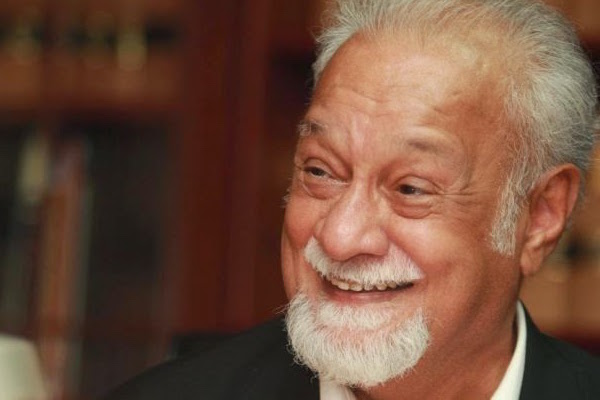
The ICJ condemned the High Court decision sentencing prominent Malaysian lawyer and chairman of the opposition Democratic Action Party Karpal Singh with a criminal sanction. He was found guilty of sedition on 21 February 2014.
The sanction amounts to RM 4,000 fine (approximately US$1,220).
The High Court’s decision was based on a statement made by Karpal Singh at a press conference on 6 February 2009 that Sultan Azlan Shah’s decision to remove the Perak’s state Chief Minister from office in 2009 could be challenged in a court of law.
“The Malaysian government is brazenly utilizing a draconian and outdated sedition law to restrict freedom of expression in the country by lawyers and public figures,” said Emerlynne Gil, ICJ’s International Legal Adviser on Southeast Asia.
The Malaysian government on 21 July 2012 announced that it planned to repeal the colonial-era 1948 Sedition Act, but has been slow to act on its announcement.
“Public discussion, including debates on the interpretation of laws, are an integral part of the nature of the legal process and a crucial step in the strengthening of a country’s democracy and rule of law,” said Gil. “A lawyer’s right to freely and independently engage and express their views on the law fulfills an important aspect of their professional role.”
In June 2010, the High Court initially ruled that the prosecution had failed to prove a prima facie case and acquitted Karpal Singh. The prosecution, however, later appealed, and the Court of Appeal reversed the High Court’s decision and ordered a retrial.
Pursuant to article 48(e) of the Federal Constitution, Karpal Singh now risks losing his Parliamentary seat unless the High Court’s decision is overturned during appeal.
Karpal Singh was the lead counsel for opposition leader Anwar Ibrahim during his Sodomy II appeal from 6 – 7 March 2014, which saw the Court of Appeal overturn his acquittal and sentenced him to five years in prison.
Karpal Singh is expected to appeal both the conviction and the sentence to the Court of Appeal.
Contact:
Emerlynne Gil, ICJ International Legal Adviser for Southeast Asia, t +66 2 619 8477; email: emerlynne.gil(a)icj.org
Craig Knowles, ICJ Media Consultant, t +66 81 9077653; email:craig.knowles(a)icj.org

Mar 7, 2014 | Events
This Human Rights Council side event will take place Monday 10th March 2014 at 2pm – 3pm in the Palais des Nations, Room XXII.
The speakers will be:
- Navi Pillay, UN High Commissioner for Human Rights
- Dr. Halah Eldoseri – Researcher on women’s health and women’s rights, Saudi Arabia
- Maksym Butkevych – Journalist and human rights activist, Ukraine
Moderator: Mary Lawlor, Director of Front Line Defenders.
The event is hosted by Frontline Defenders, and cosponsored by the International Commission of Jurists, Human Rights House, Trocaire, and the Permanent Mission of Ireland.
Event-HRDandCivilSocietySpace-HRC25-2014
Feb 28, 2014 | News
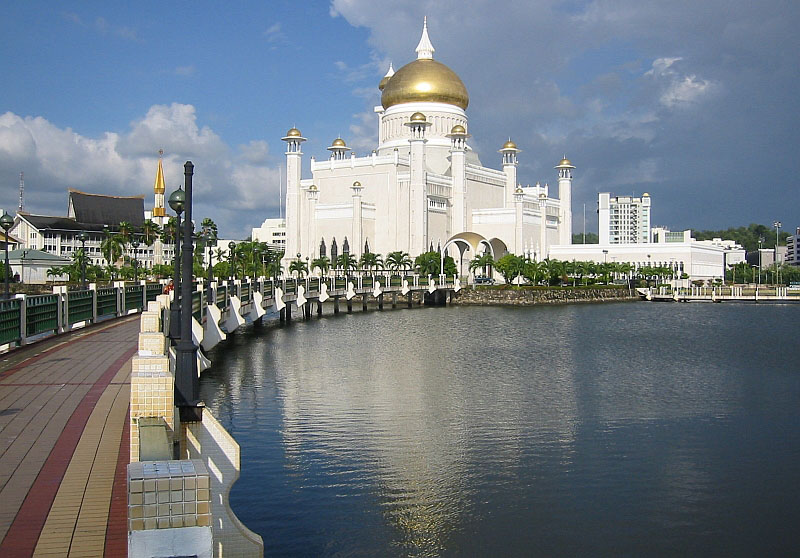
A statement by Sultan Hassanal Bolkiah suggesting that critics of Brunei Darussalam’s new Penal Code may be criminally prosecuted for slander is clearly meant to curb freedom of expression and opinion in the country, the ICJ said.
The ICJ urged the Government of Brunei to ensure full respect for the right of freedom of opinion and expression.
In a speech marking Brunei’s 30th National Day on 23 February 2014, Sultan Hassanal Bolkiah said that social media had been used to express opposition to the implementation of the new Penal Code.
He said that those who use social media to express their opinions against the new Penal Code may be committing offences under the General Offences Chapter of the new law. He reportedly characterized some of this expression as amounting to slander, including of the King and of Ulamas, or Muslim scholars. The Sultan also warned that these critics “cannot continue to be allowed to inflict insults” and that they “can be brought to court.”
“Sultan Hassanal Bolkiah’s statement illustrates that human rights, particularly respect for freedom of opinion and expression, is widely disregarded by the authorities in Brunei,” said Sam Zarifi, ICJ’s Regional Director for Asia and the Pacific.
The ICJ has criticized the new Penal Code for being an affront to human rights and at odds with international standards.
The ICJ reiterates its concern that provisions in the new Penal Code are not in accord with the commitment made by Brunei Darussalam as a member of the Association of Southeast Asian Nations (ASEAN) to promote and protect human rights in the region.
“Free, unhindered debates on issues like the enactment or implementation of a law are important cornerstones of a democratic society,” said Zarifi.
Freedom of opinion and expression is a right that is affirmed in the Universal Declaration of Human Rights and guaranteed under the Convention on the Elimination of All Forms of Discrimination against Women (CEDAW) and the Convention on the Rights of the Child (CRC), to both of which Brunei Darussalam is a party. Under international law, any restrictions or limitations must be exceptional, in accordance with the principles of the proportionality and necessity.
The ICJ urged the Government of Brunei to allow free discussion, particular on matters of public importance such as State law and policies and to fully respect the right to freedom of opinion and expression.
Contact:
Emerlynne Gil, ICJ International Legal Adviser for Southeast Asia, t +66 2 619 8477; email: emerlynne.gil(a)icj.org
Craig Knowles, ICJ Media Consultant, t +66 81 9077653; email:craig.knowles(a)icj.org

Feb 21, 2014 | News
The Kuala Lumpur High Court’s decision today to convict prominent Malaysian lawyer Karpal Singh on charges of sedition is inconsistent with international law and standards regarding free expression of opinion by lawyers, the ICJ said.
“This conviction sends a message that lawyers in Malaysia are not free to express their opinions about legal issues,” said Emerlynne Gil, ICJ’s International Legal Adviser on Southeast Asia.
Karpal Singh’s conviction was based on the fact that during a press conference held at his law firm in early 2009 he had spoken allegedly “seditious words” when questioned about whether Sultan Azlan Shah had the legal authority to remove the province’s Chief Minister, Datuk Seri Mohammad Nizar Jamaluddin, from office.
“This case is another sign of the lack of respect of the Malaysian government for the principle of free expression,” said Gil. “Karpal Singh was expressing an opinion in his capacity as a lawyer over a matter of law. He has every right to do that, as a lawyer, and of course as someone exercising his right to free expression of his views. He also has acted in fulfilment of a core function of the legal profession, which is to contribute to the public discourse on matters of law.”
The UN Basic Principles on the Role of Lawyers specifically provide that lawyers, like ordinary citizens, are entitled to freedom of opinion and expression. They have the right “to take part in public discussion of matters concerning the law, the administration of justice and the promotion and protection of human rights” without fear of suffering professional restrictions or repercussions due to their lawful action.
The High Court has fixed 7 March 2014 to hear Karpal’s mitigating circumstances, and for sentencing.
Under section 4(1) of the 1948 Sedition Act, Karpal Singh now faces a fine of up to RM 5,000 (approximately US$1,5010) and/or imprisonment of up to three years.
The conviction may force Karpal Singh to give up his seat as a member of the Malaysian parliament. Under the Federal Constitution, an elected representative is disqualified from office if fined more than RM 2,000 or jailed for a term exceeding one year.
Karpal Singh has provided legal defense in several high profile cases, including that of opposition leader Anwar Ibrahim, whose trial on charges of ‘sodomy’ has drawn heavy criticism in Malaysia and internationally.
Contact:
Emerlynne Gil, ICJ International Legal Adviser for Southeast Asia, t +66 2 619 8477; email: emerlynne.gil(a)icj.org
Craig Knowles, ICJ Media Consultant, t +66 81 9077653; email:craig.knowles(a)icj.org

Feb 19, 2014 | News
The Philippines Supreme Court’s decision to uphold provisions in the Cybercrime Prevention Act that penalize online libel may stifle freedom of expression, the ICJ warned today.
Yesterday, the Philippine Supreme Court upheld as constitutional the provisions in the Cybercrime Prevention Act penalizing and increasing the penalty for libel committed online.
“By enacting this law, the Philippines government will inhibit people who try to express themselves through the Internet and electronic media,” said Emerlynne Gil, ICJ Legal Advisor on Southeast Asia. “The Supreme Court decision unfortunately means that the Philippines has now joined those countries in the ASEAN region that are vainly trying to turn back the tide of greater and freer expression online.”
The Cybercrime Prevention Act (Republic Act No. 10175) was adopted in September 2012, but its application was suspended in October 2012 by a temporary restraining order issued by the Supreme Court.
Several groups, such as the National Union of Journalists of the Philippines, the Internet and Society Program of the UP College of Law, and the National Press Club, filed petitions before the Supreme Court alleging that the law on its face violates the right to freedom of expression as guaranteed under the Philippine Constitution.
The ICJ considers the Cybercrime Prevention Act as incompatible not only with the Philippine Constitution, but also with Philippines’ international obligations under the International Covenant on Civil and Political Rights (ICCPR), which guarantees the rights to freedom of expression, including the right to receive and impart information.
“The criminalization of libel or defamation is an affront to freedom of expression,” Gil said. “It’s now up to the Philippine Congress to amend the Cybercrime Prevention Act and decriminalize libel and defamation so as to ensure respect for freedom of expression consistent with its international obligations.”
The Court upheld both Sections 4(4) and 6 of the law, which respectively provide that libel committed through a computer system or similar means is illegal and that responsible persons will incur the penalty one degree higher than what is provided under the Revised Penal Code.
Hence, a person found guilty of committing online libel may be subject to imprisonment from six to nine years.
The ICJ has previously expressed opposition to the law, pointing out that its provisions on online libel compound the existing problematic provisions on defamation in the Philippine’s Revised Penal Code and provide for even greater penalties for libel.
The decision of the Supreme Court made a distinction on who may be punished of committing online libel.
It specified that only the original author of the allegedly libelous statement and not the recipient or those who disseminated, such as an internet service provider, may be held criminally responsible for online libel under the law.
The UN Human Rights Committee, the international monitoring body of the ICCPR, has said that States should decriminalize libel or defamation.
It underlined that in order to comply with their obligations under ICCPR, States may only penalize the most serious defamation cases and even in these cases, “imprisonment is never an appropriate penalty.” The Philippines has been a party to the ICCPR since 1986.
The ICJ welcomed the Court’s striking down as unconstitutional section 19 of the Act, which gives the Department of Justice power to restrict or block access, without prior judicial determination, to computer data found to be in violation of the law.
This is in line with the international standard that no law shall confer unfettered discretion to those charged with its execution the restriction of freedom of expression.
Contact:
Emerlynne Gil, ICJ International Legal Adviser for Southeast Asia, t +66 2 619 8477; email: emerlynne.gil(a)icj.org (For English, Filipino, and Cebuano)
Craig Knowles, ICJ Media Consultant, t +66 81 9077653; email: craig.knowles(a)icj.org