Apr 13, 2021 | News
Today, the ICJ called on the Belarus Ministry of Justice and other relevant authorities to end the recent practice of using legal proceedings against lawyers in retaliation for discharging their professional duties and to reinstate those already disbarred.
In recent months, in the context of widespread violations of the human rights of those protesting against the outcome of the disputed 2020 presidential election, there has been an unprecedented increase of cases of disbarment of lawyers especially those who comment on violations of the human rights of their clients. Among the most recently disbarred lawyers are Konstantin Mikhel, Maxim Konon, Mikhail Kirilyuk and Yulia Ivanchuk.
“This recent wave of criminal and disciplinary proceedings against lawyers is highly worrying and it constitutes an attack on the independence of the legal profession. These proceedings, be they of criminal, administrative or disciplinary nature, should be discontinued or reconsidered as being contrary to the international human rights law concerning the independence of the legal profession,” said Temur Shakirov, Senior Legal Adviser of the ICJ Europe and Central Asia Programme.
There is a clear pattern of the misuse of disciplinary proceedings against lawyers who represent political opponents of the government or those who openly criticize the government on issues of public significance.
Disciplinary proceedings in Belarus are not independent of the executive, since they are conducted by the Qualification Commission which operates under the Ministry of Justice.
Notably, disciplinary proceedings are pending against lawyer Dmitry Layevski, allegedly following his public comments on a pending Draft Law on advocates’ activities.
Dmitry Layevski is a lawyer representing Victor Babaryko, an opposition leader in Belarus currently in detention, and Maxim Znak, former legal representative of Maria Kolesnikova, another detained opposition leader.
Earlier, a number of lawyers, including Aleksandr Pylchenko, former legal representative of Viktor Babaryko and Maria Kolesnikova, and Lyudmila Kazak, former legal representative of Maria Kolesnikova, faced disciplinary sanctions, and Lyudmila Kazak incurred an administrative fine, as a result of discharging their professional functions.
Several lawyers involved in human rights cases have been called by the Qualification Commission to undergo an examination to re-certify their qualification to practice law and have failed the exam. This procedure appears to target lawyers working to defend human rights, as a means of harassment or reprisal.
For example, following comments in mass media, Sergey Zikraskiy, a lawyer who often represented Belarusian journalists, was called to pass extraordinary re-examination which he failed. The certification is carried out by the Qualification Commission.
Criminal cases are still pending against lawyers Ilya Saley and Maxim Znak, who appear to have suffered consequences as a result of their representation of opposition leaders Maria Kolesnikova and Victor Babaryko.
“These disbarments have a significant chilling effect on work of the legal profession and undermine the ability of lawyers to defend human rights of their clients in accordance with international standards on the role of lawyers,” Shakirov said.
Background
International law and standards
According to the UN Basic Principles on the Role of Lawyers, the State authorities must guarantee that lawyers are able carry out their professional functions without hindrance, intimidation, harassment or fear of retaliation (Principle 16). The UN Basic Principles on the Role of Lawyers affirm that lawyers “shall not suffer, or be threatened with, prosecution or administrative, economic or other sanctions for any action taken in accordance with recognized professional duties, standards and ethics.” (Principle 16.c) They further stipulate that lawyers must not be identified with their clients or their clients’ causes as a result of discharging their functions (Principle 18).
International standards also require the institutional independence of the legal profession. The executive body of the professional associations of lawyers must be elected by its members and must exercise its functions without external interference (Principle 24, The UN Basic Principles on the Role of Lawyers).
Feb 6, 2021 | News
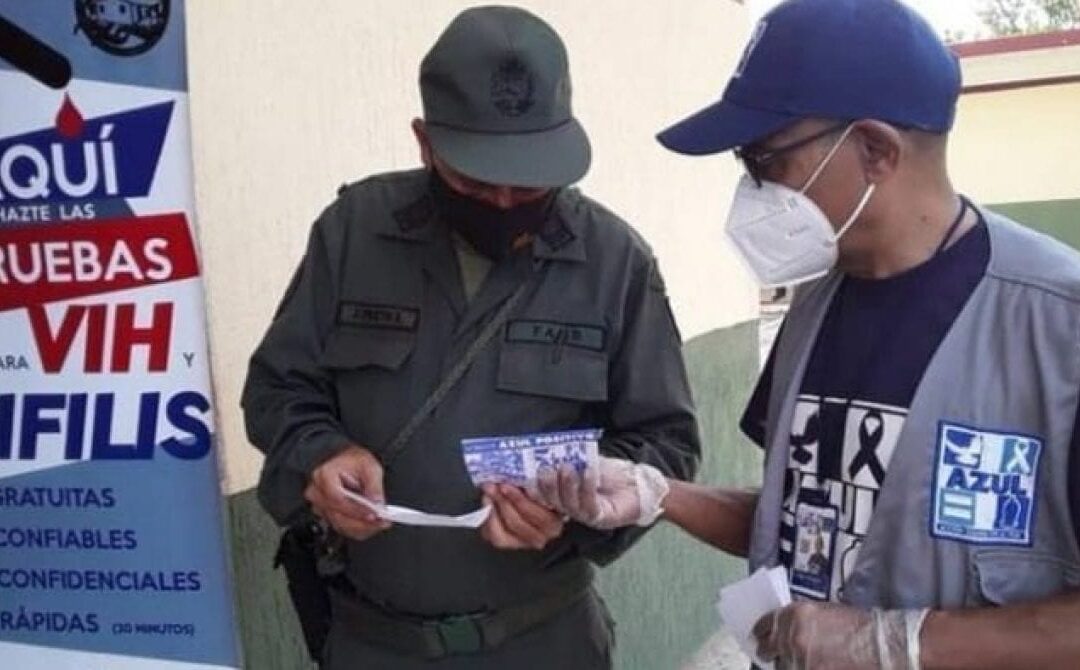
The recent, ongoing and unwarranted detention of five members of the Venezuelan NGO ‘Azul Positivo’ is one more event in a series of threats, harassment, attacks, restrictions, reprisals and criminal proceedings against Venezuelan civil society organizations and human rights defenders, which has been intensifying since November 2020.
In recent months and weeks, state agents have forcibly entered the offices of civil society organizations; public threats have been made against defenders who have been engaging with human rights mechanisms, NGO bank accounts have been frozen and arrest warrants issued for aid workers.
Venezuelan civil society operate in a context of serious legal and administrative obstacles with domestic laws used to target human rights defenders, such as the ‘Law Against Hate’, or having the effect of limiting the operations of NGOs and restricting their access to funding, essentially blocking the work of many organizations vital for Venezuelans in need.
In a public statement, a number of UN independent human rights experts and regional experts have described threats and measures taken against Venezuelan civil society since November 2020 as amounting to ‘systematic persecution and stigmatization.’
It is essential that humanitarian and human rights organizations responding to the grave humanitarian and human rights crises in the country, pushing for accountability for violations and abuses and the return of guarantees provided by democratic institutions and processes are able to do their work without fear or hindrance.
Human rights defenders are critical, constructive and essential to democracies and the functioning of the rule of law. Attempts to silence and cow them are counterproductive and shameful.
We urge the Venezuelan authorities to ensure that harassment and threats against Venezuelan defenders stop and for all international legal guarantees to be respected. We call on all states and UN bodies and agencies to actively support civil society organizations, defenders and activists and to speak up loudly and consistently for the right to defend human rights in Venezuela and globally.
We are inspired by the daily commitment and courage of Venezuelan human rights defenders and humanitarian workers and stand in solidary with our Venezuelan partners and friends.
Amnesty International
Center for Justice and International Law (CEJIL)
CIVICUS
Civil Rights Defenders
Conectas Diretos Humanos
Freedom House
Global Centre for the Responsibility to Protect
Human Rights Watch
International Commission of Jurists
International Service for Human Rights
People in Need
Washington Office on Latin America (WOLA)
Jan 26, 2021 | News
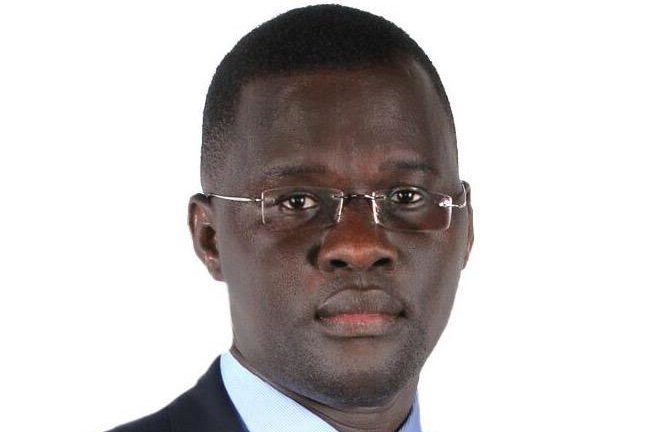
Lawyers for Lawyers (L4L) and the ICJ condemn the spurious charges under the Anti-Money Laundering brought against Ugandan lawyer and human rights defender Nicholas Opiyo and call for them to be dropped.
The organizations consider that this action stands to impede work of lawyers in the country of carrying out their professional functions, particularly regarding human rights work.
There do not appear to be legitimate grounds for these charges or the ongoing prosecution. The organizations are further concerned at numerous alleged violations surrounding the arrest, detention and pre-trial proceedings.
Nicholas Opiyo, Executive Director of Chapter Four Uganda, a civil rights charity working to defend human rights and civil liberties, was arbitrarily arrested on 22 December 2020, not informed of the reason for his arrest and effectively held in incommunicado detention for a prolonged period.
On 22 December 2020, plain clothed law enforcement officers who did not identify themselves seized Mr. Opiyo from a restaurant, along with four other individuals, including three lawyers.
He was later charged under section 3 (c) of the Anti-Money Laundering Act on allegations that he acquired USD 340,000 through the bank account of Chapter Four Uganda, knowing that “the said funds were proceeds of crime”.
Chapter Four Uganda have confirmed that these are legitimate donor funds for lawful purposes.
Sophie de Graaf, the Director of Lawyers for Lawyers, said:
“Lawyers play a vital role in the protection of the rule of law and human rights. It is the responsibility of lawyers to protect and establish the rights of citizens from whatever quarter they may be threatened. Their work is indispensable for ensuring effective access to justice for all. To fulfil their professional duties effectively, lawyers should be able to practice law freely and independently, without any fear of reprisal.”
Kaajal Ramjathan-Keogh, ICJ’s Africa Director, added:
“Uganda is required under its Constitution and under its international legal obligations, to respect and protect the independence of lawyers. These baseless charges seek to intimidate and harass Mr. Opiyo and interfere with his work as a lawyer”.
Lawyers for Lawyers and the ICJ call on the Ugandan authorities to drop the spurious charges against Mr. Opiyo and to ensure that his rights to due process and fair trial are fully respected.
The organizations emphasize that the responsibilities authorities must comply with Uganda’s international legal obligations to ensure that members of the legal profession can carry out their professional functions without harassment and improper interference, including arbitrary arrest and incommunicado detention.
Background
Article 23 of Uganda’s Constitution stipulates that suspects under detention should be brought before a court of law within 48 hours from the time of arrest. Article 27 of Uganda’s Constitution requires that a person charged with a criminal offence should be informed immediately of the charges against them. Article 28 of the Ugandan Constitution guarantees for every person the right to a fair hearing and the right to legal representation. These rights are protected under the International Covenant on Civil and Political Rights and the African Charter on Human and Peoples Rights, to which Uganda is a party.
International and regional standards on ensuring the independence of lawyers are set out in the UN Basic Principles on the Role of Lawyers (UN Basic Principles) and the Principles and Guidelines on the Right to a Fair Trial and Legal Assistance in Africa.
Contact:
Kaajal Ramjathan-Keogh, ICJ Africa Director Kaajal.Keogh(a)icj.org +27 84 5148039
Tanveer Jeewa, Media and Legal Consultant Tanveer.Jeewa(a)icj.org
Nov 20, 2020 | News
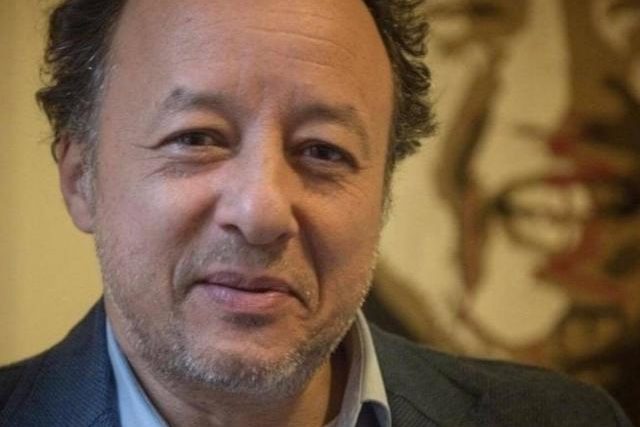
The ICJ today called on the Egyptian authorities to immediately and unconditionally release human rights defenders Gasser Abdel-Razek, Mohamed Bashseer and Karim Ennarah.
The detainees, senior staffers of the Egyptian Initiative for Personal Rights (EIPR), a leading human rights organization, were targeted in connection with their human rights work.
The arrests are part of a broader, relentless campaign by the military and government to intimidate and silence civil society organizations, including through such means as trumped-up “terrorism” charges and sham judicial proceedings.
“By arresting Mohamed Bashseer, Karim Ennarah and Gasser Abdel-Razek, and charging them with terrorism-related offences, the Egyptian government led by President Al-Sisi are writing a new, terrifying chapter in their repression playbook,” said Said Benarbia, Director of ICJ’s Middle East and North Africa Programme.
“Their crackdown on independent civil society must end.”
On 19 November 2020, Gasser Abdel-Razek, EIPR’s Executive Director, was arrested by security forces from his home in Maadi, Cairo. He appeared before the Supreme State Security Prosecution (SSSP) and charged in case No. 855/2020 with, among other charges, “joining a terrorist group” and “spreading false news.”
On 15 November 2020, EIPR’s Administrative Manager Mohamed Bashseer, was arrested at his house in Cairo. On 17 November 2020, Karim Ennarah, EIPR’s director of the criminal justice programme, was also arrested.
They both face similar charges in the same case No. 855/2020, together with other numerous lawyers and human rights defenders, including Mohamed El-Baqer and Mahienour al-Massry.
Over the past seven years, EIPR has been subjected to a pattern of harassment and persecution by the military and government.
In 2016, the assets of EIPR’s founder and former executive director, Hossam Bahgat, were frozen and he was subjected to a travel ban since then.
On February 2020, Patrick George Zaki, an EIPR researcher, was arrested at Cairo Airport by National Security Agency officers who reportedly subjected him to torture, including with electric shocks. He was charged by a public prosecutor with, among other charges, “spreading false news” and “inciting protest without authorization”. He remains in custody
The recent arrests of the three senior EIPR officials follow a visit by a number of European ambassadors and other diplomats to the EIPR Cairo offices on 3 November 2020, during which the human rights situation in Egypt was discussed.
“The international community and in particular States engaging in political and security cooperation with Al-Sisi’s regime must not overlook the serious violations against human rights defenders taking place in the country,” added Benarbia.
“They should demand an end to these violations and ensure that individuals and independent human rights groups are able to do their legitimate and critical human rights work freely and without intimidation.”
Contact
Said Benarbia, Director, ICJ Middle East and North Africa Programme, t: +41-22-979-3817; e: said.benarbia(a)icj.org
Download the Arabic version
Egypt-EIPR crackdown-News-2020-ARA
Nov 16, 2020 | Advocacy
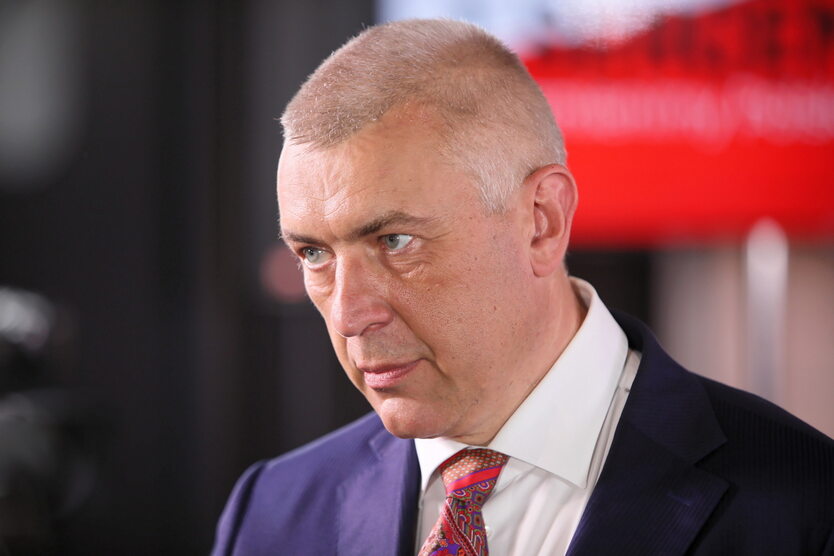
On 15 October 2020, Polish lawyer Roman Giertych was detained by the Central Anticorruption Bureau (CBA) on accusations of money laundering. His house and office were searched and prosecutors imposed preventive measures, including suspension of his right to practice law.
Lawyers for Lawyers, the ICJ and the Amsterdam Bar Association are concerned that the manner in which these measures were taken is inconsistent with international standards on the independence of the legal profession.
Roman Giertych has worked on a series of high-profile cases against the governing Law and Justice party. He has also represented various prominent opposition figures, including Donald Tusk, the former Polish prime minister and head of the Civic Platform opposition party, and former president of the European Council.
Mr. Giertych’s arrest happened one day before the scheduled detention hearing in another politically significant high-profile case, concerning Leszek Czarnecki, in which Roman Giertych was appointed as defence counsel.
According to the information available to Lawyers for Lawyers (L4L), the ICJ and the Amsterdam Bar Association, Mr. Giertych was arrested merely to serve him with charges. He was not given a chance to appear voluntarily.
On 22 October 2020, Mr Giertych’s defense lawyers filed four complaints with the court about the actions of the Poznań prosecutor’s office relating to his arrest and the search of his home and office.
Professional lawyers’ associations such as the National Council of Attorneys-at Law, the Association of Attorneys-At-Law “Defensor Iurius”, the Polish Bar Council and the Council of the Warsaw Bar Association of Advocates have expressed “great concern” about Mr. Giertych’s detention, the search of his house and office, and the preventive measures that were taken against Mr. Giertych.
Lawyers for Lawyers, the ICJ and the Amsterdam Bar Association are concerned about the circumstances of Mr. Giertych’s arrest, in particular the fact that the arrest seems to have only been made in order to present him with charges.
L4L, ICJ and the Amsterdam Bar Association are also concerned by the fact that the searches of his house and office were conducted without proper safeguards of attorney-client privilege and by the suspension of Mr. Giertych’s right to practice his legal profession by a public prosecutor. We will continue to monitor the case of Mr. Giertych closely.
Download
Poland-Roman Giertych-Advocacy-2020-ENG (full statement with additional information, in PDF)