May 10, 2016 | News
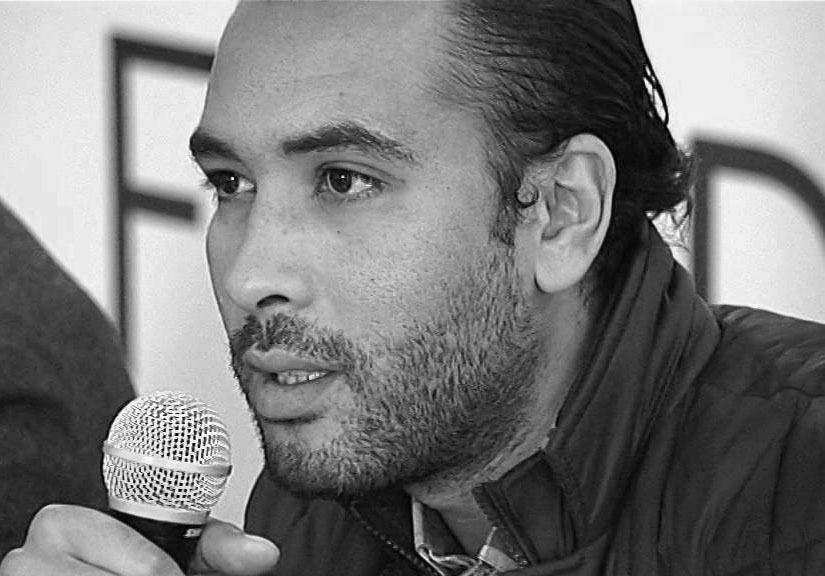
The ICJ today called on the Egyptian authorities to immediately release human rights lawyer Malek Adly and to drop all charges against him. He was arrested on Thursday 5 May 2016, pursuant to an arrest warrant.
Malek Adly has been charged with a number of offences, including “attempting to overthrow the regime,” “spreading false rumors,” and “using force against a public servant.”
The Prosecuting authorities have not provided information on specific behaviour that would constitute criminal conduct.
The ICJ is concerned that the charges may be in retaliation for Malek Adly’s work as a lawyer and human rights defender, and are aimed to chill him and others from engaging in work perceived as threatening to or disfavoured by Egyptian authorities.
They came at the backdrop of his work as a human rights lawyer, his critical views on the rule of law situation in Egypt, and his legitimate and peaceful exercise of freedom of expression and assembly in opposing transferring the sovereignty of Tiran and Sanafir islands from Egypt to Saudi Arabia, the ICJ says.
“Malek Adly’s arrest, detention and prosecution for carrying out his work as a lawyer and human rights defender and for peacefully expressing his views is yet another attempt by the Egyptian regime to muzzle lawyers, the last line of defence for victims of human rights violations in Egypt,” said Said Benarbia, Director of the ICJ Middle East and North Africa Programme.
“The regime’s crackdown on fundamental rights and freedoms has been worryingly extended to the very lawyers whose role is to challenge and protect against such crackdown,” he added.
Over the last three years, the ICJ has documented numerous cases of lawyers who have been subjected to human rights violations and reprisals in relation to the representation of their clients.
These include the cases lawyers Imam Afifi and Karim Hamdi who were allegedly subjected to torture and subsequently died while in police custody.
International standards aiming to safeguard the role of lawyers provide that States have a duty to ensure that lawyers are able to perform their functions “without intimidation, hindrance, harassment or improper interference” and that lawyers must not be subject to prosecution or other sanction for carrying out their professional responsibilities, the Geneva-based organization reminds.
International standards on human rights defenders require States protect human rights defenders from attacks, threats, retaliation and arbitrary action.
The Egypt 2014 Constitution guarantees the “independence of the lawyer’s profession and the protection of its interests as a guarantee to protecting the right to defence”. In addition, it prohibits the arrest of a lawyer while he or she is exercising the right to defence, except in flagrante delicto crimes.
“The Egyptian authorities must live up to their obligations under the Constitution and international law and put an immediate end to their attacks against lawyers,” concluded Benarbia.
Contact
Nader Diab, Associate Legal Adviser of the ICJ Middle East and North Africa Programme, t: +216 51727023; e: nader.diab(a)icj.org
Egypt-HR Lawyer MalekAdly-News-Press Releases-2016-ARA (full text in Arabic, PDF)

May 9, 2016 | News
The ICJ is deeply concerned at the recent legal harassment of several Cambodian human rights defenders and perceived political opponents, which raises serious questions as to the impartiality of the investigators, prosecutors and judges involved.
The ICJ calls on the Government to immediately conduct an independent review of the decision to pursue these cases, to end the prosecution of those who have been charged if the allegations are found to be groundless or the proceedings to have been unlawful or abusive, to cease the use of judicial and prosecutorial processes to harass and intimidate human rights defenders and perceived political opponents, and to respect its international obligations under the Convention on the Privileges and Immunities of the United Nations.
“The decision to proceed with these cases should be subject to a careful and independent review and any charges that have resulted must be dropped if the allegations are found to be without merit or have been carried through unlawful or abusive procedures,” said Kingsley Abbott, International Legal Adviser for Southeast Asia with the ICJ.
“The strong appearance of bias present in these cases flies in the face of the absolute right of all accused to have their case considered by independent and impartial prosecutors and judges at every stage of the process,” he added.
The different proceedings all stem from allegations centered on an alleged affair between Khom Chandaraty (also known as Srey Mom) and Kem Sokha, acting leader of the opposition Cambodia National Rescue Party (CNRP).
After a voice recording appeared on social media, allegedly of a conversation between them, the Cambodian Counter-Terrorism Directorate of the Government’s Central Directorate for Security “invited” Srey Mom for questioning, which prompted her to seek human rights assistance from a leading Cambodian NGO, the Cambodian Human Rights and Development Association (ADHOC).
On 11 March 2016, the Counter-Terrorism Directorate questioned Srey Mom. She denied the suggestions she had a relationship with Kem Sokha and that she was the female voice on the recording.
On 19 April 2016, after having met with ADHOC on a number of further occasions, Srey Mom was asked in a closed session with a prosecutor at the Phnom Penh Municipal Court to answer allegations of having provided false testimony and of having engaged in prostitution.
On this occasion, Srey Mom admitted to a relationship with Kem Sokha.
On 22 April 2016, Srey Mom alleged in an open letter that ADHOC staff had attempted to persuade her to lie to the authorities.
On 2 May 2016, an Investigating Judge in Phnom Penh charged four staff members of ADHOC, Nay Vanda, Ny Sokha, Yi Soksan, and Lem Mony, with “bribery of a witness”.
A former staff member of ADHOC, Ny Chakrya, and a staff member of the Cambodia Office of the High Commissioner for Human Rights (OHCHR), Sally Soen, were also charged with being accomplices, notwithstanding Sally Soen’s immunity from prosecution under the Convention on the Privileges and Immunities of the United Nations.
The allegation of bribery appears to relate to the fact that ADHOC reportedly provided Srey Mom with a small sum of money to cover food and transport costs, including to attend questioning by judicial authorities.
“While Cambodia has a positive legal duty under international law to protect human rights defenders from attacks arising out of their work, these proceedings appear to be aimed at intimidating and silencing Cambodian civil society and are the latest in a series of laws and actions directed against them,” said Abbott.
Last year, the Government passed the Law on Associations and NGOs (LANGO), which Abbott stated would “severely restrict the ability of members of civil society to exercise their rights to freedom of association and expression which Cambodia has a duty to protect under its international obligations.” Abbott further stated that the Governments intention was to “…weaken the impact of NGOs, including human rights defenders.”
Under Article 12 of the United Nations Declaration on Human Rights Defenders, States have an obligation to take all necessary measures to ensure the protection of human rights defenders, including against any threats, pressure, retaliation or arbitrary action as a consequence of the legitimate exercise of their rights under the Declaration.
In other proceedings, the Phnom Penh Municipal Court summoned Kem Sokha to answer allegations of criminal defamation and two other members of the CNRP, Pin Ratana and Tok Vanchan, have been questioned about allegations of prostitution.
Political commentator, Ou Virak, has been summoned to appear in the Phnom Penh Municipal Court on 12 May 2016 to answer allegations of criminal defamation for expressing the view that the ruling Cambodian Peoples Party (CPP) was exploiting the alleged affair between Kem Sokha and Srey Mom.
On 24 April 2016, a CNRP commune chief, Seang Chet, was arrested and detained on charges of bribery after Srey Mom alleged Seang Chet had attempted to pay her mother US $500 to encourage her to deny the affair.
Read also:
Cambodia: the ICJ condemns Senate’s approval of draft Law on Associations and NGOs
Cambodia: approved NGO law poised to hobble the work of civil society
Cambodia: withdraw draft law on associations and non-governmental organizations – joint letter
Cambodia: ICJ and other rights groups urge end to NGO law
Contact
Kingsley Abbott, ICJ’s International Legal Adviser, t: +66 94 470 1345, e: kingsley.abbott(a)icj.org
May 3, 2016 | News
The ICJ is concerned at the reported improper interrogation as a witness of lawyer Marina Moshko and searches of her apartment and office by investigators of the Investigative Committee of Russia together with officers of the St. Petersburg and Leningrad Region Federal Security Service.
The interrogation was in connection with a criminal case against her client, Natalia Koltsova, related to alleged criminal business activities.
Targeting a lawyer in the investigation of the lawyer’s client runs contrary to international law and standards, and to principles of lawyer-client confidentiality enshrined in both Russian and international law.
The ICJ therefore calls on the law enforcement authorities to refrain from any measures which obstruct access to a lawyer and the right to an effective defence, including improper interrogation of lawyers as witnesses, and searches of lawyers’ premises.
The Russian authorities must uphold Russian law and the country’s international legal obligations on this matter and must take steps to ensure that lawyers are effectively protected against any form of harassment or improper interference.
During the searches, authorized by the Basmannyi District Court of Moscow, the files Marina Moshko’s clients were examined and photographs were taken of one file, which contained evidence in the same criminal case in which Marina Moshko is acting for the defence (see additional information below).
In addition to the searches of the lawyer’s premises, the investigators conducted a “confrontation” (a form of investigatory interview) between the lawyer and her client’s mother.
Marina Moshko was thereafter excluded from representation of her client as she was herself considered to be a witness in the case.
This case is hardly the first of its kind.
In a recent report entitled Towards a Stronger Legal Profession in the Russian Federation, the ICJ expressed concern at “cases of interrogations of lawyers in order to exclude them from representing a party to the proceedings”.
The report concluded that “[i]nterrogation of a lawyer as a witness constitutes a serious interference with the work of lawyers in clear contradiction to Russian legislation and international standards on the role and independence of lawyers.”
The ICJ recalls that the Russian Federation Code of Professional Ethics of Lawyers prohibits lawyers from making witness statements about any facts known to him or her in the context of professional activities (Article 6 (6)).
Both the Law “On advocates’ activities and advokatura in the Russian Federation” (Article 8 (2)) and the Russian Criminal Procedure Code (article 56 (3)) prohibit summoning lawyers as witnesses in cases in which they represent clients.
Furthermore, searches of lawyers’ premises and interference with clients’ files are contrary to international law and standards on lawyer-client confidentiality, which is an element both of the right to respect for private life, and of the right to a fair trial.
In particular, the UN Basic Principles on the Role of Lawyers, in Principle 22, stipulate that: “[g]overnments shall recognize and respect that all communications and consultations between lawyers and their clients within their professional relationship are confidential”.
The UN Human Rights Committee has also underscored that such practices may breach the obligation of States to ensure the right to a fair trial under the International Covenant on Civil and Political Rights (ICCPR), particularly where “lawyers are released from their obligation of professional confidentiality and obliged to testify or face the risk of imprisonment”
This case apparently represents such an instance in which a lawyer is excluded from representing a party, and lawyer-client confidentiality is breached, through questioning her as a witness. Such exclusions interfere with a defendant’s access to effective legal representation and may damage the effectiveness of the defence, contrary to the right to fair trial protected, inter alia, by Article 6 of the European Convention on Human Rights and Article 14 of the ICCPR.
Contact:
Róisín Pillay, Director, Europe Programme, roisin.pillay@icj.org
Temur Shakirov, Legal Adviser, Europe Programme, temur.shakirov@icj.org
Additional information:
Marina Moshko represents Natalia Koltsova, a suspect in the case on a criminal group allegedly created by Dmitry Zarubin, owner of the Cartier boutique. Dmitry Zarubin was arrested in autumn 2015 and charged with creation of an organized criminal group which brought expensive electronic goods as cheap building materials. Natalia Koltsova is charged with heading one of the units of the alleged criminal group. These searches are reportedly related to the representation of Natalia Koltsova.
The ICJ understands that the Council of the Chamber of Lawyers of Leningrad Region has addressed a letter to the Prosecutor General of the Russian Federation regarding this problematic case of the searches of lawyers.
Read also ICJ’s Report Towards a Stronger Legal Profession in the Russian Federation
Russia-Marina Moshko statement-News-Web story-2016-RUS (story in Russian, PDF)
Apr 15, 2016 | News
The Nepal government should immediately stop all intimidation and harassment of the National Human Rights Commission (NHRC) and its staff and respect its independence in line with international standards, the ICJ and other rights groups said today.
The attempts to intimidate the NHRC are a direct contradiction of the United Nation’s Principles relating to the Status of National Institutions (the Paris Principles) as well as Nepal’s constitution, the ICJ Amnesty International and Human Rights Watch said.
According to the commissioners and confirmed by independent media accounts, on April 3, 2016, Prime Minister K.P. Sharma Oli summoned the National Human Rights Commission chair, Anup Raj Sharma, and other commissioners to question them about the NHRC’s statement delivered by Commissioner Mohna Ansari during the Universal Periodic Review (UPR) of the human rights situation in Nepal before the UN Human Rights Council in Geneva in March.
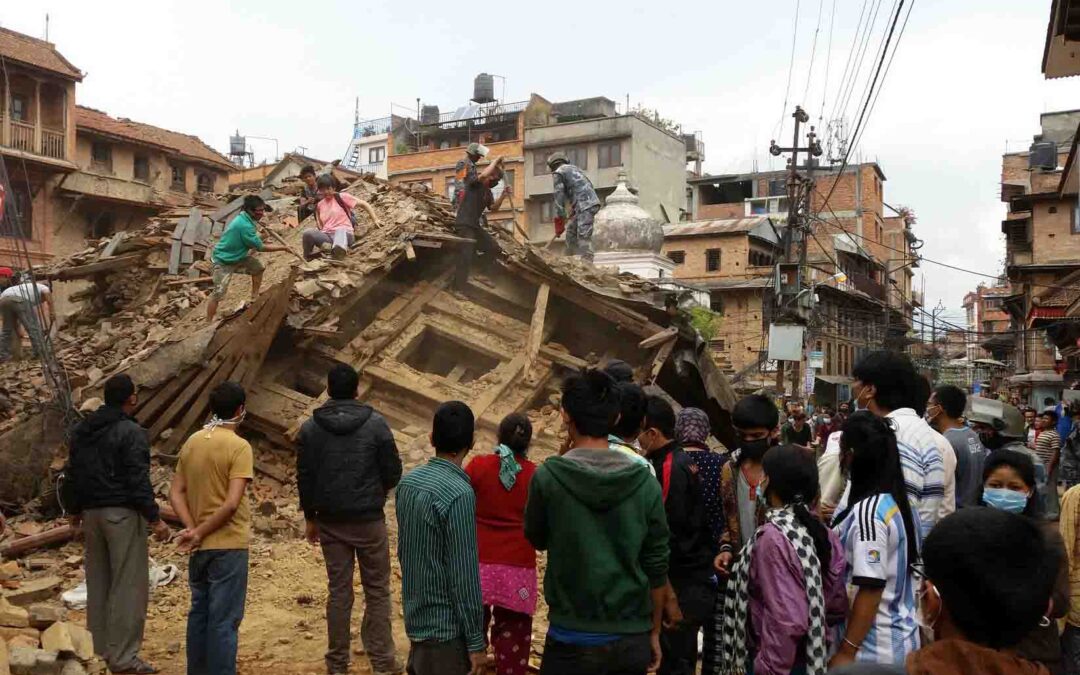
In its statement, the commission highlighted various ongoing human rights concerns, including discriminatory citizenship provisions in the new constitution, the continued failure to properly investigate alleged unlawful killings and excessive use of force during protests in the Terai region in 2015, violations of the economic, social, and cultural rights of earthquake victims (photo), and the need for credible transitional justice for conflict victims.
“As the principal independent constitutional body mandated to promote and protect human rights in the country, the NHRC plays a vital role in ensuring governmental accountability, and was well within its authority under both the Nepali Constitution and international standards when it delivered its submission to the UN Human Rights Council during the UPR,” said Nikhil Narayan, ICJ’s South Asia Senior Legal Adviser.
“The PM’s blatant attempt to intimidate the NHRC members for that submission is a flagrant violation of the government’s basic obligation to ensure the NHRC’s ability to carry out its work independently and without undue interference,” he added.
While it is entirely appropriate for the prime minister, like other stakeholders, to consult with the NHRC, such exchanges should be conducted with due respect for the legitimate exercise of the institution’s constitutional mandate, independently and free of undue interference or intimidation, the rights organizations said.
NHRC members present at the meeting uniformly expressed the sentiment that Oli, through his aggressive questioning and reprimanding of the commissioners over the contents of certain sections of its submission, was trying to intimidate the commission and in particular Commissioner Ansari, at whom the questioning appeared exclusively directed.
“The line and manner of questioning, including insinuations of bias and a lack of neutrality, particularly those aimed at Commissioner Ansari, the public face of the NHRC in Geneva, revealed an intent not of clarification, but intimidation that seeks to limit the role and effectiveness of the NHRC,” said Champa Patel, director of the South Asia Regional Office at Amnesty International.
Based on media accounts, discussions between the commissioners and the prime minister reflected an apparent attempt by the prime minister to discredit the commission’s statement by portraying it as the personal views of Commissioner Ansari alone or those of a nongovernmental organization.
Sharma promptly rebutted this characterization in a public statement on April 10, clarifying that “the statement delivered by NHRC Spokesperson Ansari at the UPR session was that of the commission and not her own,” and that “[i]mpunity has affected the overall promotion and protection of human rights.”
Amnesty International, Human Rights Watch, and the ICJ have consistently and repeatedly highlighted rights concerns similar to those the commission expressed in its UPR submission. The prime minister and government of Nepal should implement without delay the commission’s recommendations concerning discriminatory constitutional provisions, impunity for perpetrators of Terai violence on all sides, ensuring justice in the process of transition, and protecting the rights of earthquake victims.
The prime minister and the government of Nepal must publicly state that they will respect and guarantee the independence and integrity of the National Human Rights Commission, as the principal constitutionally mandated human rights body in the country, in accordance with international standards.
“The prime minister overstepped his authority, and his attempts to intimidate and intervene in the work of the NHRC contravene the Paris Principles, which clearly provide for the establishment of autonomous and independent institutions,” said Meenakshi Ganguly, South Asia director at Human Rights Watch. “The prime minister seems unwilling to recognize that the NHRC acts independently and is not an arm of the executive, subject to governmental dictates.”
Contact:
Nikhil Narayan, ICJ’s South Asia Senior Legal Adviser, t: +97-7-981-318-7821 ; e: nikhil.narayan(a)icj.org
Sam Zarifi, ICJ’s Asia Director, t: +66-807-819-002 ; e: sam.zarifi(a)icj.org
Additional information:
The Paris Principles set out internationally agreed upon standards designed to guide the work of national human rights institutions in a credible, independent and, effective manner. Crucially, the Paris Principles define the role, composition, status, and functions of these bodies, which include engaging with the UN and regional institutions and states’ obligation to ensure their real independence through a broad mandate, adequate funding, and an inclusive and transparent appointment process.
Furthermore, the UN Declaration on the Right and Responsibility of Individuals, Groups and Organs of Society to Promote and Protect Universally Recognized Human Rights and Fundamental Freedoms (Declaration on Human Rights Defenders) reaffirms the right of human rights defenders and institutions to advocate for human rights at the national and international level, including by engaging with the UN and other intergovernmental organizations.
Apr 6, 2016 | News
Newly appointed Myanmar Attorney General U Tun Tun Oo must commit to strengthening the rule of law and respect for human rights in the country, said the ICJ today.
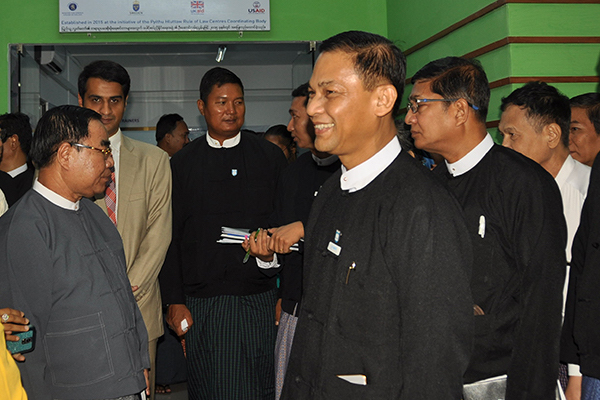
U Tun Tun Oo (photo) has been one of the Deputy Attorney-Generals in the Union Attorney General’s Office since 2006.
“U Tun Tun Oo is taking over a post that is Myanmar’s most powerful legal officer. He plays a complex role, at once a member of the Executive, adviser to the President and the Hluttaw, the authority drafting and amending laws,” said Sam Zarifi, ICJ’s Asia Director. “As an immediate matter, he should review all political cases and stop the harassment of human rights defenders.”
The Attorney General represents the government in judicial proceedings and advises the cabinet on the legality of its actions.
He also leads Prosecutors in the country, and thus has the authority to select, initiate and undertake investigations into criminal and politically sensitive cases.
The Attorney General is also the president of the country’s only officially recognized Bar Association.
The Attorney General is, in effect, the minister of justice, and as such has controlled much of the work of the judiciary, too.
The Union Attorney General’s Office has historically followed the interests of the military and impeded an independent judiciary, the ICJ notes.
It has been criticized for failing to tackle major problems such as corruption and human rights abuses while continuing to prosecute human rights defenders and political opponents.
“Within the Union Attorney General’s Office, prosecutors must act with integrity in an independent, impartial and objective manner and in the protection of the public interest”, said Zarifi.
“Prosecutors must exercise sound discretion in the performance of their functions. They must seek justice, without fear of favour, not merely convict.”
“The Attorney-General’s Office must not shy away from prosecutions that will combat impunity,” he added.
The Union Attorney General’s Office launched its Strategic Plan for 2015-2019, establishing important benchmarks for measuring the institution’s development.
The Strategic Plan acknowledges the public’s low confidence in the office and commits the office to the rule of law, human rights, fair trials, prosecutorial ethics and accountability, in accordance with international standards.
“The Union Attorney General’s Office must investigate and prosecute criminal offences, including gross human rights violations and abuses, with impartiality. The Union Attorney General’s Office must be free from unwarranted interference from the legislative and the executive branches of government. Likewise, it must not interfere with judges or lawyers in an independent judiciary,” Zarifi said.
Contact:
Sam Zarifi, ICJ Regional Director for Asia and the Pacific, t: +66807819002; e: sam.zarifi@icj.org
Vani Sathisan, ICJ International Legal Adviser for Myanmar, t: +95(0)9250800301; e: vani.sathisan@icj.org
Additional information:
Under international standards, prosecutors are required to “respect and protect human dignity and uphold human rights” and “give due attention to the prosecution of crimes committed by public officials, particularly corruption, abuse of power, grave violations of human rights and other crimes recognized by international law.” These principles are set out in the United Nations Guidelines on the Role of Prosecutors.
An exposition and analysis of international law and standards are available in English and Myanmar language in the ICJ’s authoritative Practitioners’ Guide on the Independence and Accountability of Judges, Lawyers and Prosecutors.