Mar 28, 2016 | News
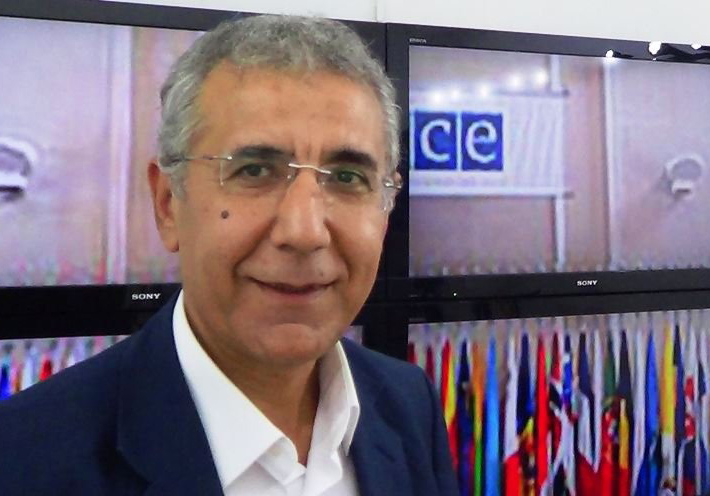
The ICJ welcomes the release of human rights lawyer Intigam Aliyev today after the Supreme Court reduced and suspended his sentence and ordered his immediate release.
Intigam Aliyev, a prominent human rights lawyer and the head of the NGO Legal Education Society, had been convicted on 22 April 2015 of tax avoidance, illegal entrepreneurship and abuse of power and sentenced to seven and a half years of imprisonment by a Baku Court.
A number of credible human rights organizations and international observers who have closely followed the case have stated that they consider the charges he was tried on to have been politically motivated, and that the real reason for his prosecution and conviction was repression by the Government of critical voices in civil society.
In a closed hearing, the Supreme Court reduced his sentence to five years of imprisonment and suspended its execution, after a request to this effect was made by Azerbaijan’s Prosecutor General, Zakir Garalov.
This unusual initiative follows the rejection, on 24 February, by the same Supreme Court of Intigam Aliyev’s complaint against his sentence.
“While the release of Intigam Aliyev is a positive step, the ICJ remains concerned that this decision appears to leave the underlying conviction in place despite credible reports that the charges were politically motivated,” said Massimo Frigo, ICJ Legal Adviser.
“If, as these allegations would suggest, Intigam Aliyev was targeted for his work as a lawyer, this would clearly violate international standards on the independence of lawyers”, said Temur Shakirov, another ICJ Legal Adviser.
Contact
Temur Shakirov, Legal Adviser, Europe Programme, temur.shakirov(a)icj.org
Massimo Frigo, Legal Adviser, Europe Programme, masimo.frigo(a)icj.org
Mar 11, 2016 | News
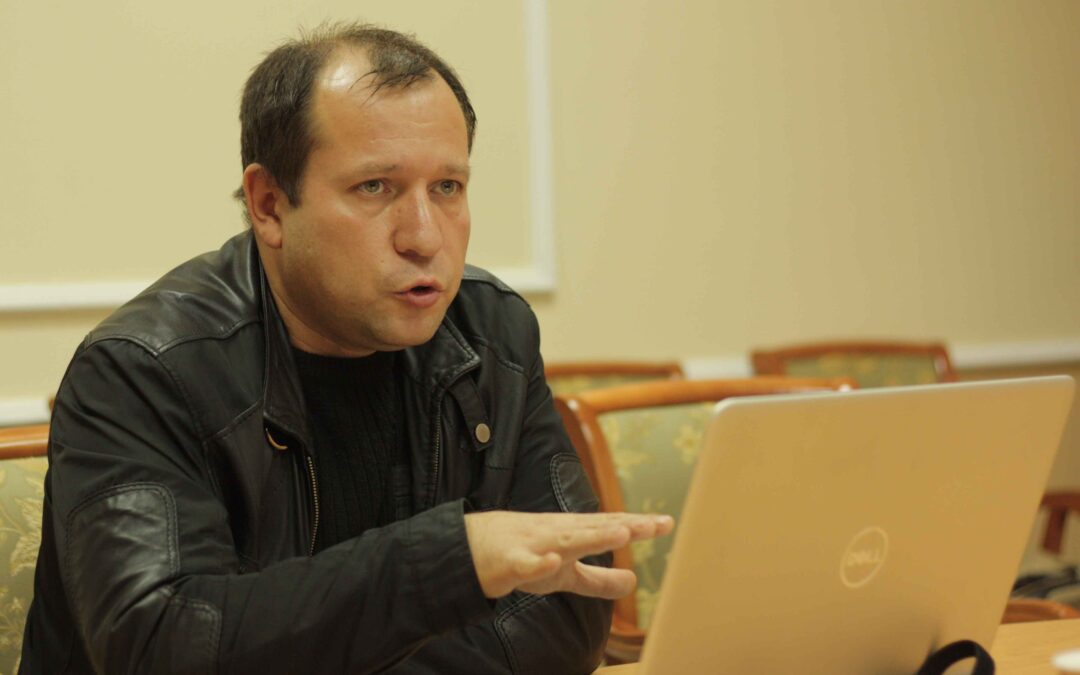
The Joint Mobile Group is known for its courageous work in opening legal cases on behalf of victims of torture in Chechnya. On March 9th, they were travelling together with journalists and the group was physically attacked, their confidential notes stolen, and the vehicles they were in burned.
Their offices in Ingushetia were also attacked.
This is part of an ongoing pattern of threats and intimidation directed against the Joint Mobile Group.
As recently as December their offices in Chechnya were completely burned.
The Martin Ennals Award provides protection through publicity for Human Rights Defenders who are working at personal risk to protect the rights of others.
“Sadly it appears that the need for protection, in this case, remains as urgent as ever. We urge the responsible authorities to identify the perpetrators and bring them to justice,” the ICJ says.
The Award laureate is selected by a jury of 10 global human rights organizations, including the ICJ.
The other members are Amnesty International, Human Rights Watch, Human Rights First, FIDH – International Federation for Human Rights, World Organisation Against Torture (OMCT), Front Line Defenders, EWDE Germany, International Service for Human Rights and HURIDOCS.
For further information, you can also read articles on the BBC, The Guardian, Russia Today, and the report on the MEA 2013.
Picture: Igor Kalyapin, founder of the Joint Mobile Group.

Mar 10, 2016 | News
The ICJ welcomes the decision of the Magistrate Court to dismiss the charges against Lena Hendry for her involvement in 2013 screening of No Fire Zone: The Killing Fields of Sri Lanka, an award-winning human rights documentary on the civil war in Sri Lanka.
Magistrate Mohamad Rehab Mohd Aris determined that the prosecution failed to prove a prima facie case against Lena Hendry (photo).
As a consequence, she did not have to enter her defense.
“We welcome the decision of the Magistrate’s Court to clear Lena Hendry from all charges,” said Emerlynne Gil, ICJ’s Senior International Legal Adviser.
“We must emphasize though that subjecting Lena Hendry in the first place to criminal prosecution simply for screening this documentary violated her human rights and contravenes Malaysia’s obligations to uphold freedom of expression,” she added.
“We should remember that the provision in the Film Censorship Act 2002 used against Lena Hendry remains on the books and still operative. It can still be used to stifle the voices of other human rights defenders in Malaysia,” Gil further said.
Lena Hendry was charged under section 6(1)(b) of the Film Censorship Act 2002 for allegedly showing the film without prior authorization by the Board of Censors.
The said provision prohibits any person to circulate, exhibit, distribute, display, manufacture, produce, sell, or hire any film or film publicity material that has not been approved by the Board of Censors.
If Lena Hendry had been found guilty, she could have faced a fine of up to RM30,000 (approximately US$6,900) and/or a sentence of up to three years imprisonment.
The ICJ reiterates its call to the Government of Malaysia to safeguard freedom of expression and uphold the right of individuals to elaborate and disseminate information, including on questions of public import and the documentation of human rights abuses.
Contact:
Emerlynne Gil, Senior International Legal Adviser for Southeast Asia, t: +66 840923575 ; e: emerlynne.gil@icj.org
Feb 24, 2016 | News
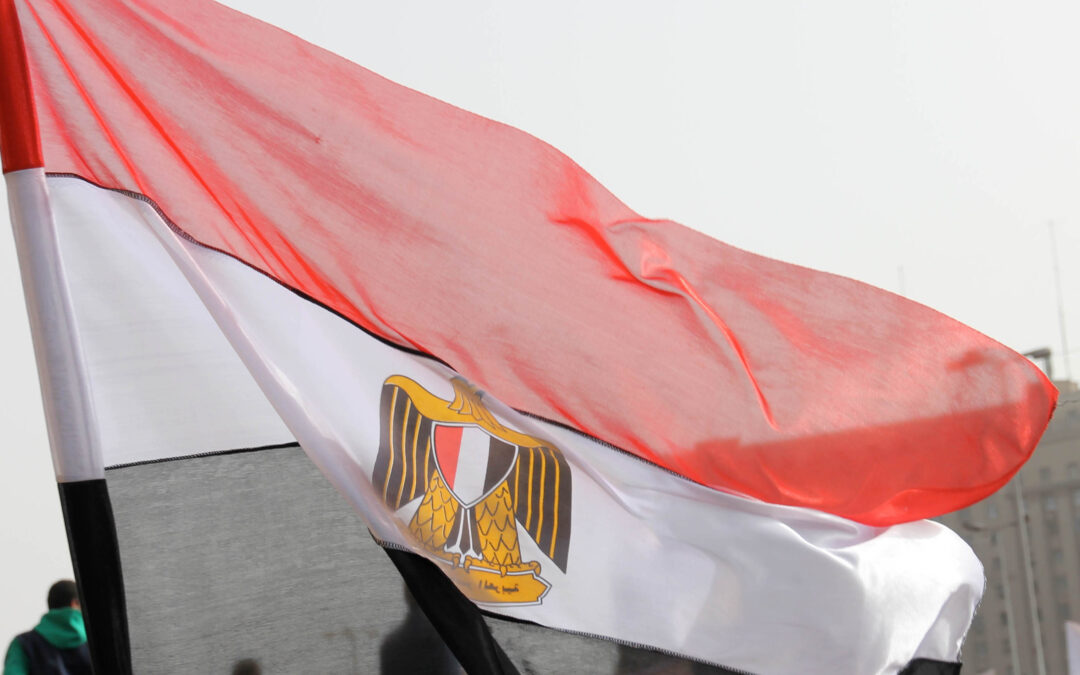
The ICJ today called on the Egyptian authorities to put an immediate end to their campaign to muzzle judges through unfair and arbitrary “unfitness” proceedings.
The Disciplinary Board, in hearings that tried dozens of judges at the same time, declared a total of 41 judges “unfit” for judicial office in 2015, forcing them into retirement.
The Supreme Disciplinary Board is currently reviewing these two cases.
The ICJ is concerned that many of the judges that have been subjected to these proceedings are leading advocates for judicial independence in Egypt and that the proceedings before both the Disciplinary Board and the Supreme Disciplinary Board were not fair.
Further, the cases stem from the judges’ exercise of freedom of association, belief, assembly and expression, and it appears that the Disciplinary Boards did not act in accordance with relevant international standards in this regard.
”Ending judges’ tenure following mass proceedings that are both arbitrary and unfair is inconsistent with Egypt’s obligations under international law,” said Said Benarbia, Director of the ICJ Middle East and North Africa Programme.
“With these assaults on individual judges, the Egyptian authorities are ensuring that their ongoing, sustained crackdown on fundamental rights and freedoms is extended to the very institution that is supposed to protect such rights and freedoms- the judiciary,” he added.
In the “July 2013 Statement Case”, 56 judges were subjected to disciplinary proceedings, following the Military seizure of power in July 2013, for endorsing a statement that called for the 2012 Constitution to be restored, for a dialogue between all stakeholders to be established within the framework of constitutional legitimacy, and for the right to peaceful demonstration to be respected.
The ICJ considers the statement to have been made consistent with the judges’ right to freedom of expression and association, exercised in a manner that preserved the dignity of their office and the impartiality and independence of the judiciary.
However, on 14 March 2015, the Disciplinary Board found that 31 of the 56 judges were not fit to hold judicial office and in effect removed them from office by forcing them into retirement.
The Board found there was not sufficient evidence that the other 25 judges had in fact endorsed the statement.
The ICJ is concerned that the procedures and hearings before the Disciplinary Board and the Supreme Disciplinary Board have not satisfied international standards of fairness.
In many instances, judges were not adequately notified of the dates of the hearings or of the courtrooms where such hearings took place.
In Egypt, judges facing disciplinary hearings are entitled to have another judge represent them; however, many of the judges were not permitted by Board officials to bring their representative to the hearings, without any reason being given for barring the representative, or because no representative could be secured as a result of fear of reprisals.
Further, many judges were not provided with adequate time and facilities to prepare their defense.
In another case, the “Judges for Egypt Case”, each judge had limited time to make his case before the Board during the hearings, though they were granted the right to submit at the final hearing written pleadings of no more than two pages .
At the final hearing in the case, while the judges waited all day in the Board’s premises, the hearing was held in the absence of all but one of them.
Furthermore, the Board refused to collect the written pleadings without giving any reasons.
On 22 February 2016, after protesting against the adjournment of his hearing, Judge Amir Awad was arrested and placed under detention for four days by the office of the prosecutor.
He is charged with insulting a public employee and forcibly entering his office.
“Both cases have been tainted by failures to ensure the fairness of the proceedings. The Egyptian authorities must nullify all decisions to remove judges resulting from these proceedings and put an immediate end to all forms of intimidation against and persecution of judges,” Benarbia added.
Contact:
Nader Diab, Associate Legal Adviser of the ICJ Middle East and North Africa Programme, t: +216 51727023; e: nader.diab(a)icj.org
Egypt-Attacks against judges-News-Web Stories-2016-ENG (full story in PDF, English)
Egypt-Attacks against judges- Press Release -2016- ARA (full story in PDF, Arabic)
Jan 29, 2016 | News
La CIJ expresa su preocupación frente a una nueva denuncia abusiva de la Fundación contra el Terrorismo, esta vez contra el Director de la CIJ para Centroamérica y un consultor que contribuye con el Bufete de Derechos Humanos, y contra el Director de Centro de Acción Legal, Ambiental y Social.
Esta denuncia se suma a otras en contra de abogados y abogadas de Guatemala. A través de querellas y acusaciones falsas, esta Fundación pretende afectar la función que estos profesionales cumplen como defensores de los derechos humanos.
Estas denuncias falsas son parte de una campaña iniciada hace más de un año y que ha querido afectar a más de cien personas, a quienes la Fundación contra el Terrorismo ha calificado como terroristas y guerrilleros (as), sin aportar pruebas.
Efectivamente se han presentado denuncias contra funcionarios y ex funcionarios del Ministerio Público, como la ex Fiscal General Claudia Paz y Paz y la actual Fiscal General Thelma Aldana, el Fiscal de Derechos Humanos o en contra de jueces y juezas del Organismo Judicial que ejercen su función en forma independiente, promoviendo un discurso de odio en contra de estas personas que actúan como defensores y defensoras de derechos humanos.
Ante esto hechos, la CIJ demanda:
- Que el Estado de Guatemala, por medio de las autoridades correspondientes, inicie una investigación exhaustiva e imparcial acerca de las actividades que realiza la Fundación contra el Terrorismo sobre todo, que investigue el origen de aquellas actividades que dirige en contra de defensores y defensoras de Derechos Humanos;
- Que el Estado de Guatemala, por medio de las autoridades correspondientes, brinde la protección debida a defensores y defensoras de derechos humanos;
- Que una vez finalizada la investigación el Estado de Guatemala, a través de las autoridades y mecanismos correspondientes, adopte las medidas necesarias de acuerdo a derecho con respecto a la Fundación contra el Terrorismo y su Director, por llevar a cabo campañas de odio en contra de defensores y defensoras de derechos humanos.