Nov 17, 2015 | News
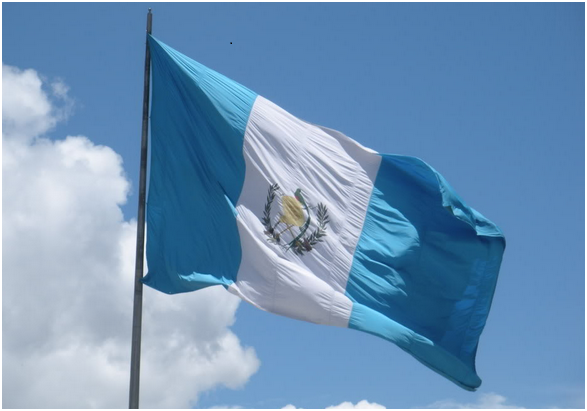
Desde el año 2004, la CIJ ha señalado casos en los que el Estado de Guatemala dirige su poder punitivo en contra de defensores y defensoras de derechos humanos por su asociacion a actos pacíficos en defensa de los recursos naturales de distintas comunidades en el país.
Ante esta práctica, que socava el derecho a defender los derechos humanos, la CIJ expresa:
1. La criminalización de la protesta social se ha convertido en un fenómeno recurrente en Guatemala, en la que el Derecho Penal es utilizado como instrumento de represión y deslegitimación de la labor que las y los defensores de derechos humanos llevan a cabo en el país.
2. Especial preocupación causan las detenciones arbitrarias de las que son objeto defensores y defensoras de derechos humanos, que trabajan en áreas de alta conflictividad social y se vinculan a la protección de los recursos naturales, territorios o derechos de los Pueblos Indígenas. En algunos casos, el Estado de Guatemala ha optado por la suspensión de las garantías constitucionales en esas regiones, decretando estados de prevención o de sitio.
3. Con el objeto de conocer el impacto de esta práctica, la eurodiputada Marina Albiol, visitó Guatemala del 2 al 5 de noviembre del presente año. En dicha ocasión, la CIJ acompañó a su delegación en una visita in situ a los departamentos de Huehuetenango y San Marcos, para entrevistarse con defensores y defensoras de Derechos Humanos, así como para sostener reuniones con funcionarios de gobierno y movimientos sociales.
4. La delegación constató que frecuentemente las y los líderes comunitarios y defensores de derechos humanos, son sometidos a procesos penales injustos, práctica que consituye una herramienta para el acoso a dichas personas.
5. La delegación pudo constatar el caso de las detenciones arbitrarias de Ermitaño Bernardo López , Rigoberto Juárez y Domingo Baltazar, Francisco Pedro (Chico Palas), Adalberto Villatoro (Don Tello), Arturo Pablo Juan,Saúl Méndez y Rogelio Velásquez, todos ellos del Departamento de Huehuetenango; en los dos últimos casos mencionados, se ha dictado sentencia absolutoria, pero ambos continúan detenidos. Todos han padecido su privación de libertad , en la cárcel de Huehuetenango o en la prisión de la zona 18 de Guatemala, bajo condiciones extremadamente difíciles. Los anteriores no son los únicos, ya que junto a ellos se encuentran detenidas arbitrariamente otras defensoras y defensores de derechos humanos del departamento de Huehuetenango y de otros departamentos.
6. Asímismo preocupa la detención de Mauro Vay, dirigente y defensor de derechos humanos de la organización CODECA, quien se encuentra bajo medida sustitutiva, pero con restricciones que han afectado su derecho al trabajo y libertad de movimiento, durante todo el año 2015 en el departamento de Suchitepéquez.
7. La Comisión Interamericana de Derechos Humanos ha expresado que la protesta social pacífica, es una herramienta fundamental para la labor de defensa de los derechos humanos, esencial para la crítica política y social de los gobiernos. En tal sentido, los Estados están obligados a asegurar que ningún defensor o defensora de los derechos humanos sea impedido de reunirse y manifestarse públicamente en forma pacífica.
Ante estos hechos, Wilder Tayler, Secretario General de la CIJ expresó: “Urgimos a las autoridades del Estado de Guatemala a detener la criminalización de la protesta social y las detenciones arbitrarias que este fenómeno conlleva. Amendrentar y obstaculizar la labor de defensoras y defensores de derechos humanos constituye de por sí, una violación del derecho de las garantías individuales”.
Oct 15, 2015 | News
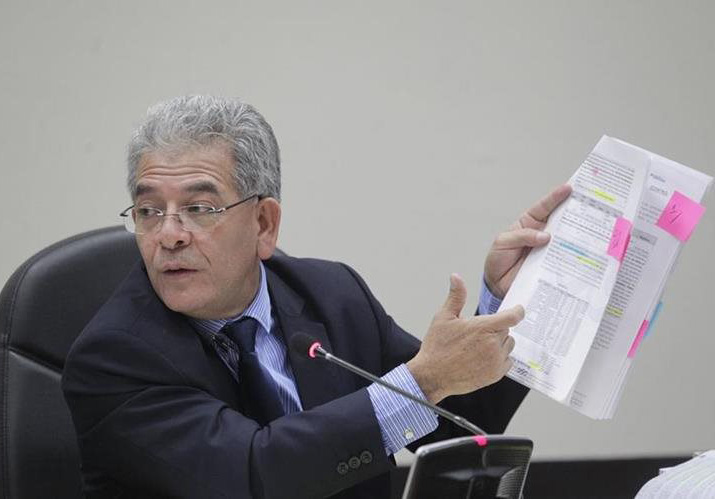
La CIJ, durante la misión de su Comisionado José Antonio Martín Pallín al país, ha constatado que la trascendencia política y social de los asuntos que el Juez Miguel Ángel Gálvez está investigando, le ha ocasionado numerosos ataques injustificados desde diversos sectores de la sociedad guatemalteca.
Además, la CIJ recibió información que las y los jueces continúan siendo amenazados en el ejercicio de su independencia por la injerencia de la Corte Suprema de Justicia en funciones administrativas, relacionadas con el control del personal, especialmente en el traslado injustificado de jueces.
El Juez Miguel Ángel Gálvez (foto) ha afrontado riesgos de traslado en los últimos 6 meses.
La CIJ concluye que la actuación del Juez se ajusta a los principios internacionalmente admitidos del derecho al debido proceso y a las garantías de las y los sindicados.
La CIJ expresa su profunda preocupación por la acumulación excesiva de asuntos judiciales sobre el Juzgado de Competencia Ampliada del juez Gálvez, que hacen absolutamente imposible una actuación dentro de los plazos exigidos por la ley.
La CIJ demanda con toda firmeza que la Corte Suprema de Justicia tome medidas efectivas de apoyo al juzgado de Mayor Riesgo B, para que éste pueda concentrarse en la tramitación de los asuntos que verdaderamente preocupan en este momento a los ciudadanos y ciudadanas guatemaltecas, como por ejemplo el llamado Caso La Línea, el caso Sepur Zarco y el caso Siekavizza, entre otros.
La CIJ considera que ningún órgano judicial puede afrontar la pesada carga judicial a la que el Juez Gálvez tiene que hacer frente; cualquier demora en la tramitación de los asuntos pendientes ante su juzgado, no debe ser atribuida al juez Gálvez, sino a la inactividad de la Corte Suprema de Justicia, que no nombra a jueces de apoyo, que permitan tramitar las causas pendientes.
Jul 22, 2015 | News
Ante los procesos penales que ha iniciado la Comisión internacional contra la Impunidad en Guatemala (CICIG) en el país, la CIJ expresa su absoluto apoyo al Comisionado de la CICIG Iván Velásquez por la batalla que está librando por la depuración del Estado de Guatemala y contra la corrupción.
Todos los casos develados por la CICIG están demostrando los niveles de impunidad existentes, debido a la persistencia de diferentes estructurales criminales, que cuentan con participación de altos funcionarios de Gobierno.
La CIJ lamenta que un partido político esté promoviendo acciones en contra de la CICIG y manifestaciones de diversa índole, para desestabilizar al país y evitar que sus miembros y candidatos sean investigados.
La CIJ se permite recordar que los actos de corrupción afectan seriamente la vida de toda la población guatemalteca, el uso adecuado de los recursos públicos en beneficio de las mayorías y corroe los cimientos básicos del Estado de derecho.
Ramón Cadena, Director de la CIJ para Centro América, declaró: “Hacemos un llamado a todos los partidos políticos, para que apoyen la gestión de la CICIG y faciliten toda la información que coadyuve a las investigaciones que la CICIG está llevando a cabo para erradicar la corrupción en el país.”

Jul 14, 2015 | News
The Royal Government of Cambodia must immediately end the legal harassment of human rights defender, Ny Chakrya, Head of the Human Rights and Legal Aid Section of the Cambodian Human Rights and Development Association (ADHOC), the ICJ said today.
On 13 July 2015, a Deputy Prosecutor at the Phnom Penh Municipal Court questioned Ny Chakrya for two hours in relation to statements he had made at two press conferences in May 2015.
The summons and questioning were, according to information provided to the ICJ, pursuant to a complaint by an Investigating Judge and another prosecutor.
The proceedings appear to be based on the fact that at the press conferences Ny Chakrya alleged that two clients of ADHOC had been arbitrarily arrested and detained in Siem Reap province and were facing an unfair trial.
“The legal harassment of Ny Chakrya for merely raising allegations of human rights violations is itself a clear violation of human rights,” said Kingsley Abbott, ICJ’s International Legal Adviser.
“Human rights defenders play a vital role in promoting and protecting human rights and the State has a duty to create the conditions for them to be able to carry out their work effectively and without fear of retaliation,” he added.
The International Covenant on Civil and Political Rights (ICCPR), to which Cambodia is a State Party, guarantees the right to freedom of expression; the prohibition of arbitrary arrest or detention and the right to a fair and public hearing by a competent, independent and impartial tribunal established by law; and the right to seek effective remedies for alleged violations of human rights.
The UN Declaration on Human Rights Defenders, adopted by a consensus of States including Cambodia, affirms the right of everyone to peacefully oppose human rights violations.
It reaffirms the prohibition of retaliation, threats and other harassment against anyone who takes peaceful action against human rights violations, both within and beyond the exercise of their professional duties.
It also protects the right of persons to file formal complaints about alleged violations of rights.
The UN Guidelines on the Role of Prosecutors provide that prosecutors have the duty to uphold human rights and that states must ensure they have the power and discretion to fulfill this and other duties. Prosecutors should not proceed with a case they know to be unfounded.
“The complaint against Ny Chakrya was clearly without foundation and he should never have been summoned for questioning in the first place,” Abbott said. “To continue to proceed with this case would be a violation of Ny Chakrya’s rights as a human rights defender.”
The ICJ reiterates its call for the end of the legal harassment of Ny Chakrya and that his case should be closed definitively by whatever means or to whatever extent is available to the Deputy Prosecutor and other state officials.
Background:
According to information provided to the ICJ, on 22 June 2015 the Phnom Penh Municipal Court issued a summons for Ny Chakrya to appear before it for questioning pursuant to a complaint filed by the Investigating Judge and the Deputy Prosecutor of the Siem Reap Provincial Court alleging public defamation (Art. 305 of the Cambodian Criminal Code), acts of slanderous denunciation (Art. 311 of the Cambodian Criminal Code), and the publication of comments to put pressure on the jurisdiction (Art. 522 of the Cambodian Criminal Code).
On 13 July 2015 at the Phnom Penh Municipal Court, the Deputy Prosecutor questioned Ny Chakrya about statements he made at two press conferences organized by ADHOC.
At a press conference on 12 May 2015 in Siem Reap, Ny Chakrya and a lawyer from ADHOC alleged that two clients of ADHOC had been arbitrary arrested and detained in the context of a high profile land dispute in Siem Reap province.
Ny Chakrya alleged that their arrest and detention was a violation of Cambodian law and international human rights law.
At a press conference on 20 May 2015 in Phnom Penh, Ny Chakrya sought to raise public awareness about a complaint that he had filed the same day to the President of the Disciplinary Council of the Supreme Council of Magistracy.
In the complaint, Ny Chakrya alleged that the Deputy Prosecutor and Investigating Judge of the Siem Reap Provincial Court lacked independence and that the two villagers would not receive a fair trial as a result.
On 17 June 2015, the Siem Reap Provincial Court found ADHOC’s clients guilty of inciting a group of villagers to trespass on, use and destroy the property of Community Takhmao Development Agricultural & Industrial, an agricultural development company.
They were sentenced respectively to six months’ and eight months’ imprisonment.
The criminal proceedings arose in the context of a dispute between Community Takhmao Development Agricultural & Industrial and villagers in Chup Romdeng Village in Siem Reap province regarding the alleged illegal clearing of land in Siem Reap province.
Contact:
Kingsley Abbott, ICJ International Legal Adviser, t: +668 4092 3575 ; e: kingsley.abbott(a)icj.org
Jul 13, 2015 | News
The ICJ expresses concern at the recent decision of the Nizami District Court of Baku to disbar Khalid Baghirov, a prominent lawyer who litigates before national and international jurisdictions including the European Court of Human Rights.
Khalid Baghirov had been accused of the use of improper expressions and inappropriate behaviour, following statements he made in a hearing before Sheki Appeal Court, alleging that the judge in the case was biased.
On 2 February 2015, the ICJ observed the disciplinary hearing in the case of Khalid Baghirov before the Nizami District Court of Baku.
The Court’s decision, on 10 July 2015, follows the disbarment earlier this month of lawyer Alaif Ghasanov, for making a public statement about the conditions of detention of one of his clients, Leyla Yunus, a prominent human rights defender currently held in detention.
There are grounds to believe that Khalid Baghirov’s disbarment is in retaliation for his representation of clients in high profile cases, including prominent human rights defenders.
“Disbarments such as this have a chilling effect on the work of other lawyers, sending a signal that they may be penalized for discharging their functions independently and in accordance with international standards on the role and duties of the legal profession,” said Róisín Pillay, Director of the ICJ Europe Programme.
“Without independent legal representation, those who come before the courts cannot receive a fair trial and the system’s capacity to fairly administer justice under the rule of law is undermined,” she added.
Access to effective and independent legal assistance is an indispensable element of the right to a fair trial, guaranteed under the European Convention on Human Rights and the International Covenant on Civil and Political rights, to which Azerbaijan is a party.
The ICJ affirms that freedom of expression of lawyers constitutes an essential requirement for the proper functioning of the legal profession.
Article 23 of the UN Basic Principles on the Role of Lawyers states that lawyers: “[…] have the right to take part in public discussion of matters concerning the law, the administration of justice and the promotion and protection of human rights and to join or form local, national or international organizations and attend their meetings, without suffering professional restrictions by reason of their lawful action or their membership in a lawful organization.”
The European Court of Human Rights commented in its recent decision in Moris v France that where a lawyer makes statements regarding the functioning the judiciary, a matter of public interest, little room is left for restrictions on such comments which are protected pursuant to the right to freedom of expression.
In particular, the Court held that “[…] a lawyer should be able to draw the public’s attention to potential shortcomings in the justice system; the judiciary may benefit from constructive criticism”.
The ICJ calls on the public authorities of Azerbaijan as well as the Azerbaijan Collegium of Lawyers to ensure that lawyers, including those representing opposition leaders or human rights defenders, are not identified with their clients’ causes and are able to discharge their functions freely without any fear of persecution, harassment or improper interference.
Background:
Khalid Baghirov, an Azerbaijani lawyer, has represented a number of clients in high-profile cases, including Ilgar Mammadov, Leyla and Arif Yunus and Rasul Djafarov.
He has filed over 40 applications to the European Court of Human Rights, thirteen of which are pending communication.
On 17 March, 2014, Sheki Court convicted Ilgar Mammadov, leader of the “Republican Alternative” movement and former presidential candidate, and sentenced him to seven years of imprisonment.
The case was appealed to Sheki Appeal Court, and a hearing in the appeal was held on 12 August 2014.
On 25 September 2014, judge of Sheki Appeal Court Rashid Huseynov filed a complaint (1 (107)-90/2014) before the Collegium of Advocates requesting disciplinary measures against Khalid Baghirov for a breach of the Law of the Republic of Azerbaijan “On Advocates and Advocates’ Activity”, which included a failure to wear “lawyers’ outfit” in the court room, and use of improper expressions and behaviour incompatible with standards of lawyer’s conduct.
According to the complaint, on 12 August 2014, at the appeal hearing of Mammadov’s case by the Sheki Appeal Court, Khalid Baghivov was alleged to have said: “… like a state, like a court… If there were justice in Azerbaijan, neither the judge Rashid Huseynov would make unjust and biased decision, nor the person like him would be a judge”. He allegedly did not wear a lawyer’s gown during the appeal herrings on 12 and 13 August as well as on 3 and 4 September 2014 hearings.
On 19 November 2014, the Disciplinary Commission of the Advocates’ Collegium issued an opinion, finding that the applicant’s speech aimed to defame the State and was in breach of lawyer’s ethical standards.
On 10 December 2014, the Presidium of the Collegium of Lawyers suspended Khalid Baghirov’s practice, stating inter alia as follows: “The fact that advocate Khalid Baghirov stated the expression ‘like a state, like a court’ in the open court session casts a shadow not only on judiciary branch of Azerbaijan, more importantly, on our state that is considered to be holy for each citizen of Azerbaijan. […] Moreover, by using expression ‘If there were justice in Azerbaijan, neither the judge Rashid Huseynov would make unjust and preconceived decision, nor the person like him would be a judge’ Khalid Baghirov humiliated authority of the whole Justice System of Azerbaijan”.
At the same time, the Presidium applied to the Nizami District Court seeking complete termination of his right to practice law.
Contact:
Róisín Pillay, Director, Europe Programme, roisin.pillay(a)icj.org
Temur Shakirov, Legal Adviser, Europe Programme, temur.shakirov(a)icj.org