Apr 7, 2015 | News
Venezuela is intimidating and harassing human rights defenders, and making unsubstantiated allegations that they are seeking to undermine Venezuelan democracy, 28 international and Latin American human rights organizations, including the ICJ, said today.
The authorities’ allegations concern the groups’ legitimate functions of documenting abuses and representing victims before international human rights bodies.
Venezuelan authorities should cease this tactic immediately, the groups said.
Governments participating in the Summit of the Americas in Panama on April 10-11, 2015, should press the administration of Nicolás Maduro to ensure that human rights defenders can do their job without fear of reprisals, the organizations said.
The government harassment is clearly intended to discredit and intimidate groups that document human rights violations, the groups said.
On February 12, Diosdado Cabello, president of the National Assembly and member of the governing party, stated on the website of his weekly TV show, Con el Mazo Dando, aired on the state-run Venezolana de Televisión, that “NGO representatives from the Venezuelan extreme right” would participate in hearings before the Inter-American Commission on Human Rights (IACHR) in March.
Cabello had previously criticized Venezuelan human rights defenders who participated in the country’s review by the UN Committee Against Torture in Geneva, or traveled abroad to conduct advocacy meetings.
On March 18, during his show, Cabello read a list of names of individuals and organizations who had traveled to Washington, DC, to participate in the IACHR hearings.
The list included leading human rights groups such as Provea, Espacio Público (Public Space), Observatorio Venezolano de Prisiones (Venezuelan Observatory of Prisons), Transparencia Venezuela (Transparency Venezuela), Cofavic, Codevida, and Observatorio Venezolano de Conflictividad Social (Venezuelan Observatory of Social Conflicts).
Cabello accused them of receiving instructions from the US Embassy in Caracas before traveling to the hearings.
Cabello contends that the information presented on the show had been provided by anonymous “patriotic informants” (patriotas cooperantes).
Twelve human rights defenders who arrived in Caracas on various flights between March 20 and 22 have said that they were followed by unidentified men from when they landed until they left the airport, were filmed or photographed, and/or that officials irregularly searched their bags.
On March 23, María Alejandra Díaz, a lawyer who represented the government at the IACHR hearings, said on Venezolana de Televisión that “The issue of human rights is just a façade” and that nongovernmental groups that participated in the hearings “say they are Venezuelan” but “play the imperialist game” and “lie in front of the IACHR to make Venezuela look like the devil.”
An article published on April 3 in the official newspaper Correo del Orinoco accused two well-respected human rights defenders of being part of the US Central Intelligence Agency’s “Venezuelan delegation” at the Summit of the Americas.
Their objective is to “legitimize destabilization actions” in Venezuela, the article says.
Under international law, governments must ensure that human rights defenders are allowed to pursue their legitimiate activities without reprisals, threats, intimidation, harassment, discrimination, or unnecessary legal obstacles.
The Inter-American Court of Human Rights held in 2003 that “[r]espect for human rights in a democratic state depends largely on human rights defenders enjoying effective and adequate guarantees so as to freely go about their activities.”
The rights to freedom of expression and association may be subject to limitations, but the limitations must adhere to strict standards so that they do not improperly impede the exercise of those rights. Any restrictions should be prescribed by law, be necessary in a democratic society, and proportionate to the aim pursued.
In 2012, the UN special rapporteur on the rights to freedom of peaceful assembly and of association called on countries to ensure that these rights “are enjoyed by everyone and any registered or unregistered entities” and that no one is subject to “harassment, persecution, intimidation or reprisals” for exercising them.
Signatories
Amnesty International
Asociación Pro Derechos Humanos (APRODEH) (Peru)
Asociación por los Derechos Civiles (ADC) (Argentina)
Centro de Derechos Humanos de la Montaña Tlachinollan (Mexico)
Centro de Derechos Humanos Miguel Agustín Pro Juárez, A.C. (Centro Prodh) (Mexico)
Centro de Estudios de Derecho, Justicia y Sociedad (Dejusticia) (Colombia)
Center for Justice and International Law (CEJIL)
CIVICUS
Ciudadanos en Apoyo a los Derechos Humanos, A.C. (CADHAC) (Mexico)
Comisión Colombiana de Juristas (Colombia)
Comisión Ecuménica de Derechos Humanos (CEDHU) (Ecuador)
Corporación Humanas (Chile)
Coordinadora Nacional de Derechos Humanos (Peru)
Due Process of Law Foundation (DPLF)
Instituto de Estudios Legales y Sociales del Uruguay (IELSUR) (Uruguay)
Instituto de Defensa Legal (IDL) (Peru)
Instituto de Desenvolvimento e Direitos Humanos (Brazil)
International Commission of Jurists
International Federation for Human Rights (FIDH)
International Service for Human Rights (ISHR)
Frontline Defenders
Fundación Myrna Mack (Guatemala)
Fundación Regional de Asesoría en Derechos Humanos (INREDH) (Ecuador)
Human Rights Watch
Observatorio Ciudadano (Chile)
Robert F. Kennedy Center for Justice & Human Rights
Transparency International
World Organization Against Torture
Venezuela-Harassment of HRDs-News-web stories-2015-SPA (full text in PDF, Spanish version)
Venezuela-Harassment of HRDs-News-web stories-2015-POR (full text in PDF, Portuguese version)
Mar 23, 2015 | News
The arrest and criminal investigation today of prominent human rights Malaysian lawyer Eric Paulsen, apparently in connection to messages he sent on Twitter, is another move towards Malaysia’s accelerating use of the archaic and draconian Sedition Act, said the ICJ.
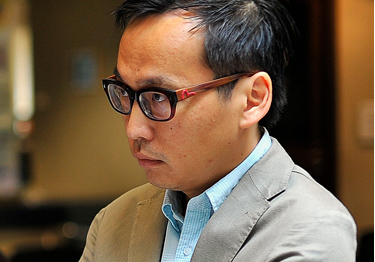
Eric Paulsen (photo), co-founder of Lawyers for Liberty, was arrested in the afternoon of 22 March 2015 at the Dataran Merdeka underground in Kuala Lumpur.
Although the exact basis of the arrest is not yet clear, his lawyers believe it was because of his Tweets criticizing efforts to introduce religion-based criminal offences and punishment (hudud) by the Kelantan state government.
Eric Paulsen was detained overnight and has yet to be charged with any offence. During the remand hearing on his case at noon today, the court denied an extension of his detention, but the police kept him in detention until 6pm today for questioning.
According to media reports, the postings “were seen as an insult which could disturb public peace,” one of the bases for invoking the Sedition Act.
“Malaysian authorities have been increasingly resorting to the Sedition Act to silence any political criticism, and now they’ve taken the alarming step of expanding it to cover even statements about religion,” said Emerlynne Gil, International Legal Advisor for Southeast Asia at the ICJ. “The Malaysian government is trying to position itself as the authority on religious matters, while at the same time violating the right to free expression as well as Malaysia’s Constitution.”
On 22 March 2015, Malaysia’s Inspector-General of Police (IGP) Tan Sri Khalid Abu Bakar, commented through his own Twitter account that the police “views seriously” comments on religion made by those who are “not experts on the subject.” He further said, that the police “ha[ve] no choice but to take action” against those people who comment on religion.
The IGP’s comments were made in relation to the launching of an investigation against the Business Radio Station (BFM) and its presenter, Aisyah Tajuddin, for criticizing the implementation of hudud in Kelantan.
In 2012, Prime Minister Najib Razak promised that the Government of Malaysia would abolish the Sedition Act.
This promise, however, was reversed when Najib Razak announced in November 2014, that the Act would instead be strengthened to include provisions to protect the sanctity of Islam and on the secession of the Sabah and Sarawak states.
“The Sedition Act of 1948 is archaic and it’s high time the government followed through on its promise to get rid of this legislation,” said Emerlynne Gil.
This is Eric Paulsen’s second investigation under the Sedition Act this year, as he was arrested in January and then charged in February under section 4(1)(c) of the Act for a Twitter comment regarding the Malaysian Islamic Development Department.
The ICJ underscores that the Government’s actions contravene Principle 23 of the UN Basic Principles on the Role of Lawyers, which states that “lawyers like other citizens are entitled to freedom of expression, belief, association and assembly.
In particular, they shall have the right to take part in public discussion of matters concerning the law, the administration of justice and the promotion and protection of human rights….”
Background:
The 1948 Sedition Act, originally enacted by the British colonial government and amended several times over the years, criminalizes speech and publications considered to have “seditious tendencies”.
The term “seditious tendencies” is ambiguously defined to mean any kind of speech or publication that causes “hatred or contempt, or excite disaffection” against any ruler or the government or promotes “ill will and hostility between the different races or classes”.
The law also considers “seditious” any speech or publication that questions the special privileges of the Malay people, as provided in the Constitution.
Furthermore, sedition is a strict liability offence in Malaysia, which means that the intention of a person allegedly making seditious statements is irrelevant.
For instance, a person making a statement may not have the intent to cause “hatred or contempt” towards the government, but may nonetheless be held liable for sedition if authorities believe that the person in fact incited such feelings.
The ICJ considers that the Act, by its very terms, contemplates restrictions on the exercise of freedom of expression that are grossly overbroad and inconsistent with basic rule of law and human rights principles.
Contact:
Emerlynne Gil, ICJ’s International Legal Adviser for Southeast Asia, e: emerlynne.gil(a)icj.org, t +66 2 619 8477 ext. 206 or +66 840923575
Mar 20, 2015 | News
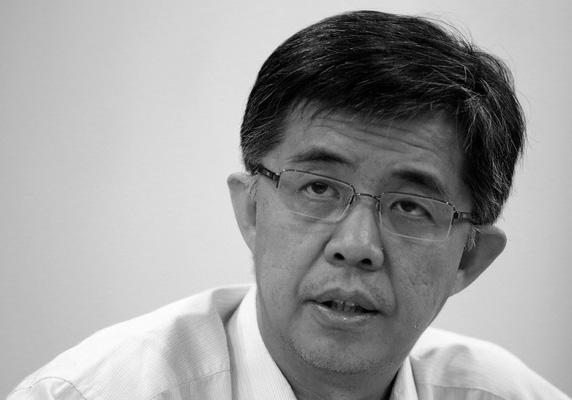
The Malaysian government should immediately release from detention Malaysian Parliamentarian Tian Chua, the ICJ said.
Tian Chua, who is also Vice President of the opposition Parti Kaedilan Rakyat (PKR), was arrested today for allegedly committing acts under section 143 of the Penal Code on unlawful assembly.
The arrest took place before noon after Tian Chua voluntarily appeared at the Dang Wangi police station in Kuala Lumpur to provide a statement in connection with the investigations regarding his participation in the peaceful KitaLawan rally on 7 March 2015.
The police detained Tian Chua before he could provide his statement.
He has so far not been charged with any offence.
However, if he is charged under section 143 of the Penal Code and convicted, he may be imposed the penalty of imprisonment for up to six months or fined, or both.
“At least 11 opposition figures associated with the KitaLawan rally have now been targeted by the authorities, who have been arresting and detaining them for 24 hours as a form of harassment and intimidation,” said Emerlynne Gil, ICJ’s International Legal Advisor for Southeast Asia. “It seems that Malaysia is rapidly returning to the dark days during the late 1980s of systematic pretrial and arbitrary detention under the Internal Security Act.”
The KitaLawan rally was convened in protest at the conviction and imprisonment of opposition leader Anwar Ibrahim, who was sentenced to five years’ imprisonment in February 2015 on charges of sodomy, following a trial conducted in violation of international human rights standards.
The ICJ underlines that in the absence of charges for a cognizable criminal offence not predicated on the exercise of a protected human right, Tian Chua and the other individuals who participated at the KitaLawan rally should not have been arrested and any form of harassment against them must be ended.
Under Malaysian law, police arresting a person without a warrant has to bring the arrested person before a judge “without unnecessary delay”.
The law also provides that no person arrested without a warrant shall be detained for more than 24 hours before being presented to a judge.
“The authorities are abusing their powers and using the law as a form of punishment even before they are convicted of, or even charged with, an actual crime in violation of Tian Chua’s right to presumption of innocence,” added Gil. “This abuse of pretrial detention as a form of harassment aggravates the repressive atmosphere created by the recent misuse of sedition laws to silence critics.”
Tian Chua is expected to be held overnight in prison. He will have his remand hearing on 21 March in the morning.
The ICJ calls for Tian Chua’s immediate release and urges the Government of Malaysia to end all forms of harassment against persons for their participation in peaceful assemblies.
Contact:
Emerlynne Gil, ICJ’s International Legal Adviser for Southeast Asia, e: emerlynne.gil(a)icj.org, tel. no.: +66 2 619 8477 ext. 206 or +66 840923575

Dec 13, 2014 | News
The ICJ condemned decision of the People’s Supreme Court on 12 December 2014 affirming the unfair convictions of human rights defenders Bui Thi Minh Hang, Nguyen Van Minh and Nguyen Thi Thuy Quynh respectively to three, two-and-a half and two years imprisonment.

Dec 3, 2014 | News
The December 2 conviction of journalist David Bergman on contempt charges by the International Crimes Tribunal (ICT) further shrinks the narrowing space for observers to comment on the war crimes proceedings, the ICJ, Amnesty International and Human Rights Watch said.
Bergman (photo) was sentenced to a symbolic “simple imprisonment till the rising of the court” and a fine of Taka 5,000 (about US$56) for comments he made in three separate blog postings regarding legal proceedings before the ICT.
The ICT is a specially constituted court set up to bring to account those responsible for grave violations of international law during the country’s 1971 war of independence.
Concerns over its statute, rules of procedure, and practices have been raised since its inception, including by international monitors and legal experts.
“The ICT is dealing with incredibly complex factual and emotional issues of tremendous interest to people in Bangladesh and across the world, and part of this process is establishing public confidence in the legal system,” said Sam Zarifi, ICJ’s Director for Asia. “Holding a credible and highly regarded journalist in contempt for raising important questions doesn’t end the debate surrounding the ICT’s performance, in fact it undermines confidence in the court’s commitment to justice.”
Download the full story in PDF here:
Bangladesh-Conviction of Journalist-News-Press release-2014-ENG