


EU: Care for migrant children in mainstream child protection systems
Immigration detention of children is unlawful according to international law and States are obliged to implement alternatives to detention. One of the best solutions for unaccompanied children is their placement into mainstream child protection systems, which already works well in some countries in the EU, an ICJ webinar was told.
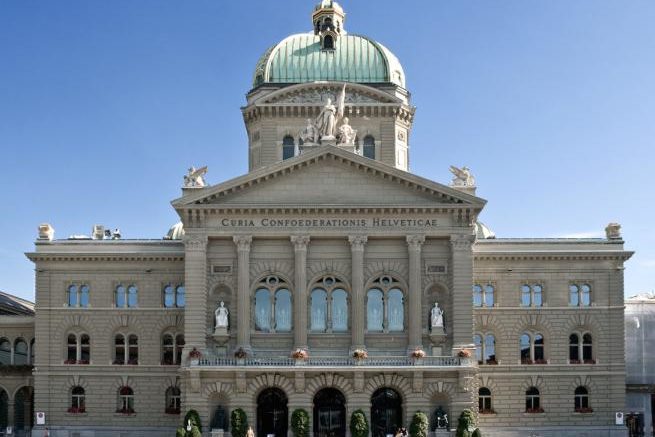
Switzerland : draft anti-terrorism law fails to comply with human rights obligations
The Swiss Section of the ICJ sent today to the Swiss Parliament (National Council) a letter warning that, if approved, the current Draft Federal Law on Police Measures against Terrorism, tabled before them would clash with the country’s obligations under international human rights law. The ICJ supports this initiative of its Swiss Section.
The letter outlines several key concerns with the legislative proposal that could be used to unduly restrict aspects of freedom of expression, the right to liberty, and the rights of the child , in contravention of international law guarantees.
The National Council holds today a crucial discussion on the draft legislation.
Switzerland-Anti terrorism law-Advocacy-2020-GER (the full letter, in German, PDF)
Myanmar: ICJ supports youths and civil society on freedom of Religion and Belief
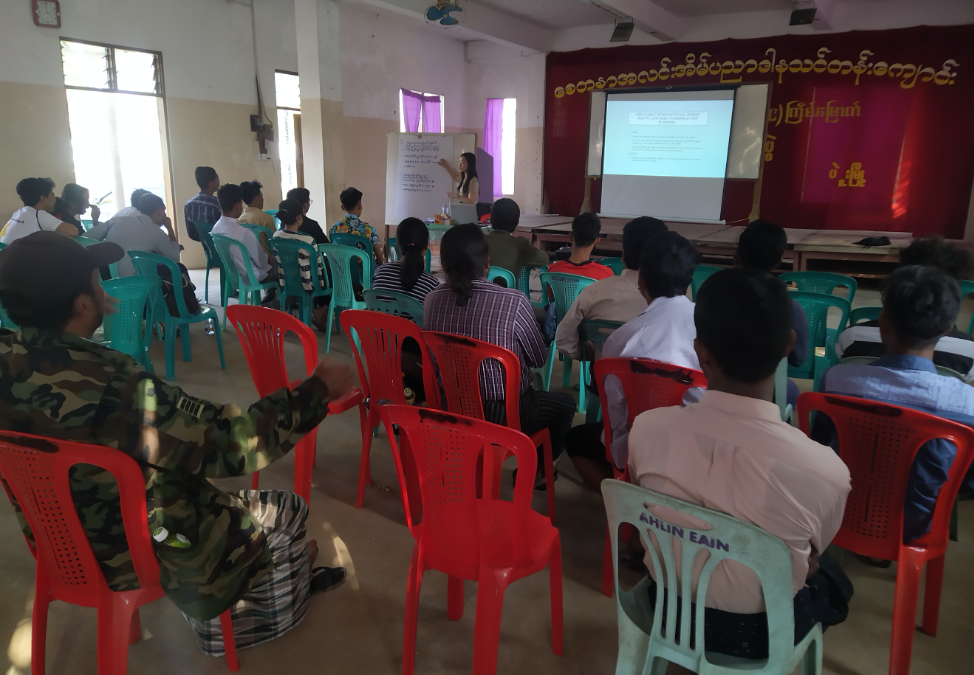
In January and February 2020, the ICJ supported community dialogue events on international and national law and standards relating to freedom of thought, conscience, religion and belief.
The events were organized by the Young Men’s Christian Association (YMCA) for around 50 youths and human rights defenders from Chin State and Bago Region in Myanmar.
The program sought to improve the capacity of local youths and human rights defenders from Chin State and Bago Region to understand how freedom of religion or belief (FoRB) is protected by the international and national legal frameworks and apply this understanding to their activities.
The ICJ’s national legal researcher, Ja Seng Ing, introduced the concept of freedom of religion or belief (FoRB) u, and applicable international standards on FoRB for Myanmar including how FoRB interacts with other human rights such as freedom of expression. She presented an overview of the domestic legal framework on FoRB and highlighted the State’s obligation to implement such laws and policies to respect and protect the equality, non-discrimination and other rights of individuals and to particularly address violations of their rights to FoRB.
The participants raised the need to improve the quality of public discussion on FoRB and related human rights, and shared this experiences in advocating for the protection of FoRB – including the limitation and challenges that they have faced.
The activities are part of the ICJ’s ongoing effort to convene civil society actors and lawyers in Myanmar with a view to advancing FoRB in the country, and builds on the ICJ’s previous work on this theme.
Contact
Ja Seng Ing, ICJ Legal Researcher, e: jaseng.ing(a)icj.org
Related material
New report examines right to freedom of religion or belief in Malaysia, March 2019
Sierra Leone: ICJ convenes judicial dialogue on implementation of human rights standards in West Africa
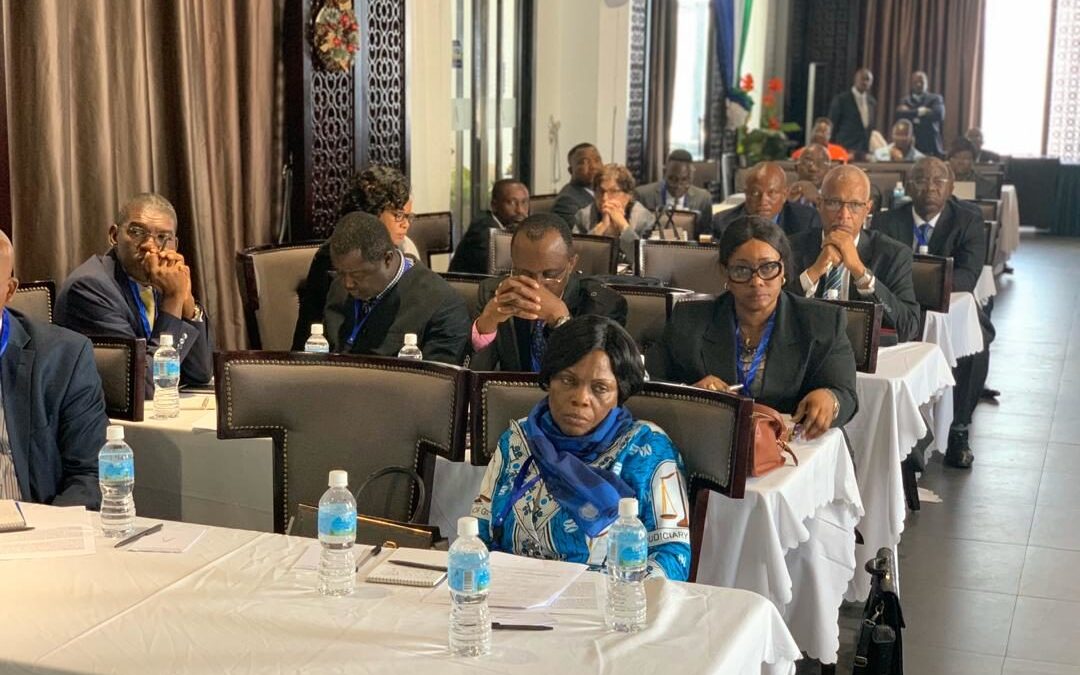
The ICJ, in collaboration with the Judicial Training Institute of Sierra Leone and the Judiciary of Sierra Leone, hosted a judicial dialogue for effective implementation of global, regional and sub-regional human rights standards.
The event brought together over 40 judges representing the High Courts, Courts of Appeal and Supreme Courts of the Gambia, Ghana, Liberia, Nigeria, and Sierra Leone.
The President of the Republic of Sierra Leone Julius Maada Bio, addressed the opening ceremony, stressed the critical role of the judiciary and called on the judges to remain focused and independent even in the face of unwarranted criticism.
Sierra Leone’s Chief Justice Desmond Babatunde Edwards, for his part, emphasized the duty of the judiciary to ensure that the protection of internationally guaranteed human rights is not compromised.
Other speakers at the opening ceremony were Sierra Leone’s Attorney-General/Minister of Justice Ms Priscilla Schwartz, the Chairperson of the Human Rights Commission of Sierra Leone Ms Patricia Ndanema, and the President of the Sierra Leone Bar Association Mr Basita Michael.
‘‘A core objective of the ICJ is to support the protection of human rights across the globe through the promotion of respect for the rule of law,‘‘ said Arnold Tsunga, ICJ’s Africa Regional Director. Tsunga stressed that the programme was initiated based on the ICJ’s conviction that the challenge in Africa is not necessarily a lack of human rights law and standards, but the existence of a huge gap in the implementation.
“The training sessions and judicial dialogue are important to ensure that the quality of supply meets the demand for human rights protection in Africa,” he added.
Working sessions of the event were facilitated by resources persons, including ICJ Commissioners Justice Jesmina King of the African Commission on Human and Peoples’ Rights and Professor Michelo Hansungule; Dr Chidi Anslem Odinkalu of the Africa office of the Open Society Justice Institute and Madam Hannah Forster, Executive Director of the African Centre for Democracy and Human Rights Studies.
The event was enabled through support by the European Union.
Contact
Arnold Tsunga, ICJ Regional Director for Africa, t: +27 716405926 or +263 777 283 249: e: arnold.tsunga(a)icj.org
Solomon Ebobrah, Senior Legal Adviser (ARP), t: +234 803 492 7549, e: solomon.ebobrah(a)icj.org
Recent News
 Myanmar: As armed conflict rages and military rule continues, critical measures can be taken towards eventual justice and accountability for victims of Enforced Disappearance10 Sep 2026
 HRC63: ICJ Raises Alarm over Repression in Tunisia and Arbitrary Detention in El Salvador09 Sep 2026
 HRC63: ICJ Calls for Protection of Lawyers and Accountability in Myanmar07 Sep 2026
 More than fifty years on: enforced disappearance, the families who named it, and the reframing of international protection26 Aug 2026