
Sep 12, 2013 | News, Uncategorized
Justice Elizabeth Evatt AC (photo), will be observing the hearing of the appeal of Anwar Ibrahim’s case from 17 to 18 September 2013 at the Court of Appeal in Putrajaya.
Justice Evatt is the first female judge to be appointed to an Australian Federal Court, a former member of the United Nations Human Rights Committee, and a commissioner of the ICJ.
Anwar Ibrahim is a Malaysian politician and is currently the leader of the opposition party, Parti Keadilan Rakyat, and the opposition alliance known as Pakatan Rakyat.
The appeal hearing that Justice Elizabeth Evatt will be observing emerged from the 2008 charges filed against Anwar Ibrahim immediately after the general elections held that year.
He was charged for allegedly committing sodomy, which is a crime under Section 377B of the Penal Code and carries the penalty of up to 20 years of imprisonment and whipping.
The High Court acquitted Anwar Ibrahim on 9 January 2012.
This is the second time that Anwar Ibrahim is facing sodomy charges after his dismissal from the Malaysian Cabinet in 1998.
In 2004, The ICJ also sent a representative to observe the sodomy trial of Anwar Ibrahim, where the Federal Court overturned the High Court decision to convict him.
The ICJ called the Federal Court’s ruling “a step in the right direction in upholding the rule of law”.
Justice Evatt’s mandate as ICJ’s high-level observer to the appeal hearing includes monitoring the fairness of the proceedings against Anwar Ibrahim in the light of relevant international standards.
These standards include, among others the UN Basic Principles on the Independence of Judges, which set out standards on the independence and impartiality of judges, and the UN Guidelines on the Role of Prosecutors, which set out standards on the independence of prosecutors.
Justice Evatt will also be evaluating whether the prosecution under Section 377B of the Malaysian Penal Code is being used in this case to suppress political dissent, contrary to the right to freedom of expression.
“The right to observe trials stems from the general right to promote and secure the protection and realization of human rights. Trial observation is a key tool in monitoring the respect for human rights and the rule of law. It is an effective method to examine the level of independence and impartiality of a country’s criminal justice system,” said Emerlynne Gil, ICJ’s International Legal Adviser on Southeast Asia. “Trial monitoring also serves to promote better compliance with both domestic law and international standards that aim to ensure protection of human rights, including the rights to fair trial and due process.”
Contact:
Emerlynne Gil, International Legal Adviser for the ICJ Asia & Pacific Programme, t +662 6198477 ext. 206; email: emerlynne.gil(a)icj.org

Sep 11, 2013 | News
The ICJ expressed its disappointment over the continued arbitrary detention and refusal of bail of Secretary of human rights organization, Odhikar, and Supreme Court Advocate Adilur Rahman Khan.
The ICJ urged the Bangladeshi authorities to drop their opposition to Adilur Rahman Khan’s bail application.
On 9 September 2013, a Magistrates Court in Dhaka refused Adilur Rahman Khan’s bail application for the second time. He had earlier been denied bail on 11 August 2013.
“Adilur Rahman Khan is being arbitrarily detained for his lawful exercise of the right to freedom of expression and his legitimate work as a human rights defender,” said Ben Schonveld, ICJ’s South Asia Director. “What we are seeing is a Government crackdown on voices of dissent.”
Under international law, all persons are presumed innocent until proven guilty.
Under Article 9 of the International Covenant on Civil and Political Rights (ICCPR), to which Bangladesh is a party, there is a presumption of pre-trial release.
A person can only be denied pre-trial release where it is reasonable and necessary in all of the circumstances to prevent absconding, interference with evidence or recidivism.
“The Government cannot show that Adilur Rahman Khan poses a flight risk,” Schonveld added. “In fact, he faces a serious threat of torture and ill-treatment during detention, as documented by Odhikar and other human rights organizations.”
The ICJ reiterates its call on Bangladesh to immediately and unconditionally drop all charges against Adilur Rahman Khan and Nasiruddin Elan, ensure Adilur Rahman Khan is treated in accordance with international law in custody, and cease its harassment of Odhikar.
Contact
Ben Schonveld, ICJ South Asia Director (Kathmandu), t: +977 14432651; email: ben.schonveld(a)icj.org
Additional information
Adilur Rahman Khan was arrested his home on 10 August 2013 without an arrest warrant.
On August 11, a Magistrate’s Court refused his bail application and remanded him for five days of custodial interrogation.
On August 12, the High Court Division of the Supreme Court stayed the remand order and directed that Adilur Rahman be sent back to jail, where he could be interrogated ‘at the gate of the jail.’
On 4 September 2013, the Detective Branch of Police filed a charge sheet against Adilur Rahman Khan and Odhikar’s Director, Nasiruddin Elan, under Section 57 of the International Communication and Technology Act 2006.
They were accused of distorting information, presenting false evidence and manipulating photographs regarding a police operation on a Hefazat-e Islam rally in May this year.
Odhikar had reported that 61 people were killed in the police crackdown on the rally. The government contested the number of casualties.
Adilur Rahman Khan and Nasiruddin Elan will be formally charged on 12 September 2013.
LATEST UPDATE: Letter to Prime Minister Sheikh Hasina Wazed on the Continued Detention of Adilur Rahman Khan
Bangladesh- Letter Adilur Rahman Khan-Advocacy-Open letter-2013 (full text in pdf)
Aug 22, 2013 | News
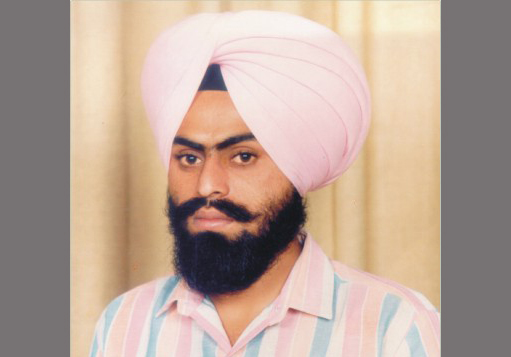
The ICJ called upon the Indian Government to halt the imminent execution of Professor Devinderpal Singh Bhullar.
In August 2001, Professor Bhullar was sentenced to death under the Terrorist and Disruptive Activities (Prevention) Act following his conviction on charges related to the bombing of the All Indian Youth Congress in New Delhi in 1993.
“Those who commit acts of terrorism should be prosecuted before competent, independent and impartial courts that meet international due process standards”, said Ben Schonveld, ICJ’s South Asia Director.
“However, while those responsible for such acts must be held to account, the ICJ opposes the death penalty in all circumstances, without exception as it is an inherently cruel and irreversible punishment that violates the right to life.”
“Furthermore, there are serious questions about whether Professor Bhullar’s trial was in accordance with the requirements of international law”, Schonveld added. “His conviction and death sentence are based solely upon an alleged confession he made in police custody, which he later retracted, claiming it was extracted under torture.”
The ICJ says that the execution of an individual in these circumstances would violate India’s obligations under the International Covenant on Civil and Political Rights to respect the right to life, the right to a fair trial and the absolute prohibition of torture.
In May 2011, President Pranab Mukherjee rejected Professor Bhullar’s petition for clemency. The Supreme Court rejected his earlier plea on 12 April 2013 to commute the sentence to life imprisonment, and upheld its decision on 14 August 2013.
India ended an eight-year moratorium on the death penalty with the executions of Ajmal Kasab on 21 November 2012 and Mohammad Afzal Guru on 9 February 2013.
“The resumption of the death penalty by India is contrary to the global and regional movement towards the abolition of the death penalty”, said Schonveld.
The ICJ reminds that 150 countries worldwide, including 30 states in the Asia-Pacific region, have abolished the death penalty in law or in practice.
The ICJ urges the Indian Government to immediately reinstate the moratorium on the death penalty, with a view to abolishing the death penalty permanently and acceding to the Second Optional Protocol to the International Covenant on Civil and Political Rights on the abolition of the death penalty.
Over the years, the member states of the United Nations have adopted various instruments in support of the call for the worldwide abolition of the death penalty. In 2007, the UN General Assembly adopted a resolution emphasizing that “that the use of the death penalty undermines human dignity” and calling for the establishment of a moratorium on the use of the death penalty “with a view to abolishing the death penalty”.
The resolution was reaffirmed in 2008, 2010, and most recently in December 2012, when and overwhelming majority of 110 UN Member States voted in favor of a worldwide moratorium on executions as a step towards abolition of the death penalty.
Contact:
Ben Schonveld, ICJ South Asia Director, (Kathmandu); t: +977 9804596661; email: ben.schonveld(a)icj.org

Jan 8, 2013 | News
 The Nepali government should cooperate with any investigation into allegations of torture against Nepal Army Colonel Kumar Lama, recently arrested and charged in the United Kingdom, the ICJ said today.
“The ICJ welcomes the steps taken by the UK to criminally investigate and bring to justice an individual suspected of the serious crime of torture,” said Sam Zarifi, ICJ’s Asia Director. “If the government wants to prevent the future prosecution of conflict-era human rights violations in foreign countries, then it must cooperate with the UK proceedings, and take immediate steps to investigate and prosecute similar violations domestically, in line with Nepal’s own international obligations and the jurisprudence of Nepal’s Supreme Court.”
UK authorities arrested Colonel Lama on January 3rd for his alleged involvement in the torture of detainees while commander of the Gorusinge Battalion barracks in Kapilbastu in 2005.
Colonel Lama is currently serving as UN peacekeeper in the Sudan. At the time of the arrest, he was visiting family members who reside in the UK.
In response to the arrest, senior Nepali government leaders including the Deputy Prime Minister have called for his immediate release, and characterized the arrest as an “attack on national sovereignty.”
The ICJ pointed out that such statements seem to be predicated on a basic misunderstanding of both the UK and Nepal government’s international obligations to investigate and prosecute acts of torture, which are crimes under international law.
The Convention Against Torture and Other Cruel, Inhuman or Degrading Treatment of Punishment, to which both the UK and Nepal are party, expressly provides under article 7 that a State must prosecute or extradite for prosecution a person found under its territorial jurisdiction.
This obligation is an expression of the legal principle of “universal jurisdiction,” under which all States have a duty, not only a right, to prosecute and punish crimes under international law, including torture, and to take effective measures including the adoption of national legislation to exercise jurisdiction over such crimes.
In many countries, including the UK, legislation grants the courts jurisdiction to prosecute certain international crimes, including torture, regardless of where the violations took place.
The UK legislation was passed as part of an effort to comply with international law, including the Geneva Conventions on the laws of war and the Convention Against Torture.
For the UK police to release Colonel Lama without conducting a full investigation, as called for by the government of Nepal, would constitute a violation of the UK’s own international obligations, the ICJ stresses.
“This arrest by the UK police is not a threat to the sovereignty of Nepal; on the contrary, the acceptance of international human rights legal obligations to combat torture constitutes a clear expression of sovereignty by both the UK and Nepal. The UK through its actions this week is rightfully discharging these obligations,” Zarifi said. “Nepali victims have been forced to seek redress outside their own country against perpetrators because of the government of Nepal’s track record of failing to prosecute conflict-era crimes.”
“Decades of experience from around the world demonstrates that the failure to provide truth and justice as a society transitions away from conflict hampers the development of a durable peaceful society. That’s why the Nepali government should do all it can to help thousands of Nepali victims receive truth and justice in Nepal, and wherever perpetrators may be hiding,” Zarifi added.
National courts are generally reluctant to invoke universal jurisdiction to prosecute foreign nationals, and usually only do so when it is clear that national authorities are unable or unwilling to investigate and prosecute the alleged violation.
In Nepal, successive governments have not only failed to show their commitment to prosecute these crimes, but have made systematic efforts to avoid accountability, and rewarded suspected violators with promotions, ministerial appointments and opportunities to participate in UN peacekeeping operations.
The ICJ advised the government of Nepal that the most effective way to prevent the future arrest and prosecution abroad of those alleged to have been responsible for torture and other gross human rights violations is to:
- Show its commitment to the international rule of law by cooperating with any investigation by the UK police into the culpability of Colonel Lama, including allowing police to visit Nepal if such a request is made as part of their investigation;
- Order the prosecution of serious crimes committed during the conflict to move forward, and end attempts to introduce an amnesty for such crimes;
- Introduce transitional justice legislation that is in line with Nepal’s obligations under international law, and precludes the granting of amnesty for serious crimes;
- End politically-motivated withdrawals of human rights cases now before Nepali courts; and
- Criminalize torture, enforced disappearance and other crimes under international law.
Contact:
In Kathmandu, for ICJ, Frederick Rawski: t +977-984-959-7681
In Bangkok, for ICJ Asia-Pacific, Sam Zarifi: t +66-807-819-002
FURTHER READING:
Nepal: ‘toothless’ commissions of inquiry do not address urgent need for accountability – ICJ report

Nov 20, 2012 | News
The ICJ today called on the Israeli authorities to immediately end their military attacks in the Gaza Strip.