Tunisia: Judicial Council law declared unconstitutional, meaningful revision must follow
The ICJ today welcomed the decision of a Tunisian constitutional commission declaring a new law on the High Judicial Council (HJC) to be unconstitutional

The ICJ today welcomed the decision of a Tunisian constitutional commission declaring a new law on the High Judicial Council (HJC) to be unconstitutional
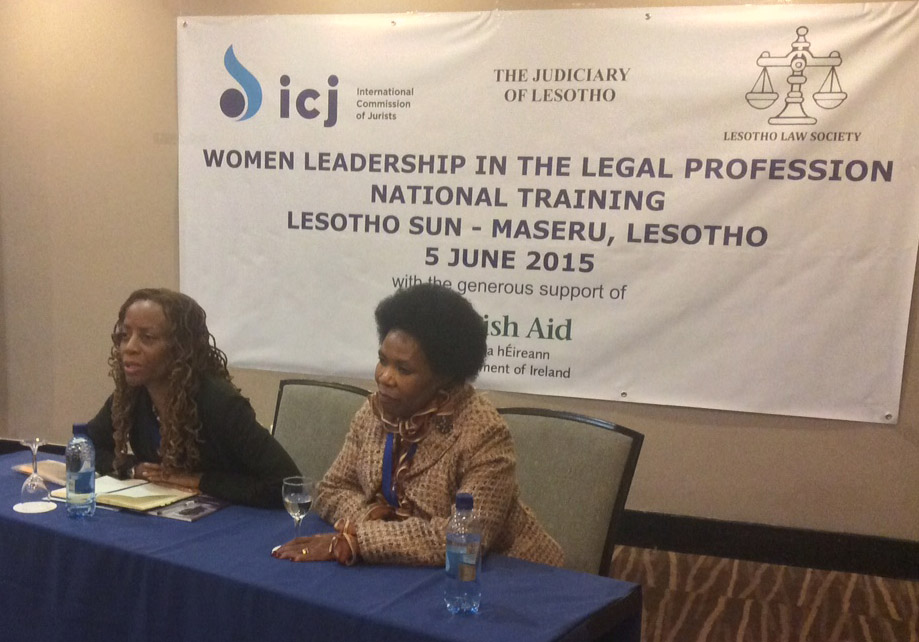
Today, the ICJ convened its training on “Women lawyers making a difference through the Legal Profession” in Maseru. Thirty-five women participated in the event.
In many jurisdictions, men invariably dominate the legal profession and there is a necessity to interrogate the reasons for this.
The advancement of women has not been significant despite the fact that there is equality in numbers in enrolment in law schools.
There have been cited challenges and obstacles that have been raised by women lawyers for this lack of advancement, and these needed to be fully explored in order to adopt concrete recommendations to inform an adequate and effective response to the apparent inequalities.
In order to address this issue within the legal profession in Lesotho, the ICJ collaborated with the Judicial Service Commission and the Lesotho Law Society.
The training brought together 35 women including Chief Justice Majara, Judges, Magistrates, Lawyers and Human Rights Activists from Non-Governmental Organisations.
The main objective of the training was to provide a platform for the participants to engage in robust discussions on the systemic obstacles that affect the ascendancy of women to leadership positions and provide them with an opportunity to introspect and come up with plausible innovative solutions and identify opportunities for change.
Further, the training would address the gender gap in the legal profession and also interrogate possible capacity building initiatives for the participants, which will enable them to effectively advance women’s rights through various advocacy techniques.
In addition, the training also sought to provide an opportunity for the Judicial Service Commission and the Lesotho Law Society for dialogue on improving the situation of women in the legal profession, as well as contributing to the promotion and protection of women’s rights and access to justice.
From 11-15 May 2015, the mission will meet with a variety of stakeholders, including officials in the executive, the Ministry of Justice, the judiciary, members of Parliament, the legal profession, media, political analysts and civil society.
The International Fact Finding Mission in Swaziland (IFFM-SZ) is led by the ICJ, in collaboration with the Africa Judges and Jurists Forum (AJJF), Judges for Judges Netherlands (J4J) and the Commonwealth Magistrates’ and Judges’ Association (CMJA).
The mission aims, among other things, to:
The mission will rely on international human rights law and standards.
After the completion of the field meetings and interviews, ICJ will release a report detailing its findings and recommendations directed to key stakeholders for their consideration and implementation.
The ICJ is committed to supporting all stakeholders in strengthening the independence of the judiciary, the legal profession and observance of the rule of law in Swaziland.
The mission comes against the background of a number of recent developments of concern for the independence and accountability of the judiciary in the country.
Read also:
Swaziland: arrest of judges raises serious concerns
Leading legal voice intervene at UN level in the case of detained Swazi lawyer Thulani Maseko
Additional information:
The mission team is composed of Judge Moses Chinhengo (of Ruwa, Harare, Zimbabwe, retired High Court Judge Botswana and Zimbabwe; ICJ Commissioner; Interim Chair AJJF, Head of the IFFM-SZ) ; Judge Charles Mkandawire (of Lilongwe, Malawi, High Court Malawi; ICJ Commissioner; Regional President-CMJA and member of the IFFM-SZ) ; Judge Oagile Dingake (of Gaborone, Botswana, Professor of Public Law at University of Cape Town, Judge Residual Special Court of Sierra Leone, Judge High Court Botswana; member of the IFFM-SZ) ; and Judge Tamara Trotman (of The Hague, Netherlands, Judge of Court of Appeal in The Hague, Chair Judges for Judges, member of the IFFM-SZ).
The judges are supported by technical staff: Laurens Hueting (Legal Adviser, ICJ-Centre for Independence of Judges and Lawyers), Otto Saki (Senior Legal Adviser, ICJ-Africa Regional Programme) and Justice Mavedzenge (ICJ Consultant and University of Cape Town PhD Candidate and Rapporteur).
Contact:
Arnold Tsunga, Director, ICJ Africa Regional Programme Director, t: +27731318411 ; e: arnold.tsunga(a)icj.org
Picture by Darron Raw
The ICJ is concerned at the recent arrest of Swaziland High Court Judges Jacobus Annandale and Mpendulo Simelane, the High Court Registrar Fikile Nhlabatsi and the Minister of Justice Sibusiso Shongwe.
The four detainees appeared today before High Court Justice Qinisile Mabuza (photo).
Justice Minister Sibusiso Shongwe was denied bail and remains detained, while the other two High Court Judges and the registrar were released on bail.
The judges, registrar and Minister of Justice are all facing various charges related to corruption and obstructing the course of justice.
The ICJ is also aware that police are presently seeking to arrest Chief Justice Michael Ramodibedi, and that they have surrounded his place of residence.
The ICJ has received information alleging that the police have cut off the electricity and water and have actively prevented people from bringing food supplies to him and his family.
The ICJ urges the authorities in Swaziland to immediately investigate the situation of the Chief Justice and, if the allegations are substantiated, to immediately restore supply of essential services to the Chief Justices family, denied in violation of rights guaranteed under the Swaziland’s Constitution and its international legal obligations.
“The arrest and attempted arrest of several judges, and a High Court Registrar as in this case, invariably raises questions of separation of powers and the independence of the judiciary,” said Wilder Tayler Secretary General of the ICJ.
“The ICJ therefore calls on the authorities in Swaziland to conduct themselves with rigorous adherence to rule of law principles, the separation of powers between the executive and the judiciary. They must also do so with strict respect for international human rights law,” he added.
The ICJ emphasizes that the Chief Justice and the other judges are entitled as everyone else in Swaziland to freedom from arbitrary detention and the right to a fair trial guaranteed under international law.
These protections include the right to be informed the reasons for their arrest and the nature of any criminal charges, the right to representation by a lawyer of their choice and the right to be considered for bail if appropriate.
If no crime is alleged, but serious professional misconduct is suspected, then arrest and detention is inappropriate.
Additional information:
The ICJ has had longstanding concerns with the state of the independence of the judiciary and legal profession and the fair administration of the justice in Swaziland.
The ICJ has recently intervened in a case involving the conviction of prominent lawyer Thulani Maseko in an unfair trial.
For an ICJ analysis of the independence of the judiciary and legal profession in Swaziland, go here.
Contact:
Arnold Tsunga, Regional Director, ICJ’s Africa Programme, t: +27 731318411, e: arnold.tsunga(a)icj.org
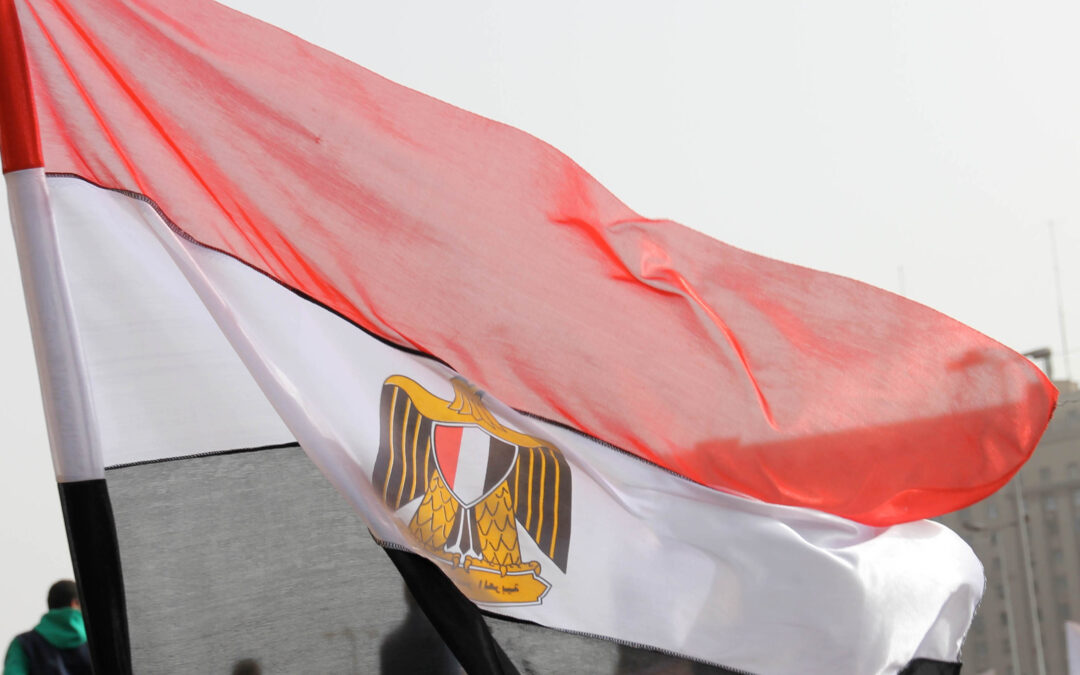
The ICJ is deeply concerned over the decision of the High Judicial Council and the President of the Cairo Court of Appeal to investigate two judges with a view to referring them to the disciplinary Council.
Media reports have indicated that Assem Abdel Jabar, deputy president of the Cassation Court, and Hicham Raouf, a judge in Cairo’s Appeal Court, are being investigated over their individual participation, together with other leading lawyers and legal experts, in a workshop organized by an Egyptian organization, United Group, to discuss and propose new legislation on the prevention of torture.
According to information available to the ICJ, the two judges have so far not been formally notified of any charges against them and have received no information about the allegations on which they are based.
The actions against these judges continue a pattern of intimidation and attempted silencing of judges who are seen by authorities as not aligning themselves with government objectives.
The apparent investigation is only the latest in a string of cases where judges have been subject to arbitrary disciplinary proceedings for legitimately exercising their rights to freedom of expression and assembly.
On 14 March 2015, the Disciplinary Council forced 31 judges into retirement for signing a statement, on 24 July 2013, which criticized the “attack on the constitutional legitimacy and the ouster of the legitimate president that was elected”.
The disciplinary proceedings against these judges were marred with violations of due process rights.
The judges were not adequately informed of the date and location of the hearings, defence witnesses were not called and requests by the judges that the hearings be public were disregarded.
On 4 April 2015, a disciplinary hearing took place against Zakaria Abdelaziz, former president of Egypt’s Judges Club and one of the leading advocates for judicial independence in Egypt.
The charges alleged “involvement in politics” and “breaking into the State Security Building during a demonstration on 5 March 2011”.
According to information available to the ICJ, the case files were not made available to Zakaria Abdeaziz until the first hearing despite repeated requests to obtain them.
Under international human rights law and standards, judges are guaranteed the right to freedom of belief, association, assembly and expression, including by commenting on matters of public concern and matters pertaining to the rule of law and human rights situation in a country.
“Instead of subjecting judges to arbitrary proceedings for lawfully exercising their rights, the Egyptian authorities should stop its sustained campaign to muzzle judges who are seen as not friendly to the authorities,“ said Said Benarbia, Director of the ICJ MENA programme. “The Egyptian authorities must reinstate all judges who were removed from office solely for exercising their rights to freedom of expression and assembly and drop all charges against those currently subject to disciplinary proceedings for charges stemming from the exercise of these rights.”
Contact:
Alice Goodenough, Legal Adviser of the ICJ Middle East and North Africa Programme, t: +44 7815 570 834, e-mail: alice.goodenough(a)icj.org
Nader Diab, Associate Legal Adviser of the ICJ Middle East and North Africa Programme, t: +41 229 793 804, e-mail: nader.diab(a)icj.org
Egypt-Judges harassed-News-web story-2015-ARA (full text in PDF)
 South Sudan: Extend UN Investigations Amid Deteriorating Human Rights Crisis
 Nepal: Publish Reports on Violent Crackdowns on Protests
 EU: ICJ publishes strategic litigation guide on children and immigration detention
 Myanmar: Five years after the coup “justice system” remains an instrument of repression