May 31, 2013 | Agendas, Events
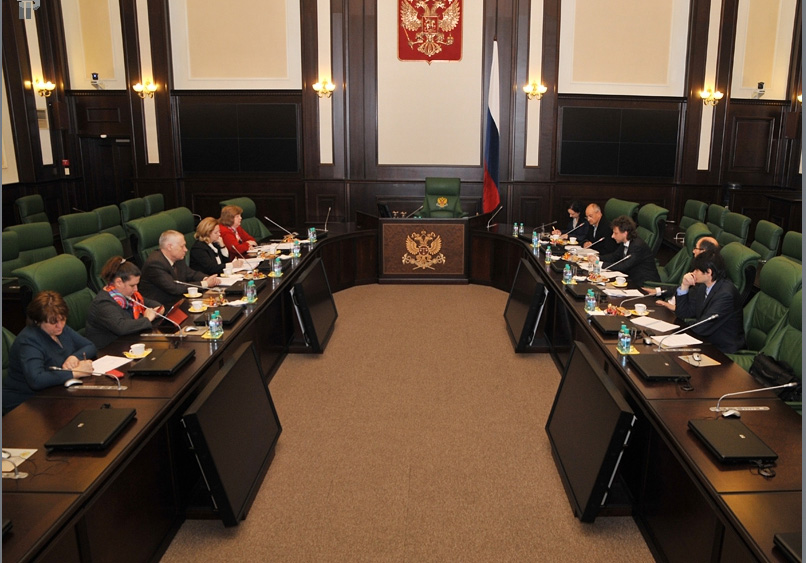
Some 30 judges from the highest national courts from 16 countries in Asia and the Pacific will meet in Bangkok, Thailand on 2-4 June to discuss the role of the judiciary in the AIDS response.
The meeting is convened by the Joint United Nations Programme on HIV/AIDS (UNAIDS), the United Nations Development Programme (UNDP) and the ICJ as part of efforts to address concerns that legal environments, including laws and policies, law enforcement practices and access to justice across the Asia and the Pacific do not consistently protect people most at risk of HIV infection and those living with HIV from violations of their human rights including health, privacy, non-discrimination and freedom from violence.
The judges’ discussions will be supported by experts and resource people from communities living with HIV, representatives of sex workers and men who have sex with men, people who use drugs and transgender people and United Nations entities.
The ICJ has always believed that an independent judiciary is essential in delivering justice to vulnerable populations, including those living/infected with HIV.
As Mr. Sam Zarifi, Regional Director for Asia and the Pacific, said: “The judiciary has a crucial role to play in establishing a legal environment that assists the struggle against the spread of HIV. In Asia and the Pacific, those most at risk of contracting HIV are often among those with the least access to justice. An independent judiciary can help protect at-risk populations from discriminatory laws, negative stereotypes, and misguided policies.”

May 17, 2013 | News
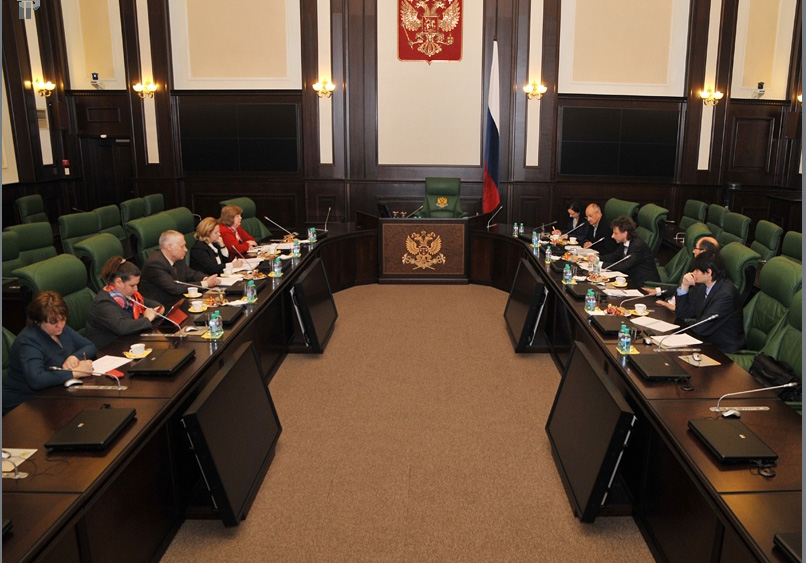
On 16 May, the ICJ and Rechters voor Rechters (Judges for Judges) observed an appeal hearing at the Supreme Administrative Court (SAC) in a case against the dismissal of Judge Miroslava Todorova.
Judge Todorova, who had been serving on the Sofia City Court, is known for critical commentary on the problems in the judiciary in Bulgaria. In this hearing, the Prosecutor’s Office supported Judge Todorova’s appeal against her dismissal, but the Court has not yet issued its decision.
The ICJ previously raised concerns over Judge Todorova’s dismissal from her position of judge and as Chair of the Bulgarian Judges Association, in July 2012. The ICJ was particularly concerned at the disproportionate sanctions for delay of several reasoned cases, which is a problematic, but usual, practice among judges in Bulgaria.
The ICJ also expressed concern at the fact that the proceedings took place some six years after the limitation period ended. Further questions arose as to the composition of the Supreme Judicial Council (SJC), the body which both initiated the proceedings and conducted the hearing, and its independence in this case.
The trial observation mission consisted of Professor Doctor Günter Witzsch (Germany), who observed the trial on behalf of the ICJ, and Judge Janneke Bockwinkel (the Netherlands, on behalf of Judges for Judges). The ICJ and Judges for Judges will continue to follow the case of the dismissal of Judge Miroslava Todorova and will issue a detailed report following the issuing of the decision by the SAC.
For further information
Róisín Pillay, Director of the Europe Programme, roisin.pillay(a)icj.org
Temur Shakirov, Legal Adviser, Europe Programme, temur.shakirov(a)icj.org
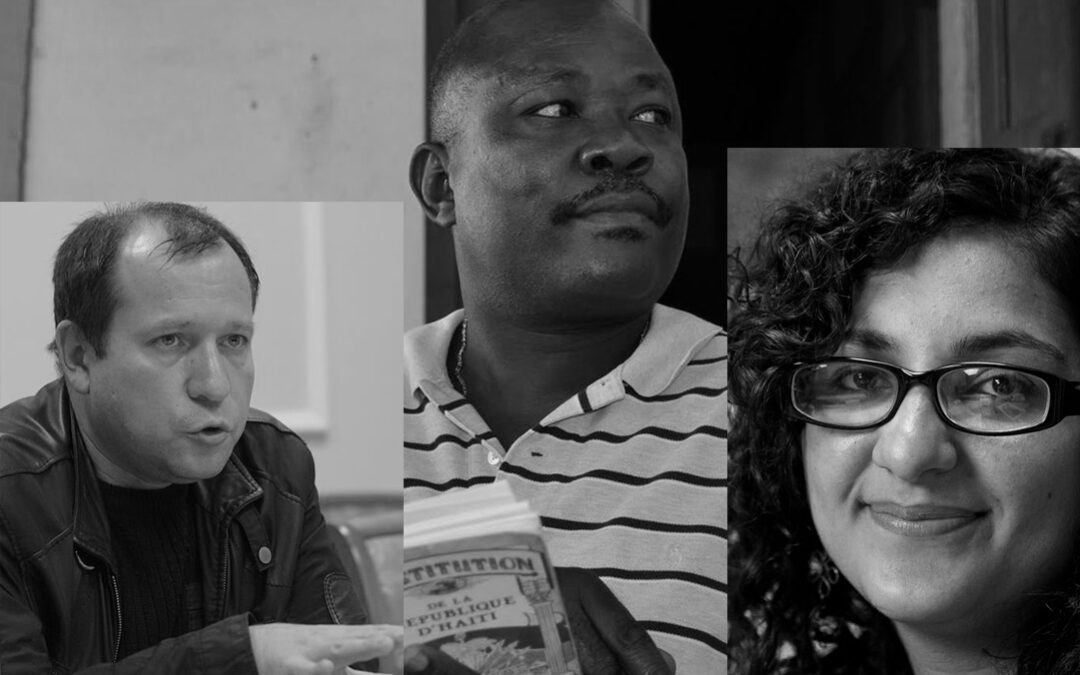
Apr 24, 2013 | Feature articles, News
The three final nominees for the Martin Ennals Award for Human Rights Defenders are Mona Seif (Egypt), Joint Mobile Group (Russia) and Mario Joseph (Haiti). The ICJ is one of the ten members of the jury.
The Martin Ennals Award is given to Human Rights Defenders who have shown deep commitment and face great personal risk. The aim of the award is to provide protection through international recognition.
Selected by ten leading human rights organizations (ICJ, Amnesty International, Human Rights Watch, Human Rights First, International Federation of Human Rights, Front Line Defenders, HURIDOCS, Diakonie – German Protestant Welfare, World Organization Against Torture and International Service for Human Rights) it is the world’s most important Human Rights Prize.
The 2013 Award will be presented on Oct. 8th at a ceremony hosted by the City of Geneva.
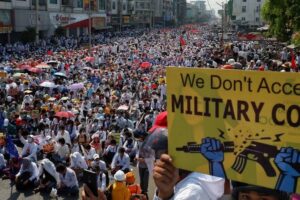
Mona Seif (Egypt) is the core founder of the” No To Military Trials for Civilians”, a grassroots initiative which is trying to stop military trials for civilians.
Since February 25, 2011, Mona has brought together activists, lawyers, victims’ families, local stakeholders and started a nationwide movement against military trials.
As part of the recent crackdown on the Freedom of Speech in Egypt she has been charged along with other Human Rights activists.
She noted that “International solidarity, and I mean people’s support not governments, empowers us to continue our battle and stop military trials for civilians“.
After the murder of several human rights activists working in Chechnya, Igor Kalyapin started the Joint Mobile Group. To reduce the risk they send investigators on short missions to Chechnya to document Human Rights abuses.
This information is then used to publicise these abuses to seek legal redress. Igor Kalyapin speaking of the effect of international publicity said “… when the international community is watching us it is more difficult for the authorities to take steps against us…”
Mario Joseph, Haiti’s most important Human Rights lawyer, has worked on some of the most important cases in Haiti, including the current case against the former dictator Jean-Claude “Baby Doc” Duvalier.
His family received asylum in the United States in 2004, while he chose to return to Haiti. He has faced threats and harassment for much of his 20 years as a lawyer although it has intensified in recent months.
He says: “this recognition from the Ennals Award shines a vital spotlight on my work, and on the work of everyone who is fighting for human rights in Haiti. That spotlight will make our work safer and more effective.”
MEA-Short Summary-2013 (read the pdf)
MEA-MONA SEIF bio-2013 (read the pdf)
MEA-JOINT MOBILE GROUP bio-2013 (read the pdf)
MEA-MARIO JOSEPH bio-2013 (read the pdf)

Dec 6, 2012 | News
The impeachment process against Chief Justice Shirani Bandaranayake ignores international standards and practice, says the ICJ.
The ICJ urges the government of Sri Lanka to take immediate steps to uphold the independence of the judiciary and adhere to international standards and practice on the removal of judges.
Today, the Chief Justice and her team of lawyers walked out of the impeachment hearing in protest over the denial of a fair hearing.
Protests supporting and opposing the impeachment process erupted on Tuesday 4 December 2012 as the Chief Justice appeared before the Parliamentary Select Committee for the second time.
Over two hundred judges, several hundred lawyers, trade union leaders and a large number of religious dignitaries assembled to show their support for the Chief Justice.
Opposition members of parliament publicaly called on the Government to adhere to principles of fair trial and due process in the impeachment process.
Reportedly the Chief Justice has been denied the right to cross-examine potential witnesses and has not been provided full disclosure of the allegations against her.
The Parliamentary Select Committee has also denied the request for a public hearing and prohibited observers from attending.
“Parliament is pushing ahead with an impeachment process that fails to adhere to fundamental principles of due process and fair trial,” said Sam Zarifi, ICJ Asia Pacific Director. “The Chief Justice’s impeachment is part of a relentless campaign waged by the Rajapaksa Government to weaken the judiciary. An independent judiciary is the principle check on the exercise of executive and legislative powers – vital to the functioning of a healthy democracy.”
As recalled by the United Nations Special Rapporteur on the independence of judges and lawyers in a statement last month, international standards require that judges be removed only in exceptional circumstances involving incapacity or gross misconduct.
A cornerstone of judicial independence is that tenure of judges be secure.
“Any process for removal must comply with all of the guarantees of due process and fair trial afforded under international law, notably the right to an independent and impartial hearing,” Zarifi added.
The United Nations Human Rights Committee, in its 2003 concluding observations on Sri Lanka, expressed concern that the procedure for removing judges under Article 107 and the complementary Standing Orders of Parliament was not compatible with Article 14 of the International Covenant on Civil and Political Rights.
The Parliamentary Select Committee, presiding over the impeachment hearings is composed exclusively of members of parliament, the majority of which are drawn from the Government coalition. No members of the judiciary are permitted to sit on the Select Committee.
Comparatively in India, an impeachment hearing is presided over by a three-member committee comprised of a Supreme Court justice, a Chief Justice of any High Court and an eminent jurist.
In South Africa, a judge may only be removed after a hearing by the Judicial Service Commission, a body composed of members of the judiciary.
In Canada, all removal proceedings are conducted by the Judicial Council, a body composed of 38 chief and associate chief justices of the superior courts and chaired by the Chief Justice of Canada.
The United Nations Special Rapporteur on the independence of judges and lawyers warned against the misuse of disciplinary proceedings as a reprisals mechanism against independent judges.
The timing of the impeachment motion raises questions. The impeachment motion was initiated just days after the Chief Justice ruled against the Government on a controversial bill – the Divi Neguma Bill – before Parliament.
If the bill passed, the Minister of Economic Development (who is also the President’s brother Basil Rajapakse) would have had control over a fund of 80 billion Sri Lankan rupees (611 million USD).
Attacks on the judiciary have been escalating in recent months. In July 2012, Government Minister Rishad Bathiudeen threatened a Magistrate in Mannar and then allegedly orchestrated a mob to pelt stones at the Mannar courthouse.
In early October, the ICJ condemned the physical assault on the secretary of the Judicial Service Commission, Manjula Tillekaratne.
In early November, the ICJ issued a report, Sri Lanka’s Crisis of Impunity, documenting how the erosion of state accountability and judicial independence, has led to a crisis of impunity in Sri Lanka.
The ICJ calls on the Government of Sri Lanka to take active measures to promote the independence of the judiciary and rule of law by adhering to international standards and practice in impeachment hearings.
Contact:
Sam Zarifi, ICJ Asia-Pacific Regional Director, (Bangkok), t:+66(0) 807819002; email: sam.zarifi@icj.org
Sheila Varadan, ICJ Legal Advisor, South Asia Programme (Bangkok), t: +66 857200723; email: sheila.varadan@icj.org