Feb 16, 2017 | Agendas, Events, News, Training modules
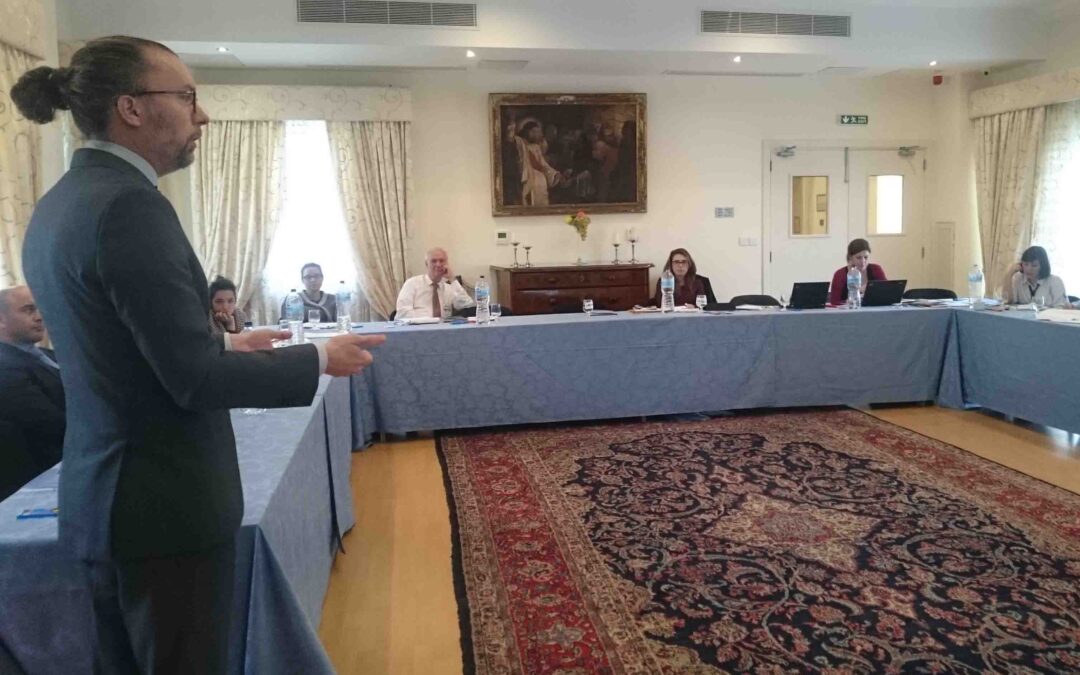
Today, the ICJ and Aditus are holding a training for lawyers on the rights of migrant children and on accessing international human rights mechanisms in Valetta.
The training aims to support the strategic use of national and international mechanisms to foster migrant children’s access to justice.
The training will take place over the course of two days 16-17 February 2017.
The training will focus on accessing the international mechanisms in order to protect and promote the rights of migrant children, the child’s right to be heard and economic, social and cultural rights.
A practical case analysis will be part of the training. Trainers include experts from the ICJ and the Hague University.
The training is based on draft training materials prepared by the ICJ (to be published in the second half of 2017) and the ICJ Practitioners Guide no. 6: Migration and International Human Rights Law.
It is organized as part of the FAIR project co-funded by the Rights, Equality and Citizenship Programme of the European Union and OSIFE.
As part of the project, this training follows the trainings on the rights of migrant children in Spain, Italy and Bulgaria, trainings in Germany, Greece and Ireland will follow this year.
Download the agenda in English here:
Malta-FAIR training-News-Agenda-2017-ENG

Feb 13, 2017 | News
The ICJ today announces the establishment of an expert panel of jurists to study and provide guidance on the effectiveness of grievance procedures provided by businesses to address and remedy harms arising from their operations.
The Panel, composed of senior retired judges, academics and legal practitioners, will work with the support of a wider group of civil society organizations, lawyers, academic institutions and the legal profession.
Many large business enterprises and projects have their own internal procedures and mechanisms to address concerns affecting individuals and local communities that arise from their operations. Known as operational-level grievance mechanisms, these are an integral part of responsible business practices and a way to remedy real or perceived wrongs.
The use of operational-level grievance mechanisms is recommended by the United Nations Guiding Principles on Business and Human Rights and global institutions, such as the World Bank.
However, poor design and/or implementation of these grievance mechanisms can result in further problems, aggravating the harm to individuals and communities and impacting on the company’s or project’s own sustainability.
The ICJ initiative has been prompted by concerns about recent cases where people the mechanisms were meant to help have been unaware of their very existence, the procedures have been unfair or unclear and outcomes have been inadequate for the kind of harm experienced.
Most importantly some grievance mechanisms seem to stand in the way of meaningful access to justice for adversely affected people.
The panel members
The expert Panel is the think tank of the ICJ initiative. Besides holding wide consultations and site visits to specific projects, the Panel will advise the ICJ on preparation of a report and a guidance to support the work of practitioners and human rights defenders working in this field.
The members of the Panel, five of whom are ICJ Commissioners, are:
- Justice Ian Binnie (retired) formerly of Canada’s Supreme Court
- Sheila Keetharuth, Lawyer in Mauritius and currently UN special rapporteur on the human rights in Eritrea
- Justice John O’Meally (retired) formerly of the District Court of New South Wales and the Dust Diseases Tribunal in Australia
- Alejandro Salinas Rivera, lawyer and former legal advisor to the Government of Chile
- Professor Marco Sassoli, professor of international law at the University of Geneva
- Justice Ajit Prakash Shah (retired), formerly of the High Court of Delhi and presently Chair of the Law Commission in India
The Panel and the ICJ will receive advice for this work from a wider Consultative Group of practitioners and members of the legal profession.
The Consultative Group includes individuals of long-standing experience and recognised expertise on the functioning of grievance mechanisms at the project or operations level.
This initiative adds to the growing attention paid to remedy systems available to individuals and communities affected by business operations.
The final outcome of this initiative will be to provide guidance to making effective the remedial procedures systems available in cases of business-related human rights abuses in way that truly helps victims attain justice.
Feb 1, 2017 | News
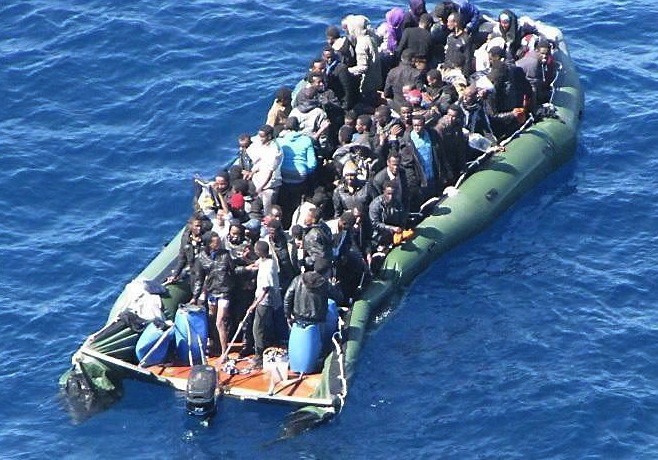
The ICJ, the European Council on Refugees and Exiles, Refugee Rights Turkey, Mülteci-Der and the ICJ-European Institutions begun today a two-year project to enhance access to justice for migrants, refugees and asylum-seekers in Turkey.
The project, which also aims to ensure protection of their rights, at the national and international levels, is co-funded by the European Union.
More information here: Turkey-ICJ project migrants-News-2017-ENG
Jan 30, 2017 | News
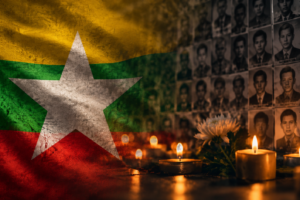
It is with great sadness that the ICJ has learned of Lawyer U Ko Ni’s death at Yangon International Airport today.
An armed man in the crowded airport reportedly shot him in the head at close range, along with U Nay Win a taxi driver who had tried to intervene.
The suspect was reportedly apprehended at the scene.
The ICJ stresses the need for a prompt, thorough and impartial investigation into the killing.
“It is vital that in the current climate of inter-religious tension that the rule of law is seen to prevail and for those responsible to be held criminally accountable,” said Sam Zarifi, the ICJ’s Asia-Pacific Regional Director.
“We await the results of the ongoing investigation,” he added.
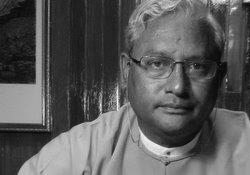
U Ko Ni (photo) was a prominent and well-respected legal figure in Myanmar.
He was a respected veteran of the democracy movement, an adviser to the National League for Democracy and Aung Sang Su Kyi.
He was a rare outspoken voice against discrimination and had recently advocated for laws against hate speech and for inter-communal harmony.
U Ko Ni was returning from an official visit to Indonesia with senior Buddhist and Muslim figures aimed at sharing experiences and overcoming inter-religious tensions when the attack occurred.
U Ko Ni was also a patron of the recently formed Myanmar Muslim Lawyers Association.
He was an outspoken critic of the “race and religion laws”, a legislative package of four bills supported by hardline nationalists, as well as a champion of religious tolerance.
“U Ko Ni was a principled lawyer. He was committed to protecting human rights, preventing hate crimes and the rule of law in Myanmar, and his presence as leading advocate will be deeply missed,” Zarifi added.
Nov 9, 2016 | News
The ICJ welcomes the judgment of the European Court of Human Rights in Schukurov v Azerbaijan, finding that the right to petition the Court had been violated by the search of a lawyer’s premises and seizure of documents.
The ICJ submitted a third party intervention in the case, outlining international law and standards relevant to legal professional privilege and the seizure of legal documents.
The case files were seized as part of a criminal investigation opened against the lawyer, Intigam Aliyev, who was representing the applicants in the case. The Court found that the search and seizure by the Azeri authorities had violated article 34 of the Convention, which stipulates that States must not hinder in any way the effective exercise of the right of individual application to the Court.
The ICJ notes that the Court’s judgment follows its earlier finding of a violation of article 34 in the case of Annagi Hajibeyli v Azerbaijan, which arose from the same incident.
The ICJ stresses that these searches of lawyers’ premises are contrary to international standards on the role of lawyers. It is particularly worrying that they form part of a pattern of harassment of lawyers in Azerbaijan, including abusive disciplinary proceedings and criminal prosecutions. Such harassment damages the ability of lawyers to protect human rights through the judicial process, and undermines the independence of the legal profession.
The decision of the Court should now be fully and promptly executed, the ICJ said.