Apr 13, 2021 | News
Today, the ICJ called on the Belarus Ministry of Justice and other relevant authorities to end the recent practice of using legal proceedings against lawyers in retaliation for discharging their professional duties and to reinstate those already disbarred.
In recent months, in the context of widespread violations of the human rights of those protesting against the outcome of the disputed 2020 presidential election, there has been an unprecedented increase of cases of disbarment of lawyers especially those who comment on violations of the human rights of their clients. Among the most recently disbarred lawyers are Konstantin Mikhel, Maxim Konon, Mikhail Kirilyuk and Yulia Ivanchuk.
“This recent wave of criminal and disciplinary proceedings against lawyers is highly worrying and it constitutes an attack on the independence of the legal profession. These proceedings, be they of criminal, administrative or disciplinary nature, should be discontinued or reconsidered as being contrary to the international human rights law concerning the independence of the legal profession,” said Temur Shakirov, Senior Legal Adviser of the ICJ Europe and Central Asia Programme.
There is a clear pattern of the misuse of disciplinary proceedings against lawyers who represent political opponents of the government or those who openly criticize the government on issues of public significance.
Disciplinary proceedings in Belarus are not independent of the executive, since they are conducted by the Qualification Commission which operates under the Ministry of Justice.
Notably, disciplinary proceedings are pending against lawyer Dmitry Layevski, allegedly following his public comments on a pending Draft Law on advocates’ activities.
Dmitry Layevski is a lawyer representing Victor Babaryko, an opposition leader in Belarus currently in detention, and Maxim Znak, former legal representative of Maria Kolesnikova, another detained opposition leader.
Earlier, a number of lawyers, including Aleksandr Pylchenko, former legal representative of Viktor Babaryko and Maria Kolesnikova, and Lyudmila Kazak, former legal representative of Maria Kolesnikova, faced disciplinary sanctions, and Lyudmila Kazak incurred an administrative fine, as a result of discharging their professional functions.
Several lawyers involved in human rights cases have been called by the Qualification Commission to undergo an examination to re-certify their qualification to practice law and have failed the exam. This procedure appears to target lawyers working to defend human rights, as a means of harassment or reprisal.
For example, following comments in mass media, Sergey Zikraskiy, a lawyer who often represented Belarusian journalists, was called to pass extraordinary re-examination which he failed. The certification is carried out by the Qualification Commission.
Criminal cases are still pending against lawyers Ilya Saley and Maxim Znak, who appear to have suffered consequences as a result of their representation of opposition leaders Maria Kolesnikova and Victor Babaryko.
“These disbarments have a significant chilling effect on work of the legal profession and undermine the ability of lawyers to defend human rights of their clients in accordance with international standards on the role of lawyers,” Shakirov said.
Background
International law and standards
According to the UN Basic Principles on the Role of Lawyers, the State authorities must guarantee that lawyers are able carry out their professional functions without hindrance, intimidation, harassment or fear of retaliation (Principle 16). The UN Basic Principles on the Role of Lawyers affirm that lawyers “shall not suffer, or be threatened with, prosecution or administrative, economic or other sanctions for any action taken in accordance with recognized professional duties, standards and ethics.” (Principle 16.c) They further stipulate that lawyers must not be identified with their clients or their clients’ causes as a result of discharging their functions (Principle 18).
International standards also require the institutional independence of the legal profession. The executive body of the professional associations of lawyers must be elected by its members and must exercise its functions without external interference (Principle 24, The UN Basic Principles on the Role of Lawyers).
Jan 26, 2021 | News
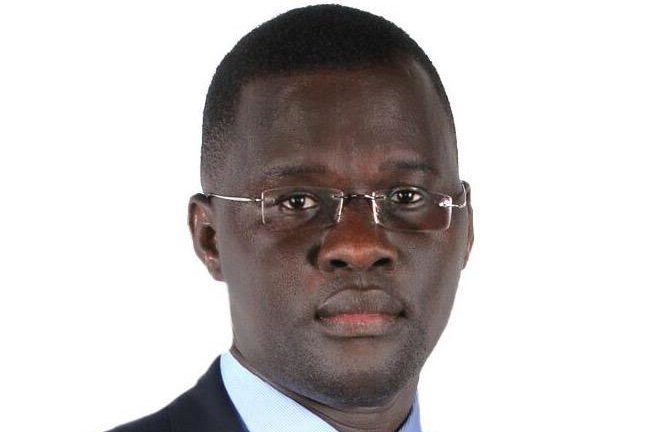
Lawyers for Lawyers (L4L) and the ICJ condemn the spurious charges under the Anti-Money Laundering brought against Ugandan lawyer and human rights defender Nicholas Opiyo and call for them to be dropped.
The organizations consider that this action stands to impede work of lawyers in the country of carrying out their professional functions, particularly regarding human rights work.
There do not appear to be legitimate grounds for these charges or the ongoing prosecution. The organizations are further concerned at numerous alleged violations surrounding the arrest, detention and pre-trial proceedings.
Nicholas Opiyo, Executive Director of Chapter Four Uganda, a civil rights charity working to defend human rights and civil liberties, was arbitrarily arrested on 22 December 2020, not informed of the reason for his arrest and effectively held in incommunicado detention for a prolonged period.
On 22 December 2020, plain clothed law enforcement officers who did not identify themselves seized Mr. Opiyo from a restaurant, along with four other individuals, including three lawyers.
He was later charged under section 3 (c) of the Anti-Money Laundering Act on allegations that he acquired USD 340,000 through the bank account of Chapter Four Uganda, knowing that “the said funds were proceeds of crime”.
Chapter Four Uganda have confirmed that these are legitimate donor funds for lawful purposes.
Sophie de Graaf, the Director of Lawyers for Lawyers, said:
“Lawyers play a vital role in the protection of the rule of law and human rights. It is the responsibility of lawyers to protect and establish the rights of citizens from whatever quarter they may be threatened. Their work is indispensable for ensuring effective access to justice for all. To fulfil their professional duties effectively, lawyers should be able to practice law freely and independently, without any fear of reprisal.”
Kaajal Ramjathan-Keogh, ICJ’s Africa Director, added:
“Uganda is required under its Constitution and under its international legal obligations, to respect and protect the independence of lawyers. These baseless charges seek to intimidate and harass Mr. Opiyo and interfere with his work as a lawyer”.
Lawyers for Lawyers and the ICJ call on the Ugandan authorities to drop the spurious charges against Mr. Opiyo and to ensure that his rights to due process and fair trial are fully respected.
The organizations emphasize that the responsibilities authorities must comply with Uganda’s international legal obligations to ensure that members of the legal profession can carry out their professional functions without harassment and improper interference, including arbitrary arrest and incommunicado detention.
Background
Article 23 of Uganda’s Constitution stipulates that suspects under detention should be brought before a court of law within 48 hours from the time of arrest. Article 27 of Uganda’s Constitution requires that a person charged with a criminal offence should be informed immediately of the charges against them. Article 28 of the Ugandan Constitution guarantees for every person the right to a fair hearing and the right to legal representation. These rights are protected under the International Covenant on Civil and Political Rights and the African Charter on Human and Peoples Rights, to which Uganda is a party.
International and regional standards on ensuring the independence of lawyers are set out in the UN Basic Principles on the Role of Lawyers (UN Basic Principles) and the Principles and Guidelines on the Right to a Fair Trial and Legal Assistance in Africa.
Contact:
Kaajal Ramjathan-Keogh, ICJ Africa Director Kaajal.Keogh(a)icj.org +27 84 5148039
Tanveer Jeewa, Media and Legal Consultant Tanveer.Jeewa(a)icj.org
Jan 18, 2021 | News
Soltan Achilova, Loujain AlHathloul and Yu Wensheng, three outstanding human rights defenders based in authoritarian states are nominated for the 2021 Martin Ennals Award for Human Rights Defenders. The ICJ is member of the MEA Jury.
In isolated Turkmenistan, Soltan Achilova documents human rights violations and abuses through photojournalism.
Imprisoned in Saudi Arabia, Loujain AlHathloul is a leading advocate for gender equality and women’s rights.
A lawyer, Yu Wensheng defended human rights cases and activists before his conviction and imprisonment in China.
The Finalists distinguish themselves by their bravery and deep commitment to the issues they defend, despite the many attempts to silence them by respective governmental authorities.
“Every year thousands of human rights defenders are persecuted, harassed, imprisoned, even killed. The Martin Ennals Foundation is honored to celebrate the 2021 Finalists, who have done so much for others and whose stories of adversity are emblematic of the precarity faced by the human rights movement today,” said Isabel de Sola, Director of the Martin Ennals Foundation.
“Authoritarian states tend to believe that by jailing or censoring human rights defenders, the world will forget about them. During the COVID-pandemic, it seemed like lockdowns would successfully keep people from speaking out. This year’s Finalists are a testament to the fact that nothing could be further from the truth,” added Hans Thoolen, Chair of the Jury.
Nothing can stop us from celebrating human rights defenders
Each year, the Martin Ennals Award honors human rights defenders from around the world who distinguish themselves by their strong commitment to promoting our fundamental rights – often at the risk of their own lives.
The 2021 Martin Ennals Award Ceremony will celebrate their courage on 11 February during an online ceremony hosted jointly with the City of Geneva which, as part of its commitment to human rights, has for many years supported the Award.
The 2021 Finalists
In Turkmenistan, one of the world’s most isolated countries, freedom of speech is inexistant and independent journalists work at their own peril. Soltan Achilova (71), a photojournalist, documents the human rights abuses and social issues affecting Turkmen people in their daily lives. Despite the repressive environment and personal hardships, she is one of the very few reporters in the country daring to sign independent
In Saudi Arabia, women still face several forms of gender discrimination, so much so, that the Kingdom ranks in the bottom 10 places according to the World Economic Forum’s Global Gender Gap Report 2020. Loujain AlHathloul (31) was one of the leading figures of the Women to drive movement and advocated for the end of the male guardianship system. She was imprisoned in 2018 on charges related to national security together with several other women activists. Tortured, denied medical care, and subjected to solitary confinement, Loujain was sentenced to 5 years and 8 months in prison on 28 December 2020.
In China, more than 300 human rights activists and lawyers disappeared or were arrested in 2015 during the so called 709 Crackdown. A successful business lawyer, Yu Wensheng (54) gave up his career to defend one of these detained lawyers, before being arrested himself. Detained for almost three years now, Yu Wensheng’s right hand was crushed in jail and his health is failing.
Contact
Olivier van Bogaert, Director Media & Communications, ICJ representative in the MEA Jury, t: +41 22 979 38 08 ; e: olivier.vanbogaert(a)icj.org
Chloé Bitton, Communications Manager, Martin Ennals Foundation, t +41 22 809 49 25 e: cbitton(a)martinennalsaward.org
MEA Finalists Bios-2020-ENG (full bios of finalists, in PDF)
MEA Finalists Bios-2020-ARA (full story and bios of finalists in Arabic, PDF)
Jan 18, 2021 | News
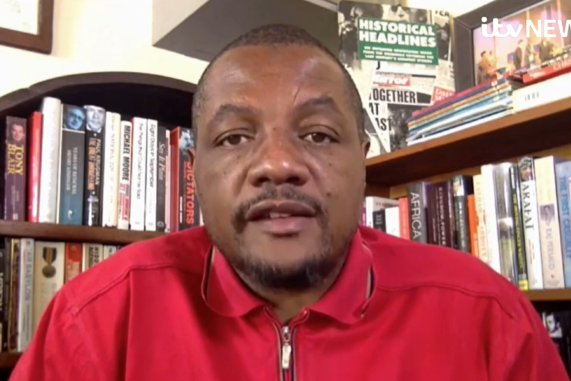
The ICJ today condemned the arbitrary arrests in recent days of prominent Zimbabwean human rights defenders Hopewell Chin’ono, Fadzayi Mahere and Job Sikhala, who have been critical of the government led by President Emmerson Mnangagwa.
The ICJ is concerned that their arrests and potential prosecutions are based solely on their exercise of protected human rights, including freedom of expression. The ICJ calls for their immediate release and the dropping of the charges against them.
The three have been charged with contravening section 31 of the Criminal Code which prohibits “publishing or communicating false statements prejudicial to the state”.
The alleged offences arise from posts made on social media and comments issued by all three in connection with an incident at a Harare taxi rank in which a police officer is alleged to have assaulted a mother with a baby on her back.
ICJ’s Africa Director Kaajal Ramjathan-Keogh said:
“The use of judicial processes to silence these three human rights defenders constitutes a continuing assault on members of the bar and journalists and is a clear attempt to chill others from carrying out their professional functions when these activities offend government authorities. Of concern is the continued use of criminal defamation (section 31) charges which were declared unconstitutional in 2014 yet continues to be weaponised against human rights defenders.”
Chin’ono, a journalist, was arrested on 8 January and had his application for bail rejected on 14 January. He has been handcuffed and held in leg irons during court appearances, despite a Magistrate’s ruling on 12 January that forcing Chin’ono to be shackled in leg irons and handcuffing him amounts to inhumane and degrading treatment.
Mahere is a lawyer and spokesperson of the opposition political party Movement for Democratic Change (MDC) Alliance. She was arrested on 11 January. On 15 January Magistrate Trynos Utahwashe failed to hand down his ruling on her application for bail as required.
Bail was however granted today. Mahere did raise concerns about the absence of essential COVID-19 measures in her detention, including the lack of temperature checks or sanitisers at the entrance to the police station; the failure to practice social distancing in the waiting area or holding cells; the unavailability of masks in the cells and use of old masks by cellmates; as well as the failure to provide sanitary materials to female inmates.
Sikhala is a human rights lawyer, the MDC Alliance Vice National Chairperson, and MP for Zengeza West.
He was part of Chin’ono’s legal team. On 15 January Magistrate Ngoni Nduna dismissed his bail application stating that there was overwhelming evidence against him not to grant it. He remains in prison custody while he awaits trial. Sikhala has also been handcuffed and held in leg irons during court appearances.
Ramjathan-Keogh added:
“The courts have unlawfully employed the denial of bail as well as the repeated prolonged bail proceedings as a punitive tool in these cases. Pre-trial detention without the opportunity for bail, with exceptions not applicable here, is a violation of the right to liberty. The government has an obligation to provide safe and humane conditions of detention.”
The ICJ recalls that that Zimbabwe’s Constitution guarantees the rights to freedom of expression and freedom of the media (Article 61); freedom from arbitrary detention (Article 50). Zimbabwe has an international legal obligation to protect these rights under the International Covenant on Civil and Political Rights (Article 9 and 19) and the African Charter on Human and Peoples’ Rights (Articles 6 and 9).
Contact:
Kaajal Ramjathan-Keogh, Director of ICJ Africa Programme, e: Kaajal.Keogh(a)icj.org ; t: +27845148039
Tanveer Jeewa, Legal and Communications Consultant, e: Tanveer.Jeewa(a)icj.org
Background Information:
Hopewell Chin’ono has been arrested on three separate occasions. He has been denied bail on each occasion and those bail proceedings have been unduly and unfairly prolonged. He was initially arrested in July 2020 after he expressed support on Twitter for an anti-corruption protest, which was planned for 31 July. He was charged with incitement to participate in public violence and breaching anti-corona virus health regulations.
He appeared in court three times to apply for bail and was only granted bail in September 2020, nearly two months after his arrest. On 3 November 2020, he was re-arrested for contempt of court for allegedly violating section 182(1)(a) or (b) of the Criminal Code because of a tweet he posted. His tweet stated: “On day of bail hearing CJ was seen leaving court in light of what has been said by judges what does this say.” The arrest violates Zimbabwe’s constitutional provisions, in particular, section 61, which provides for freedom of expression and the right of a journalist to practice his profession. He was again arrested on 8 January 2021 for allegedly communicating falsehoods by tweeting that police beat a baby to death.
Chin’ono was in 2020 denied access to the legal representative of his choice. The magistrate’s order barring lawyer Beatrice Mtetwa from continuing as defence legal counsel for Chin’ono violated his right to a fair trial and Mtetwa’s right to express her opinions freely. See ICJ’s statement of 21 August 2020.
Nov 16, 2020 | Advocacy, News
Today, the ICJ calls on the Ukrainian authorities to abandon a draft law which would dismiss the judges of the Constitutional Court of Ukraine, as a means of retaliation for a decision adopted by the Court and in order to circumvent the decision.
The authorities should also refrain from any other actions, including harassment of judges, which undermine the independence of the Constitutional Court.
“This draft law constitutes a direct attack on the ability of the judiciary to exercise its functions independently. It is incompatible with basic principles of the rule of law and the separation of powers, and with international standards on the independence of the judiciary,” said Róisín Pillay, Director of the ICJ Europe and Central Asia Programme.
“By the nature of their role, the judiciary, and especially constitutional courts may be required to decide on controversial matters. It is however essential that particularly in such cases, courts are able to operate without fear of retaliation or repression for the decisions they take,” she added.
The draft law on Restoring Public Confidence in the Constitutional Court, submitted by President Zelensky to the Ukrainian Parliament (Verkhovna Rada), aims to pronounce a decision of the Constitutional Court on anti-corruption legislation “void” and without legal consequences.
This runs contrary to the Ukrainian Constitution according to which “[d]ecisions and opinions adopted by the Constitutional Court of Ukraine shall be binding, final and may not be challenged” (Article 151-2).
The draft law would terminate the mandate of the judges of the Constitutional Court, in contravention of the Constitution of Ukraine as well as basic principles of independence of the judiciary, governing appointments, dismissal and security of tenure of judges.
The draft law provides that the powers of the Constitutional Court of Ukraine in force at the time of the decision on the anti-corruption law would be terminated from the date of entry into force of the law.
According to the explanatory note to the Draft Law, one reason the adoption of the law would be justified is because there had not been a “proper substantiation” of its judgment on the anti-corruption law. The note alleges that Court’s decision was adopted in the private interests of judges of the Constitutional Court of Ukraine, that its proper substantiation was not provided and that it contradicts the principle of the rule of law and denies the European and Euro-Atlantic choice of the Ukrainian people. The ICJ considers these allegations are inappropriate as they directly interfere with the judicial function of the Constitutional Court of Ukraine, contrary to the national legislation and international law on the independence of the judiciary.
On 2 November 2020, Oleksandr Tupitsky, the President of the Constitutional Court was summoned for interrogation by the State Investigation Bureau in connection with allegations against him of committing crimes as part of an organized group. The ICJ fears that this may be a form of pressure in relation to the Constitution Court’s decision.
Following these incidents, the Constitutional Court has stopped working as four of the judges refuse to take part in its sessions. The Court therefore lacks the necessary quorum to operate.
The ICJ calls on Ukraine to withdraw the draft law, and to refrain from any further reprisals against judges for their decisions.
Download
Ukraine-draft law constitutional court-News-ENG-2020 (full statement with background information)