Mar 31, 2015 | Advocacy, News
The ICJ today expressed concern at searches of lawyers’ homes and workplace by Kyrgyz investigators in the city of Osh.
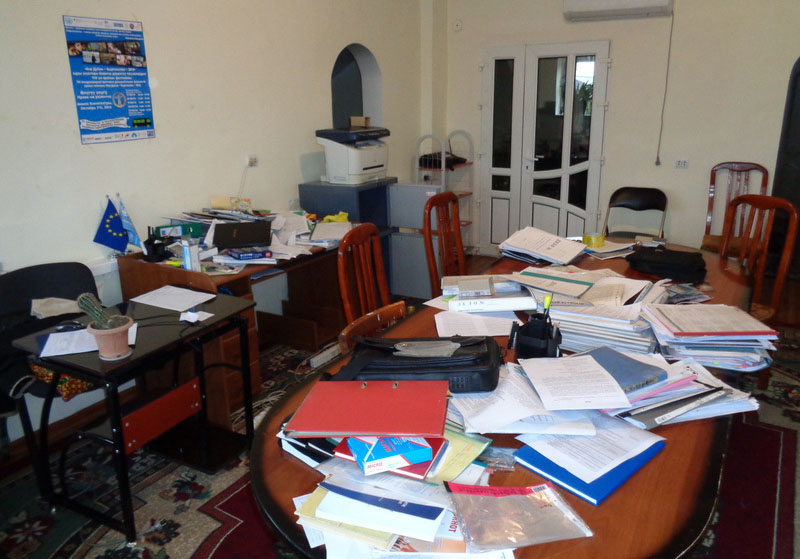
The home of lawyer Valerian Vakhitov and the office of the human rights organization “Bir-Duyno-Kyrgyzstan” (photo) where lawyers Valerian Vakhitov and Khusanbay Saliyev worked, were searched and materials of the lawyers’ cases were seized. The ICJ considers that the searches are violations of the right to confidential communication between a lawyer and his or her client.
The confidentiality of lawyer-client communications and lawyers’ files is protected in international human rights law as part of the right to a fair trial, as well as the prohibition of arbitrary interference with correspondence, privacy and (in this case) home.
The searches followed the arrest of Umar Farooq, a US citizen and journalist who reportedly conducted research on inter-ethnic tensions in the Kyrgyz Republic, in particular near the border with Uzbekistan.
On 25 March 2015, he was arrested by officers of the State Committee of National Security (SCNS) and a number of items in his possession were seized including recordings containing “statements on religious topics and clips of military activities”, copies of charges filed against clients of the two lawyers, A.M. Yusupov and I.I. Salibayev, and the business cards of the two lawyers.
On 28 March, Umar Farooq was expelled from the Kyrgyz Republic on grounds of collection of information without accreditation.
The investigator sought a search warrant for the lawyers’ premises on the grounds that they could contain documents “necessary for the investigation” in criminal case No. 082-15-0236.
Warrants to search the NGO premises where the lawyers worked and to search the residence of Valerian Vakhitov, were issued in separate proceedings on 26 and 27 March by judges K.M. Matisakov and B.T. Satybaldiyev.
According to the search warrant issued by the Court, the search of Lawyer Vakhidov’s home was authorized taking into account the “the need for a full, objective, comprehensive resolution of the crime, obtaining evidence necessary for the investigation of the case, inevitability of the punishment for a crime committed and for the purposes of national security”.
The same reasons were given to authorize searches of the office of “Bir-Duyno-Kyrgyzstan” Investigators seized computers, memory sticks, dictaphones and disks with information on cases in which the lawyers represented clients.
Lawyer Vakhitov reported that among other documents, files relating to nine cases in which he represented individuals before the UN Treaty Bodies, including communication with the UN bodies, had been seized.
The ICJ notes that the State Committee of National Security of the Kyrgyz Republic officially stated, on 30 March, that the searches of work and residence places of lawyers were “legal and within the framework of the CPC of the KR [Criminal Procedure Code of the Kyrgyz Republic]”.
On the same day, the Council of Advokatura, its main executive body, issued a statement calling on the Prosecutor General Indira Zholdubayeva “to take the strictest measures provided by law in regard to the officers of the State Committee of National Security which violated the guarantees of the independence of lawyers’ activity and integrity of lawyers”.
The ICJ considers that the searches are a clear violation of the law of the Kyrgyz Republic. According to Article 29 of the Law On Advokatura and Lawyers’ Activity the Kyrgyz Republic “requisitioning, seizure, examination, inspection, copying documents, collection and use of information related to legal assistance in a particular criminal case are allowed only in the case involving a lawyer as a defendant …”.
A criminal case against a lawyer may be initiated only by the Prosecutor General or her deputy (Article 29.3).
According to article 30 of the Law, information related to providing legal aid to clients is protected as lawyer-client privilege (…).
Read the full statement here:
Kyrgyzstan-Searches of lawyers-Advocacy-2015-ENG (full text in PDF)
Kyrgyzstan-Searches of lawyers-Advocacy-2015-RUS (Russian version in PDF)
Mar 5, 2015 | News
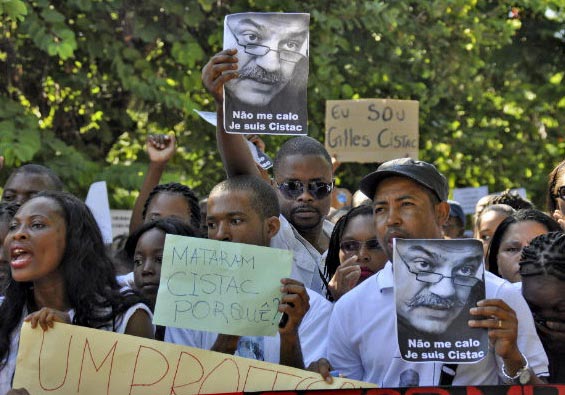
The ICJ calls for the prompt and thorough investigation into the killing of Gilles Cistac, a prominent academic and human rights defender.
Gilles Cistac served as a Professor of Law at the Faculty of Law, Universidade Eduardo Mondlane in Mozambique.
His death, at the hands as of yet un-indentified gunmen in Maputo, Mozambique, on Tuesday 3 March 2015, follows his involvement in the debates on the sensitive issues of decentralization of power and establishment of autonomous provinces in Mozambique.
It is also reported that he was the subject of recent attacks on social media by a person who used a pseudonym and called Gilles Cistac a spy and a traitor, and accused him, along with others, of subverting the country.
“Demonstrating its commitment to the rule of law and respect for human rights, which were central to Gilles Cistac’s work, the government must fulfill its obligation to investigate the killing of Professor Cistac, promptly and effectively, and to ensure that those responsible are brought to justice in fair proceedings,” said Arnold Tsunga the Africa Director of the ICJ.
These obligations arise as part of the government’s duty to protect the right to life including under the African Charter on Human and Peoples’ Rights and the International Covenant on Civil and Political Rights, international human rights treaties to which Mozambique is a party.
The government must also take steps to ensure protection of those, including human rights defenders, who exercise their right to freedom of expression.
Arnold Tsunga also called on the authorities in Mozambique to heed the message of the UN High Commissioner for Human Rights, Zeid Ra’ad Al Hussein, UN High Commissioner for Human Rights: “Human rights defenders are not violent seditionists, criminals, nor bloody revolutionaries, as so many governments like to portray them. They are the best of us, all of us. And they have a message. (…) Understand the message, talk to them about it, be persuaded or persuade, without violence, instead of silencing them, punishing them, their families, and their communities.”
The ICJ will continue to monitor is the investigation of this deadly attack as part work to promote enhanced respect for human rights and in defence of human rights defenders.
Contact:
Arnold Tsunga, t +27 716 405 926 ; e arnold.tsunga(a)icj.org
Feb 17, 2015 | News
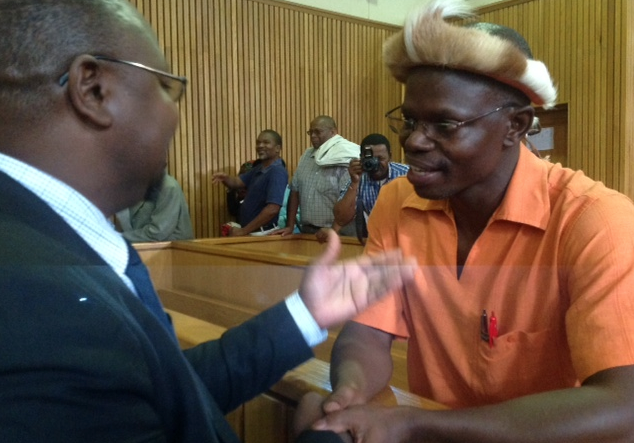
Alleging a range of human rights violations by Swaziland in the cases of Thulani Maseko and Bheki Makhubu, leading legal advocates today filed a petition with the UN Working Group on Arbitrary Detention (UNWGAD) in Geneva.
The American Bar Association’s Center for Human Rights, the global law firm Hogan Lovells and the ICJ jointly produced a petition calling for the UNWGAD to issue an opinion regarding the lawfulness of the continued incarceration of Thulani Maseko, an internationally recognized human rights lawyer and feature writer for The Nation magazine.
“The consequences of this arbitrary action against Thulani Maseko have not only violated his rights and exacted a heavy personal toll, but have also highlighted the rule of law deficit in Swaziland,” said Wilder Tayler, ICJ’s Secretary General. “Thulani Maseko has been denied his right to express an opinion on public affairs and the administration of justice, guaranteed under international law and affirmed in the UN Basic principles on the Role of lawyers.”
Thulani Maseko and journalist Bheki Makhubu were charged with two counts of contempt of court emanating from articles published in February and March 2014, in which they questioned circumstances surrounding the arrest of a government vehicle inspector.
They were sentenced to two years of imprisonment, without the alternative option of a fine at the end of a trial largely condemned by leading international rights groups as unfair and not complying with international standards on the right to a fair trial.
Some of the fair trial guarantees that have been breached, according to the legal petition filed with the UNGWAD, include the right to be tried by an independent and impartial tribunal; right to a public hearing; right to a legal counsel; right to the presumption of innocence; right to bail; and right to protection of the law.
“The use of contempt of court proceedings to suppress the right to freedom of expression is a violation of international human rights law,” said Marc Gottridge, partner at Hogan Lovells. “The right to freedom of expression is guaranteed in the Swazi constitution and international law, including treaties to which Swaziland is a party.”
“The general failings of the Swazi judiciary with respect to independence and impartiality makes it reasonable to conclude that there cannot be an effective domestic remedy for Thulani Maseko,” he added.
Contact:
Arnold Tsunga, Director, ICJ Africa Regional Programme, t +27 716 405 926 or +41 762 399 032, e arnold.tsunga(a)icj.org,
Matt Pollard, Senior Legal Adviser, ICJ, Centre for Independence of Judges and lawyers, t +41 22 979 38 12, e matt.pollard(a)icj.org
Marc Gottridge, Partner Hogan Lovells, t +1 212 918 3000, e marc.gottridge(a)hoganlovells.com
Ginna Anderson, Senior Counsel, Center for Human Rights, American Bar Association, t +1 202 442 3438, e ginna.anderson(a)americanbar.org
Background:
Thulani Maseko was arrested on 17th March 2014 following a warrant of arrest that was issued by the Chief Justice Michael Ramodibedi on his own motion.
This was after he had written an article titled “Where the Law Has No Place” criticising the courts for the way that a fellow Swazi citizen Mr Gwebu Bhantshana had been arrested and detained and the wider implications of that case on the rule of law in Swaziland.
Save for 3 days in April 2014 when he was released following Judge Mumcy Dlamini’s judgment declaring his arrest and detention wrongful and illegal, Thulani has been in custody since his initial arrest. Mr. Maseko was initially held at Sidwashini Correctional facility before he was taken to Big Bend Correctional facility, where he is currently lodged.
Further background material can be found here:
http://www.americanbar.org/news/abanews/aba-news-archives/2014/04/statement_of_jamesr.html
https://www.icj.org/swaziland-icj-condemns-the-harsh-prison-term-imposed-on-thulani-maseko-and-bheki-makhubu/
https://www.icj.org/swaziland-icj-condemns-the-conviction-of-celebrated-human-rights-lawyer-and-prominent-journalist-on-charges-of-contempt-of-court/
https://www.icj.org/swaziland-icj-concerned-at-detention-of-human-rights-lawyer-and-journalist/
Download the petition:
Swaziland-Maseko WGAD Petition-Advocacy-2015-Eng (full text in PDF)
The lawyers at Hogan Lovells US LLP who worked on this petition are Marc Gottridge, Dianne Milner, Allison Holt and Hans H. Hertell.
Feb 5, 2015 | News
The ICJ is concerned by yesterday’s attack on lawyer Murad Magomedov in Makhachkala, near the Supreme Court of Dagestan building. The ICJ calls on the authorities to take effective measures to guarantee the security of lawyer Magomedov.
The attack took place during a break in a Supreme Court hearing in which Murad Magomedov was defending his client, Akhmed Israpilov, on charges of terrorism.
The lawyer was severely beaten by a group of five people, and sustained serious head injuries.
He was taken to the Republican Central Clinical Hospital, where he remains, recovering from concussion, multiple injuries and fractures of the jaw.
“This is yet another in a series of physical attacks against lawyers in Dagestan and shows the urgent need for the authorities to take effective measures to protect lawyers in the region,” Temur Shakirov, ICJ Legal Adviser, said today. “Both local and federal authorities in the Russian Federation must ensure a prompt investigation leading to those responsible for this violent act being brought to justice.”
The UN Basic Principles on the Role of Lawyer provide that “where the security of lawyers is threatened as a result of discharging their functions, they shall be adequately safeguarded by the authorities”.
Under international human rights law, the State must take steps to protect the security of persons who the authorities know or ought to know are under threat, and must ensure an independent, prompt, and thorough investigation of any attacks on the life or physical integrity of individuals.
Murad Magomedov has worked as a lawyer with “Memorial” Human Rights Centre since autumn 2014 and represents individuals affected by of a “special operation” in Dagestan’s Vremenyi village in September 2014. In this case Magomedov does not act as a Memorial representative.
The ICJ has previously highlighted cases of assault and killing of lawyers in Dagestan.
Contact:
Róisín Pillay, Director, Europe Programme, roisin.pillay(a)icj.org
Temur Shakirov, Legal Adviser, Europe Programme, temur.shakirov(a)icj.org

Feb 3, 2015 | News
On 2 February, the ICJ observed the trial of lawyer Kalid Baghirov, before the Nizami District Court of Baku.
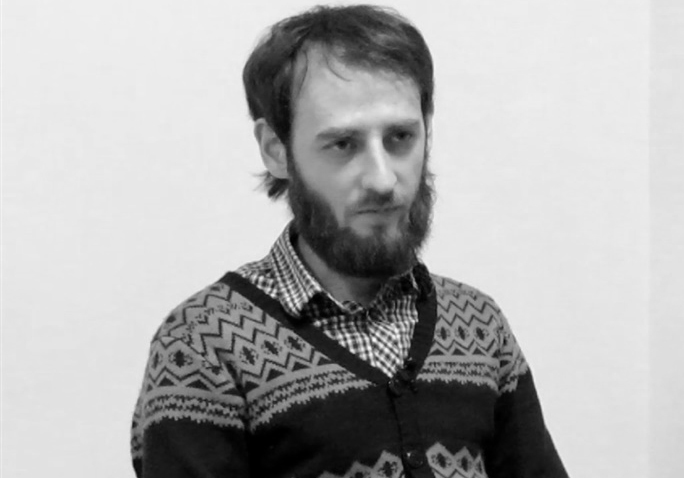
In the case, the Azerbaijan Collegium of Lawyers seeks disbarment of the prominent lawyer (photo), who recently acted in a number of high profile cases in Azerbaijan, including on behalf of human rights defenders.
Following a letter of the Sheki Court of Appeal alleging misconduct by Khalid Baghirov during the trial against Ilgar Mammadov, leader of the “Republican Alternative” movement and former presidential candidate, on 10 December 2014 the Presidium of the Collegium of Lawyers suspended Khalid Baghirov’s practice.
At the same time, the Presidium applied to the Nizami District Court seeking complete termination of his right to practice law. The Court accepted the case for consideration.
The ICJ commissioned an international observer, Liliya Vigel, a lawyer practicing in the Republic of Uzbekistan, to observe the hearing in the case before the Nizami District Court.
The ICJ observer also met with the representative of the Collegium of Lawyers, with lawyer Baghirov, with members of the Presidium of the Collegium, and with a number of non-governmental organizations to collect information about the case.
The ICJ continues to monitor the case in relation to international standards on human rights and the rule of law, including as regards respect for the role of lawyers, and plans to publish a report on the proceedings in due course.
Contact:
Róisín Pillay, Director, Europe Programme, roisin.pillay(a)icj.org
Temur Shakirov, Legal Adviser, Europe Programme, temur.shakirov(a)icj.org