Jul 19, 2019 | News, Op-eds
An opinion piece by Emerlynne Gil, Senior Legal Adviser, ICJ Asia-Pacific Programme.
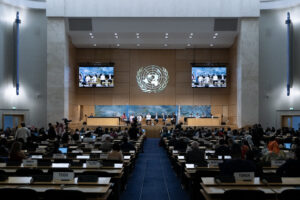
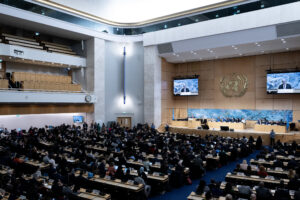
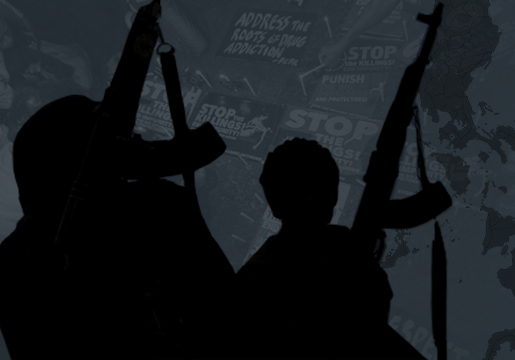
Last week, the UN Human Rights Council adopted a resolution expressing concern over the human rights situation in the Philippines. It specifically expressed grave concern over the killings and disappearances arising from the drug war of the current administration.
Since 2016, when the government began its campaign against illegal drugs, there have been reports of thousands of killings of people who were allegedly involved in the drug trade and drug use.
Furthermore, in the recent report of Lawyers Rights Watch Canada (LRWC), there have been more than 40 lawyers killed under the current administration.
The resolution was, in fact, restrained in tone and content. Human rights groups like the ICJ had hoped that it would establish an international mechanism to investigate the killings and other human rights violations.
However, the Council held back and merely urged the Philippine government to “take all necessary measures to prevent extrajudicial killings and enforced disappearances”.
It also asked the Philippine government “to cooperate with the Office of the High Commissioner on Human Rights” and other international human rights mechanisms, and requested the UN High Commissioner for Human Rights to present a report to the Council for discussion in June 2020.
The Philippine government sent a big delegation to Geneva to lobby against the adoption of any resolution. During the informal consultations among States on this resolution, there were theatrics from the delegation, which walked out during the first consultation.
At the second consultation, nobody from the delegation attended, but former Ambassador Rosario Manalo, who also previously represented the Philippines in the ASEAN Intergovernmental Commission on Human Rights (AICHR), and is now a member of the UN Committee on the Elimination of Discrimination against Women, was present.
Purporting to speak as a ‘human rights defender’, she launched an angry tirade against Iceland as the sponsor of the resolution and the other States who supported it.
She also called the Filipino human rights defenders in the room who were seated right next to her as ‘treacherous’, and accused them of peddling lies about the country.
The theatrics in Geneva did not serve the Philippine government well. In the end, the Council voted to adopt the resolution.
Now that it has been adopted, what does this mean for Filipinos? The UN Human Rights Council, like any international human rights body, has significantly limited ability to directly protect human rights on the ground.
Thus, while it has adopted this resolution, the Council will not have the power to actually stop the unlawful killings and other human rights violations being committed. The Council will be unable to compel the implementation of the recommendations in any resolution it adopts, where a State is unwilling to cooperate.
Hence, the Philippine government still holds the discretion on whether or not to implement the recommendations made by the Council.
This is where ordinary Filipinos come in. The people – as the eyes and ears on the ground – are indispensable to the work of international human rights bodies like the Human Rights Council.
The effectiveness of the Council in protecting human rights on the ground greatly relies upon the extent to which the people on the ground – including human rights defenders – are able to engage and work with them.
The information provided by the general public regarding the situation on the ground is very important to the work of international human rights mechanisms like the Council. This information gives these mechanisms a clearer and more accurate picture of the human rights situation in the country.
We should thus not be silent. We should continue pressing the government to implement the recommendations in this resolution. The key recommendation is that the government should investigate extrajudicial killings and enforced disappearances and hold the perpetrators accountable.
In its formal statement to the Council after adoption of the resolution a few days ago, the representative of the Philippine government at the Council vigorously claimed that the country has ‘fully functioning domestic accountability mechanisms’, ignoring the fact that authorities have been unwilling or unable to conduct effective investigation or prosecutions for any of the numerous allegations of unlawful killings.
Hence, we should press the government to demonstrate that its claim that domestic accountability mechanisms are functioning is true, and that it should then use these mechanisms by investigating the killings and disappearances and punishing the perpetrators.
It is a welcome development that the Human Rights Council passed this resolution on the human rights situation in the Philippines.
But the work does not end there. There is a symbiotic relationship between the actions of the people on the ground and the work of international human rights mechanisms like the Council.
It is now left to us to press our government for the implementation of the recommendations in the resolution.
Jul 11, 2019 | News
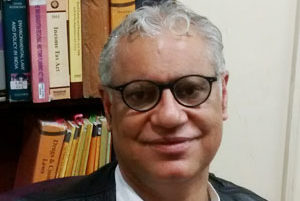
The ICJ today condemned the raids on 11 July by India’s Central Bureau of Investigation (CBI) on the homes and offices of Anand Grover and Indira Jaising, two lawyers prominent for frequently challenging the Indian government’s failures to respect and promote the rights of all people in India.
Grover and Jaising are both Supreme Court lawyers and co-founders of the Lawyers Collective, a non-governmental organization.
These raids were reportedly conducted pursuant to CBI’s registration of criminal charges into alleged violations of Foreign Contribution (Regulation) Act (FCRA), a much criticized law frequently used to target human rights defenders and critics of the Indian government.
“This raid seems designed to harass and intimidate two tireless advocates of Constitutional and international rights in India,” said Sam Zarifi, Secretary-General of the ICJ.
“The Indian government must immediately cease harassment of the Lawyers Collective and its founders Anand Grover and Indira Jaising,” he added.
The CBI raids appears to be based on a 2016 Ministry of Home Affairs report, now under appeal in the Bombay High Court, and without any material change in circumstances since its release.
The raid has also been conducted notwithstanding a National Human Rights Commission statement seeking a status report from the CBI by 21 July 2019 to ensure that the investigation is “non-discriminatory and to avoid arbitrariness”.
The attack is emblematic of a broader pattern of official threats to and harassment of Indian civil society in general, and the Lawyers Collective in particular.
Lawyers Collective’s FCRA license was cancelled in November 2016, a decision that is under appeal in the Bombay High Court. The action relied upon overly broad and vague legal provisions of the FCRA that violate India’s legal obligation to respect and protect the rights to freedom of expression, association and peaceful assembly.
“The repeated use of the FCRA to target civil society including Lawyers Collective has had a devastating chilling effect on public comment about the government,” said Zarifi.
“The law should be repealed, or substantially amended to include safeguards against arbitrary use of its provisions, and to protect freedom of expression and association,” he added.
The ICJ supports the 2016 call by three United Nations Special Rapporteurs to the Indian Government to repeal FCRA, which decried the FCRA’s use to “silence organisations involved in advocating civil, political, economic, social, environmental or cultural priorities, which may differ from those backed by the Government”.
Jun 13, 2019 | News
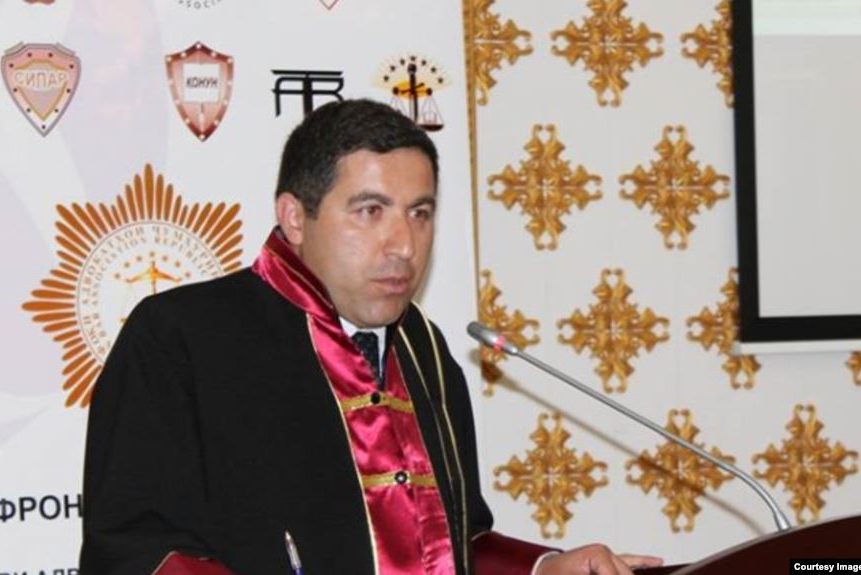
Today, the ICJ called on the authorities in Tajikistan to immediately release a prominent lawyer who is currently serving a sentence of imprisonment of 28 years on dubious charges.
The UN Working Group on Arbitrary Detention (WGAD) published a decision in Mr Yorov’s case on (date), finding that “the trials of Mr. Yorov were carried out in total disregard for the guarantees encapsulated in article 14 of the Covenant, being of such gravity as to give the deprivation of liberty of Mr Yorov an arbitrary character […].”
The Working Group recommended that the government remedy the situation of Yorov without delay and to this end “release Mr. Yorov immediately and accord him an enforceable right to compensation and other reparations, in accordance with international law”.
The ICJ has previously expressed concern that Buzurgmehr Yorov’s conviction may constitute a reprisal for his defense work in high-profile political trials in connection with his representation of thirteen leaders of the Islamic Renaissance Party of Tajikistan (IRPT).
The ICJ earlier expressed concerns at the conviction of the lawyer to a 28 year sentence in prison, which is based on clearly improper charges related to the defense of his clients.
The ICJ welcomes the decision of the WGAD and calls on the Tajikistan authorities to fully implement the decision and to take all necessary measures to protect lawyer Yorov, his family and his lawyers against any threats to their security, or any intimidation, hindrance, harassment or improper interference with their performance of their professional functions as lawyers.
In this regard, the ICJ notes recent protests by dozens of individuals who took part in a rally against Yorov in front of the representative offices of the United Nations and the European Union in Tajikistan, soon after the decision of the WGAD.
Posters of the demonstrators called on the UN High Commissioner of Human Rights to “take her hands off Tajikistan” and named organisations that had defended Mr Yorov or brought the petition on behalf of Yorov to the UN WGAD.
In this context, it is imperative that the Tajikistan government immediately publicly affirm the legitimacy of the decision of the WGAD and make clear its commitment to complying with it, the ICJ underlined.
Background
Buzurgmekhr Yorov was arrested two years ago on 28 September 2015, on charges of “fraud” and “forgery of documents.” Later, he was accused of violating three more articles of the Criminal Code, including in relation to alleged “public calls for extremist activity.”
On 6 October 2016, The Dushanbe City Court sentenced Yorov to 23 years imprisonment in a strict regime prison.
In March 2017, Yorov was sentenced to an additional two years’ deprivation of liberty for “contempt of court and insulting the representative of power.” In August 2017, he received a further three years sentence on charges of “insulting the president.”
The ICJ has, on a number of occasions, expressed its serious concerns over the arrest and conviction of Buzurgmehr Yorov and other lawyers in Tajikistan.
On 24 May 2019, the UN Working Group on Arbitrary Detention, a group of independent experts established in 1991 whose members are appointed by the UN Human Rights Council, published an Opinion finding a number of violations of human rights of Yorov protected under the International Covenant on Civil and Political Rights and recommended as a remedy his immediate release, payment of compensation or other reparation and conducting an investigation into the violation of Yorov’s rights.
The UN Basic Principles on the Role of Lawyers require that the Governments ensure that lawyers “are able to perform all of their professional functions without intimidation, hindrance, harassment or improper interference ”. Under these Principles “where the security of lawyers is threatened as a result of discharging their functions, they shall be adequately safeguarded by the authorities.” The right to “offer and provide professionally qualified legal assistance or other relevant advice and assistance in defending human rights and fundamental freedoms” is guaranteed by the Declaration on the Right and Responsibility of Individuals, Groups and Organs of Society to Promote and Protect Universally Recognized Human Rights and Fundamental Freedoms (Article 9.3(c)).
May 24, 2019 | News
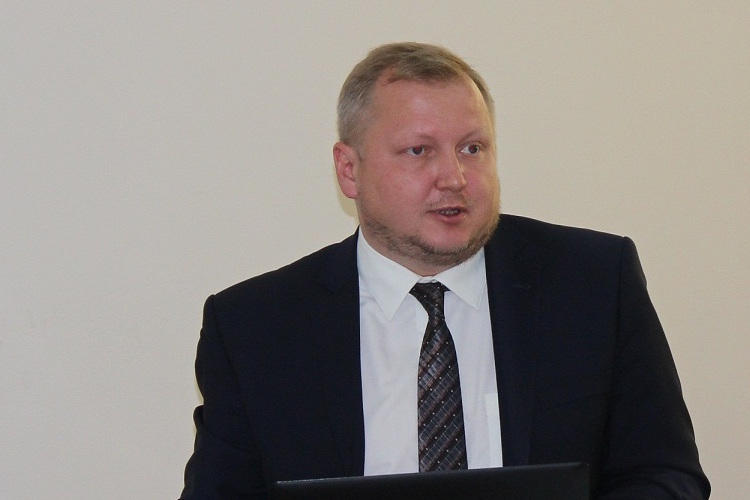
Following the decision of the Petropavlovsk Court to disbar Sergey Sizintsev the former Executive Director of the National Bar Association, the ICJ reiterates its concerns at the unjustified proceedings against him.
The ICJ calls on the relevant authorities to revise the decision to disbar Sizintsev, which is not issued in accordance with the law and may constitute retaliation for his open criticism of the problematic reform of the legal profession in Kazakhstan.
On 21 May, the Petropavlovsk City Court No. 2, in a hearing chaired by judge Larisa Krukova, approved the application of the Ministry of Justice of the Republic of Kazakhstan to revoke Sergey Sizintsev’s license to practice law.
The formal reason for the disbarment was that the lawyer practiced law while being the Executive Director of the Republican Bar Association from 2016 to 2018.
According to the complaint of the Ministry of justice, a member of the Bar Association was prohibited from “occupying a position in the public service or engaging in business activities or holding any other paid position” in accordance with article 33.11 of the “Law on Advocates Activity and Legal Aid”.
Sizintsev argued that the Ministry of Justice incorrectly interpreted the notion of “another paid position”, since the second sentence of the same article states that “A lawyer has the right to be elected to a paid elected or appointed position in the Bar Association, the Republican Bar Association and international public associations of lawyers”.
Also, the lawyer stated that he had previously addressed a request to the Ministry of justice asking about possibility of holding a position in the Bar Association and working as an advocate and the Ministry of justice in its official response stated that “Lawyers occupying elective or appointed posts in the territorial or Republican bar associations are not obliged to take any action to terminate their license to engage in advocacy, unless there are other grounds provided by law”.
It was also answered, “that in this connection, for the indicated reasons, the validity of the license for the right to engage in advocacy activity should not been suspended”. In addition, the Ministry of Justice previously voiced a similar position on its official web-portal in response to a request from another user.
The ICJ has previously raised concerns that pressure on Sizintsev and other lawyers started after they had actively advocated against the law “On Advocates Activity and Legal Aid”, which attempted to interfere with the independence of the legal profession.
In that regard, the ICJ reiterates that according to the UN Basic Principles on the Role of Lawyers, lawyers like other citizens are entitled to freedom of expression, belief, association and assembly.
In particular, they have the right to take part in public discussion on matters concerning the law, the administration of justice and the promotion and protection of human rights and to join or form local, national or international organizations and attend their meetings, without suffering professional restrictions by reason of their lawful action or their membership in a lawful organization. (Principle 23).
In cases of disciplinary action against lawyers, international standards provide that “[a]ll disciplinary proceedings shall be determined in accordance with the code of professional conduct and other recognised standards and ethics of the legal profession and in the light of [the UN Basic Principles on the Role of Lawyers]” (Principle29).
Therefore, the ICJ calls for the case to be reconsidered on appeal in accordance with the clear terms of Article 33.11 of the Law on Advocates Activity and Legal Aid, and in light of the rights of lawyers to exercise their freedom of expression and association including through participation in organisations of lawyers and through criticism of legislation affecting the profession.
The ICJ further calls on the Ministry of Justice to end pressure on the active members of the Bar Association for legitimate exercise of their rights and duties as lawyers in accordance with the national legislation and international human rights standards and law.
May 20, 2019 | News
The ICJ, the Geneva Bar Association and the Geneva legal community have joined forces to launch the ICJ-Geneva Lawyers International Cooperation Initiative. Under the Initiative, Geneva lawyers will join ICJ missions on the five continents to support the independence and integrity of lawyers and judges at risk, and to promote the Rule of Law.
The Initiative launches with a mission tomorrow, May 21st. A lawyer from the Geneva Bar Association will go to Guatemala to work the ICJ team and lawyers investigating and fighting the forced displacement of the indigenous community of La Laguna de El Petén.
Missions under the initiative will typically involve, among other things:
– Trial observations;
– Fact-finding missions;
– Support for the independence of lawyers and bar associations;
– Capacity building and training activities;
– Expertise and academic support.
Since its founding in 1952, the ICJ has played a unique and preeminent role as a non-governmental organization for the defense of the Rule of Law around the world, and the independence of judges and lawyers.
With the presence of its headquarters in Geneva for more than 60 years, through the Initiative the ICJ is further deepening its special bond with the city, to spread and share the spirit of Geneva.
“International support and solidarity are crucial to the work of lawyers defending the human rights of those who are often marginalized from power,” said Michaël Sombart, Director of Strategic Partnerships of the ICJ. “With this project the ICJ can help lawyers around the world benefit from the reputation and high standing of the Swiss legal community and bring the message of the Genève humanitaire beyond borders.”
“This initiative is welcome and we support it with commitment,” said Sandrine Giroud, member of the Geneva Bar Council and Chair of its Human Rights Commission. “The Rule of Law is under attack around the world and lawyers play a vital role in its defense and the impartiality of justice. Our support for the ICJ-Geneva Lawyers International Cooperation Initiative is in line with the lawyer’s mission as a bulwark against the arbitrariness and the defense advocacy tradition of the Geneva Bar Association. We welcome this collaboration, which is part of the fight for justice and respect for fundamental rights and guarantees. ”
Nicolas Gürtner, First Secretary of the Young Bar Association of the Geneva Bar Association, said: “This project offers a remarkable opportunity for young lawyers to work alongside the jurists of international repute of the ICJ in favour of the guarantee of Rule of Law.”
The Steering Committee for the Initiative includes:
– The ICJ;
– For the Geneva Bar Association: the Commission on Human Rights and the Young Bar Association;
– Representatives of the Geneva judicial and academic world, including Professor Robert Roth, former President of the Court of Cassation, former director of the Geneva Academy, Professor Emeritus of the University of Geneva
Contact :
Michaël W. Sombart, ICJ, Director of Strategic Partnerships, t: +41 22 979 38 31 ; m: +41 77 965 98 45 ; e: michael.sombart(a)icj.org