Aug 31, 2018 | Advocacy, Non-legal submissions
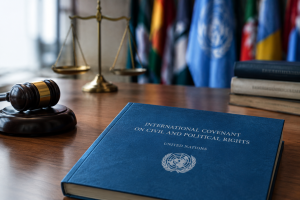
Today, the ICJ made a submission to the Committee on Economic, Social and Cultural Rights in advance of Committee’s examination of South Africa’s initial periodic report under the International Covenant on Economic, Social and Cultural Rights. South Africa ratified the Covenant in 2015.
When CESCR convenes to consider South Africa’s report on 2-3 October 2018, it will therefore be the first time that the Committee has the opportunity to review a report from South Africa on the implementation of its Covenant obligations.
In its submission, supplementing submissions made by a range of South African civil society organizations, the ICJ drew the Committee’s attention to:
a) South Africa’s incomplete discharge of its obligations in terms of the Covenant;
b) The South African Government’s need for guidance from the Committee on the discharge of its obligations in terms of the right to work;
c) The South African Government’s need for guidance from the Committee on the discharge of its obligations in terms of the right to an adequate standard of living;
d) The South African Government’s failure to report effectively and accurately on its efforts to realize the ESC rights of persons with disabilities;
e) The uncertain status of the South African Government’s commitment to the enactment of legislation to ensure the implementation of the Covenant;
f) The uncertain status of the South African Government’s intention to ratify the Optional Protocol to the Covenant; and
g) The uncertain status of the South African Government’s declaration with regard to the right to education.
The ICJ’s submission invites CESCR to make various specific recommendations to the Government of South Africa in its Concluding Observations on each of these issues. Broadly, the ICJ also invites CESCR to recommend to the Government of South Africa time-bound commitments to processes leading to:
1. The full domestication of Covenant in South African law;
2. A comprehensive review of South Africa’s domestic laws and policies on ESC rights to ensure that they are implemented consistently with South Africa’s obligations in terms of the Covenant; and
2. The ratification of Optional Protocol to the International Covenant on Economic, Social and Cultural Rights.
The ICJ’s submission also supports submissions by civil society organizations and the South African Human Rights Commission inviting CESCR to recommend that South Africa withdraw its declaration relating to its “immediate” obligations in terms of the Covenant right to education.
Finally, the ICJ considers it critical that the South African Government reflect on the ways in which the Covenant to increases, alters and nuances the nature and content of its human rights commitments and obligations in terms of the realization of economic, social and cultural rights.
This the ICJ submits is particularly crucial in regard to rights which are entrenched in the Covenant but not the South African Constitution such as the right to work (Articles 6-8) and the right an adequate standard of living (Article 11).
In undertaking this process, the ICJ submits that due regard should be had the standards set out in the Covenant as interpreted by the Committee in its general comments.
SouthAfrica-ICJSubmissionCESCR-Advocacy-Non-legal submission-2018-ENG (full text, PDF)
Jun 22, 2018 | Events, News
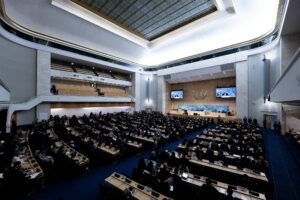
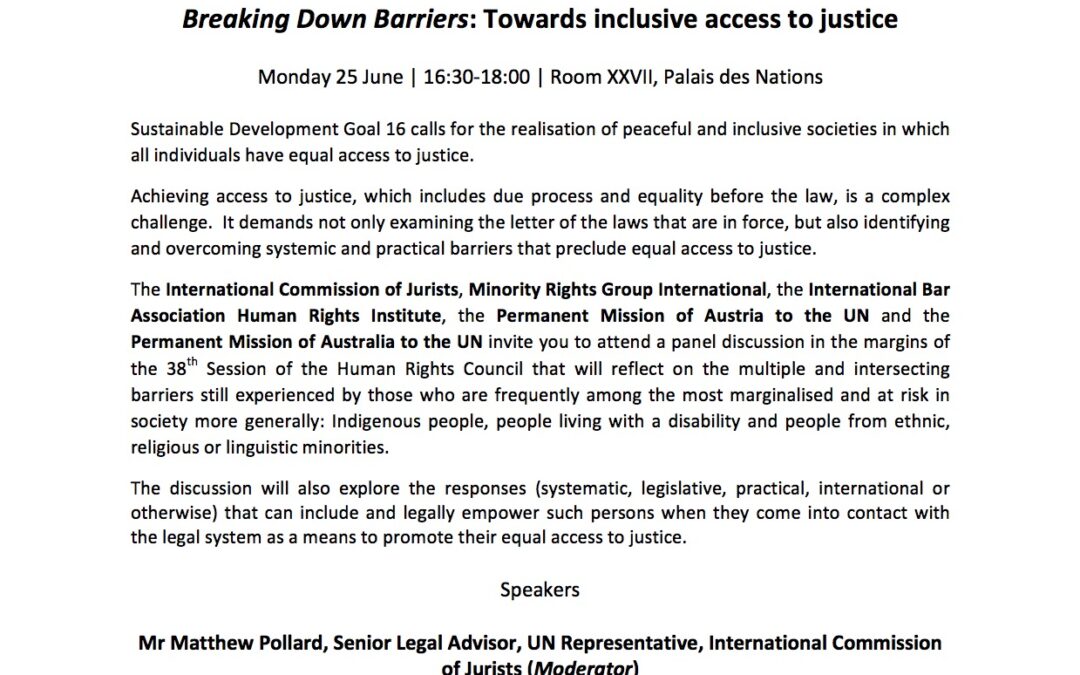
This side event to the UN Human Rights Council session addresses equal and effective access to justice for indigenous people, people living with a disability and people from ethnic, religious or linguistic minorities.
Monday 25 June | 16:30-18:00 | Room XXVII, Palais des Nations
Sustainable Development Goal 16 calls for the realisation of peaceful and inclusive societies in which all individuals have equal access to justice.
Achieving access to justice, which includes due process and equality before the law, is a complex challenge. It demands not only examining the letter of the laws that are in force, but also identifying and overcoming systemic and practical barriers that preclude equal access to justice.
The International Commission of Jurists, Minority Rights Group International, the International Bar Association Human Rights Institute, the Permanent Mission of Austria to the UN and the Permanent Mission of Australia to the UN invite you to attend a panel discussion in the margins of the 38th Session of the Human Rights Council that will reflect on the multiple and intersecting barriers still experienced by those who are frequently among the most marginalised and at risk in society more generally: Indigenous people, people living with a disability and people from ethnic, religious or linguistic minorities.
The discussion will also explore the responses (systematic, legislative, practical, international or otherwise) that can include and legally empower such persons when they come into contact with the legal system as a means to promote their equal access to justice.
Speakers:
Mr Matthew Pollard, Senior Legal Advisor, UN Representative, International Commission of Jurists (Moderator)
Dr June Oscar AO, Australia’s Aboriginal and Torres Strait Islander Social Justice Commissioner, Australian Human Rights Commission
Mr Glenn Payot, UN Representative, Minority Rights Group International
Ms Victoria Lee, Programme Manager, Human Rights and Disability Team, Office of the High Commissioner for Human Rights
For more information contact un(a)icj.org
Mar 21, 2017 | News
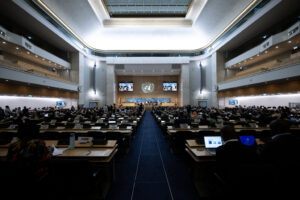
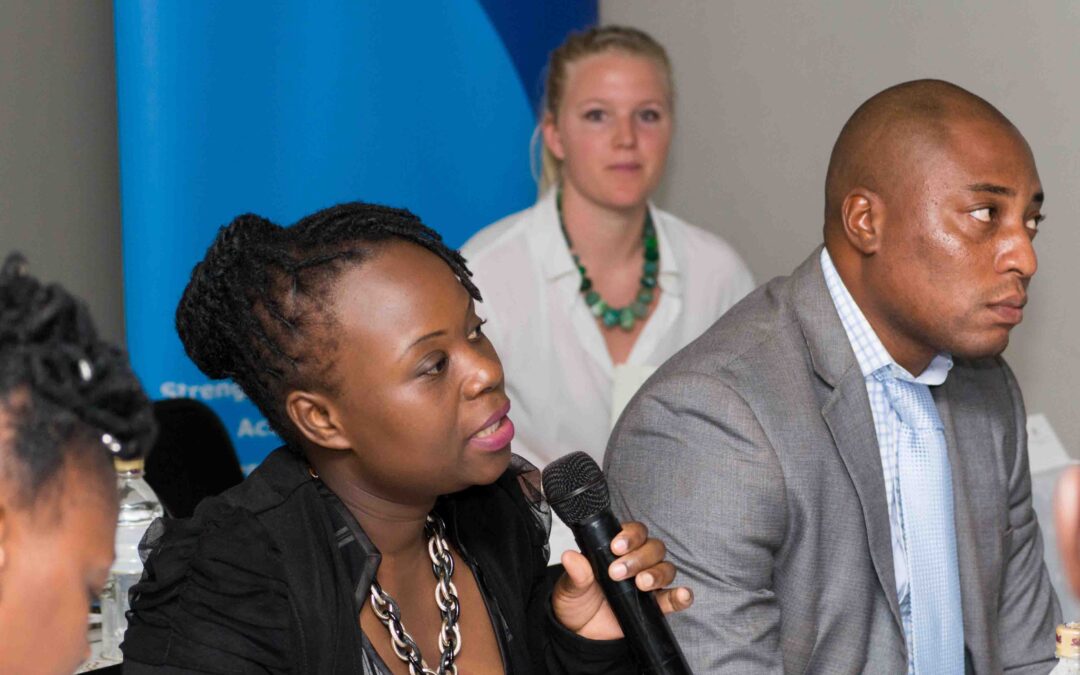
The National Prosecuting Authority (NPA) held a consultation conference on case and docket management system in Harare on 21 March 2017. The ICJ provided technical support.
The consultation conference was intended to validate findings of the field and desk research conducted in respect of case management in Zimbabwe.
The ICJ engaged consultants reviewed the case and docket management system as it relates to other justice actors such as the judiciary, police, prisons and legal aid providers.
The case and docket management assessment was measured against regional and international comparative standards.
The assessment focused on how case and docket management systems address the rights of vulnerable groups’ including women, unrepresented minors, juveniles and persons with disabilities.
From these consultations and field work, the NPA will be supported with a comprehensive, specific and detailed proposal with practical steps for adopting an improved case and docket management system.
Further, the findings will make recommendations on strengthening the case management system in Zimbabwe and how to address the needs and interests of the various justice sector stakeholders.
The consultation conference was attended by the Acting Prosecutor General, Deputy Prosecutor General, National Director of Public Prosecutions, senior law officers, senior magistrates, clerks (criminal courts), representatives from Zimbabwe Prisons and Correctional Services (ZPCS), Zimbabwe Republic Police (ZRP), and Zimbabwe Human Rights Commission (ZHRC).
Civil society representatives included directors and senior staffers from Zimbabwe Human Rights NGO Forum, Zimbabwe Lawyers for Human Rights (ZLHR) among others.
This consultation was held with financial support from the Foreign Commonwealth Office (FCO) Magna Carta Fund, through the British Embassy in Harare.
Contact
Arnold Tsunga, ICJ Regional Director for Africa, t: +27 716 405 926, e: arnold.tsunga(a)icj.org
Jul 22, 1992 | News
The ICJ has urged Japan to revise its 1988 Mental Health Law in order to better protect the human rights of psychiatric patients.