Nov 22, 2019 | News
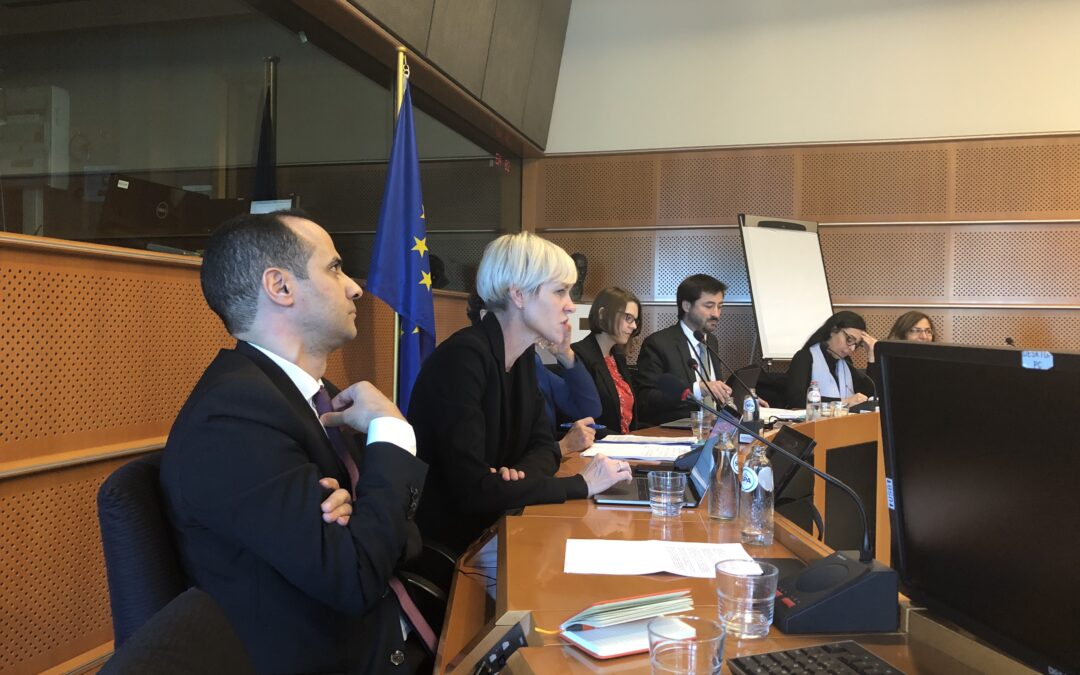
On 20 November 2019, the ICJ and Tineke Strik, Member of the European Parliament, hosted a roundtable discussion in Brussels on the ICJ’s report Accountability for Crimes under International Law in Libya: An Assessment of the Criminal Justice System.
Panelists called for the establishment of a Human Rights Council mandated Commission of Inquiry on Libya and for States to refrain from entering or implementing agreements that could give rise to support for or complicity in violations of international law.
They also called for the intensification of monitoring of Libyan Coast Guard operations and publication of its key findings, and for the European Commission to ensure its cooperation with Libyan authorities is conditional on meeting concrete, verifiable and timebound benchmarks.
At the launch, Said Benarbia and Kate Vigneswaran, MENA Programme Director and Senior Legal Adviser respectively, discussed the findings and recommendations of the ICJ’s report examining the criminal justice framework in Libya. The report finds that investigations and prosecutions of crimes under international law have been limited to a handful of cases, and substantial reforms to the legal framework are required to ensure fair and effective justice in future cases.
In light of the report’s findings, Marwa Mohammed, Head of Advocacy and Outreach for Lawyers for Justice in Libya, discussed the arbitrary detention of thousands of migrants, refugees and asylum seekers in Libya, systematic human rights violations and abuses being committed against them, and absence of options for protection, repatriation and return, including as a result of EU States’ policies.
Philippe Dam, Advocacy Director for Europe and Central Asia at Human Rights Watch, then discussed the engagement of the EU, European Commission and EU States with Libyan authorities, including in the context of violations and abuses committed against migrants, refugees and asylum seekers intercepted by the Libyan Coast Guard.
The panel was introduced by Karolina Babicka, Legal Advisor for the ICJ’s Europe and Central Asia Programme, and moderated by Tinneke Strik. It was attended by representatives of the European Commission, the EEAS, UNHCR, non-government organizations and independent persons
Nov 4, 2019 | News
The ICJ today expressed its grave concern at the conduct of police forces in their enforcement of a court order to remove refugees and asylum seekers from the offices of the United Nations High Commission for Refugees (UNHCR) in Cape Town on October 30.
Police appeared to be using excessive and unlawful force, resulting in injuries to some protestors.
The ICJ called for a prompt independent, impartial, and through investigation into the police conduct, with a view to holding account officials responsible for any ill-treatment and to prevent such methods of policing to recur.
While trying to remove largely peaceful protestors from the premises, police fired rubber bullets and stun grenades against refugees who were protesting in the streets of Cape Town last week. A video clip widely shared on social media showed police ripped a baby from a woman.
The court had granted an interdict to remove the group in Cape Town on October 18 at the Cape Town Magistrate’s Court following an application by the building landlord to evict the group. More than 100 protestors were arrested and released on warnings.
“The way refugees were treated in Cape Town on Wednesday is shameful. South African authorities should be acting to protect migrants from the xenophobic violence and threats they have been experiencing, not to perpetuate them,” said Arnold Tsunga, ICJ Africa regional director.
Refugees and asylum seekers had staged a sit-in outside the UNHCR offices in Cape Town and Pretoria for four weeks now, pleading to be resettled outside of South Africa, claiming that they felt unsafe. They said that recent attacks on foreign nationals left them feeling unsafe in South Africa. (Read the ICJ statement on the attacks here.)
In a statement, the UNHCR said the organization had received concerns of personal safety, access to documentation, challenges accessing services, and lack of job opportunities from the asylum seekers and refugees who had been camping outside of its offices.
The statement also indicated that some of the protesting group had demanded resettlements, which were only available for a limited number of vulnerable refugees. The UNHCR said it had been engaging with the refugees and asylum seekers since the protests began, encouraging them to participate in constructive dialogue to address their grievances and find a peaceful resolution to the situation.
“We call on South African authorities the United Nations Human Rights Council (UNHRC) to urgently address migrants’ concerns in a constructive and amicable manner before the situation escalates further,” Tsunga added.
Background
South African law and international law forbid the unnecessary and disproportionate use of force and protect people from ill-treatment. .
The UN Basic Principles on the Use of Force and Firearms by Law Enforcement Standards provides that law enforcement officials must use restraint and may use force only where only where strictly necessary, and any such force must be proportionate to the legitimate object, such as making a lawful arrest and protecting the lives and safety of others.
South Africa is party of the African Charter of Human and Peoples Rights and the International Covenant on Civil and Political Rights, both of which guaranteed from torture and cruel, inhuman or degrading treatment, including that resulting from unlawful use of force.
Contact
Arnold Tsunga (Director): c: +26 37 7728 3249 e: arnold.tsunga(a)icj.org
Shaazia Ebrahim (Media Officer): c: +27 71 670 6719 e: shaazia.ebrahim(a)icj.org
Aug 27, 2019 | News
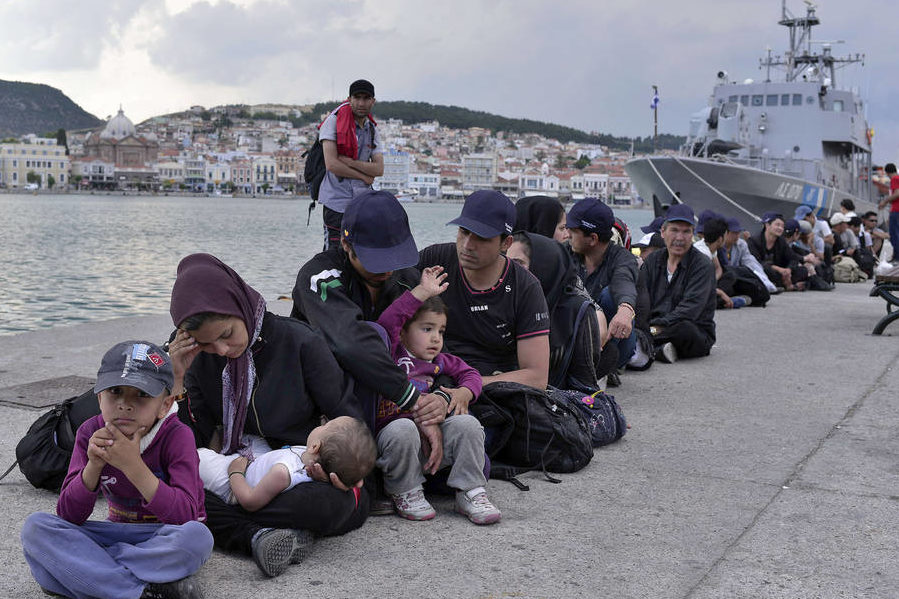
Following the killing of an Afghan boy in the Moria reception center in Greece, the ICJ calls on the Greek authorities to effectively implement measures of protection prescribed to Greece this May by the European Committee on Social Rights.
According to information by the UN High Commissioner for refugees, the 15-year-old Afghan boy was killed and two other boys injured after a fight broke out at the Moria reception centre on the Greek island of Lesvos.
The safe area at the Moria Reception and Identification Centre, RIC, hosts nearly 70 unaccompanied children, but more than 500 other boys and girls are staying in various parts of the overcrowded facility without a guardian and exposed to exploitation and abuse.
“This is not a situation unique to Moria. In other parts of Greek islands and also on mainland Greece human rights of migrant children are being violated,” said Karolína Babická, ICJ Legal Adviser.
Security of children as well as access to basic needs, such as appropriate shelter, food water or medical care, were the focus of a recent case the ICJ brought together with ECRE and Greek Council for Refugees (GCR) to the European Committee on Social Rights (ECSR).
The ECSR acknowledged the urgency of the situation and decided on immediate measures in the case already on 23 May 2019.
“It is unacceptable that the decision on interim measures has not yet been implemented by the Greek government and now we have to witness such tragic events like a death of a child in the camp,” said Karolína Babická.
“It is a sad wake-up call to the Greek administration that the situation cannot remain like this,” she added.
In its decision, the Committee members required the Greek government to immediately provide migrant children with appropriate shelter, food, water, education and medical care; to remove unaccompanied migrant children from detention and from Reception and Identification Centers (RICs) at the borders, place them in suitable accommodation for their age and appoint effective guardians.
“Greece must urgently bring those children to safety and make sure their basic needs are met and human rights are protected, in order to comply with its international legal obligations,” said Róisín Pillay, ICJ Europe and Central Asia Programme Director.
Contact:
Karolína Babická, Legal Adviser, ICJ Europe and Central Asia Programme, m +32 475 46 2067 ; e: Karolina.Babicka(a)icj.org
Aug 8, 2019 | News
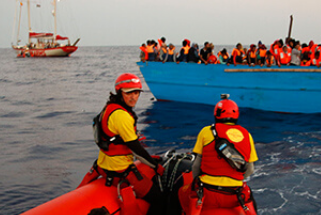
The ICJ called today on Italy and Malta to cooperate to swiftly provide a place of safety for the disembarkment of the 121 migrants, likely including asylum seekers, on board the Open Arms vessel.
Open Arms rescued 123 people that left Libya and were on a situation of distress in international waters, and has been navigating seven days on the Central Mediterranean Sea in search of a place of safety for disembarkment.
Currently Italy and Malta (the nearest States) and Spain (the flag State) have not granted access to their territorial waters.
“When a boat is conducting an operation of rescue it is the duty under international law for neighbouring States to provide a place of safety,” said Massimo Frigo, ICJ Senior Legal Adviser.
“The situation on the boat, with also 30 children and two babies, is rapidly deteriorating and it is of the utmost urgency to allow for their disembarkment,” he added.
“The refusals and lack of cooperation by Italy, Malta and Spain is in contravention of their obligations under the law of the sea,” said Frigo.
“These States should open their harbours and the EU should work hard to ensure that resettlement is ensured so as to relieve pressure from them.”
Relevant provisions of international law include: UN Convention on the Law of the Sea (Article 98); International Convention for the Safety of Life at Sea (SOLAS), Annex, Chapter V; International Convention on Maritime Search and Rescue.
Contact:
Massimo Frigo, ICJ Senior Legal Adviser, t:+41 22 979 3805 ; e: massimo.frigo(a)icj.org
Jul 31, 2019 | News, Publications, Reports, Thematic reports
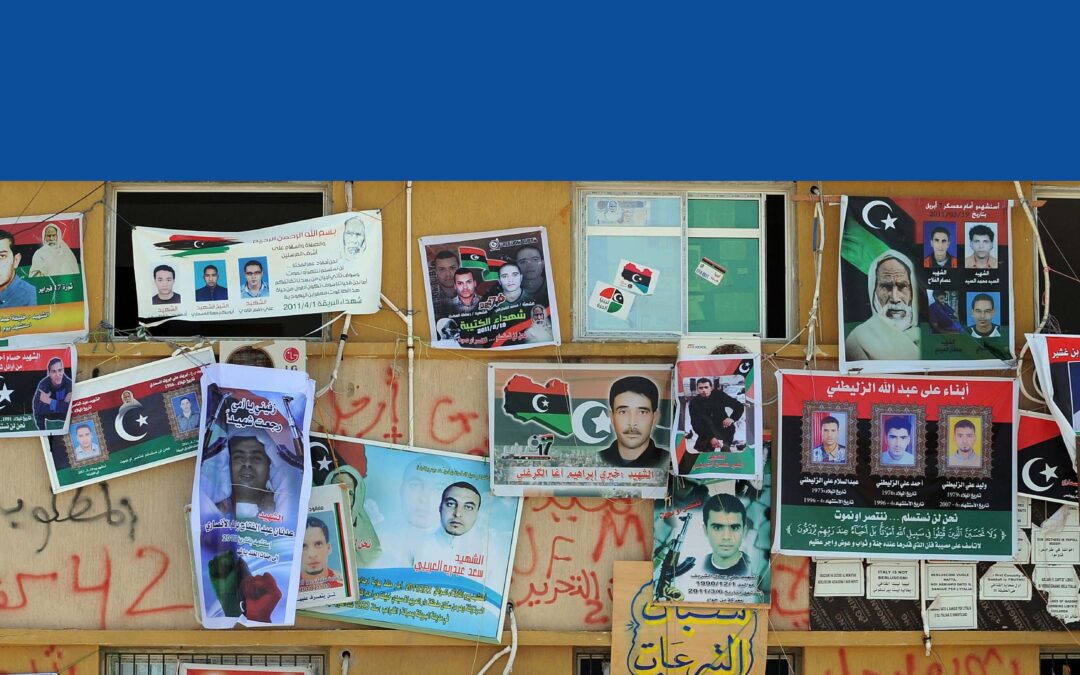
In a report released today on Libya’s criminal justice system, the ICJ said the United Nations, international actors and States must prioritize accountability for crimes under international law in their engagement with Libya.
This includes the establishment of a Commission of Inquiry or similar mechanism to document and report on gross human rights violations and to collect and preserve evidence of crimes for future criminal proceedings.
“The Libyan criminal justice system needs comprehensive reform to dismantle the structural impunity that prevails in the country,” said Said Benarbia, the ICJ’s MENA Programme Director.
“Rather than assuming the system is capable of ensuring justice for the egregious human rights violations and abuses still being perpetrated in Libya, international actors should establish a mechanism to monitor, report on and address these violations and prioritize human rights in any agreement with Libyan authorities,” he added.
The report Accountability for Serious Crimes under International Law in Libya: an Assessment of the Criminal Justice System finds that investigations and prosecutions of crimes under international law have been limited to a handful of cases and that future cases are unlikely meet international standards necessary to ensure fair and effective justice, in particular the rights to liberty and a fair trial and the prohibition on torture and ill-treatment.
Fragmentation in Libyan executive and legislative bodies, with the internationally recognized government unable to control significant parts of the territory, has weakened political structures and led to a precarious security situation that impedes the effective functioning of the judiciary, which has remained largely unified.
“Accountability efforts in Libya are hindered by cycles of violence, weak and ineffective law enforcement agencies, the arbitrary exercise of policing and detention powers by armed groups, and a web of amnesties, immunities and defences that shield perpetrators from justice,” said Kate Vigneswaran, the ICJ’s MENA Programme Senior Legal Adviser.
“Victims should not have to wait any longer for these obstacles to be removed and justice delivered. Peace and justice in Libya can only be achieved if the rule of law is fully established,” she added.
Since 2011, crimes under international law and other gross human rights violations, including torture and ill-treatment, enforced disappearance, enslavement and rape, have been committed by State and non-State actors on a widespread scale, including against thousands of migrants, refugees and asylum seekers arbitrarily detained.
“The recent upsurge in conflict and related commission of direct and indiscriminate attacks against civilians and mass displacement of the population makes tackling the climate of impunity vital for combating the commission of crimes,” said Benarbia.
To this end, States should fully support International Criminal Court efforts to conduct Libya-related investigations and prosecutions, including with a view to enforcing arrest warrants and bringing alleged perpetrators before the court for trial.
In her address to the Human Rights Council on 24 June, High Commissioner for Human Rights Michelle Bachelet stated that “Libya is not a port of safe return” and that “[t]he international community must come together to support pathways to sustainable peace in the country.”
Key recommendations for international actors, including UN bodies and States, include:
- The United Nations Human Rights Council should establish a Commission of Inquiry or similar mechanism, with a mandate to monitor, document, establish the facts and report on gross human rights violations in Libya, including with a view to collecting and preserving evidence of crimes under international law for future criminal proceedings before national or international courts;
- States should exercise universal jurisdiction to investigate and prosecute crimes under international law committed in Libya, including when the perpetrator is within their territory or otherwise under their jurisdiction;
- States should fully cooperate with and adequately resource the ICC to enhance its capacity to conduct its investigations and prosecutions, enforce related arrest warrants, and bring alleged perpetrators to account; and
- States and UN actors should refrain from entering into or implementing agreements with Libyan authorities, including in relation to the detention of migrants, refugees and asylum seekers and the provision of arms, where it is reasonably foreseeable that violations of rights under international law might occur.
Contact:
Said Benarbia, Director, ICJ Middle East and North Africa Programme, t: +41-22-979-3817; e: said.benarbia(a)icj.org
Kate Vigneswaran, Senior Legal Adviser, ICJ Middle East and North Africa Programme, t: +31-62-489-4664; e: kate.vigneswaran(a)icj.org
Libya-Accountability report launch-News-Press releases-2019-ENG (full story, in English, PDF)
Libya-Accountability serious crimes-Publications-Reports-Thematic reports-2019-ENG (full report in English, PDF)
Libya-Accountability report launch-News-Press releases-2019-ARA (full story in Arabic, in PDF)
Libya-Accountability serious crimes-Publications-Reports-Thematic reports-2019-ARA (full report in Arabic, PDF)