Oct 16, 2016 | News
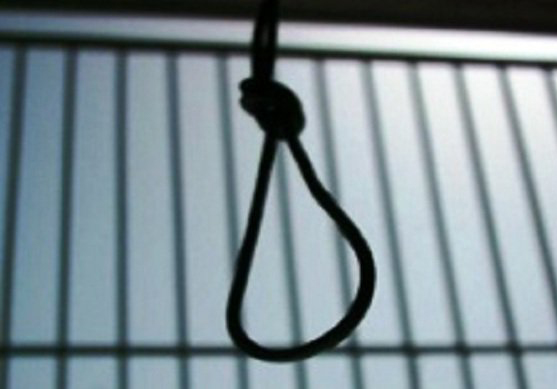
The ICJ today condemned the execution of Asadul Islam, leader of Jamayetul Mujahideen Bangladesh (JMB), a banned Islamist group.
Asadul Islam was hanged on Sunday for his alleged role, along with seven other JMB leaders, in a 2005 bus bombing that killed two lower court judges.
He was tried and convicted in absentia in 2005, later detained in July 2007, and had been in prison since that time. In August 2016, the Bangladesh Supreme Court dismissed his final appeal, paving the way for his execution this week.
“The death penalty is the ultimate form of cruel and inhuman punishment, and does not serve the interests of justice,” said Sam Zarifi, Asia-Pacific Regional Director for the ICJ.
“While Bangladesh authorities have an obligation to bring to justice perpetrators of such terror attacks, this must be done through fair trials and the rule of law,” he aded.
The International Covenant on Civil and Political Rights (ICCPR), to which Bangladesh is a party, protects the right to life and the right to a fair trial.
As the UN Human Rights Committee has emphasized, because of its irreversible nature it is particularly important that all applicable fair trial standards be scrupulously observed in capital punishment cases.
Failure to respect such standards constitutes a violation of both the right to life (ICCPR article 6) and the right to a fair trial (ICCPR article 14).
The ICJ is particularly concerned that his trial in absentia impaired Islam’s right to a fair trial, as the right to be present at trial and present a defence are critical elements of a fair trial.
The ICJ opposes capital punishment in all cases without exception.
The ICJ considers that the death penalty constitutes a violation of the right to life and the right not to be subjected to cruel, inhuman or degrading treatment.
In December 2014, the UN General Assembly by an overwhelming margin adopted a resolution, for the fifth time since 2007, emphasizing that the use of the death penalty undermines human dignity and calling on those countries that maintain the death penalty to establish a moratorium on its use with a view towards its abolition.
“Especially where the death penalty is concerned, the State must take extra care to ensure that the trial process meets the highest standards of fairness and due process under international law, as there is no possibility of reversal once carried out,” Zarifi said.
“Bangladesh has an unfortunate record of administering unfair trials in terrorism cases, including those involving the death penalty,” he added. “Asadul Islam’s case raises serious concerns that the Bangladesh authorities once again failed to meet their fair trial obligations under international law, and therefore this death sentence should not have been carried out.”
The ICJ calls on Bangladesh to impose an official moratorium on the death penalty and take prompt measures towards its abolition.
Contact
Sam Zarifi, ICJ Asia Pacific Regional Director (Bangkok), t: +66 807819002; email: sam.zarifi(a)icj.org

Jun 30, 2016 | News
The Pakistani Government should not extend the oppressive and ineffective Protection of Pakistan Act (POPA), which is set to expire on 15 July 2016, said the International Commission of Jurists (ICJ) today.
POPA was enacted in July 2014 for a period of two years to combat “waging of war or insurrection against Pakistan” and to provide “speedy trial” for offences “threatening the security of Pakistan”.
Earlier this week, the Ministry of Interior confirmed that it planned to renew POPA for another two years.
“In these two years, not one suspect has been convicted under POPA, so we can conclude that the law doesn’t really protect people in Pakistan from terrorism and other violent acts, but instead it undermines their basic human rights protections,” said Sam Zarifi, ICJ’s Asia director.
“The Government’s plan to renew this hastily drafted law is a classic case of supposedly ‘temporary’ departures from normal legal processes and human rights protections on the basis of ‘exceptional” circumstances’ becoming a permanent part of the legal system.”
In a statement issued shortly after the Protection of Pakistan Act was enacted, the ICJ warned that POPA gives military and law enforcement authorities sweeping powers to detain individuals in contravention of Pakistan’s international human rights law obligations.
The law allows prolonged preventive administrative detention without adequate safeguards; retrospectively authorizes otherwise arbitrary or unlawful arrests or detentions; authorizes secret and unacknowledged detention; and gives law enforcement agencies broad powers to “shoot at sight”.
In addition, the law creates “special courts” to try scheduled offences under the Act. Procedures for the operation of these “special courts” allow for secret hearings and do not meet international standards for fair and public criminal proceedings before a competent, independent and impartial tribunal.
According to Government officials, the Ministry of Interior has cleared “hundreds of cases of peace disrupting elements” for trial before the “special courts” constituted under POPA.
The five “special courts” remained non-functional for many months because of lack of staff and other facilities. The courts are now functional, but have so far not concluded a single trial.
“POPA is not only an oppressive law, it has also proven to be completely ineffective,” added Zarifi. “Instead of renewing the law, the Government should focus on strengthening the existing criminal justice system, which is suffering because of years of neglect.”
Political groups, including the Muttahida Qaumi Movement (MQM) and the Pakistan People’s Party (PPP), have alleged that the unfettered powers given to civilian and military law enforcement agencies under POPA are being used to target their workers for political activity and association. They say the law has been used to arbitrarily detain dozens of their activists.
“Pakistan faces a genuine threat from militant groups engaging in acts of terrorism, and the Pakistani Government has an obligation to protect all people from such attacks,” said Zarifi. “International law gives governments reasonable flexibility to combat terrorism, without contravening human rights obligations, and claims of ‘threats to national security’ can never be used as a justification for the practice of extrajudicial killings, secret detention, and enforced disappearance.”
The ICJ urges the Pakistani authorities not to extend POPA.
It further calls on the authorities to review all national security legislation to ensure it is fully compatible with international human rights law and standards.
Contact:
Sam Zarifi, ICJ Asia Pacific Regional Director (Bangkok), t: +66 807819002; e: sam.zarifi(a)icj.org
Reema Omer, ICJ International Legal Adviser for Pakistan (London), t: +44 7889565691; e: reema.omer(a)icj.org

May 9, 2016 | News
The ICJ is deeply concerned at the recent legal harassment of several Cambodian human rights defenders and perceived political opponents, which raises serious questions as to the impartiality of the investigators, prosecutors and judges involved.
The ICJ calls on the Government to immediately conduct an independent review of the decision to pursue these cases, to end the prosecution of those who have been charged if the allegations are found to be groundless or the proceedings to have been unlawful or abusive, to cease the use of judicial and prosecutorial processes to harass and intimidate human rights defenders and perceived political opponents, and to respect its international obligations under the Convention on the Privileges and Immunities of the United Nations.
“The decision to proceed with these cases should be subject to a careful and independent review and any charges that have resulted must be dropped if the allegations are found to be without merit or have been carried through unlawful or abusive procedures,” said Kingsley Abbott, International Legal Adviser for Southeast Asia with the ICJ.
“The strong appearance of bias present in these cases flies in the face of the absolute right of all accused to have their case considered by independent and impartial prosecutors and judges at every stage of the process,” he added.
The different proceedings all stem from allegations centered on an alleged affair between Khom Chandaraty (also known as Srey Mom) and Kem Sokha, acting leader of the opposition Cambodia National Rescue Party (CNRP).
After a voice recording appeared on social media, allegedly of a conversation between them, the Cambodian Counter-Terrorism Directorate of the Government’s Central Directorate for Security “invited” Srey Mom for questioning, which prompted her to seek human rights assistance from a leading Cambodian NGO, the Cambodian Human Rights and Development Association (ADHOC).
On 11 March 2016, the Counter-Terrorism Directorate questioned Srey Mom. She denied the suggestions she had a relationship with Kem Sokha and that she was the female voice on the recording.
On 19 April 2016, after having met with ADHOC on a number of further occasions, Srey Mom was asked in a closed session with a prosecutor at the Phnom Penh Municipal Court to answer allegations of having provided false testimony and of having engaged in prostitution.
On this occasion, Srey Mom admitted to a relationship with Kem Sokha.
On 22 April 2016, Srey Mom alleged in an open letter that ADHOC staff had attempted to persuade her to lie to the authorities.
On 2 May 2016, an Investigating Judge in Phnom Penh charged four staff members of ADHOC, Nay Vanda, Ny Sokha, Yi Soksan, and Lem Mony, with “bribery of a witness”.
A former staff member of ADHOC, Ny Chakrya, and a staff member of the Cambodia Office of the High Commissioner for Human Rights (OHCHR), Sally Soen, were also charged with being accomplices, notwithstanding Sally Soen’s immunity from prosecution under the Convention on the Privileges and Immunities of the United Nations.
The allegation of bribery appears to relate to the fact that ADHOC reportedly provided Srey Mom with a small sum of money to cover food and transport costs, including to attend questioning by judicial authorities.
“While Cambodia has a positive legal duty under international law to protect human rights defenders from attacks arising out of their work, these proceedings appear to be aimed at intimidating and silencing Cambodian civil society and are the latest in a series of laws and actions directed against them,” said Abbott.
Last year, the Government passed the Law on Associations and NGOs (LANGO), which Abbott stated would “severely restrict the ability of members of civil society to exercise their rights to freedom of association and expression which Cambodia has a duty to protect under its international obligations.” Abbott further stated that the Governments intention was to “…weaken the impact of NGOs, including human rights defenders.”
Under Article 12 of the United Nations Declaration on Human Rights Defenders, States have an obligation to take all necessary measures to ensure the protection of human rights defenders, including against any threats, pressure, retaliation or arbitrary action as a consequence of the legitimate exercise of their rights under the Declaration.
In other proceedings, the Phnom Penh Municipal Court summoned Kem Sokha to answer allegations of criminal defamation and two other members of the CNRP, Pin Ratana and Tok Vanchan, have been questioned about allegations of prostitution.
Political commentator, Ou Virak, has been summoned to appear in the Phnom Penh Municipal Court on 12 May 2016 to answer allegations of criminal defamation for expressing the view that the ruling Cambodian Peoples Party (CPP) was exploiting the alleged affair between Kem Sokha and Srey Mom.
On 24 April 2016, a CNRP commune chief, Seang Chet, was arrested and detained on charges of bribery after Srey Mom alleged Seang Chet had attempted to pay her mother US $500 to encourage her to deny the affair.
Read also:
Cambodia: the ICJ condemns Senate’s approval of draft Law on Associations and NGOs
Cambodia: approved NGO law poised to hobble the work of civil society
Cambodia: withdraw draft law on associations and non-governmental organizations – joint letter
Cambodia: ICJ and other rights groups urge end to NGO law
Contact
Kingsley Abbott, ICJ’s International Legal Adviser, t: +66 94 470 1345, e: kingsley.abbott(a)icj.org

Mar 17, 2016 | News
The Indonesian House of Representatives should reject proposed amendments to the country’s Anti Terrorism Law that would actually contravene international law, said the ICJ and other human rights groups today.
“The horrific recent attacks in Jakarta highlight the Indonesian government’s obligation to protect people from acts of terrorism, but experience from around the world has shown that countering terrorism must occur along with protection of human rights, not in violation of Indonesia’s legal obligations,” said Sam Zarifi, ICJ’s Regional Director for Asia and the Pacific.
The ICJ, the Commission for the Disappeared and Victims of Violence (KontraS), and the Indonesian Human Rights Monitor (IMPARSIAL) noted that the proposed amendments would authorize unnecessarily prolonged detention of suspects, putting them at risk of torture, ill-treatment, enforced disappearance, and arbitrary detention.
The amendments also include a provision on administrative detention.
“This is generally forbidden in international law, save in the most exceptional circumstances far narrower than as contemplated under the amendments,” Zarifi added.
A letter sent by the organizations to the House of Representatives lays out recommendations on how this provision may be revised so that it would not violate the rights of detainees.
“There is no reference anywhere in the amendments how detainees may challenge the lawfulness of their detention. It has to be clear in the law that these remedies are available to them,” said Haris Azhar, National Executive Coordinator of KontraS.
The three organizations also underline the amendment proposing stripping Indonesian combatants abroad of their nationality would be contrary to international law, if this would render them stateless.
“Nationality is what legally binds an individual to a particular State. It is an essential prerequisite to the enjoyment and protection of the full range of human rights,” said Poengky Indarti, board member of IMPARSIAL.
They also said that the proposed provision on incitement to terrorism would unduly limit political speech, especially those that are contrary to the views of persons wielding power and authority, such as opinions on self-determination or changes to the legal and constitutional structures.
The proposed amendments impose the death penalty on particular offences.
The ICJ, IMPARSIAL, and KontraS oppose capital punishment in all cases without exception, as it is a violation of the right to life and the right not to be subjected to cruel, inhuman, and degrading treatment.
In the letter, they remind the government of Indonesia to immediately impose a moratorium on the use of the death penalty, with a view to moving towards its total abolition.
The ICJ, IMPARSIAL, and KontraS urged the members of Indonesia’s House of Representatives to keep in mind that whatever measures Indonesia uses to counter terrorism must comply with international law and protect human rights.
Contact:
Emerlynne Gil, ICJ’s Senior International Legal Adviser (Bangkok), t: +66 840923575 ; e: emerlynne.gil(a)icj.org
Fatia Maulidiyanti, S.IP, International Desk of KontraS (Jakarta), t: +62 21 391 9097/98 ; e: fatia(a)kontras.org
Poengky Indarti, Member of the Board of IMPARSIAL (Jakarta), t: +62 812 8362 8659 ; e: poengky1970(a)gmail.com
Indonesia-Letter to Gvt-Advocacy-Open letters-2016-ENG (full text of letter, in PDF)

Mar 10, 2016 | Advocacy, Non-legal submissions
The ICJ today delivered an oral statement on counter-terrorism legislation in these countries, in an interactive dialogue at the UN Human Rights Council with the the Special Rapporteur on the promotion and protection of human rights and fundamental freedoms while countering terrorism.
The text of the statement follows:
COUNTER-TERRORISM LEGISLATION IN EGYPT, TUNISIA AND PAKISTAN
10 March 2016
Mr President,
The International Commission of Jurists (ICJ) welcomes the attention given by Special Rapporteur Ben Emmerson, to defective counter-terrorism legislation that facilitates violations of human rights, as reflected for example by communications on Egypt, Tunisia and Pakistan in the Communications Report of Special Procedures (A/HRC/31/79).
Numerous counter terrorism laws promulgated or applied in these and other countries include overly broad or imprecise definitions of terrorism-related offences. These extend the laws’ reach beyond acts of a truly terrorist character. Such laws can be and are abused or misapplied to criminalize the legitimate and peaceful exercise of fundamental rights and freedoms.
Further, these laws provide sweeping immunities that contribute to pervasive impunity for unlawful killings by security forces.
These laws also facilitate violations of the right to liberty and fair trial rights and insufficiently safeguard against abuses in detention. In Tunisia a person can be held in police custody without being brought before a judge for up to 15 days. In Pakistan, suspects can be held in preventive detention without charge, and without being brought before a judge, for up to 90 days.
Egypt and Pakistan continue to use military courts to conduct unfair trials of civilians in terrorism cases, contrary to international standards. At least eight civilians sentenced to death in secretive trials by military courts in Pakistan have been hanged since January 2015. “Expedited” procedures in terrorism circuit courts in the Egyptian civilian system also give rise to fair trial concerns.
The ICJ invites the Special Rapporteur to comment on measures or mechanisms that states, inter-governmental organisations, and civil society can take to help ensure that states such as Tunisia, Egypt and Pakistan repeal or amend counter-terrorism legislation to bring it into line with their international human rights obligations and commitments.

![Smoke rises after an Israeli air strike on the village of Taybeh in southern Lebanon [Source: Al Jazeera]](https://www.icj.org/wp-content/uploads/2026/03/Screenshot-2026-03-20-at-15.56.24-300x200.png)