The International Federation for Human Rights (FIDH) and the International Commission of Jurists (ICJ) call on the Thai authorities to act to suspend the proceedings and quash the charges against Bilal Mohammed and Yusufu Mieraili, and to ensure that any investigation into the 2015 Erawan Shrine bombing is conducted in a manner that fully complies with human rights and due process guarantees. They further call on both Thai and Cambodian authorities to ensure that the two men receive enforceable reparations, including compensation, for multiple human rights violations, in line with the opinion and request recently issued by the United Nations (UN) Working Group on Arbitrary Detention (WGAD).
Geneva, Paris, 15 December 2025. The ongoing trial against the two men, which began in February 2016, has been replete with fair trial violations. Between 2016 and 2019, the trial was held in the Bangkok Military Court. In July 2019, it was transferred to the civilian Bangkok South Criminal Court, where progress has remained extremely slow. During several hearings since July 2025, the two defendants have not been provided with a Uyghur interpreter.
“The investigation, prosecution, and trial of Bilal Mohammed and Yusufu Mieraili have been rife with human rights violations and have exposed some of the systemic deficiencies of Thailand’s criminal justice system. The two Uyghur men remain arbitrarily detained and there is no end in sight to what is possibly one of Thailand’s longest criminal trials,” said FIDH Vice-President Teppei Ono.
From 2 to 4 December 2025, Bilal Mohammed testified before the Bangkok South Criminal Court that he fled China’s Xinjiang Uighur Autonomous Region in 2015 amid escalating human rights violations and that he arrived in Bangkok only days after the bombing. He stated that he had been subjected to ill-treatment by the Thai authorities during the inquiry in late September 2015 in order to extract a “confession.” He informed the Court of multiple instances of ill-treatment by the Thai authorities, including being taken for interrogation while blindfolded and held at gunpoint and being denied access to a Uyghur interpreter throughout the investigation process, which led him to sign documents written in Thai – a language he does not understand. In addition, while detained at the 11th Army Circle military base, he was constantly chained by a foot to his bed until December 2015.
On 14 January 2026, the trial will resume at the Bangkok South Criminal Court with the examination of Yusufu Mieraili. The two defendants are currently detained at the Bangkok Remand Prison.
“Neither the Thai prosecutorial authorities nor the courts appear to have ensured an effective and impartial investigation into the alleged ill-treatment. The failure to do so is not only a violation of the defendant’s right to an effective remedy, but also taints the proceedings themselves, casting serious doubt on whether a fair trial is possible,” said ICJ Senior Legal and Policy Director Ian Seiderman.
FIDH and ICJ welcome the WGAD’s opinion and call on the governments of Thailand and Cambodia to take immediate steps necessary to comply with the UN body’s findings, in compliance with the two countries’ international human rights obligations as well as international law and standards.
FIDH and ICJ also reiterate their call on the Thai government to guarantee that the two defendants are subjected to treatment and detention conditions that comply with their obligations under international law, including the International Covenant on Civil and Political Rights (ICCPR) and the Convention against Torture (CAT), and with the UN Standard Minimum Rules for the Treatment of Prisoners (the Nelson Mandela Rules).
Deprivation of liberty declared “arbitrary”
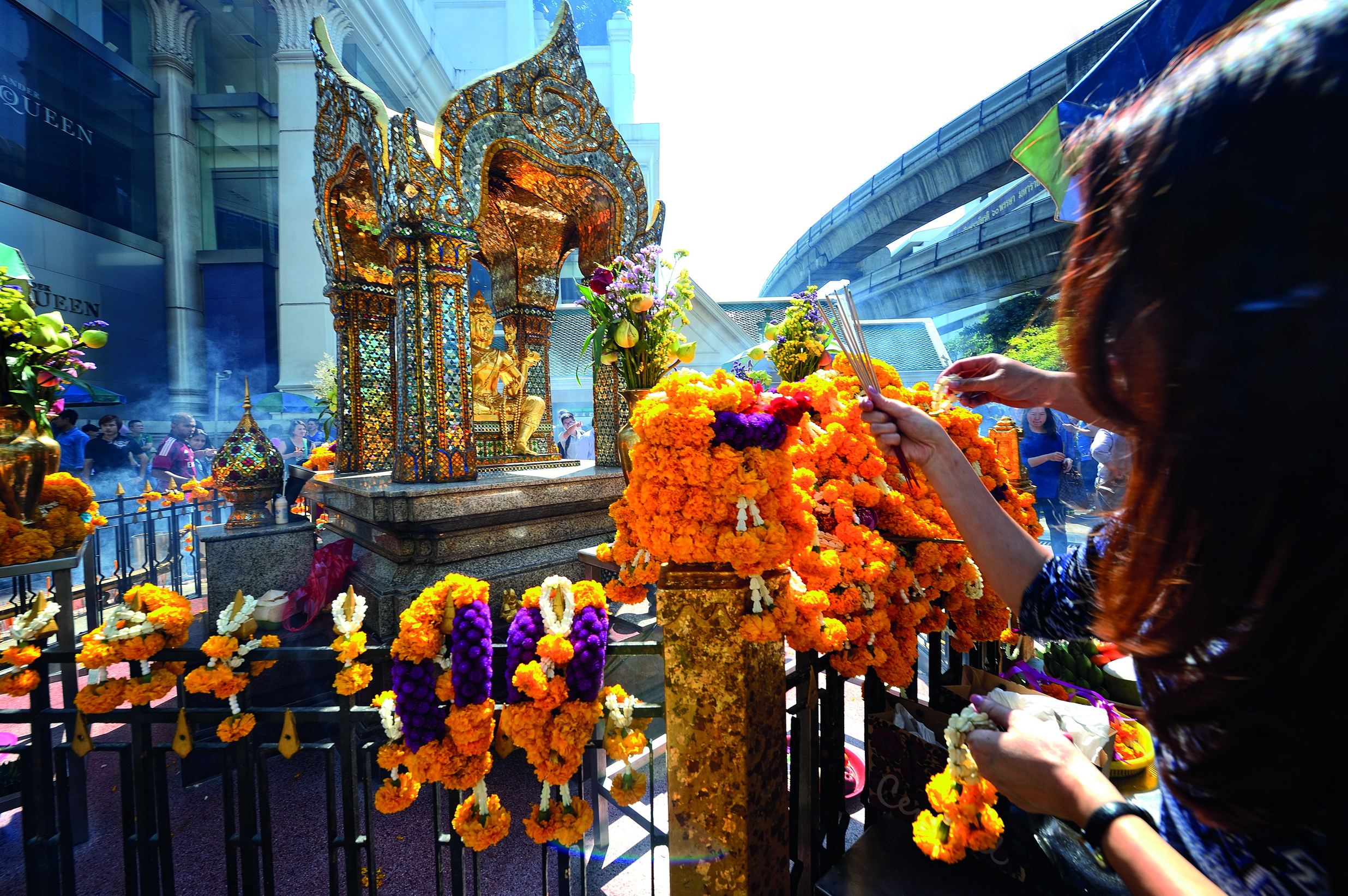
Bilal Mohammed and Yusufu Mieraili, ethnic Uyghurs from China’s Xinjiang region, have been on trial in Thailand for nearly 10 years after being accused of carrying out the August 2015 bombing of the Erawan Shrine in Bangkok, which resulted in 20 deaths and more than 120 injuries.
Bilal Mohammed was arrested by Thai police and military officers on 29 August 2015 in Bangkok, while Yusufu Mieraili was allegedly arrested on 1 September 2015 in Cambodia before being deported and subsequently arrested by the Thai authorities at the Thai-Cambodian border on the same day. They were subsequently held, for most of the past decade, inside the 11th Army Circle military base in Bangkok, before being transferred to a civilian detention facility in March 2025.
The WGAD opinion, adopted on 26 August 2025 and made public in late November 2025, was formulated in response to a communication jointly made by FIDH and ICJ to the UN body on 7 December 2023. In its opinion, the WGAD found the deprivation of liberty of Bilal Mohammed and Yusufu Mieraili to be arbitrary and called on the Thai government to release them immediately and to “accord them an enforceable right to compensation and other reparations.”
The WGAD also called on the Cambodian government to provide Yusufu Mieraili an enforceable right to compensation and reparations. In addition, it urged both governments to “ensure a full and independent investigation” into the arbitrary deprivation of liberty of the two men.
The WGAD declared the detention of Bilal Mohammed and Yusufu Mieraili arbitrary because it contravened Articles 2, 3, 5, 9, 10, and 11 of the Universal Declaration of Human Rights (UDHR) and Articles 2, 9, 10, 14, and 26 of the International Covenant on Civil and Political Rights (ICCPR). These provisions guarantee the right to liberty, humane treatment, the right to a fair trial, and equal protection before the law and non-discrimination.
In its opinion, the WGAD found that the initial detention of Bilal Mohammed and Yusufu Mieraili by Thai police and military officers lacked legal basis, as they were arrested without warrants and were not informed of the reasons for their arrest in a language they understood.
The WGAD also determined that the seven-day administrative detention imposed on the two defendants upon arrest amounted to pre-trial detention in a criminal case “without safeguarding the procedural rights they would have had as suspects.” It found that their subsequent detention at the 11th Army Circle military base for six and eight days before being brought before a judge exceeded the 48-hour limit for detention without charge or judicial oversight mandatory under international law, as affirmed by the UN Human Rights Committee. As a result, the two men’s rights to be informed of the reasons for their arrest and to be brought promptly before a judge, guaranteed under Articles 3 and 9 of the UDHR and Articles 9(2) and (3) of the ICCPR, were violated.
With regards to the right to a fair trial—the non-observance of which will generally render detention arbitrary— the WGAD identified multiple serious violations. It found violations of the defendants’ right to legal counsel and confidential communication under Article 14 (3)(b) of the ICCPR, as they did not have access to a lawyer of their own choosing during the initial stages of questioning, inquiry, and crime scene re-enactment.
According to the WGAD, and in the absence of any rebuttal by the Thai government, the Thai authorities’ use of a “confession” from Bilal Mohammed—who alleged was the result of acts of ill-treatment by Thai authorities at the 11th Army Circle military base—amounted to violations of the right to be compelled to testify against himself or to confess guilt, protected under Article 5 of the UDHR and Article 14 (3)(g) of the ICCPR.
The Thai police’s public statements asserting Bilal Mohammed’s guilt, as well as the use of shackles during public crime scene reenactments and all court hearings, further violated the presumption of innocence guaranteed under Article 11 (1) of the UDHR and Article 14 (2) of the ICCPR.
The WGAD considered the fact that both defendants were detained and tried by “the same military apparatus” as fundamentally undermining their right to a fair hearing and due process. In particular, their initial trial at the Bangkok Military Court violated Article 14(1) of the ICCPR and customary international law prohibiting the trial of civilians by military courts.
The WGAD also found that the prolonged trial—lasting more than nine years—exceeded “what is necessary and reasonable for criminal proceedings” and violated the right to be tried without undue delay under Article 14(3)(c) of the ICCPR. It further ruled that the “systematic problems with interpretation” throughout the proceedings violated the right to adequate interpretation assistance under Article 14 (3)(f) of the ICCPR.
In addition, the WGAD concluded that the two defendants had been subject to “discriminatory detention” based on their Uyghur ethnicity, noting the Thai government’s pattern of persecuting Uyghur asylum seekers through arrest, prolonged detention, and forced deportations. This amounted to violations of Article 2 of the UDHR and Articles 2 and 26 of the ICCPR.
After more than nine years in military custody, Bilal Mohammed and Yusufu Mieraili were transferred to the Bangkok Remand Prison on 3 March 2025. Nevertheless, the WGAD was “extremely concerned” about the poor detention conditions and the “systemic” mistreatment they faced during their prolonged detention in military facilities, including lack of adequate healthcare, the denial of religious dietary requirements, and isolation from other detainees. The WGAD noted that these conditions were in breach of Thailand’s obligations under Article 10 (1) of the ICCPR, and inconsistent with Article 25 of the UDHR and the Nelson Mandela Rules.
In Yusufu Mieraili’s case, the WGAD further concluded that the Cambodian government was responsible for his arrest, detention and deportation which was carried out without satisfying the requirements under Article 9 of the UDHR and Articles 9(2) and (3) of the ICCPR.
Download
the joint press release is available for download here.