Jun 28, 2021 | Advocacy, Non-legal submissions
The ICJ joined civil society organisations in a statement to the UN Human Rights Council to express deep concern about at a global backlash against LGBTIQI during the interactive dialogue with the Independent Expert on protection against violence and discrimination based on sexual orientation and gender identity.
The joint statement reads as follows:
“This is a joint statement.
This June marks 10 years since the first resolution on protection against violence and discrimination based on sexual orientation and gender identity. We welcome the Expert’s work and his essential role connecting the lived realities of LGBT people and communities and defenders with the UN.
We also welcome this report and the analysis of gender grounded on international human rights law it provides.
We support the Expert’s intersectional approach, as well the sustained focus on identifiying root causes of violence and discrimination based on sexual orientation and gender identity. We highlight with concern the Expert’s acknowledgement that ‘trans and gender-diverse persons suffer an unacceptable state of extrajudicial executions, forced disappearance, torture and ill-treatment, as well as systematic exclusion from education, employment, housing and health care’.
In the context of the growing anti-human rights movement, we witness a global backlash against the human rights of women and LGBTQI people, as well as an increase in criminalization and persecution of defenders in the context of governments’ purported responses to the COVID-19 pandemic. We have seen increased targeting, harassment, attacks and detention specifically of trans and gender-diverse human rights defenders who are targeted because of the work they do and because of who they are.
With respect to promoting and protecting human rights, the Expert clearly highlights the critical role of national, regional and international civil society; while noting that civil society spaces are actively being shrunk. We echo the Expert’s call on States to ‘uphold an enabling environment for civil society working for the human rights of trans, non-binary and gender-non conforming persons, and to respect and protect their rights to freedom of assembly and association’.
The voices of LGBTQI human rights defenders must be heard in order to keep governments accountable for human rights violations, and to continue to demand that the UN system fulfill its human rights mandate.
In this vein, we deplore the systemic underfunding of the UN human rights system and the drive for so-called efficiency, including the cancellation of general debates in June. General debates are a vital part of the agenda by which NGOs can address the Council without restrictions. We call for the reinstatement of general debates at all sessions, with the option of civil society participation through video statements.
Finally, we welcome the Expert’s recognition of the Yogyakarta Principles and the Yogyakarta Principles plus 10, as authoritative articulations of existing international human rights law in relation to issues of sexual orientation and gender identity, as well as their broad application in international, regional and national fora.
Thank you”
Signatories:
Amnesty International;
Article 19;
CHOICE for youth and sexuality;
International Commission of Jurists;
Outright Action International;
Swedish Federation for Lesbian, Gay, Bisexual, Transgender, Queer and Intersex Rights (RFSL)
Accountability International;
Association Humanity First Cameroon;
Campaign Against Homophobia, Poland;
International Institute on Race, Equality and Human Rights;
ERA – LGBTI Equal Rights Association for Western Balkans and Turkey;
Edge Effect; GATE, Trans, Gender Diverse and Intersex Advocacy in Action;
Human Rights Defenders Network-SL;
Intersex Asia Network;
Lesbian and Gay Federation, Germany;
Mulabi;
Planet Ally;
Organization Intersex International – Chinese;
The Norwegian Organization for Sexual and Gender Diversity;
Synergia – initiatives for human rights;
Young Queer Alliance.
Jun 23, 2021 | Human Rights Council, News, Work with the UN
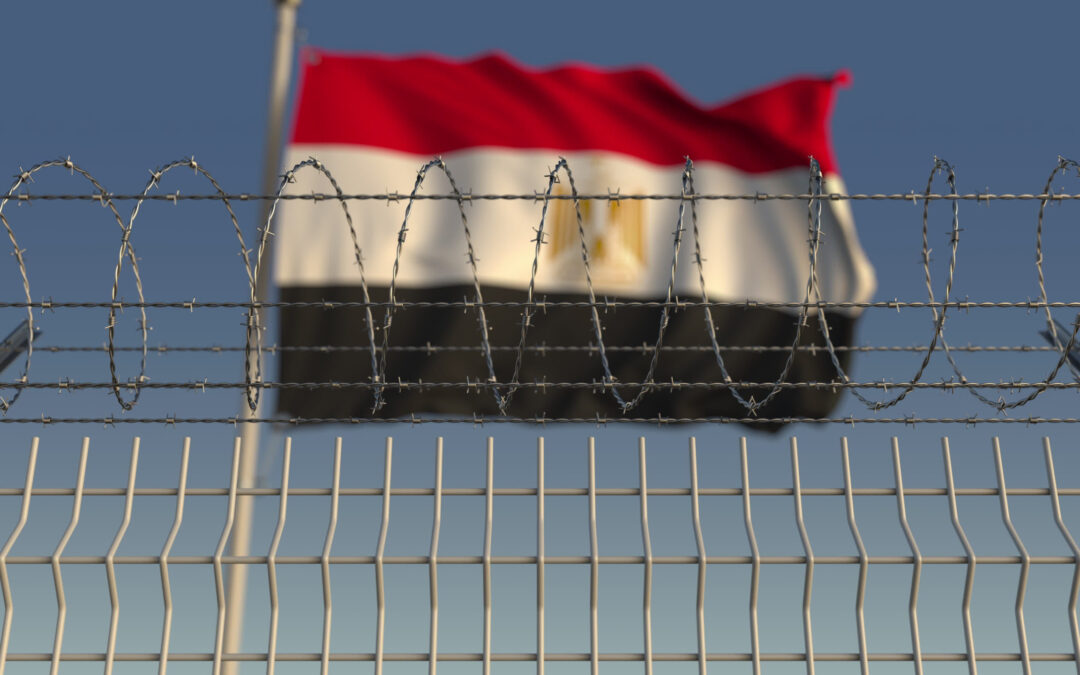
The Egyptian authorities systematically abuse “counter-terrorism” laws against human rights defenders, setting a dangerous model for other countries around the world to follow.
On 23 June, the International Commission of Jurists (ICJ) and the Cairo Institute for Human Rights Studies (CIHRS) jointly organized an online event on the sidelines of 47th session of the United Nations Human Rights Council to denounce Egypt’s targeting of human rights defenders through the country’s “counter-terrorism” laws.
Titled ‘Weaponizing Counter Terrorism Laws to Silence Human Rights Defenders’, the interactive online webinar aimed to highlight how the Egyptian authorities use “counter-terrorism” laws to target human rights defenders, including by placing lawyers and human rights activists on Egypt’s “terrorist list”, a recent practice resulting in serious human rights violations.
The event was moderated by Bahey Eldin Hassan, CIHRS Director, who stressed that the abuse of the “counter-terrorism” laws was not only employed against human rights defenders, and is not a phenomenon limited to Egypt.
The United Nations Special Rapporteur on Human Rights and Counter-Terrorism, Fionnuala Ní Aoláin, pointed out that repressive regimes take advantage of the lack of a globally agreed definition of terrorism when legislating for counter terrorism purposes. As a result, they get to place whomever they like under the “terrorism label” at the national level, with no meaningful oversight or penalties.
“The United Nations Security Council has taken on a massive legislative role on counter terrorism, which has given cover to and enabled State repression at the national level,” Ní Aoláin noted addressing the role of the international community.
“This is not an accident or a ‘bad apple’ problem, the misuse of counter-terrorism is embedded in the practised national legal systems,” Ní Aoláin added. “That abuse is part of the DNA of State practice in many countries.”
“We are at a pivotal moment. States must ask themselves what 20 years of abuse of counter terrorism laws have done,” Ní Aoláin urged. “It has weakened protections and made us less safe in many ways. This is a time for States to stand up and ensure pressure for change of this situation.”
Brian Dooley, Senior Advisor to the UN Special Rapporteur on Human Rights Defenders, noted that for authorities to imprison a human rights defender “with a straight face” for a long period of time, they have to use major accusations such as terrorism.
“The Egyptian authorities know that these human rights defenders are not terrorists,” Dooley said. “In most of the cases we have seen, where defenders were sentenced to ten years or more in prison, the relevant authorities use some sort of anti-terrorism, national security, or treason laws to justify putting a human rights defender away in prison for 10 or more years.”
Said Benarbia, ICJ Middle East and North Africa Director, began by naming some of the most prominent human rights defenders who remain in pre-trial detention facing “terrorism-related charges” in Egypt.
Among those Benarbia mentioned are: Alaa Abdelfattah, a blogger and a human rights activist; Mahienour al-Masri, a human rights lawyer; Mohammad al-Baqer, a lawyer and the director of the independent NGO, Adalah; and Amr Imam, a lawyer at the Arabic Network for Human Rights Information.
“In most of the cases the ICJ documented human rights defenders face charges of ‘joining a terrorist group’,” but the State security prosecution has consistently failed to even name the terrorist organization or group concerned,” Benarbia said. “In most of the cases, prosecutions were initiated with the sole purpose of intimidating and silencing human rights defenders.”
Benarbia emphasized that prosecuting individuals despite a total lack of evidence to support the charges is contrary to both the Egyptian and international law and standards.
“Any country that, like Egypt, uses ‘counter terrorism’ legislation to clamp down on basic freedoms and retaliate against human rights defenders and create open-air prisons should not have a say in setting international standards on terrorism,” Benarbia added.
Human Rights Defender, Celine Lebrun Shaath, delivered a passionate statement about her husband, Ramy Shaath, an Egyptian Palestinian human rights defender who has been detained since July 2019. Shaath, who herself was deported from Egypt in the wake of her husband’s arrest, mentioned that the online event was taking place on Ramy Shaath’s birthday; the second since his imprisonment. “I would rather not be here today,” she added, lamenting what had happened to her husband.
“We do not know to what terrorist group Ramy is supposed to be belonging,” Shaath said. “He is accused of spreading ‘fake news’, but we don’t know which news or where he had spread them.”
Shaath expressed her hope that the Egyptian government would heed the call for her husband’s release and free Ramy and all the political prisoners.
“[Human Rights Defenders] should be looked at as a wealth for this country. They are the future, they are not a threat, dissent is not terrorism, dissent is a vibrant part of democracy that should be cherished and protected,” Shaath underscored.
On 12 March 2021, 31 UN Member States signed a joint declaration condemning the human rights situation in Egypt, which Finland delivered on their behalf at the Human Rights Council’s 46th session. The joint letter focused primarily on “the restrictions on freedom of expression and the right to peaceful assembly, the constrained space for civil society and political opposition, and the application of terrorism legislation against peaceful critics.”
The event was cosponsored by Human Rights Watch, Amnesty International, the International Service for Human Rights and the International Federation for Human Rights.
You can watch the entire event here.
Contact:
Said Benarbia, Director, ICJ Middle East and North Africa Programme, t: +41-22-979-3817; e: said.benarbia(a)icj.org
Asser Khattab, Research and Communications Officer, ICJ Middle East and North Africa Programme, e: asser.khattab(a)icj.org
Jun 23, 2021 | Advocacy, Non-legal submissions
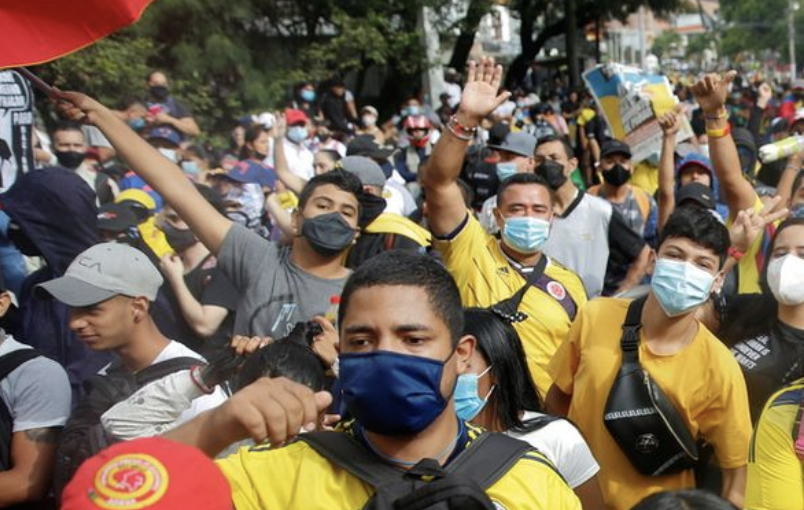
The ICJ joined over 300 civil society organisations in a statement to the UN Human Rights Council to express deep concern about the situation of human rights in Colombia during the presentation of the annual report of the UN High Commissioner for Human Rights.
The statement reads as follows:
“Thank you Madam President,
On behalf of the undersigned organisations, we thank the High Commissioner for her annual report, particularly on activities undertaken in Colombia. The situation in the country confirms the need for continued monitoring and provision of technical assistance by her Office
Throughout the eight weeks of mass protests that have spread to different cities throughout the country, we’ve seen killings, excessive use of force, acts amounting to torture and other ill-treatment, enforced disappearances, sexual violence, arbitrary detentions and attacks, including cyber-attacks against those exercising their right to protest, all of which constitute flagrant human rights violations. These violations are taking place in spite of a Supreme Court ruling ordering the security forces to refrain from acting violently and arbitrarily in a systemic manner during demonstrations, and calls by human rights mechanisms to cease these violations.
The protests are rooted in structural demands linked to the respect for human rights, and other concerns including poverty, inequality, growing social injustices, impunity, systemic racism and systematic violence against human rights defenders -including social, campesino, trade union and indigenous leaders and the press. They are also a result of the continued failure to fully implement the 2016 Peace Accord.
We urge the Council to call on Colombia to cease the use of violence and to respect the right to peaceful protest; to independently investigate human rights violations committed in this context; to accept the visit of the Special Procedures; and facilitate the building of social consensus around structural demands.
Finally, we ask the High Commissioner, through her Office in Colombia, to prepare a report on the human rights violations committed during the protests.
Thank you Madam President.”

Jun 21, 2021 | Advocacy, Non-legal submissions
The ICJ and Human Rights Watch today addressed the UN Human Rights Council in the Interactive Dialogue on the Report of the Office of the High Commissioner for Human Rights on COVID-19 responses and human rights.
The statement reads as follows:
Madam High Commissioner,
The ICJ and Human Rights Watch welcome your report on COVID-19 and human rights.
We believe that urgent action is needed beyond broad statements of condemnation of vaccine inequity. People without access to vaccines continue to live in fear of COVID-19 and, throughout the world, many continue to die.
Slow vaccine rollout continues across Southern Africa and Latin America and in Nepal and India despite the prevalence of quickly transmitting variants. In the face of such significant peril, Indian courts have questioned the rationality of government plans. In South Africa elite athletes and sports administrators have been vaccinated, while older persons and vulnerable populations continue to wait their turn.
Pharmaceutical companies impose far reaching non-disclosure agreements on governments which restrict access to health information necessary to combat corruption and ensure accountability. In Colombia, courts have ordered disclosure of contracts relating to COVID-19 vaccines despite such agreements.
COVID-19 response measures continue to be used in Cambodia, Thailand and Vietnam to restrict access to health information and stifle expression of human rights defenders. In Hungary similar tactics have been compounded by simultaneous attacks on judicial independence.
How will the OHCHR guide States on how to ensure effective judicial and other remedies are available for those whose human rights are threatened by inadequate or inequitable COVID-19 responses?
I thank you.”
Contact:Massimo Frigo, ICJ UN Representative, e: massimo.frigo(a)icj.org, t: +41797499949
Jun 18, 2021 | Agendas, Events, News
On 22 June, the ICJ, Human Rights Watch, the Cairo Institute for Human Rights Studies, the Center for Reproductive Rights and the International Planned Parenthood Federation, with the co-sponsorship of the Kingdom of Spain, organize an online event on the 10th anniversary of the Council of Europe’s Convention on preventing and combating violence against women and domestic violence (Istanbul Convention).
This side event at the margin of the 47th regular session of the UN Human Rights Council has convened expert speakers to illustrate the situation of human rights protection to combat and prevent violence against women in Europe, how the Istanbul Convention has crucially contributed to this goal and the obstacles to its effective implementation.
Preventing and combating violence against women, as well as its causes and consequences, are a priority of the UN Human Rights Council. While UN standards are central to achieving this goal, regional standards have to date provided a key contribution in this field. The Council of Europe’s Istanbul Convention is the most far-reaching international treaty specifically designed to counter violence against women.
On 11 May 2021, the Istanbul Convention turned 10 years old. It is now time to take stock of the achievements that this Convention has contributed to as well as the challenges ahead, including countering the spread of misinformation about the Convention and ensuring states continue to champion its principles and standards.
Women and girls are still suffering the aftermaths of the COVID-19 crisis. The pandemic effects have shown a worrying increase on violence against women. The universalization of the Istanbul Convention is more important than ever because the pandemic has unveiled the “permanent shadow pandemic” that women and girls are suffering around the world.
When: Tuesday June 22nd, 13:00 – 14:00 CEST
Where: Zoom
Language: English
Panelists
- María Isabel Sanchís, Senior Advisor, Office of the Commissioner on Violence against Women of the Government of Spain
- Dubravka Šimonović, UN Special Rapporteur on violence against women, its causes and consequences
- Dame Silvia Cartwright, former Governor General of New Zealand, former CEDAW member, Commissioner of the International Commission of Jurists
- Professor Feride Acar, former chairwoman of CEDAW and GREVIO
- Hillary Margolis, Senior Researcher, Women’s Rights Division, Human Rights Watch
Moderator Massimo Frigo, UN Representative, ICJ
To confirm your participation and receive connection details, please RSVP to Massimo Frigo, email: Massimo.Frigo@icj.org .
Event-Invitation-Side Event-IstanbulConvention-UN-HRC47-final-2021-eng (download the event leaflet)