Jun 19, 2020 | Advocacy, Non-legal submissions
The ICJ has responded to a call for input by UN human rights experts, for their upcoming reports on COVID-19 and human rights.
The written submission, in response the joint call for submissions questionnaire issued by a number of UN Special Procedures, highlights key issues in relation to access to justice and the operation of courts, the right to food and the right to housing, and impacts on LGBTi persons and persons living in poverty, in a number of countries where the ICJ is active.
The submission can be downloaded in PDF format here: ICJ-UN-SP-COVID19SUBMISSION-2020-EN
Jun 18, 2020 | Advocacy, Non-legal submissions
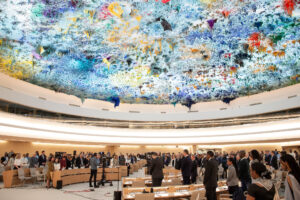
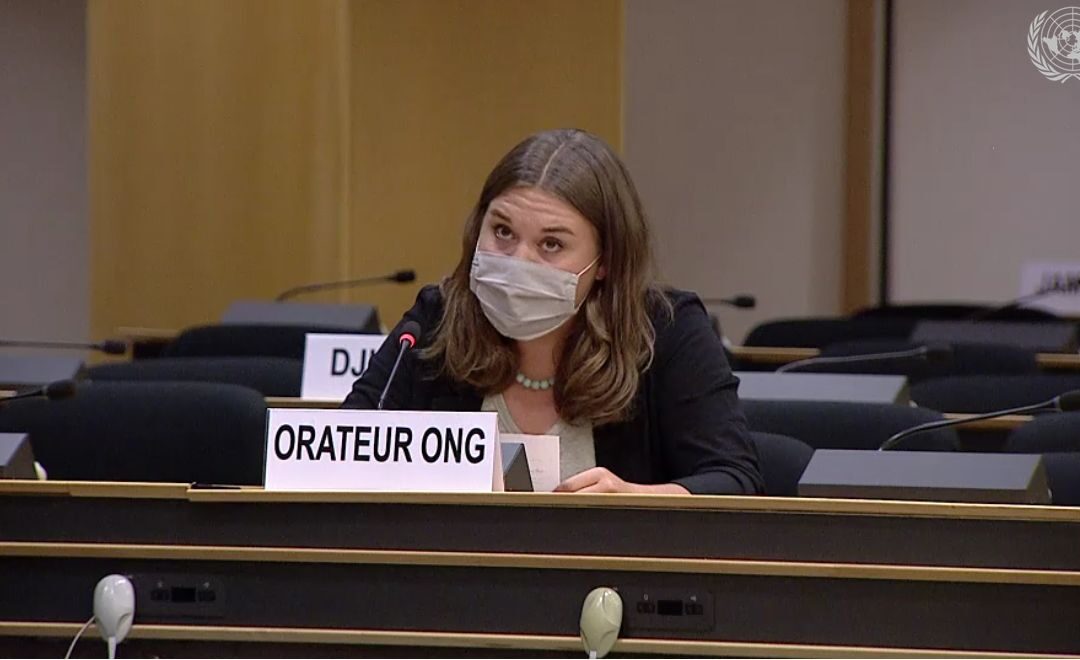
At the UN Human Rights Council, the ICJ today welcomed a pending resolution that would create an international Fact-Finding Mission on Libya.
The statement read as follows:
“The International Commission of Jurists welcomes the oral update by the High Commissioner for Human Rights on the situation in Libya.
The ICJ is seriously concerned by the escalation of conflict in Libya and the increasing number of violations and abuses of international law including unlawful killings and attacks on civilian objects committed since this session was suspended in March. Just last week, at least eight mass graves were found, mainly in Tarhuna, in which the bodies of women and children were found.
The ICJ welcomes the High Commissioner’s recommendation that the Human Rights Council establish an international investigative body and calls on the Council to adopt the resolution tabled by Libya establishing a Fact-Finding Mission to investigate and preserve evidence of violations of international human rights law and international humanitarian law committed by all parties in Libya.[1] The ICJ calls on States to ensure the Fact-Finding Mission has at least one full year to complete its work.
As the Berlin Conference conclusions stressed,[2] accountability for gross human rights violations must be a key component of the political process in Libya. States must increase efforts to guarantee accountability remains front and centre in all negotiations on the future of Libya and provide full support including cooperation and resources to the Fact-Finding Mission for Libya once established.”
[1] A/HRC/43/L.40.
[2] https://www.bundesregierung.de/breg-de/aktuelles/the-berlin-conference-on-libya-1713868.
Jun 18, 2020 | Advocacy, Non-legal submissions
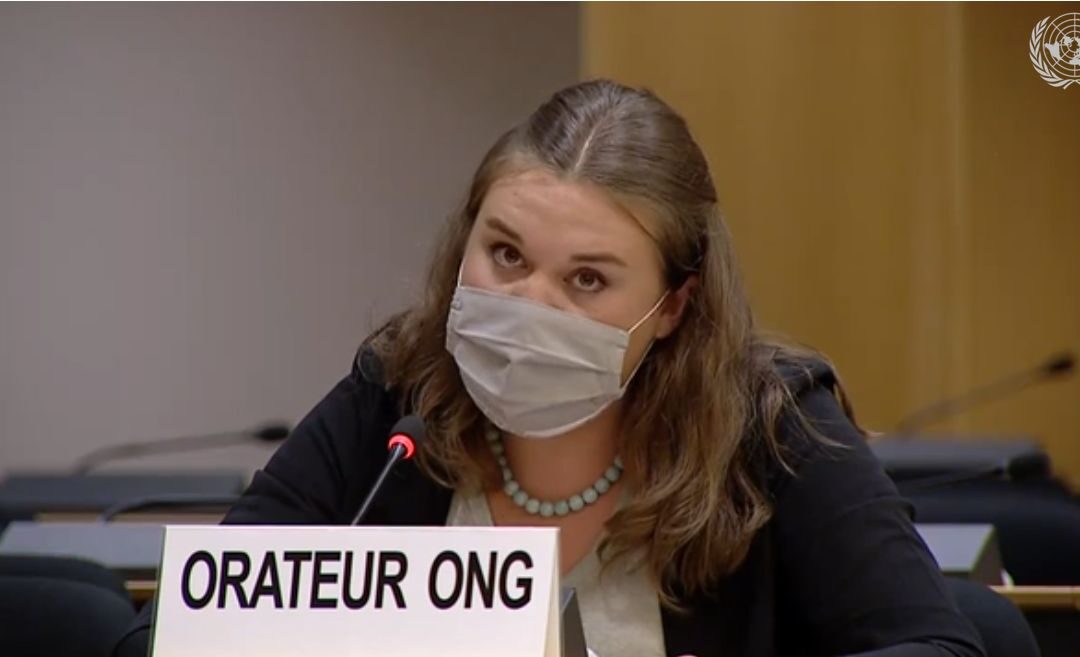
Speaking at the UN Human Rights Council in Geneva today, the ICJ urged action on excessive use of force, including unlawful killings, disproportionately targeting people of African descent and other minorities, by police throughout the United States of America, as well as in other countries.
The statement, delivered during an urgent debate on “current racially inspired human rights violations, systemic racism, police brutality and the violence against peaceful protest” that was requested by African countries, read as follows:
“Black lives matter.
The International Commission of Jurists (ICJ) condemns widespread incidents of unlawful and unnecessary use of force, including lethal force, by police throughout the United States of America, disproportionately targeting people of African descent and other minorities.
Many jurisdictions in the United States disregard, in law and in practice, universal standards including under the International Covenant on Civil and Political Rights and the UN Basic Principles on the Use of Force and Firearms by Law Enforcement Officials. These incorporate the requirements of proportionality and necessity and affirm that lethal force may only be used when strictly unavoidable to protect life. The ICJ is also concerned that doctrines of “qualified immunity” in practice result in impunity for extrajudicial killings and other serious human rights violations by police. The UN Human Rights Committee and the Committee against Torture, among others, have already called on the US to address these deficiencies in meeting their international legal obligations.
The United States is not alone in such abusive and racially discriminatory practices, which plague countries on every continent. While the Council is rightly giving long overdue attention to the United States, this must not serve as an excuse for any other State to fail to acknowledge and address similar violations within their own jurisdictions.
The ICJ supports calls for an independent international mechanism to address systematic racism in law enforcement in the United States and elsewhere.”
Apr 30, 2020 | Advocacy, Non-legal submissions
The ICJ has joined other NGOs in highlighting the contribution of independent UN human rights experts in ensuring that measures against COVID-19 are consistent with human rights.
The statement, delivered by Amnesty International on behalf of the group of NGOs in an informal online meeting of the UN Human Rights Council, read as follows:
“We thank the Coordination Committee for the update on the work undertaken by the Special Procedures to date to highlight the human rights impacts of the COVID-19 pandemic.
As States undertake extraordinary measures to curb the spread of COVID-19, we recognize the good faith efforts of many States to effectively protect the right to life, the right to health and other human rights as well as the well-being of their populations, and to curb the spread of COVID-19. States must ensure that quality health services and goods necessary for prevention and care are accessible, available and affordable for all. Health workers and other front-line workers should be provided with adequate protective equipment, information, training and psycho-social support. Key health services, including sexual and reproductive health information and services, should be confirmed as essential services and their provision guaranteed.
We also recognize that in other contexts, States have used emergency powers to enact repressive measures that do not comply with the principles of legality, proportionality and necessity and that may have the effect or intention of suppressing criticism and minimizing dissent.
In this regard, we take heart at the Special Procedures statement that “[t]he COVID-19 crisis cannot be solved with public health and emergency measures only; all other human rights must be addressed too“.[1] We particularly value the vast and interconnected responses by the Special Procedures highlighting the wide-ranging effects of the pandemic itself, as well as of measures taken by states in the name of responding to the global health crisis.
The Special Procedures have addressed the impact on economic, social and cultural rights, such as the rights to health, housing, water and sanitation, food, work, social security, education, healthy environment and adequate standard of living, and to equality and non-discrimination as cross-cutting rights.
The Special Procedures have also highlighted the increased risks of people with underlying health conditions, older people, people who are homeless or in inadequate housing, people living in poverty, persons with disabilities, LGBTI people, children, migrants, refugees and asylum-seekers, people living in refugee or IDP camps, and people deprived of liberty. They have also highlighted the effects on women and girls, calling for responses to consider factors such as their “sex, gender, age, disability, ethnic origin, and immigration or residence status among others“.[2]
We also welcome the various tools that have been developed by some mandate holders, such as the COVID-19 Freedom Tracker, the Dispatches, video messages and guidelines in addition to the vast number of press releases.[3] Making these tools readily accessible to all stakeholders is critical, as is considering ways to receive feedback and share learnings about their application. We encourage the Special Procedures to continue to deepen their analyses of state responses, including through reports to the Human Rights Council and the General Assembly, and to offer guidance, through the tools mentioned, to states on how to respond to the crisis in a human rights compliant manner.
Last but not least, we urge UN member states to cooperate fully with the Special Procedures. While country visits are suspended for the time being, this should not be used as an excuse not to co-operate. We call on states to respond in a timely manner to communications from the Special Procedures and to seek technical and expert advice from relevant mandate holders in relation to draft legislation to ensure that these are in line with states’ obligations to respect, protect and fulfil all human rights.”
The statement was joined by the following organisations:
- Amnesty International
- Asian Forum for Human Rights and Development (FORUM-ASIA)
- Centro de Estudios Legales y Sociales (CELS)
- CIVICUS: World Alliance for Citizen Participation
- Conectas Direitos Humanos
- DefendDefenders (East and Horn of Africa Human Rights Defenders Project)
- Human Rights Law Centre
- Human Rights Watch
- ILGA World – The International Lesbian, Gay, Bisexual, Trans and Intersex Association (International Lesbian and Gay Association)
- International Commission of Jurists
- International Service for Human Rights
[1] https://www.ohchr.org/EN/NewsEvents/Pages/DisplayNews.aspx?NewsID=25746&LangID=E
[2] https://www.ohchr.org/EN/HRBodies/SP/Pages/News.aspx
[3] https://www.ohchr.org/EN/HRBodies/SP/Pages/COVID-19-and-Special-Procedures.aspx
Apr 9, 2020 | Advocacy, Non-legal submissions
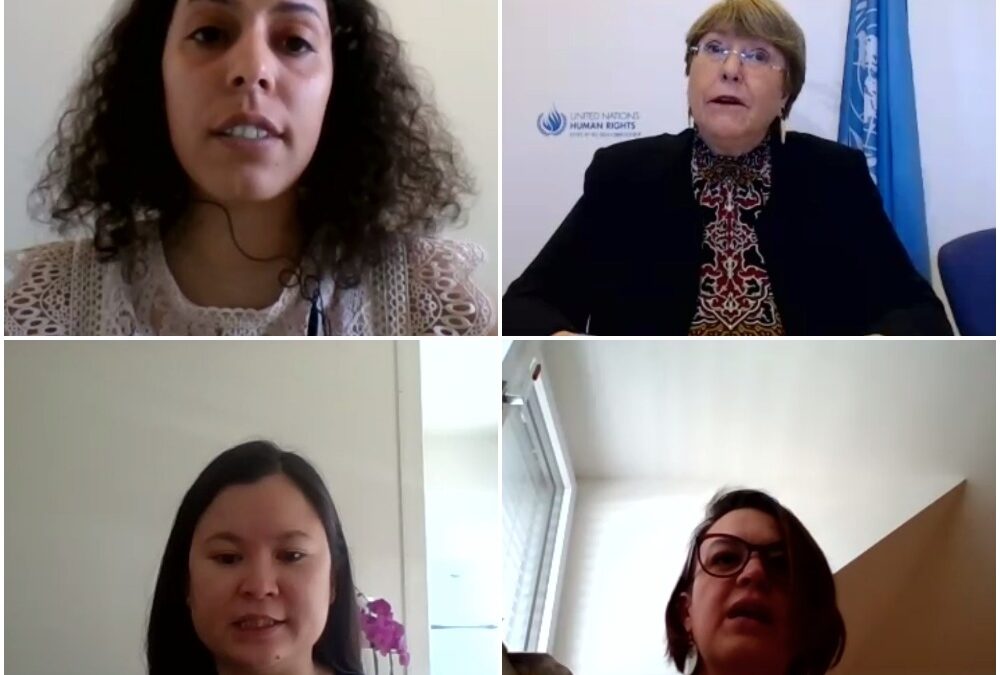
The ICJ has joined other NGOs highlighting key human rights issues in the COVID-19 pandemic, at a virtual meeting of the UN Human Rights Council.
In the informal conversation, exceptionally organised by video-conference, the High Commissioner for Human Rights presented a statement, as did the President of the Council and a number of States, followed by several statements by NGOs.
The ICJ joined statements delivered by CIVICUS (on civil and political rights), ISHR (on the UN system response), and FORUM-Asia (on economic, social and cultural rights), on behalf of a large number of NGOs from around the world.
The statements focussed on, among other things:
- the obligations of States individually and collectively to mobilize the maximum available resources to respond to the pandemic and protect those at risk, including by respecting, protecting and fulfilling economic, social and cultural rights;
- the need to guard against abuse of emergency powers and undue restrictions on fundamental rights, including non-discrimination, freedom of expression and right to access information, the right to privacy, rights of persons deprived of liberty, and taking into account the situation of particularly-at-risk groups;
- the role of the Human Rights Council, Special Procedures and Secretary General to monitor, report on, and respond to human rights aspects of the pandemic and States’ responses, and ensuring that civil society continues to be able to participate in all relevant UN and other processes.
The full statements may be downloaded in PDF format here:
Civil and Political Rights: UN-JointStatement-COVID19CPR-2020-final
Economic, Social and Cultural Rights: UN-JointStatement-COVID19ESCR-2020-final
United Nations Mechanisms: UN-JointStatement-COVID19UN-2020-final
Abbreviated versions were delivered in the dialogue, due to the limited time available.
In extensive and detailed closing remarks, the High Commissioner responded to many of the questions and observations made during the discussion, concluding, on the topic of access to justice in times of crisis, as follows (unofficial transcription):
“Courts become more important than ever to safeguard rights in times when major decisions with broad impact are being taken and implemented at great speed. In these circumstances, we have already seen the real risk for abuse of power, legal over-generalization and mistake. The courts must remain available to address these issues, if necessary of course by modifying their working methods. We have seen courts in many countries taking measures to ensure they remain accessible while protecting their staff and clients.”
A video recording of the event can be viewed here.
The High Commissioner’s specific remarks on access to justice can be accessed directly here.