Jun 29, 2015 | News
The ICJ calls on the UN Human Rights Council and the Security Council to respond to the findings of the Independent Commission of Inquiry on the 2014 Gaza Conflict, and fully implement all its recommendations.
This should be done with a view to ensuring accountability, including effective remedy and reparation, for all violations of international humanitarian law and human rights abuses committed by the Israeli Defence Forces (IDF) and by Palestinian armed groups, the ICJ says.
The ICJ further calls on the Human Rights Council to establish an independent mechanism to monitor the implementation of the Commission’s recommendations by both parties.
“Israeli and Palestinian authorities must break the chronic cycle of impunity in the Israeli-Palestinian conflict. All credible evidence of war crimes, such as the Commission of Inquiry has highlighted, must be properly investigated,” said Said Benarbia, Director of the ICJ MENA Programme.
“No one who is responsible, whether military or civilian and regardless how high their office, can be allowed to escape justice,” he added.
The Report published last week, and discussed today at the Human Rights Council, documents serious violations of international law and human rights abuses committed during the conflict, such as indiscriminate attacks, including disproportionate attacks, and direct attacks against civilians and against civilian objects that are not justified under the International Humanitarian Law.
The Commission found that artillery and other explosive weapons had been used in densely populated areas, that entire neighborhoods in Gaza had been destroyed, and that unguided rockets had been used.
As indicated by the Commission, some of those acts may constitute war crimes.
To date, both Israeli and Palestinian authorities have failed to meet their obligations under international law to effectively investigate the violations and to prosecute anyone criminally responsible.
Investigations and criminal proceedings initiated by the IDF’s Military Advocate General (MAG), which is also involved in the planning and execution of the IDF’s military operations, fall short of international standards including in relation to independence and impartiality.
No criminal investigations into violations and abuses committed by Palestinian armed groups appear to have been initiated by the Gaza authorities.
The ICJ calls on both authorities to provide for effective, independent and impartial investigation mechanisms in line with international standards.
Absent such reforms, international justice mechanisms can and should fill accountability and remediation gaps where domestic authorities are unwilling or unable to effectively administer justice.
“Israeli and Palestinian authorities must reform the framework for their current investigations and prosecutions. They must also fully cooperate with international accountability mechanisms, including the preliminary examination initiated by the International Criminal Court,” Benarbia said. “The aim throughout must be to make known the truth about the violations, to identify and hold those responsible to account, to ensure victims’ rights, and to prevent any recurrence.”
Contact:
Theo Boutruche, Legal Adviser of the ICJ Middle East and North Africa Programme, tel: +33 670735747, e-mail: theo.boutruche(a)icj.org
POT-UN Report Gaza -News-Press release-2015-ARA
Jun 18, 2015 | News
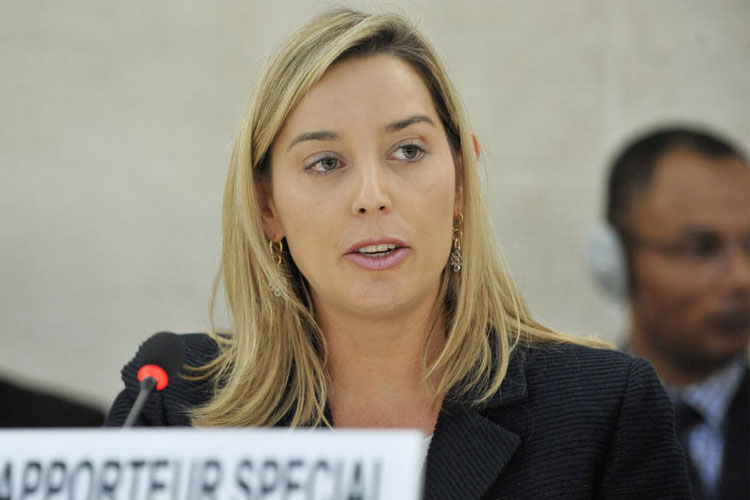
Mrs Gabriela Knaul (Brazil) today participated in an Interactive Dialogue with the Human Rights Council. Topics included children in the justice system, her visits to Qatar, United Arab Emirates, Tunisia and Portugal, and the need more generally for better implementation of relevant UN standards.
Mrs Knaul’s appearance before the Human Rights Council will be her last before her term in the mandate comes to an end in the coming months.
Her successor as UN Special Rapporteur on the independence of judges & lawyers is to be appointed at the end of the Council session, on 3 July 2015.
Following an initial presentation by the Special Rapporteur, the concerned countries responded, followed by discussion by other states, and civil society.

Jun 17, 2015 | Events, News
Head of ICJ’s Centre for the Independence of Judges & Lawyers, Matt Pollard, today moderated a side event on “Securing the independence and effectiveness of the Judiciary: European initiatives and perspectives in global context” at the UN Human Rights Council.
At the event, representatives of the Council of Europe highlighted the work of the European Commission for the Efficiency of Justice (CEPEJ) and the Consultative Council of European Judges (CCJE). The UN Special Rapporteur on the Independence of Judges and Lawyers, Ms Gabriela Knaul (from Brazil) reflected on the global relevance of European initiatives and institutions during her six years in the mandate.
Matt Pollard discussed the impact of Council of Europe standards and jurisprudence, both within Europe and in terms of global influence, from the perspective of civil society, as well as highlighting that standards and jurisprudence developed in other regions also present a rich source that European institutions should do more to draw on in their own work.
The interactive Panel discussion included extensive questions and comments from state delegations and civil society representatives in attendance at the event.
Panelists:
Mr. Georg Stawa, President of the European Commission for the Efficiency of Justice, Council of Europe
Mr. Bart van Lierop, President of the Consultative Council of European Judges
Mrs. Gabriela Knaul, UN Special Rapporteur on the Independence of Judges and Lawyers
Mr. Matt Pollard, Centre for the Independence of Judges and Lawyers, International Commission of Jurists (moderator)
This side event was organised by the Permanent Delegation of the Council of Europe to the UN Office in Geneva, with the co-sponsorship of Australia, Botswana, Hungary, Mexico as the main sponsors of the resolution on the independence of judges and lawyers
Jun 9, 2015 | News
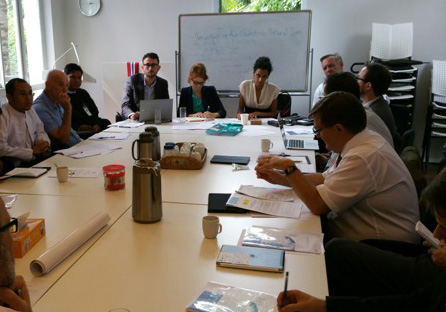
The ICJ today organized a diplomatic dialogue, in advance of the Universal Periodic Review (UPR), with ambassadors and high-level diplomatic representatives, to share the state of human rights in Myanmar.

May 30, 2015 | Advocacy, Legal submissions
This paper was prepared by the ICJ for the first session of the Open Ended Intergovernmental working Group on a Legally Binding Instrument on TNCs and other business enterprises, argues that all conduct by all types of business enterprises, whether local or transnational, should be addressed in the legally binding instrument.
The paper argues that business enterprises that do not have any or any significant transnational operations no doubt are capable of and in many instances have been responsible for human rights abuses no less serious in scale or severity than those of transnational businesses. The victims of human rights abuses committed directly or indirectly by businesses are unlikely to distinguish whether the business enterprise that causes them harm has transnational ownership or operations; nor are victims likely to excuse abuses they suffer from a “local” business simply because the entity lacks a transnational element.
Therefore, in principle all conduct by all types of business enterprises, whether local or transnational, shall be addressed in the legally Binding instrument. The footnote in the preamble should not be interpreted as limiting in any way the scope of possible discussions in the Intergovernmental Working Group or any analysis or recommendations that may be reported back to the Council on a future treaty.
Global-Report-ScopeBusinessTreaty-2015