Mar 27, 2014 | News
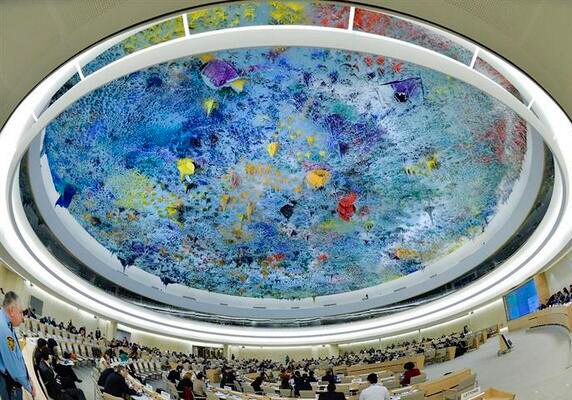
The UN Human Rights Council resolution to establish an international investigation into allegations of human rights violations and abuses committed by both sides in Sri Lanka’s civil war gives hope to tens of thousands of victims who continue to be denied truth and justice.
Mar 27, 2014 | Advocacy, Non-legal submissions
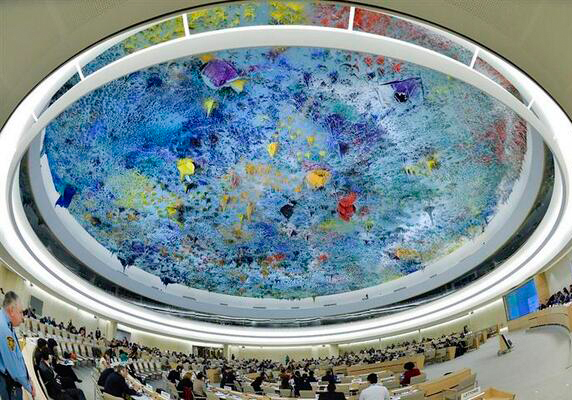
The ICJ made an oral statement on the recommendations made to Israel by the UN Human Rights Council, following Israel’s Universal Periodic Review.
The ICJ statement focussed on recommendations related to:
- compliance with international humanitarian and international human rights law , including particularly for thorough and impartial investigations into all allegations of human rights and humanitarian law violations committed in the context of the prolonged occupation of the OPT, and accountability of individuals responsible for such violations;
- Israel’s unlawful settlement policy;
- the separation wall; and
- administrative detention.
The full statement can be downloaded in PDF: Advocacy-UN-HRC25-IsraelUPR-20032014
Video of the discussion, including the ICJ statement, may be viewed here.
Mar 26, 2014 | Advocacy, Non-legal submissions
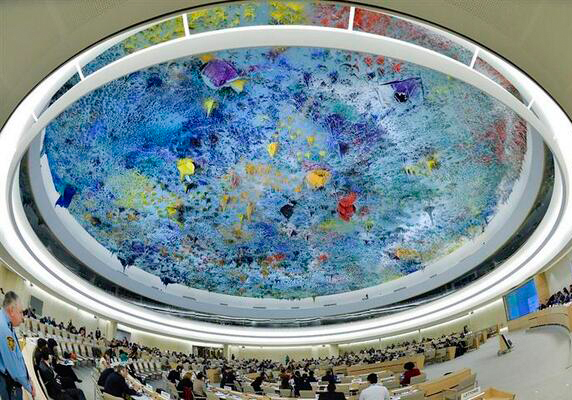
The ICJ emphasised the need for an international inquiry to monitor and investigate human rights violations in Sri Lanka, during discussion at the UN Human Rights Council.
The ICJ stated that an international investigation mechanism such as a Commission of Inquiry is needed in part because the Sri Lankan justice system today simply cannot be relied upon to function as an independent and impartial institution.
- The judicial appointment process is subject to political interference.
- Judges and lawyers are subjected to threats and intimidation.
- Security of tenure for the judiciary is not protected by an independent, impartial and fair procedure for the removal or discipline of judges.
The UN High Commissioner for Human Rights has repeatedly expressed concern about “the continuing high levels of harassment and intimidation meted out to human rights defenders, lawyers and journalists”. Further incidents against human rights defenders occurred during the Human Rights Council session itself.
The ICJ urged the Council to establish an international independent and impartial investigation mechanism to give a glimmer of hope to victims and families, that their rights under international law to truth, justice and reparation will ultimately be upheld.
A number of delegations have jointly presented a draft resolution that would establish an international investigation with the backing of the Human Rights Council. A vote on the resolution is expected later in the week.
The full statement can be downloaded in PDF: Advocacy-UN-HRC25-SriLanka-OralStatement-26032014-rev
Video of the discussion of the report, including the ICJ oral statement, is available in the UN webcast archive.
See also:
Briefing note on independence of judges and lawyers in Sri Lanka
Mar 24, 2014 | Advocacy, Non-legal submissions
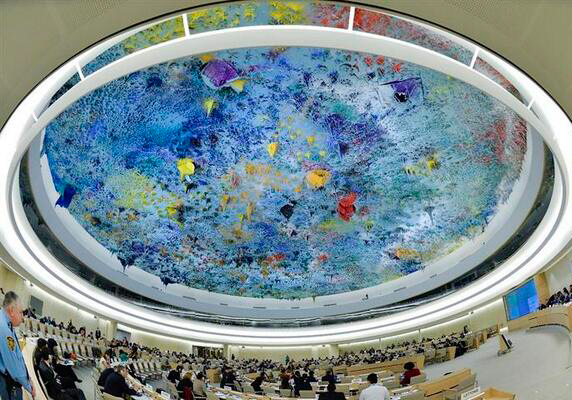
The ICJ made an oral statement to the UN Human Rights Council during the general debate on the situation of human rights in the Occupied Palestinian Territory.
The ICJ noted that, almost ten years after the International Court of Justice ruled the construction of the separation wall in the Occupied Palestinian Territory (OPT) to be unlawful, States and international organizations have failed to take effective measures to hold Israel accountable for violations of international humanitarian law and human rights law arising from the wall.
As the International Court of Justice held, States must not “recognize the illegal situation resulting from the construction of the wall” and must not “render aid or assistance in maintaining the situation created by such construction.” Israel, for its part, must dismantle the wall and its associated regime and provide reparation to victims.
At the same time, Palestinian armed groups must renounce all direct or indiscriminate attacks on civilians and civilian objects. Israel must also cease its own violations of international humanitarian law.
The ICJ further addressed the human rights impacts of Israeli settlements in the occupied territory, and the need for the Security Council effectively to address the issue.
The full statement can be downloaded in PDF here: Advocacy-UN-HRC25-IsraelOPT-24032014
Mar 21, 2014 | Advocacy, Non-legal submissions
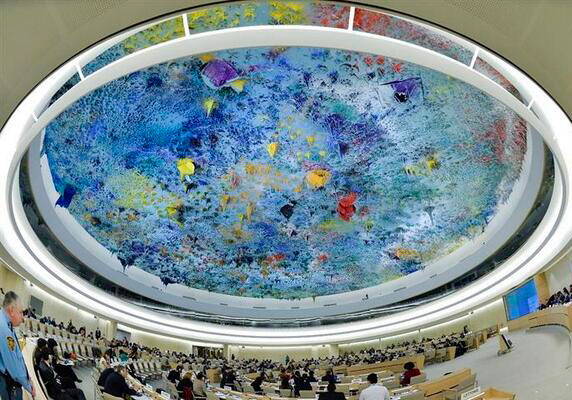
The ICJ spoke at the UN Human Rights Council on the lack of progress in Nepal on ending impunity.The oral statement was delivered during the general debate on the Universal Periodic Review (UPR).
Nepal has failed to take concrete action to implement key UPR recommendations, including those crucial to implementing the right to an effective remedy and reparation, creating effective mechanisms for transitional justice and ending impunity.
The Government continues to try to force through a Truth and Reconciliation Commission that is not human rights complicant and has already been ruled invalid by the Supreme Court of Nepal.
Nepal has also failed to take meaningful measures to investigate human rights violations and abuses that arose during the armed conflict.
The ICJ called on Nepal to take specific measures towards ending impunity.
The full written statement can be downloaded, in PDF format: Advocacy-UN-HRC25-Nepal-OralStatement-2103214
The representative of Nepal exercised the right of reply in response to ICJ’s oral statement.
Video of the oral statement, and Nepal’s statement in reply, via the official UN webcast.