Apr 29, 2013 | News
The Bahrain authorities must fully cooperate with the UN mechanisms and implement the recommendations of the Bahrain Independent Commission of Inquiry (BICI) set up by the Government of Bahrain in June 2011.
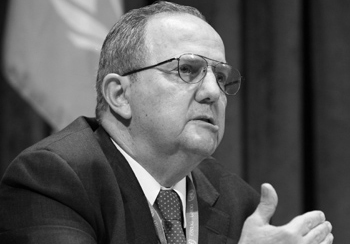
The ICJ further calls on the Bahrain authorities to ensure that the recommendations from the UN Universal Periodic Review process in September 2012 are implemented in full and in good faith and, to this end, immediately extend an invitation with specific dates to the UN Special Rapporteur on torture, Juan E. Méndez (photo).
The statement comes as the authorities in Bahrain effectively cancelled a visit of the Special Rapporteur for the second time, a previous visit in March 2012 also having been postponed at the last minute.
“As a former member of the BICI, I find it extremely disappointing that Bahrain has taken this decision for the second time. It keeps dangling the possibility of a visit when it is under pressure to do something about implementing the BICI recommendations,” said Sir Nigel Rodley, President of the ICJ. “One does not have to be a cynic to infer that once the pressure eases – for example, because the Human Rights Council has concluded its review of Bahrain’s human rights performance or the Formula One race is over – it can then withdraw its invitation. I hope the international community will take account of this pattern, when reacting to positive assurances from the authorities. Promises are no substitute for implementation.”
The report of the BICI, published in November 2011, documented numerous cases of torture and ill-treatment.
It further made crucial recommendations for reform so as to prevent these and other violations in the future, including effective investigations into all cases of torture and ill-treatment by an independent and impartial body; the establishment of a standing independent body to examine all complaints of torture or ill-treatment, excessive use of force or other abuses at the hands of the authorities; and the compensation and provision of remedies for all victims.
“The BICI’s recommendations included ones to address the serious problem of torture in Bahrain, a problem I had identified in the 1990s when I held the mandate Juan Mendez now discharges with consummate professionalism. One may perhaps be pardoned for considering that the only threat posed by the visit to the political situation is the fear of what information would be uncovered by the visit,” Sir Nigel Rodley concluded.
Contact:
Said Benarbia, ICJ Senior Legal Adviser of the Middle East and North Africa Programme, t: +41 22 979 3817, e-mail: said.benarbia(a)icj.org
UN Photo/Rick Bajornas

Mar 5, 2013 | Advocacy, Legal submissions, Non-legal submissions
The ICJ today requested the UN Special Rapporteur on the situation of human rights defenders to call on Zimbabwe, Angola, the Democratic Republic of Congo and Swaziland to take effective measures to prevent and end attacks on and persecution of human rights defenders.
The ICJ delivered its oral statement today during an interactive dialogue with the Special Rapporteur as part of the Human Rights Council’s 22nd regular session (25 February to 22 March 2013).
The ICJ also noted the need for these States to:
- Ensure adherence to international standards on detention and fair trial in cases where human rights defenders have been arrested;
- Conduct prompt and impartial investigations and, where human rights abuses are criminal in character, prosecute all persons responsible; and
- Ensure that affected human rights defenders have access to effective remedies and reparation for such abuses.
Also addressed to the Special Rapporteur on the situation of human rights defenders was a written statement submitted earlier this month concerning legislative restrictions on ‘homosexual propaganda’ that threaten LGBT human rights defenders.
SouthernAfrica-HRC22-IDItem3-SRHRDs-Non-LegalSubmission-2013 (download oral statement in PDF)
For the written statement click here
Oct 29, 2012 | Events
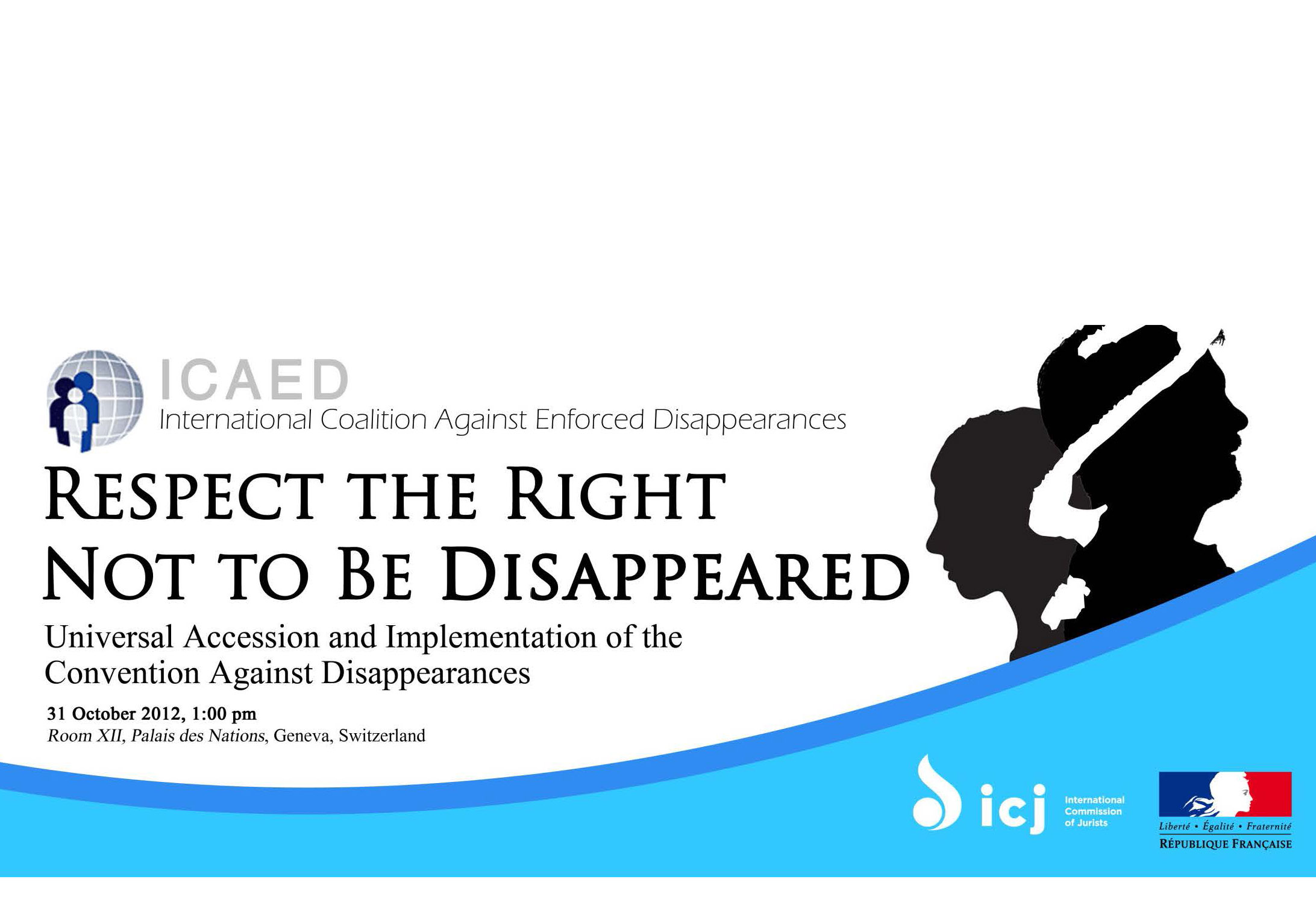 On 31 October the ICJ is co-sponsoring a side event with the Permanent Mission of France on “Respect the right not to be disappeared – Universal accession and implementation of the Convention against disappearances”.
This parallel event to the session of the Committee on Enforced Disappearance and the Working Group on Enforced and Involuntary Disappearances will take place at the Palais des Nations in Geneva, Room XII, from 1 to 3 PM (13.00-15.00).
UN-ICAED enforced disappearances – Event-2012

Sep 18, 2012 | Advocacy
 The ICJ joined the International Movement ATD Fourth World and others in supporting the final version of the draft guiding principles on extreme poverty and human rights.
During the 21st regular session of the UN Human Rights Council, the Special Rapporteur on extreme poverty and human rights, Ms Maria Magdalena Sepulveda Carmona, presented the final version of her draft guiding principles on extreme poverty and human rights.
In an interactive dialogue with the Special Rapporteur, on 12 September 2012, the ICJ joined a statement by almost 20 non-governmental organisations from throughout the world. The statement describes the draft guidelines as extremely important and calls on the Human Rights Council to adopt them.
ICJ-HRC21-IDSREP-JointOralStatement-2012 (download statement, in PDF)
Sep 13, 2012 | Events
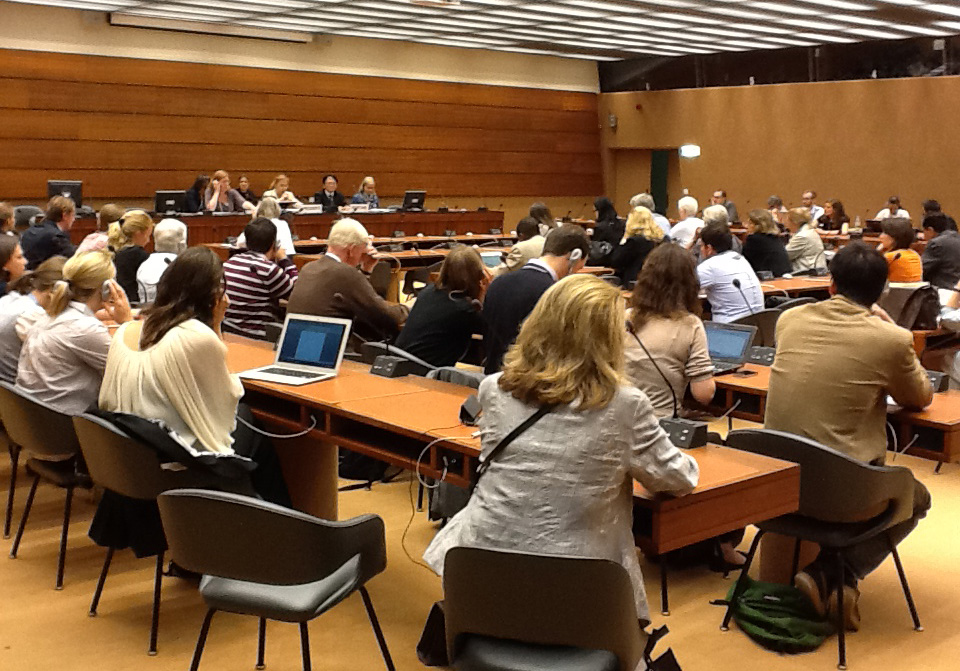
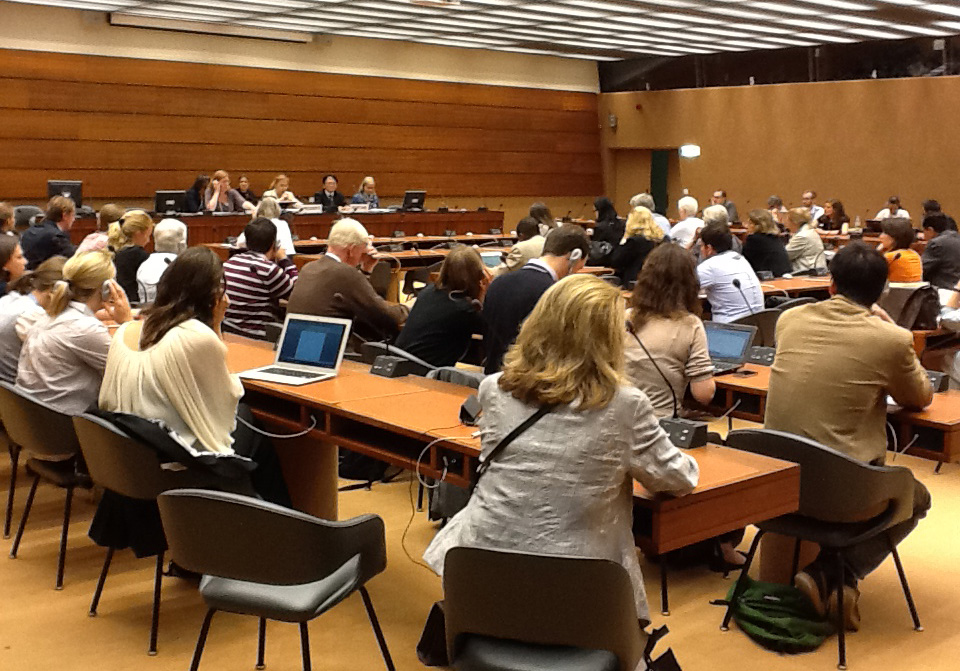 In the margins of the UN Human Rights Council 21st regular session, the ICJ held today a high-level discussion on the role of judges and lawyers in transition.
The ICJ side event discussed the role of, and challenges faced by, judges and lawyers in transition, especially as this relates to the promotion and enjoyment of truth, justice, reparation and guarantees of non-recurrence.
Panellists included Pablo de Greiff, the Special Rapporteur on the promotion of truth, justice, reparation and guarantees of non-recurrence, Judge Stefan Techsel, Judge Ad Litem at the ICTY, and Govinda Sharma, senior advocate from Nepal.
HRC21-J&LinTransition-flyer-Event-2012 (full text in PDF)