Sep 5, 2017 | Eventos, Noticias
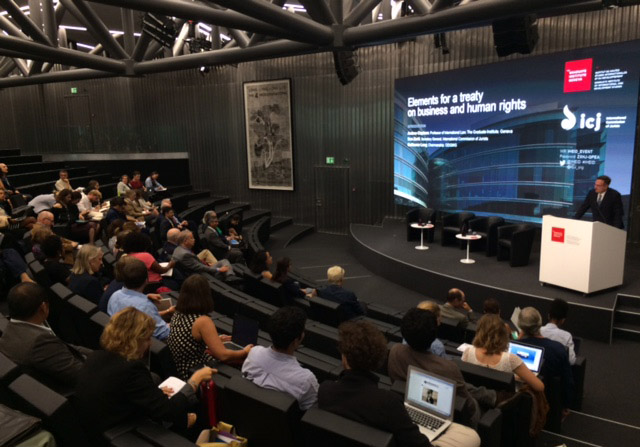
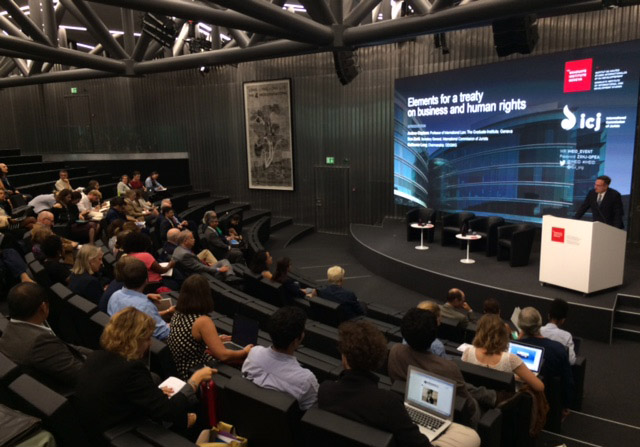
Hoy la CIJ y el Institut de Hautes Etudes Internationales et du Développement co-organizaron una conferencia pública sobre los Elementos de un tratado sobre las empresas y los derechos humanos.
En junio de 2014, el Consejo de Derechos Humanos de las Naciones Unidas estableció un grupo de trabajo intergubernamental encargado de “elaborar un instrumento internacional jurídicamente vinculante para regular, en el derecho internacional de los derechos humanos, las actividades de las empresas transnacionales y otras empresas comerciales”.
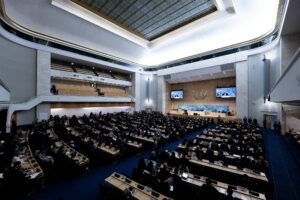
La tercera reunión del Grupo de trabajo tendrá lugar del 23 al 27 de octubre de 2017 en el Palacio de las Naciones.
El evento tuvo lugar en un momento crítico para informar el proceso de elaboración del tratado en el Grupo de trabajo, y se orientó a fomentar el intercambio de opiniones entre los actores internacionales con el objetivo de crear las base para el consenso sobre los posibles contenidos de un instrumento jurídicamente vinculante en el ámbito de las empresas y los derechos humanos.
Se espera que el futuro tratado contribuya a subsanar algunas deficiencias en el marco normativo internacional en materia de rendición de cuentas, en relación con las operaciones de las empresas en materia de derechos humanos. El tratado también debería fortalecer la acción de los Estados para garantizar recursos efectivos y reparaciones para las víctimas de abusos.
Este tratado será el primero en el marco internacional del derecho de los derechos humanos para abordar directamente las actividades de las sociedades comerciales.
El tema de los impactos de los derechos humanos por parte de las empresas comerciales figura a la cabeza de la agenda internacional sobre el que se han desarrollado varios instrumentos no vinculantes, entre los que destacan los Principios Rectores sobre las Empresas y los Derechos Humanos.
Se prevé que el proceso hacia un tratado en este ámbito se basará en los logros alcanzados hasta la fecha, cubriendo las lagunas restantes y mejorando las normas y la acción de los Estados y las empresas por igual.
Sep 5, 2017 | Events, News
Today the ICJ and the Graduate Institute of International and Development Studies co-organized a public conference: Elements of a treaty on Business and Human Rights.
In June 2014, the United Nations Human Rights Council established an inter-governmental working group to “elaborate an international legally binding instrument to regulate, in international human rights law, the activities of transnational corporations and other business enterprises”.
The third session of the working group will take place from 23-27 October 2017 at the Palais des Nations.
Today’s event took place at a critical moment to inform the process of elaboration by the working group.
It fosters the exchange of views among international actors, with the aim of creating the basis for consensus on possible contents of a legally binding instrument in the field of business and human rights.
The prospective treaty is expected to contribute to fill some accountability gaps in the international normative framework, in relation to the operations of business enterprises in terms of human rights.
The treaty should also enhance States’ action to ensure effective remedies and reparations for the victims of abuses.
This treaty will be the first in the international human rights law framework to address directly activities of business corporations.
The issue of human rights impacts by business enterprises has reached the top of the international agenda, and several non-treaty instruments have been developed, foremost among them the Guiding Principles on Business and Human Rights.
The process towards a treaty in this field is expected to build on the achievements so far, filling remaining gaps and enhancing rules for and action by states and businesses alike.
For additional information & registration click here
See also the photo of the week on Genève Internationale
Sep 3, 2017 | News
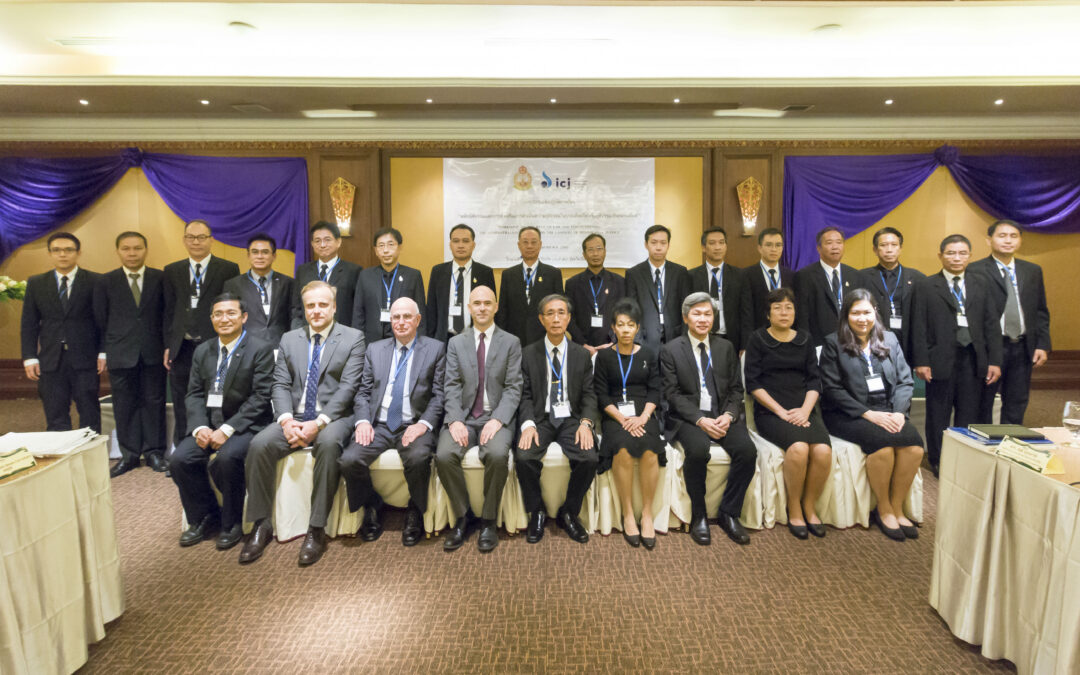
On 2 and 3 September, the ICJ held a workshop on “the Rule of Law and Strengthening the Administration of Justice in the Context of Restorative Justice” for members of the Thai judiciary.
The workshop was held in Chiang Mai.
Twenty-two judges attended the workshop, with an observer from the Thailand Institute of Justice (TIJ).
The objective of the workshop was to discuss how to best apply international standards of restorative justice within Thailand’s justice system.
Restorative justice is based on the fundamental principle that criminal behavior not only violates the law, but also injures victims and the community.
A restorative process is any process in which the victim and the offender and, where appropriate, any other individuals or community members affected by a crime participate together actively in the resolution of matters arising from the crime, with the help of a facilitator.
Frederick Rawski, Regional Director of ICJ Asia and the Pacific, recognized in his opening statement that implementation of restorative justice, including constructive non-custodial sentencing and measures, could assist in combating the problem of overcrowding in detention facilities in the North of Thailand, particularly with respect to drug-dependent offenders.
The workshop made reference to the United Nations Declaration of Basic Principles on the Use of Restorative Justice Programmes in Criminal Matters, which was adopted by the United Nations Economic and Social Council in 2002.
Speakers at the Workshop included Chief Justice Somnuk Panich from Office of the Chief Justice Region V, who formally opened the workshop, Judge Dr. Dol Bunnag, Presiding Judge of Intellectual Property and International Trade Court, who summarized the landscape of restorative justice in Thailand, and Judge Sir David James Carruthers from New Zealand, an international expert on restorative justice in New Zealand.
ICJ’s Senior International Legal Adviser Kingsley Abbott moderated the two-day workshop.
The ICJ ended the workshop with a statement reiterating its commitment towards working with Thailand’s judiciary to strengthen the rule of law and administration of justice in Thailand.

Sep 1, 2017 | Feature articles, News
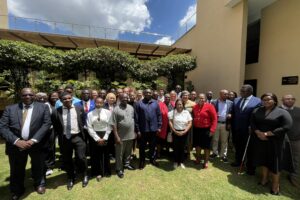
Today, an ICJ delegation concluded a learning and assessment mission to the North Mara region and the North Mara Gold Mine Ltd, a subsidiary of Acacia Mining plc located in north-west Tanzania in the Tarime district of the Mara region.
The visit took place between 27 August and 1 September.
The objective of the ICJ Mission was to learn about the operation with a view to assessing the effectiveness of the North Mara Gold Mine’s operational grievance mechanism (OGM) in addressing complaints over alleged human rights concerns and abuses committed in connection with the mine’s operations.
The members of the ICJ delegation were: ICJ Commissioners Justice Ian Binnie and Alejandro Salinas, accompanied by Mr Carlos Lopez, ICJ Senior Legal Adviser, and Mrs Antonella Angelini, researcher.
Read the full story here: Tanzania-BHR mission North Mara-News-Features article-2017-ENG (in PDF)
Sep 1, 2017 | News
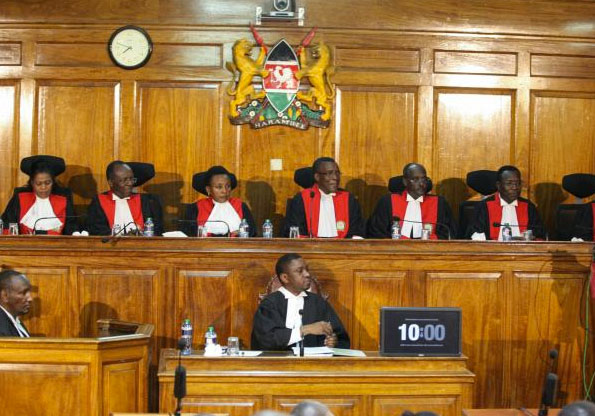
Today the Supreme Court of Kenya took the unprecedented step of voiding the presidential elections held on 8 August 2017 citing the failure by the Independent Electoral and Boundaries Commission (IEBC) to adhere to constitutionally mandated processes.
The ICJ commends the Supreme Court of Kenya for adjudication of a sensitive case at a high professional standards amidst a charged political atmosphere.
The ICJ in partnership with the Africa Judges and Jurists Forum (AJJF) sent a mission of three distinguished judges to observe the proceedings during the presidential petition in Kenya.
The delegation consisted of Retired Chief Justice Earnest Sakala (Zambia), Justice Dingake (Botswana) and Justice Chinhengo (Zimbabwe).
The mission’s observations will be publicized in due course.
Kenya held national elections on 8 August 2017 administered by the IEBC.
The IEBC subsequently announced that Uhuru Kenyatta had won the elections with a 54% majority.
The opposition National Super Alliance Coalition led by Raila Odinga filed an election petition alleging serious irregularities in the tabulation and transmission of the results of the elections and asking the court to nullify the results and order fresh elections.
The Supreme Court heard the election petitition culminating in the decision that was handed down today.
According to the observers, the court conducted the hearing in a manner consistent with the rule of law and that adhered to the Kenyan Constitution and international principles of a fair trial.
The Court gave acted fully as a competent, independent and impartial judicial body.
“The decision taken by the Supreme Court today is precedent setting. It places a cost on the election management body for apparently failing to adhere to constitutional imperatives and the normative framework governing the conduct of elections,” said Arnold Tsunga, Africa Director of the ICJ.
“Elections are a high stakes subject in Kenya, as elsewhere in the world. Previous elections have shown that violence and multiple human rights violations increase during the election period. We therefore encourage the political leaders in Kenya to accept the court’s verdict and to encourage their supporters to exercise maximum restraint and tolerance as the country braces itself for fresh elections,” he added.
Finally the ICJ urges the authorities in Kenya and the IEBC to quickly comply with and implement the court’s judgement.
Contact
Arnold Tsunga, ICJ Director for Africa, t: +27716405926 ; e: arnold.tsunga@icj.org