Apr 29, 2021 | News
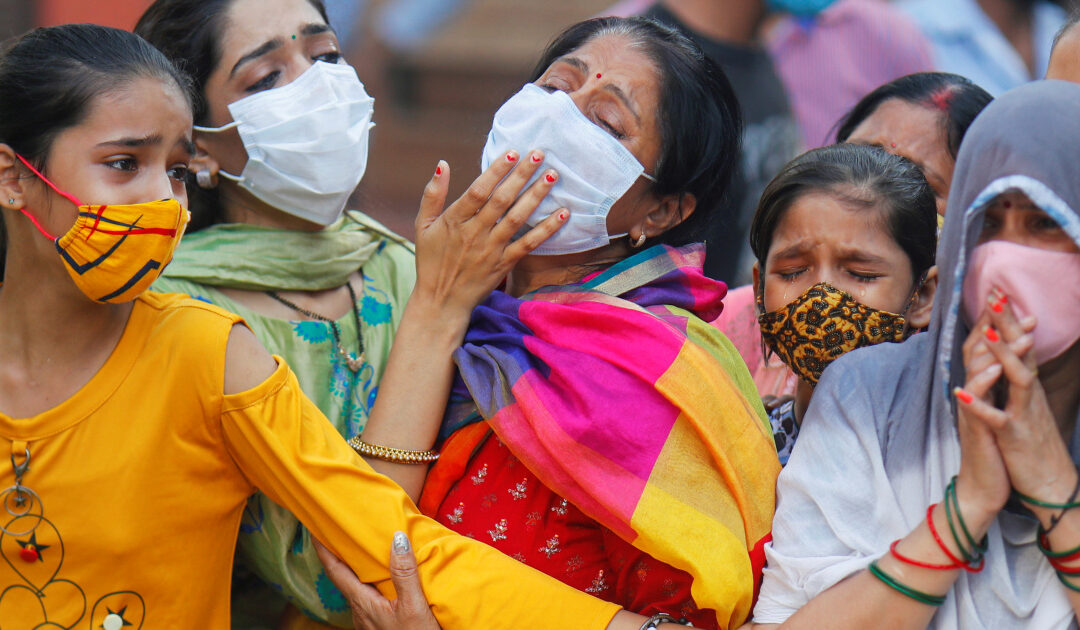
The Indian Government must urgently remedy failures that have aggravated the impact of the second wave of the Covid-19 pandemic and led to people in the country suffering record-high rates of infection and death, said the ICJ today.
The ICJ urged India’s central and state governments to comply with judicial orders regarding guaranteeing access to adequate, timely and nominally priced oxygen supply, hospital beds, COVID-19 medicines, COVID-19 tests and vaccines, in line with India’s constitutional and international legal obligations.
“The Indian federal and state governments failed to prepare for the predictable second wave of the COVID-19 pandemic, aggravating the horrific impact of the pandemic and the avoidable tragedy of between 1,500 to over 3,000 deaths daily,” said Sam Zarifi, ICJ’s Secretary General.
Since 15 April India has reported more than 200,000 cases per day and on 27 April, it reported 360,960 – the highest globally – in a devastating second wave, with the official number of deaths hovering at over 1,500 – 3,000 per day, and feared to be higher actually.
Many hospitals have reportedly turned away patients due to lack of space and some hospitals have reportedly asked those they admit to sign forms accepting the risk in case of death caused by exhaustion of oxygen supply.
The government’s failures have driven people to seek recourse in the courts. At least 11 High Courts across the country have taken cognizance of the crisis and have passed orders regarding matters including access to oxygen supply and oxygen tankers, access to medicines such as Remdesivir and to hospital beds; restriction on black marketing and private hoarding of medicines and oxygen; and prevention of violations of COVID19 regulations relating to mask wearing and social distancing.
Courts have also ordered that accurate data on COVID19 cases and deaths be relayed by the state government. The Indian Supreme Court also took suo moto cognizance of the issue and has called for a report from the central government on issues related to supply of oxygen, essential drugs, vaccine pricing.
The Delhi High Court on 21 April asked the central government to ensure that “the emergent needs of various hospitals in Delhi… would be met so that no causalities are suffered on account of discontinuing the supply of Oxygen to seriously ill COVID patients.” On 27 April, the Delhi High Court asked the Delhi government to ensure transparency in accounting of supply of oxygen and drugs to prevent hoarding and black-marketing.
The Bombay High Court on 22 April gave directions to ensure uninterrupted oxygen supply to city hospitals, access to medicines and beds, and tests.
“While the ICJ commends the Indian judiciary in trying to respond to this crisis urgently, the fact remains that a lack of a national public health strategy by the Indian Government has resulted in acute shortages of essential drugs, oxygen, and hospital beds in places where they are needed,” said Zarifi.
India is obligated under Article 12, International Covenant on Economic, Social and Cultural Rights (ICESCR), to guarantee the right to health. Under Article 12(c), ICESCR, the Indian State is required to prevent, treat and control all diseases including epidemic diseases such as COVID-19. Moreover, Article 12(d), ICESCR, requires India to create conditions that allow for “medical service and medical attention” to all in the event of a sickness, such as COVID-19. The minimum core obligations under Article 12, ICESCR, include, among others, provision of essential drugs, and a national public health strategy and a plan of action on the basis of epidemiological evidence, addressing the health concerns of the whole population. The Indian State has failed egregiously in meeting its minimum core obligations under the right to health.
The ICJ recommends, in line with decisions of Indian courts, that the Indian federal government work effectively with various state governments and other entities to remove bottlenecks in supply of medicines and oxygen, and set up additional facilities for COVID19 patients. The Indian government must also promote and model COVID appropriate behavior such as masking and social distancing and begin preparing for any subsequent waves of the pandemic.
Contact
Maitreyi Gupta, ICJ India Legal Adviser, t: +91 77 560 28369 e: maitreyi.gupta(a)icj.org
Apr 23, 2021 | News
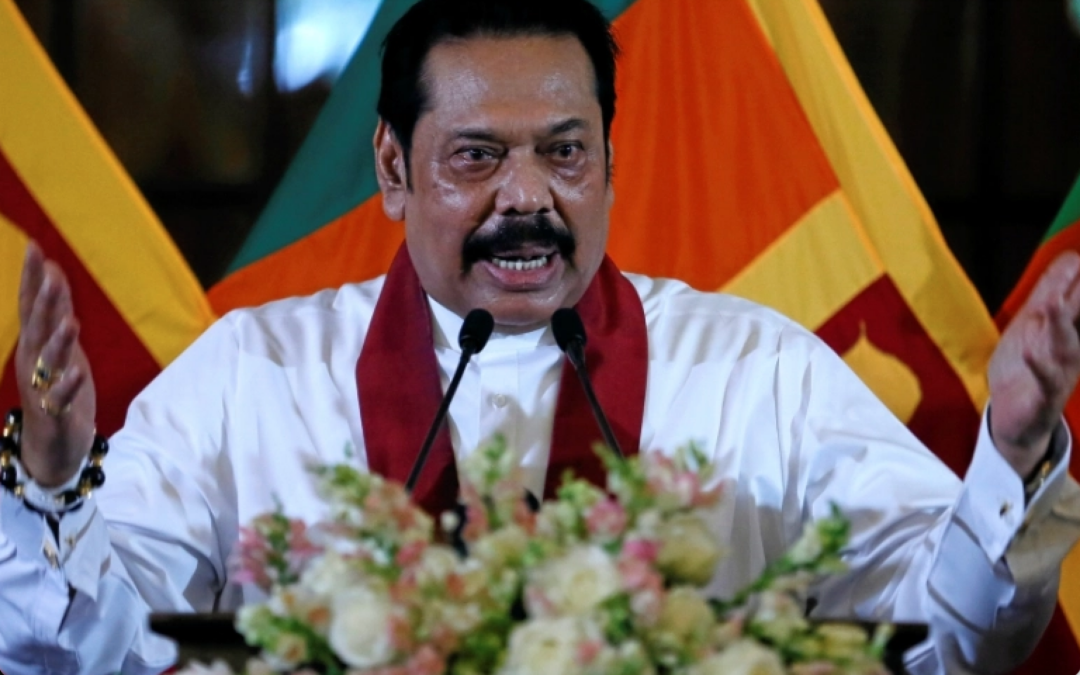
The parliamentary resolution tabled by Prime Minister Mahinda Rajapaksa would aggravate Sri Lanka’s culture of impunity and undermine the rule of law, said the ICJ today.
The Resolution tabled on 9 April seeks the approval of the Sri Lankan Parliament to stop ongoing trials against military officials and other high-ranking officials accused of serious human rights violations, as well as family members of the President and Prime Minister currently facing charges of corruption.
“The Parliament should categorically reject this ‘impunity resolution’ that interferes with the ongoing work of the judiciary and the Attorney General’s office in their efforts to provide for at least a modicum of accountability for serious violations,” said Ian Seiderman, ICJ’s Legal and Policy Director.
The Resolution seeks parliamentary approval to implement the recommendations of the so-called Commission of Inquiry on Political Victimization (COI), which were presented to President Gotabaya Rajapaksa last December. The COI and its work have been widely discredited as an affront to the independence of judiciary and the rule of law and its report has not been made available to the public.
“The report by the COI calls for the withdrawal of investigations and convictions even in the handful of cases of serious human rights violations that have been brought before courts, including in cases where perpetrators have been convicted,” Seiderman said.
The recommendations made by the COI that would be implemented by the Resolution include the withdrawal of indictments filed by the Attorney- General and the discharge of several accused in cases that have been recognized as emblematic and referred to in the report of the UN High Commissioner for Human Rights and in UNHRC Resolution 46/1. They also included similar dropping of cases of serious financial misappropriation.
Examples of emblematic cases where the COI recommends discharge of the accused include the case of alleged abductions of 11 persons by members of the Navy including Admiral Wasantha Karannagoda; unlawful killings of Tamil National Alliance MP Nadaraja Raviraj, Wasim Thajudeen, Sunday Leader Editor Lasantha Wickrematunge, Tamil National Alliance MP Joseph Pararajasingam; the alleged enforced disappearance of journalist Prageeth Ekneligoda; and the abduction of Editor Keith Noayhr.
In certain cases that have resulted in convictions for murder or torture, including one case affirmed on appeal to the Supreme Court, the COI has recommended that the Attorney-General review the convictions and discharge the accused.
“The recommendations of the COI, incorporated in this “impunity resolution”, constitute an interference with the independent functioning of the judiciary as judicial decisions and court proceedings have been reassessed outside the judicial structure,” Seiderman stated. “Involving the Parliament in giving effect to these recommendations is contrary to the principle of separation of powers as provided for in the Sri Lankan Constitution.”
The UN Basic Principles on the Independence of the Judiciary makes clear that “the judiciary shall have jurisdiction over all issues of a judicial nature and shall have exclusive authority to decide whether an issue submitted for its decision is within its competence as defined by law” and that “there shall not be any inappropriate or unwarranted interference with the judicial process, nor shall judicial decisions by the courts be subject to revision.”
The recommendations by the COI go even further and recommend the prosecution of investigators, lawyers and prosecutors in those cases under the Penal Code and the Bribery Act for “fabrication” of evidence and corruption.
“Recommending that action be taken against lawyers and prosecutors for carrying out their professional and statutory duties is an all-out assault on a free and independent bar and this recommendation must be summarily rejected,” Seiderman said.
The UN Basic Principles on the Role of Lawyers obliges the State to ensure that lawyers “are able to perform all of their professional functions without intimidation, hindrance, harassment or improper interference” and that they “shall not suffer, or be threatened with, prosecution or administrative, economic or other sanctions for any action taken in accordance with recognized professional duties, standards and ethics.”
The UN Guidelines on the Role of Prosecutors establish that “States shall ensure that prosecutors are able to perform their professional functions without intimidation, hindrance, harassment, improper interference or unjustified exposure to civil, penal or other liability.”
Contact
Osama Motiwala, ICJ Asia-Pacific Communications Officer, e: osama.motiwala(a)icj.org
Apr 21, 2021 | News
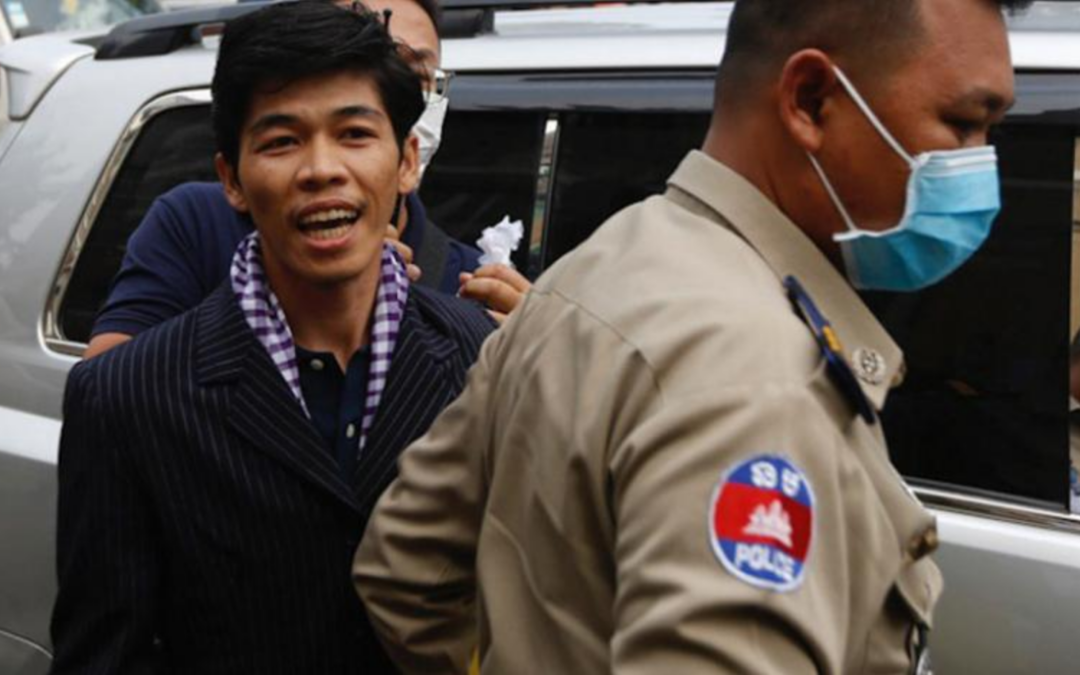
Journalists and media workers face an increasingly repressive legal landscape amidst the COVID-19 pandemic in Cambodia, Thailand and Vietnam, as outlined by the ICJ in a submission to the Office of the United Nations High Commissioner for Human Rights (OHCHR).
“Laws in Cambodia, Thailand and Vietnam that do not comply with human rights law and standards have served to shrink the civic space in which the media operate,” said Sam Zarifi, ICJ’s Secretary General. “This stands to undermine the media’s crucial work in performing their investigative functions and their capacity to impart information to the public.”
The ICJ highlighted in particular how new laws have been enacted in response to the COVID-19 pandemic that aim at or can be used by State authorities to control information about the pandemic. These laws contain provisions incompatible with human rights law and standards as their vague language makes them prone to abuses. In addition, some prescribe excessive sanctions, including severe criminal penalties, which are incompatible with the principles of necessity and proportionality.
The ICJ also underscored how the authorities in the three States continued abusing existing non-human rights compliant laws to arbitrarily restrict information and expression during the pandemic, by targeting journalists and social media users.
Although the ICJ recognizes the necessity to combat the spread of false information online to protect public health during the uncertainty of a pandemic, this objective can and must be carried out using the least intrusive means, rather than unnecessary and disproportionate measures like arrests, detentions, criminal prosecutions and onerous fines.
The submission called for the OHCHR to continue engaging with the relevant authorities in these three countries to better safeguard in law and practice the safety and work of journalists and media workers, and the right to health and right to freedom of expression and information.
This submission is aimed at providing the OHCHR information for a report it is preparing for the UN Human Rights Council pursuant to its Resolution 45/18 on the safety of journalists.
Download
The full submission is available in English here. (PDF)
Contact
Osama Motiwala, ICJ Asia-Pacific Communications Officer, e: osama.motiwala(a)icj.org
See also
ICJ, ‘Southeast Asia: ICJ launches report on increasing restrictions on online speech’, 11 December 2019
ICJ, ‘New ICJ global report shows that the right to health must be central to State responses to COVID-19’, 1 September 2020
ICJ, ‘Vietnam: authorities must act to safeguard rights online and end harassment of those expressing themselves – ICJ new report’, 9 December 2020
Apr 15, 2021 | News
The ICJ today condemned the promulgation by President Gotabaya Rajapaksa of new vague and overbroad anti-terrorism regulations, which make the already deeply flawed Prevention of Terrorism Act (PTA) open to further abuse.
The Prevention of Terrorism (Proscription of Extremist Organisations) Regulations No. 2 of 2021, published by way of Gazette notification on the 13 April 2021, outlaw 11 organisations identified as ‘extremist’ and provides criminal penalties for those accused of various kinds of associations with these and other organizations that may be similarly disfavoured.
A person who acts in contravention of the regulations is liable to a term of imprisonment up to twenty years, while any person who “conspires to commit or attempts, abets or engages in conduct in preparation to commit an offence” may be sentenced to a term of imprisonment of up to ten years.
“These ill-defined offences follow a similar pattern of the Sri Lankan executive unilaterally promulgating abusive regulations in the name of fighting terrorism over the years” said Ian Seiderman. “These latest ones come just a month after the decreeing of the ‘de-radicalisation’ regulations which allow for the Government to arbitrary detain people for up to two years without trial.”
Moreover, the listed acts shall amount to an offence not only in relation to the eleven
identified organizations, but also to any other organisation “representing or acting on behalf of such organisation or is connected with or concerned in such organisation or which is reasonably suspected of being connected with or concerned in any of the activities”. This is in violation of the principle of legality as the State may ex post facto identify any organisation as having associated with the eleven banned organisations.
The ICJ said that the Regulations were in contravention of the guarantees under article 13 of the Sri Lankan Constitution and its international legal obligations under the International Covenant on Civil and Political Rights.
A key precondition to a fair trial recognized internationally is that criminal offences must be prescribed by law and conform to the principle of legality. Vague laws undermine the rule of law because they leave the door open to selective and arbitrary interpretation and prosecution. The vague wording of a law also has an adverse impact on framing of the charge against the accused.
Following the promulgation of the ‘de-radicalisation’ regulations a number of persons belonging to minority communities were reportedly arrested under the PTA, including for ‘spreading Wahhabism via social media’ and ‘promoting terrorism related activities’.
“While the Sri Lankan Government has an obligation to protect its inhabitants from the threat of terrorism, that protection is a part of, and must not be seen in conflict with, its overall duty to protect human rights; ‘threats to national security’ can never be used as a justification for contravening basic standards in relation to freedom from arbitrary arrest”, said Ian Seiderman.
The ICJ has consistently called for the repeal of the Prevention of Terrorism Act, which has been used to arbitrarily detain suspects for months and often years without charge or trial, facilitating torture and other abuse. The ICJ reiterates its call for the repeal and replacement of this vague and overbroad anti-terror law and all regulations brought under it, in line with Sri Lanka’s international obligations.
The UN High Commissioner for Human Rights in her most recent report on Sri Lanka has reiterated the call for a moratorium on the use of the Prevention of Terrorism Act for new arrests until it is replaced by legislation that adheres to international best practices.
Contact
Osama Motiwala, ICJ Asia-Pacific Communications Officer, e: osama.motiwala(a)icj.org

Apr 9, 2021 | Advocacy, News
The ICJ, together with the Office of the United Nations High Commissioner for Human Rights (OHCHR) and the National Commission on Violence Against Women (Komnas Perempuan) in Indonesia, held a webinar on 6 April to consider ways to combat discrimination and violence faced by Indonesian women.
In particular, participants identified advocacy strategies towards strengthening Indonesia’s compliance with its international legal obligations under the UN Convention on the Elimination of all forms of Discrimination against Women (CEDAW).
The webinar was broadcast live on Facebook and showcased the Bahasa Indonesia version of CEDAW video and attended by more than 50 women human rights defenders. The participants discussed the adequacy of measures taken by the Indonesian government to implement recommendations issued by the Committee on the Elimination of Discrimination against Women (CEDAW Committee) after it had reviewed Indonesia’s report in 2012. These recommendations included a call to repeal discriminatory by-laws adopted at the provincial level that restrict women’s rights in Aceh province and elsewhere; the adoption of measures taken to ensure that the draft or proposed amendments to the Criminal Code Bill and other bills do not contain provisions that discriminate against women; the need to address gender based violence and sexual violence against women including indigenous women; and the protection of women human rights defenders.
Devi Anggraini, Chairperson of Association of Indigenous Women of the Archipelago (Perempuan Aman) said although Indonesia had ratified CEDAW through Law No. 7 year 1984 to protect the individual rights of Indonesian women, policies had yet to effectively protect the collective rights of indigenous women. She shared her concerns regarding discrimination against Indigenous women in the context of large-scale development projects, exploitation of natural resources, deforestation, and expansion of agriculture, as well as their access to land and resources.
“The Indonesian government does not seek ‘free, prior, and informed consent’ by the affected indigenous people, especially indigenous women and this has caused 87.8% of indigenous women to lose control of their traditional lands,” said Devi.
Dian Novita, Coordinator of Policy Advocacy Division from Legal aid for Women and Children (LBH APIK Jakarta) raised concern about discriminatory draft laws and provincial laws.
“LBH APIK assists many cases of women who are victims of gender-based violence in which their videos containing private sexual conducts were distributed online. However, they were criminalized under the pornography law and Electronic Information’s and Transactions (EIT) Law. We are currently trying to pursue judicial review of the ETI Law from women’s perspective”, said Dian.
Andy Yentriyani, Head of Komnas Perempuan said that despite existing challenges and new obstacles, there had been some progress in responding to the Recommendations of the CEDAW Committee from the previous cycle, such as the enactment of Supreme Court Regulation no.3 year 2017 on guidance for judges in adjudicating cases involving women and similar gender sensitive regulation released by the Attorney General’s Office and the Police. “It is now our duty to monitor that these policies and training are effectively implemented. For example, we gained extraordinary support from the civil society during the campaign urging the Government to adopt the Sexual Violence Bill and this expanded participatory space for constructive dialogue for public to understand more about State responsibilities to protect and promote the fundamental rights of women.”
Watch
Contact
Ruth Panjaitan, Legal Adviser for Indonesia, e: ruthstephani.panjaitan(a)icj.org