Aug 19, 2019 | Advocacy, Cases, Legal submissions
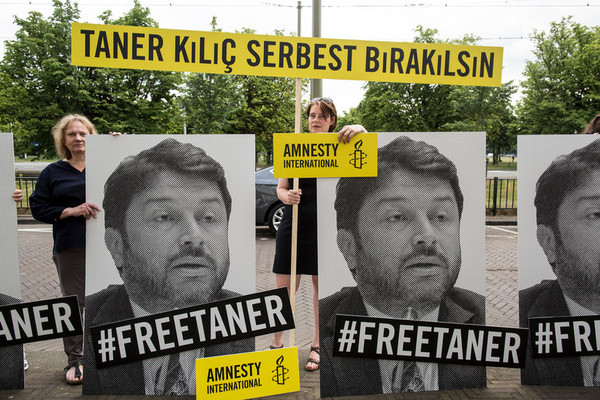
The International Commission of Jurists, the Turkey Human Rights Litigation Support Project and Human Rights Watch have jointly intervened before the European Court of Human Rights in the case of Taner Kiliç, former Chair of the Board of Amnesty International Turkey.
Taner Kiliç is a Turkish human rights defenders. He had been Chair of the Board of Amnesty International Turkey since 2014.
He was arrested on 6 June 2017 on reportedly unsubstantiated charges of “membership of a terrorist organisation” and was released on bail on 15 August 2018 after having spent 14 months in detention.
His case before the European Court of Human Rights challenges the lawfulness of his pre-trial and on remand detention, the violations of his right to judicial review of his detention, and of his freedom of expression and association, considering his arrest linked to his work as leader of a NGO.
As the interveners have written to the Court, this case epitomises some of the most fundamental human rights challenges in Turkey today.
These involve widely documented restrictions on freedom of expression, association, and assembly of human rights defenders (HRDs) and rapidly closing civil society space.
The interveners have submitted observations on:
- the factual context in respect of the situation facing HRDs in Turkey;
- international standards governing obligations towards HRDs of relevance to the Court’s interpretation of the European Convention on Human Rights, including the limits prescribed by Article 18;
- key principles necessary for a rule of law approach to the application of the criminal law, against the legal and practical pattern of excessive resort to criminal law against HRDs in Turkey today.
Turkey-ECtHR-icj&others-Kilic-Advocacy-legal submission-2019-ENG (download the third party intervention)
Photo credit: Amnesty International
Jul 31, 2019 | News, Publications, Reports, Thematic reports
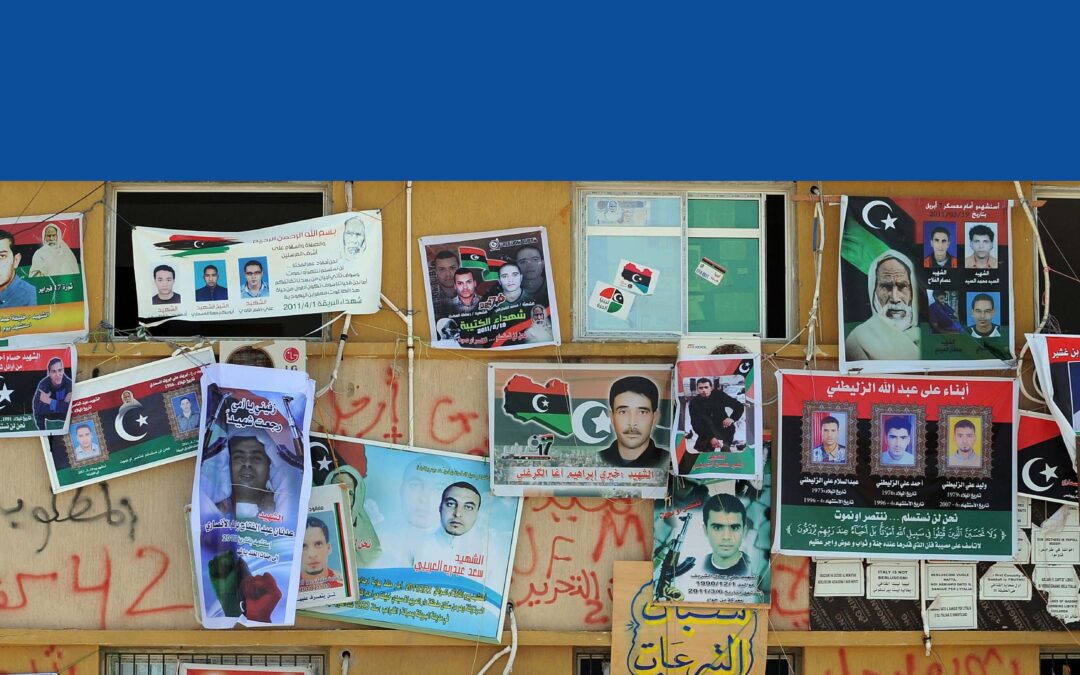
In a report released today on Libya’s criminal justice system, the ICJ said the United Nations, international actors and States must prioritize accountability for crimes under international law in their engagement with Libya.
This includes the establishment of a Commission of Inquiry or similar mechanism to document and report on gross human rights violations and to collect and preserve evidence of crimes for future criminal proceedings.
“The Libyan criminal justice system needs comprehensive reform to dismantle the structural impunity that prevails in the country,” said Said Benarbia, the ICJ’s MENA Programme Director.
“Rather than assuming the system is capable of ensuring justice for the egregious human rights violations and abuses still being perpetrated in Libya, international actors should establish a mechanism to monitor, report on and address these violations and prioritize human rights in any agreement with Libyan authorities,” he added.
The report Accountability for Serious Crimes under International Law in Libya: an Assessment of the Criminal Justice System finds that investigations and prosecutions of crimes under international law have been limited to a handful of cases and that future cases are unlikely meet international standards necessary to ensure fair and effective justice, in particular the rights to liberty and a fair trial and the prohibition on torture and ill-treatment.
Fragmentation in Libyan executive and legislative bodies, with the internationally recognized government unable to control significant parts of the territory, has weakened political structures and led to a precarious security situation that impedes the effective functioning of the judiciary, which has remained largely unified.
“Accountability efforts in Libya are hindered by cycles of violence, weak and ineffective law enforcement agencies, the arbitrary exercise of policing and detention powers by armed groups, and a web of amnesties, immunities and defences that shield perpetrators from justice,” said Kate Vigneswaran, the ICJ’s MENA Programme Senior Legal Adviser.
“Victims should not have to wait any longer for these obstacles to be removed and justice delivered. Peace and justice in Libya can only be achieved if the rule of law is fully established,” she added.
Since 2011, crimes under international law and other gross human rights violations, including torture and ill-treatment, enforced disappearance, enslavement and rape, have been committed by State and non-State actors on a widespread scale, including against thousands of migrants, refugees and asylum seekers arbitrarily detained.
“The recent upsurge in conflict and related commission of direct and indiscriminate attacks against civilians and mass displacement of the population makes tackling the climate of impunity vital for combating the commission of crimes,” said Benarbia.
To this end, States should fully support International Criminal Court efforts to conduct Libya-related investigations and prosecutions, including with a view to enforcing arrest warrants and bringing alleged perpetrators before the court for trial.
In her address to the Human Rights Council on 24 June, High Commissioner for Human Rights Michelle Bachelet stated that “Libya is not a port of safe return” and that “[t]he international community must come together to support pathways to sustainable peace in the country.”
Key recommendations for international actors, including UN bodies and States, include:
- The United Nations Human Rights Council should establish a Commission of Inquiry or similar mechanism, with a mandate to monitor, document, establish the facts and report on gross human rights violations in Libya, including with a view to collecting and preserving evidence of crimes under international law for future criminal proceedings before national or international courts;
- States should exercise universal jurisdiction to investigate and prosecute crimes under international law committed in Libya, including when the perpetrator is within their territory or otherwise under their jurisdiction;
- States should fully cooperate with and adequately resource the ICC to enhance its capacity to conduct its investigations and prosecutions, enforce related arrest warrants, and bring alleged perpetrators to account; and
- States and UN actors should refrain from entering into or implementing agreements with Libyan authorities, including in relation to the detention of migrants, refugees and asylum seekers and the provision of arms, where it is reasonably foreseeable that violations of rights under international law might occur.
Contact:
Said Benarbia, Director, ICJ Middle East and North Africa Programme, t: +41-22-979-3817; e: said.benarbia(a)icj.org
Kate Vigneswaran, Senior Legal Adviser, ICJ Middle East and North Africa Programme, t: +31-62-489-4664; e: kate.vigneswaran(a)icj.org
Libya-Accountability report launch-News-Press releases-2019-ENG (full story, in English, PDF)
Libya-Accountability serious crimes-Publications-Reports-Thematic reports-2019-ENG (full report in English, PDF)
Libya-Accountability report launch-News-Press releases-2019-ARA (full story in Arabic, in PDF)
Libya-Accountability serious crimes-Publications-Reports-Thematic reports-2019-ARA (full report in Arabic, PDF)
Jul 29, 2019 | News
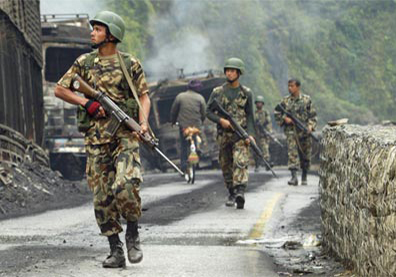
The Government of Nepal has failed to fulfill its commitment to provide justice for the victims of the country’s decade-long armed conflict, the ICJ, Amnesty International, Human Rights Watch, and TRIAL International said today.
The organizations echoed statements by victims and human rights groups about the Nepal government’s inaction on addressing conflict-era human rights violations, and a lack of transparency in the appointment of commissioners to the Truth and Reconciliation Commission and to the Commission on the Investigation of Enforced Disappearances.
“The lack of progress in holding perpetrators accountable for the suffering inflicted upon victims, their families and Nepali society as a whole, is appalling,” said ICJ Asia-Pacific Director Frederick Rawski.
“Nearly 13 years after the signing of the Comprehensive Peace Agreement, political leaders inside and outside of government are still playing games by politicizing the process. It is about time that they showed some courage, and took action to ensure access to justice, instead of continually looking after their own short-term self-interests,” he added.
“We have seen no evidence so far that the authorities of Nepal are serious about fulfilling their obligation to investigate conflict-era violations and bring all those suspected of criminal responsibility to justice in fair trials before ordinary civilian courts,” said Raju Chapagai, South Asia researcher at Amnesty International. “If the commitment to human rights obligations was as unflinching as claimed by Prime Minister KP Sharma Oli, the government would have acted diligently to deliver on its transitional justice responsibilities.”
After being elected in 2018, Prime Minister Khadga Prasad Oli renewed promises that the legal framework governing the transitional justice process would be brought into conformity with Nepal’s international human rights law obligations, as the Supreme Court had repeatedly directed. However, the government never amended the law, and instead pushed forward – without adequate consultation – with the establishment of a committee to recommend appointments to the transitional justice bodies.
“The failure of the government to deliver on its commitment to ensure truth, justice and reparations for the victims of conflict-era abuses shows a dismaying disregard for the protection of human rights,” said Meenakshi Ganguly, South Asia Director at Human Rights Watch.
The organizations called on the government to: 1) suspend the current process, and initiate a consultative and transparent process for the nomination and appointment of commissioners; 2) follow through on commitments to amend the 2014 transitional justice law to ensure that the legal framework is consistent with international human rights standards and Supreme Court rulings; and 3) adopt and publicize a plan for taking the transitional justice process forward.
“The legitimacy of Nepal’s transitional justice process lies both on a transparent and consultative appointment process for commissioners, and a strong legal foundation to allow the commissions to fulfil their mandate,” said Helena Rodríguez-Bronchú, Head of TRIAL International’s Nepal program. “Societal consensus is crucial for both factors.”
Amnesty International, ICJ and TRIAL International had previously submitted their analysis of the draft transitional justice legislation circulated in 2018 and had made recommendations on ensuring compliance with international human rights law. Human Rights Watch had also alerted for reform of the transitional justice law before appointing the commissioners. In April 2019, United Nations experts also wrote a joint letter to the foreign minister reminding the government of its commitment to amend the law and calling for a transparent process for appointing new commissioners after the terms of the previous commissioners expired.
Contact
Frederick Rawski, ICJ Asia-Pacific Director, t: +66 644781121 ; e: frederick.rawski(a)icj.org,
Nepal-trans just-News-Press releases-2019-NEP (story in Nepali, PDF)

Jul 18, 2019 | News
The ICJ and the International Bar Association’s Human Rights Institute (IBAHRI) have jointly sent international observers to attend the second hearing of the criminal trial on the “Gezi Park” protest at the Silivri Prison Courthouse in Istanbul, scheduled to take place on 18 and 19 July 2019.
The ICJ and IBAHRI observers will be monitoring a trial hearing before İstanbul 30th Assize Court with prinicipal defendant Osman Kavala, and 15 others; Ali Hakan Altınay, Ayşe Mücella Yapıcı, Ayşe Pınar Alabora, Can Dündar, Çiğdem Mater Utku, Gökçe Yılmaz, Handan Meltem Arıkan, Hanzade Hikmet Germiyanoğlu, İnanç Ekmekci, Memet Ali Alabora, Mine Özerden, Şerafettin Can Atalay, Tayfun Kahraman, Yiğit Aksakoğlu and Yiğit Ali Ekmekçi.
The observers will report directly to the IBAHRI and ICJ Secretariats on the proceedings following the mission.
The Gezi Park protests began in May 2013 as an effort by a group of environmentalists to save a park in central Istanbul from being rezoned, but soon turned into nationwide demonstrations.
The protest was quelled by police with the use of tear gas and water cannons against the protesters in Taksim Square. Following a six-year investigation into the events, the 657-page indictment issued by the Istanbul Chief Public Prosecutor’s Office was accepted by the 30th A Court in Istanbul on 4 March 2019.
The defendants are to be charged under Turkish Criminal Code Article 312 (attempt to overthrow the Turkish Government or attempt to prevent it from fulfilling its duties), Article 151 (damage to property), Article 152 (qualified damage to property), Article 174 (possession or exchange of hazardous substances without permission), Article 153 (damaging places of worship and cemeteries), Article 149 (qualified robbery), Article 86 (intentional injury); crimes under the Law on Firearms, Knives and Other Tools no. 6136, and crimes under the Law on Protection of Cultural and Natural Assets no. 2863.
The total sentence asked for by the prosecution for these offences amounts to approximately 47,520 years imprisonment.
Contact:
Massimo Frigo, Senior Legal Adviser, t: +41 22 979 38 05 – e: massimo.frigo(a)icj.org
Jul 17, 2019 | Advocacy, News, Non-legal submissions
Today, the ICJ filed a submission to the Human Rights Council’s Working Group on the Universal Periodic Review in advance of its review of Turkey’s human rights record in January 2020.
In its submission, the ICJ considered:
- the situation with the independence of the judiciary in Turkey, during and after the state of emergency of 2016-2018;
- the lack of effective remedies for the mass dismissals in the public sector occurred in that period;
- the shortcomings in fair trial rights in the criminal justice system:
- the obstacles to the action of civil society;
- the lack of accountability for torture and enforced disappeareances; and
- provided information on the status of international human rights treaties ratified by Turkey.
Contact:
Massimo Frigo, ICJ Senior Legal Adviser, e: massimo.frigo(a)icj.org
Full submission in English (PDF) : Turkey-UPR-Advocacy-non-legal submissions-2019-ENG