Mar 12, 2019 | Events, News
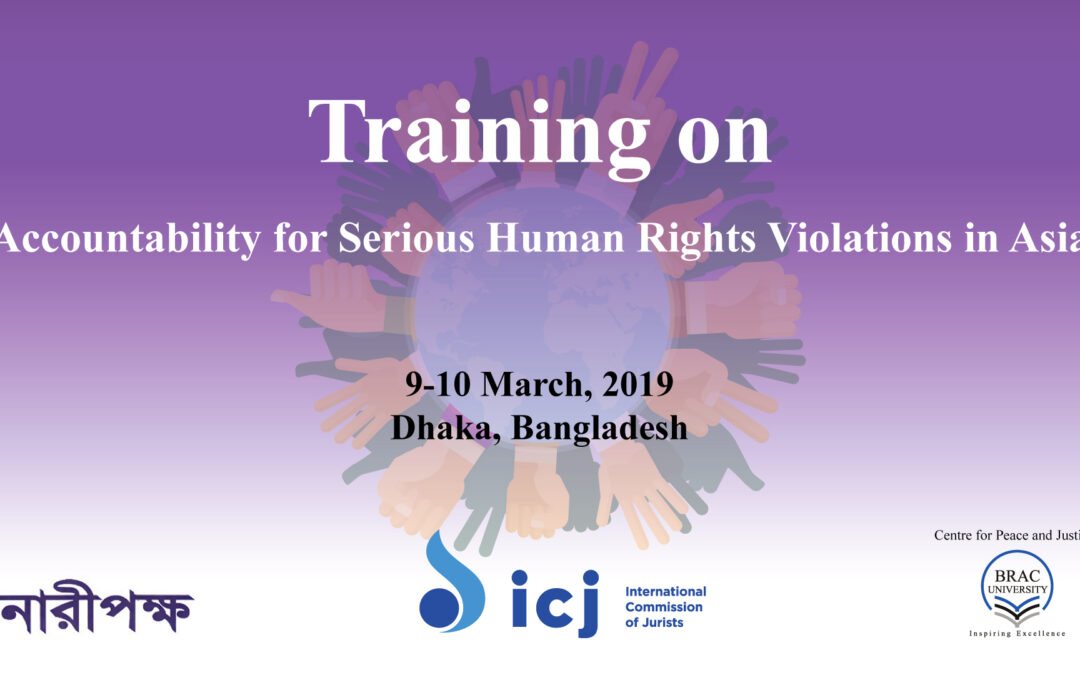
The ICJ convened a two-day workshop from 9th to 10th March 2019 in Dhaka, Bangladesh to discuss applicable international legal mechanisms designed to achieve accountability for serious human rights violations in Asia.
Bangladesh-based non-government organizations the Centre for Peace and Justice and Naripokkho co-hosted the event with the ICJ, with a representative of AJAR (Asia Justice and Rights) also joining. Twenty Bangladeshi lawyers, activists and academics attended the event.
Legal advisers from the ICJ provided an overview of the Independent Investigative Mechanism for Myanmar (IIMM), currently being established following a UN Human Rights Council resolution in September 2018.
They also discussed the structure and procedures of the International Criminal Court (ICC), whose prosecutors are currently conducting a preliminary examination into the deportation of Rohingyas from Myanmar into Bangladesh. Unlike Myanmar, Bangladesh is a State Party to the Rome Statute of the ICC, and its pre-trial chamber has indicated the Court has jurisdiction over crimes listed in the Rome Stature were one element, or part of a crime, was committed inside the territory of Bangladesh.
AJAR’s co-founder provided an overview of transitional justice processes, drawing upon international and regional experiences of truth-seeking, prosecutions, reparations and reforms to guarantee non-repetition of human rights violations.
Two of the ICJ’s legal advisers also travelled to Cox’s Bazar, Bangladesh, where they met relevant stakeholders to discuss the situation of Rohingya refugees from Myanmar, and to share information about accountability mechanisms, including about expected timelines, outcomes and limitations.
The activity is part of the ICJ’s global work on promoting accountability and redress for gross human rights violations to facilitate justice and deter repetition.
Contact: Kingsley Abbott, ICJ Senior Legal Advisor for Global Redress and Accountability e: kingsley.abbott@icj.org
Mar 7, 2019 | Advocacy, News
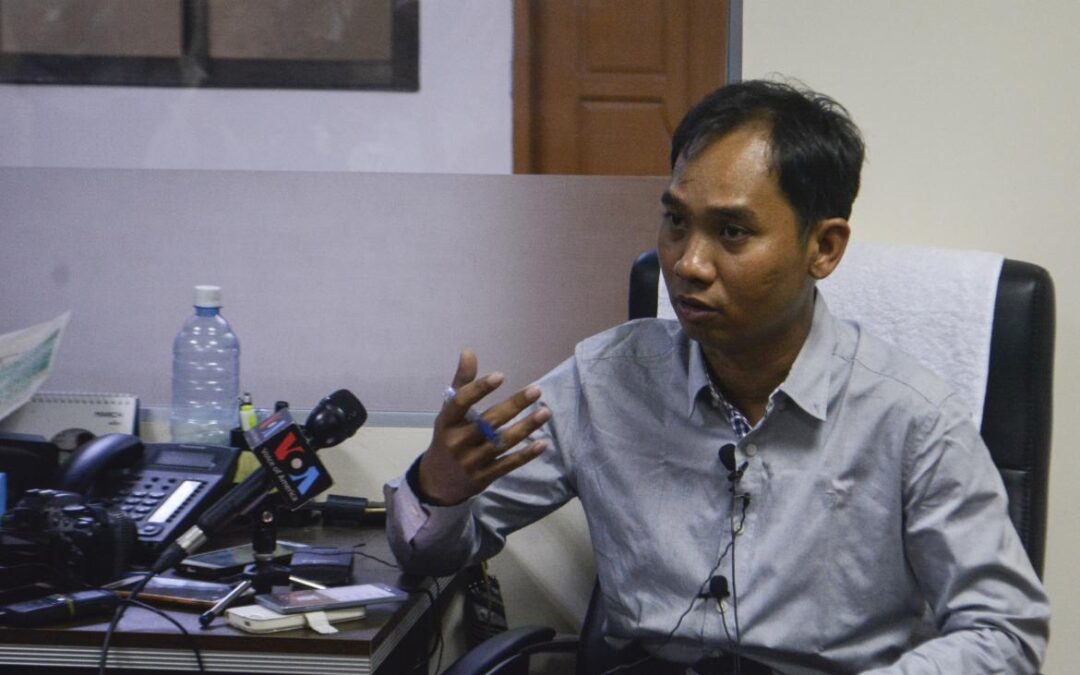
The ICJ joined a list of 77 civil society organizations to call on relevant authorities in Myanmar to drop spurious charges against journalist Ko Swe Win, to decriminalize defamation, and to release human rights defenders currently imprisoned under repressive criminal defamation laws.
The statement reads:
On the second anniversary of the defamation charges brought upon Ko Swe Win, editor at online newspaper Myanmar Now, we, the undersigned 77 civil society organisations, call on the relevant authorities to drop the case against him. Spurious defamation charges under Article 66(d) of the Telecommunications Law were filed against him on 7 March 2017 by ultranationalists intent on suppressing free speech. The Government of Myanmar must take concrete steps in parliament to decriminalise defamation, repeal Article 66(d) of the Telecommunications Law and drop the charges and release all activists and human rights defenders currently in prison and being charged under this repressive legislation.
Article 66(d) of the Telecommunications Law of 2013 was amended in 2017, but notably, defamation is still criminalised and carries a punishment of up to two years of imprisonment or a fine of up to one million kyat or both. The law is still frequently used to stifle free speech in Myanmar and silence critics. To date, a reported 173 cases have been filed under Article 66(d) since its enactment.
The UN Human Rights Committee has called on all states to decriminalise defamation, indicating that imprisonment for defamation is a penalty that can never be appropriate or compatible with the right to freedom of expression. In addition, the Special Rapporteur on the promotion and protection of the right to freedom of opinion and expression has stated that defamation should be treated as a matter of civil rather than criminal law, stressing that criminal prosecution for defamation inevitably becomes a mechanism of political censorship, which contradicts freedom of expression and of the press. In the case of Article 66(d), Myanmar law allows for agents of the offended party to file charges for defamation and initiate criminal proceedings on their behalf. In effect, this means that powerful organisations and individuals can operate via proxies to target those that they consider disturbing, a form of judicial harassment with severe implications for the individuals who are accused.
Ko Swe Win was charged with defamation under Article 66(d) of the Telecommunications Law for sharing a story by Myanmar Now on Facebook. The story quoted a senior monk who said that well-known ultranationalist monk U Wirathu’s actions could be cause for him to be expelled from the monkhood as they violated the tenets of Buddhism. U Wirathu, notorious for using Facebook to agitate against Muslims, had previously expressed support for and thanked U Kyi Lin – the recently convicted gunman who shot and killed prominent lawyer U Ko Ni in January 2017. U Ko Ni was an expert on constitutional law and was working to change the military-drafted 2008 Constitution. The plaintiff, a follower of U Wirathu, brought the charges in March 2017 and the court proceedings started in July 2017.
Since then, Ko Swe Win has had to travel regularly to the courthouse in Mandalay, where the charge was filed, from his home in Yangon and back – a distance of over 1,200 kilometres. The court hearings, now totaling 55, have been ongoing for almost two years, but the court has still only heard the plaintiff’s side, which has consistently been stalling the process. On some occasions, Ko Swe Win has travelled from Yangon only to find that the plaintiff or witnesses have failed to appear in court and that the proceedings have been postponed. The plaintiff himself was arrested in August 2017 and has since been detained, which has caused significant delays to the process.
U Wirathu has been summoned twice but failed to appear. On the first occasion, his lawyer informed the court that U Wirathu could not make the hearing because he was attending a donation ceremony. On the second occasion, U Wirathu’s lawyer requested that the hearing be held at his monastery compound. That request was denied by the township court, but U Wirathu appealed to the higher district court, which also denied the request. While the district court considered the request, no hearings could be held in the township court. Ko Swe Win however, was still required to make an appearance every two weeks before the township court judge just to be informed of the next date he was due to appear in court. This procedure, which required him to travel from Yangon to Mandalay, was typically over in a matter of minutes.
The many irregularities of this case highlight the lack of independence of the Myanmar judiciary. It appears that the authorities are determined to target those that are working to expose troubling truths and terrible crimes, rather than those who commit them. Those responsible for spreading dangerous speech and inciting violence face no consequences, while those who criticise such dangerous actions continue to be prosecuted. In a recent parallel case, also fraught with controversies, two Reuters reporters – Wa Lone and Kyaw Soe Oo – were convicted to seven years in prison for exposing a mass killing of Rohingya men and boys carried out by the Myanmar military in northern Rakhine State.
In Myanmar, high-ranking military commanders, some of whom are accused by UN investigators for war crimes, crimes against humanity, and even genocide, remain at large, while journalists who expose the truth and report on human rights violations in the country are charged under repressive laws. This inverted idea of justice needs to come to an end if Myanmar is to continue its path towards democracy.
As long as Article 66(d) remains, people in Myanmar, especially those who criticise powerful individuals, officials and government policies online, will be at risk of being imprisoned for their peaceful exercise of the right to freedom of expression.
In light of the above, we call on the Government of Myanmar and its relevant authorities to:
- Drop the defamation charges under Article 66(d) of the Telecommunications Law against Ko Swe Win and other activists and human rights defenders and release those currently imprisoned under this repressive legislation;
- Repeal Article 66(d) of the Telecommunications Law, or at a very minimum, amend it to ensure that:
- defamation is no longer criminalised by deleting references to “defamation” as well as vague language such as “disturbing”;
- only a government prosecutor can file a criminal complaint under Article 66(d);
- where recognisably criminal acts such as “extortion” and “threats” occur in the law they are clearly and narrowly defined in line with international human rights law, to ensure it is not used to criminalise the peaceful expression of views.
Download
Myanmar-statement on defamation-Advocacy-2019-ENG (full statement in English, PDF)
Myanmar-statement on defamation-Advocacy-2019-BUR (full statement in Burmese, PDF)
Mar 6, 2019 | News
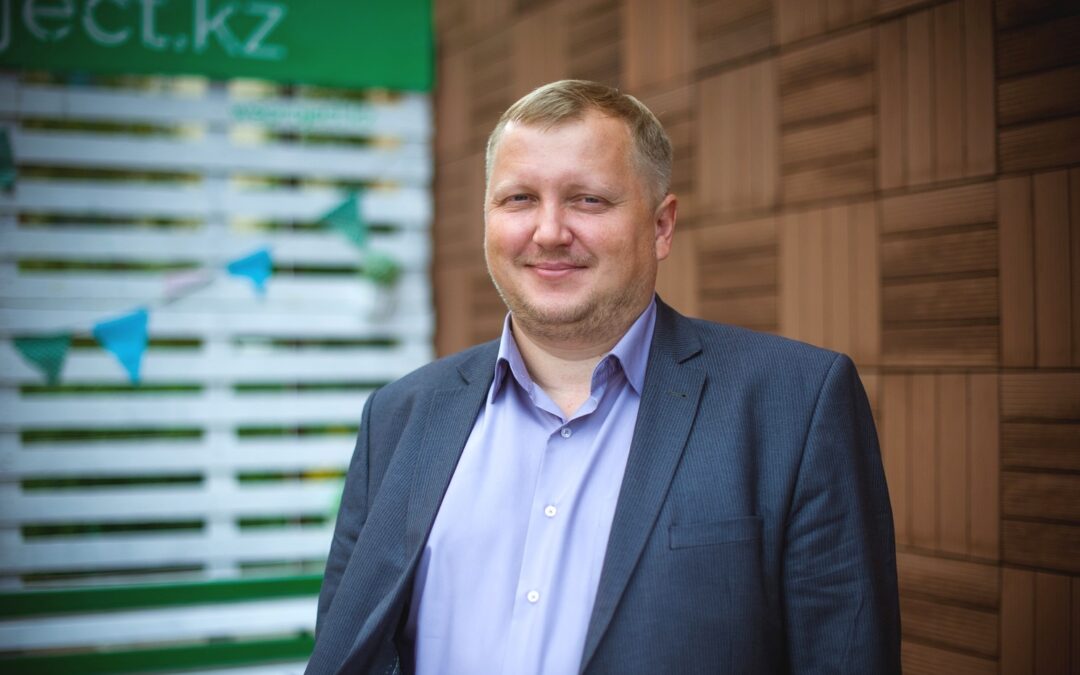
Today, the ICJ expressed concern at the initiation of disbarment proceedings by the Ministry of Justice of Kazakhstan against Sergey Sizintsev, former Executive Director of the National Bar Association and the newly-elected head of the Scientific-Consultative Board of the National Bar Association.
The official ground for disbarment of Sizintsev is his work as the Director the National Bar Association in 2016-2018 while continuing his legal practice at the same time.
On his facebook public account, however, Sizintsev alleged that this initiative is not related to the officially stated grounds, and that in fact continuing to practice while working as Director of the Bar Association is clearly permitted by the Kazakhstan’s law. Rather, he alleges, he is being pursued for his criticism of the law “On lawyers’ activity and legal aid” as well as his public statements in different international and national fora in regard to issues related to the independence of the legal profession.
The ICJ recalls that freedom of expression and association, in particular, constitute essential requirements for the proper and independent functioning of the legal profession and must be guaranteed by law and in practice.
According to Principle 23 of the UN Basic Principles on the Role of Lawyers, lawyers “[…] have the right to take part in public discussion of matters concerning the law, the administration of justice and the promotion and protection of human rights and to join or form local, national or international organizations and attend their meetings, without suffering professional restrictions by reason of their lawful action or their membership in a lawful organization. In exercising these rights, lawyers shall always conduct themselves in accordance with the law and the recognized standards and ethics of the legal profession.”
Sergey Sizintsev as Executive Director of the National Bar Association and as a member of the Parliament working group on the Law on Lawyers’ Activities, was expected to voice concerns of members of the legal position including on the new law which the legal profession consider to be restrictive.
Moreover, his position demanded that he expresses his position on behalf of the National Bar Association including to draw attention to legislative developments which can jeopardise the independence of the legal profession in Kazakhstan.
The ICJ is concerned that this initiative appears to constitute an attack on the independence of lawyers in Kazakhstan and may have a chilling effect on members of the legal profession.
The ICJ therefore calls on the Ministry of Justice to end this lawsuit immediately.
The ICJ will closely follow the case of Sergei Sizintsev and the proceedings at the Rayon Court in Petropavlovsk.
In December 2017, the ICJ organized a mission to Kazakhstan and raised concerns over the then planned reform.
In November 2018, the ICJ raised concern at the disbarment proceedings against Presidents of Aktybinsk and Pavlodar Bar Association as well as resignation of Anuar Tugel, the President of the National Bar Association of Kazakhstan, allegedly as a result of the pressure from the Ministry of Justice.
Mar 5, 2019 | News
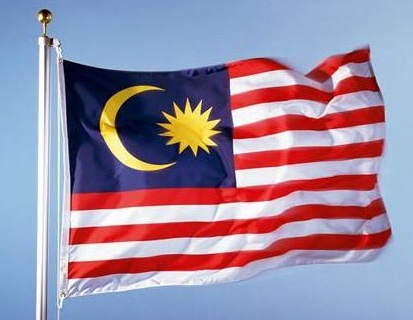
On 4 March 2019, Malaysia acceded to the Rome Statute of the International Criminal Court (ICC), making it the 124th State Party to the ICC.
“The decision by Malaysia’s government to become party to the Rome statute should be commended as a positive sign of its commitment to the rule of law and acceptance to work with the global community to end impunity and ensure accountability for some of the gravest crimes under international law,” said Frederick Rawski, the ICJ’s Asia-Pacific Director.
The ICJ considers the establishment of the ICC as a watershed achievement in the development of international law and the will and capacity of States to act in concert to address atrocities around the world that carry devastating consequences for the victims.
The aim to end impunity on a global scale requires that the Rome Statute be ratified universally.
The ICC was established in 2002 as a permanent international criminal court to investigate and, where warranted, put on trial individuals charged with the some of the most serious crimes of international concern, particularly the crime of genocide, crimes against humanity, war crimes and the crime of aggression.
The Rome Statute operates on the principle of complementarity, meaning that the ICC can only become engaged when the responsible States are unable or unwilling to investigate and prosecute allegations at the national level.
“Malaysia’s accession serves as an example for the entire Asian region, which has been significantly underrepresented at the ICC,” said Rawski.
“It sends a timely message of support for international accountability, at a moment when the actions of two of Malaysia’s neighboring countries – Myanmar and the Philippines – are the focus of preliminary investigations by the ICC, and after Philippines announced its intent to withdraw from the Statute last year,” he added.
In March 2018, the ICC was formally notified by Philippines of its intention to withdraw from the Rome Statute after the court initiated a preliminary examination into allegations of crimes committed in the context of the Philippines’ government’s “war on drugs” campaign since July 2016. The ICJ condemned this move as a blow to international justice.
In September 2018, the ICC launched a preliminary examination into allegations of forced deportations of Rohingya Muslims from Myanmar into Bangladesh, on the basis that the court had jurisdiction because Bangladesh is a State Party and the deportations occurred in part on Bangladeshi territory. The ICJ submitted an amicus curiae in support of such jurisdiction.
Contact
Frederick Rawski, ICJ Asia and Pacific Regional Director, e: frederick.rawski(a)icj.org
See also
Philippines: the Government should reconsider withdrawal from ICC
ICJ submits Amicus Curiae Brief to International Criminal Court
Mar 1, 2019 | Events, Multimedia items, News, Video clips
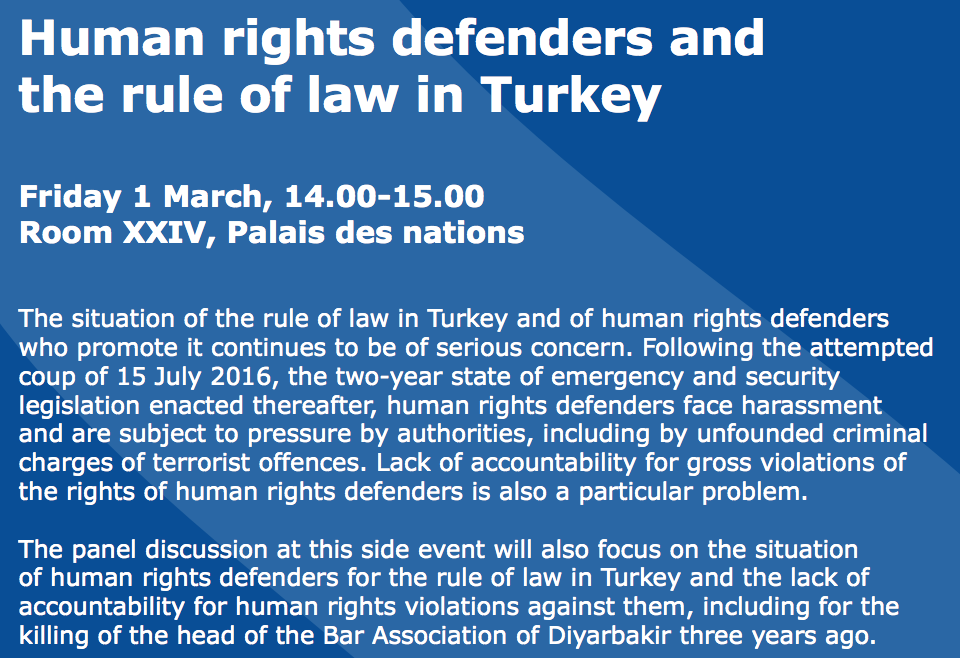
This event took place today at the Palais des Nations, United Nations, in Geneva. Watch it on video.
The situation of the rule of law in Turkey and of human rights defenders who promote it continues to be of serious concern.
Following the attempted coup of 15 July 2016, the two-year state of emergency and security legislation enacted thereafter, human rights defenders face harassment and are subject to pressure by authorities, including by unfounded criminal charges of terrorist offenses. Lack of accountability for gross violations of the rights of human rights defenders is also a particular problem.
The panel discussion at this side event will also focus on the situation of human rights defenders for the rule of law in Turkey and the lack of accountability for human rights violations against them, including for the killing of the head of the Bar Association of Diyarbakir three years ago.
The event is organized by the ICJ jointly with the International Bar Association’s Human Rights Institute.
Speakers:
– Michel Forst, UN Special Rapporteur on human rights defenders
– Feray Salman, Coordinator of the Human Rights Joint Platform (IHOP)
– Kerem Altiparmak, ICJ Legal Consultant
– Jurate Guzeviciute, International Bar Association’s Human Rights Institute
Chair:
Saman Zia-Zarifi, ICJ Secretary General
Event Flyer:
Turkey- HRD side event HRC40-News-Events-2019-ENG
https://www.facebook.com/ridhglobal/videos/795507517477571/