Mar 28, 2018 | Advocacy, Non-legal submissions
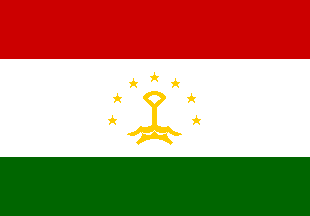
The ICJ today submitted a report to the UN Committee against Torture, calling for recommendations to be made on prevention of and accountability for continued recourse to torture and ill-treatment in Tajikistan.
The ICJ’s submission is made ahead of consideration by the Committee against Torture in April to May 2018 of Tajikistan’s third periodic report on the implementation of its obligations under the Convention against Torture and Other Forms of Cruel, Inhuman or Degrading Treatment or Punishment.
The ICJ’s report draws from an earlier study on Achieving Justice for Gross Human Rights Violations in Tajikistan and calls on the Committee against Torture to make recommendations concerning:
- The obligation to adequately sanction torture;
- The obligation to prevent torture and other forms of ill-treatment, including in places of detention;
- The obligation to investigate allegations of torture and ill-treatment;
- The use of amnesties and pardons for torture;
- The prohibition against the use of evidence obtained by torture;
- The right to complain about torture and ill-treatment; and
- The right of victims to effective remedies and reparation.
Tajikistan-CAT-Advocacy-AlternativeReport-2018ENG (download the ICJ’s submission, in PDF)
Mar 27, 2018 | Advocacy, Non-legal submissions
On 27 March 2018, the ICJ, Thai Lawyers for Human Rights (TLHR) and Cross Cultural Foundation (CrCF) made a joint follow-up submission to the UN Human Rights Committee on Thailand’s implementation of the Committee’s prioritized recommendations.
On 23 March 2017, during its 119th Session, the Human Rights Committee adopted its concluding observations on the second periodic report of Thailand under article 40 of the International Covenant of Civil and Political Rights (ICCPR).
Pursuant to its rules of procedure, the Committee requested Thailand to provide a follow up report on its implementation of the Committee’s recommendations made in paragraphs 8 (constitution and legal framework) 22 (extrajudicial killings, enforced disappearances and torture) and 34 (conditions of detention) of its concluding observations by 23 March 2018. To date, the Thai authorities are yet to file their follow-up report with the Committee.
In their joint submission to the Human Rights Committee, the ICJ, TLHR and CrCF detailed their concerns in relation to Thailand’s failure to implement the Committee’s recommendations in paragraphs 8 and 22 of its concluding observations. The three organizations’ submission focuses on their concerns arising from the following:
Constitution and legal framework
- Orders by the Head of the National Council for Peace and Order (‘HNCPO’); and
- Escalation in use of HNCPO Order No. 3/2558 to restrict fundamental freedoms.
Extrajudicial killings, enforced disappearances and torture
- Allegations of widespread use of torture and other ill-treatment;
- Incommunicado detention;
- Southern Border Provinces; and
- Threats and reprisals against persons working to bring to light cases of alleged torture, ill–treatment and enforced disappearance.
Read also
ICJ and Thai Lawyers for Human Rights, Joint submission to the UN Human Rights Committee, 13 February 2017
Contact
Kingsley Abbott, ICJ Senior International Legal Adviser for Southeast Asia, e: kingsley.abbott(a)icj.org
Thailand_Joint-Follow-up-Human-Rights-Committee-Submission-march-2018 (Full submission in ENG, PDF)
Thailand-Follow up HRC-Advocacy-Non legal submission-2018-THA (Thai version, in PDF)
Mar 27, 2018 | News
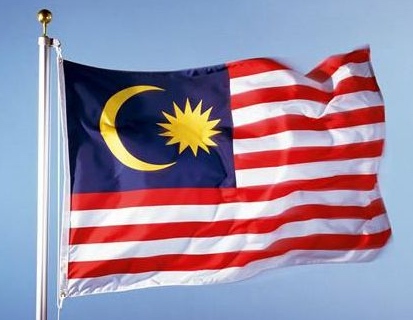
The ICJ and Suara Rakyat Malaysia (SUARAM) today urged Malaysia’s Parliament not to pass the Anti-Fake News Bill 2018.
The two organizations are concerned that the bill will unduly limit freedom of opinion or expression in Malaysia, and could be used to suppress legitimate criticism of the government.
“The bill is flawed in its design and will be open to abuse by the Malaysian government which maintains a poor track record in upholding freedom of expression,” said Sevan Doraisamy, SUARAM’s Executive Director.
“The term ‘fake news’ is in itself problematic. It is defined in an overbroad manner in the draft law, and therefore vulnerable to arbitrary interpretation and enforcement,” said Emerlynne Gil, ICJ’s Senior International Legal Adviser.
“Given past experience in Malaysia, it is highly likely to be used to suppress legitimate criticism of the government on matters of opinion or where the facts are contested,” she added.
The right to freedom of opinion and expression is guaranteed by the Federal Constitution of Malaysia, as well as the Universal Declaration of Human Rights.
The bill makes no provision for exceptions or defences such as honest mistake, parody, artistic merit, or public interest. The bill would allow up to ten years imprisonment.
“The penalties are wildly disproportionate,” said Gil. “Indeed, under international standards, imprisonment is never an appropriate penalty for such offences.”
On 3 March 2017, the UN Special Rapporteur on Freedom of Opinion and Expression, together with his counterparts from the Organization for Security and Cooperation in Europe (OSCE), the Organization of American States (OAS), and the African Commission on Human and People’s Rights (ACHPR), issued a joint declaration on ‘fake news’, disinformation, and propaganda.
The joint declaration emphasized that “the human right to impart information and ideas is not limited to ‘correct’ statements, that the right to also protects information and ideas that may shock, offend and disturb.”
It also said that “general prohibitions on the dissemination of information based on vague and ambiguous ideas, including ‘false news’ or ‘non-objective information’ are incompatible with international standards for restrictions on freedom of expression.”
The ICJ and SUARAM also note that the timing and the lack of transparent consultation on how it was developed raise concerns about the government’s motivation behind the introduction of this bill.
The bill has been introduced during the final days of Parliament sitting and is expected to be voted on within this week, leaving little time for deliberation or consultation.
“Allowing this bill to be passed would only serve as an affront to democratic values. It will be another strike on Malaysia’s already shoddy human rights record,” Doraisamy said.
“Adopting a law that would unduly limit the right to freedom of opinion and expression is not the optimal way to counter disinformation and propaganda,” said Gil.
“The best way is to disseminate accurate information and to make such information accessible to everyone,” she added.
The ICJ and SUARAM strongly urge the Malaysian parliament not to pass the Anti-Fake News Bill 2018 and uphold the right to freedom of opinion and expression in the country.
Contact
Emerlynne Gil, Senior International Legal Adviser for Southeast Asia of ICJ, t: + 662 619 8477 (ext. 206) ; e: emerlynne.gil@icj.org
Background
The Anti-Fake News Bill 2018 has been tabled for first reading at the Malaysian Parliament on 26 March 2018 and may be voted on this week or early next week.
The bill defines ‘fake news’, without any defences or exceptions, as including “any news, information, data and reports” which are “wholly or partly false”.
Furthermore, the bill states that ‘fake news’ may be “in the form of features, visuals or audio recordings or in any other form capable of suggesting words or ideas.”
If passed, any person may be subject to a penalty of up to ten (10) years imprisonment and/or a fine amounting to MYR 500,000 (approximately USD 127,681) if convicted of knowingly creating, offering, publishing, printing, distributing, circulating, or disseminating any ‘fake news’ or publication of ‘fake news’.
The bill also seeks to penalize both Malaysians and foreigners alike, even if they are outside of Malaysia, as long as the fake news concerns Malaysia or a Malaysian citizen.
Mar 27, 2018 | Advocacy, News
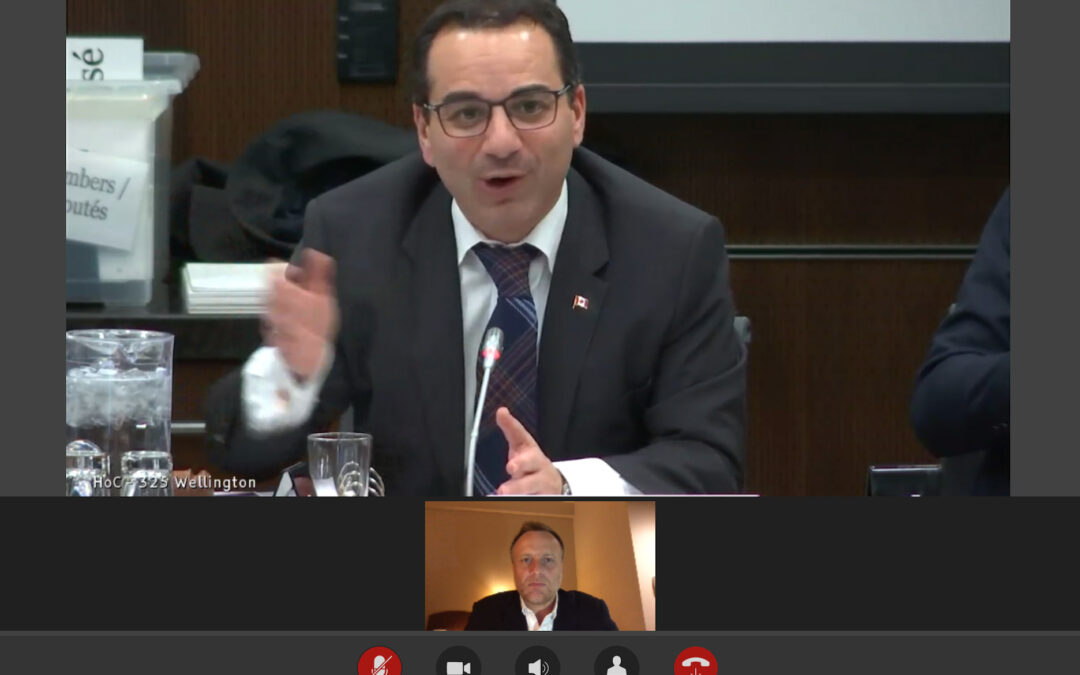
Today, the ICJ testified before the Canadian House of Commons Subcommittee on International Human Rights on the human rights and rule of law crisis in Cambodia.
Kingsley Abbott, ICJ Senior International Legal Adviser, addressed the Subcommittee on two key issues:
- The misuse of the law in Cambodia under the pretext of the “Rule of Law”; and
- The lack of an independent and impartial judiciary.
Other witnesses were former members of the Cambodian Parliament for the main opposition party, the CNRP, before its dissolution in November 2017, Mu Sochua and Kong Sophea.
Kingsley Abbott also requested that the ICJ’s October 2017 Baseline Study on the state of the rule of law and human rights in Cambodia be added to the record.
Contact:
Kingsley Abbott, ICJ Senior International Legal Adviser for Southeast Asia, e: kingsley.abbott(a)icj.org
Thailand-SDIR-Statement-ABBOTT-Advocacy-2018-ENG (Full opening statement ENG, PDF)
Mar 22, 2018 | News
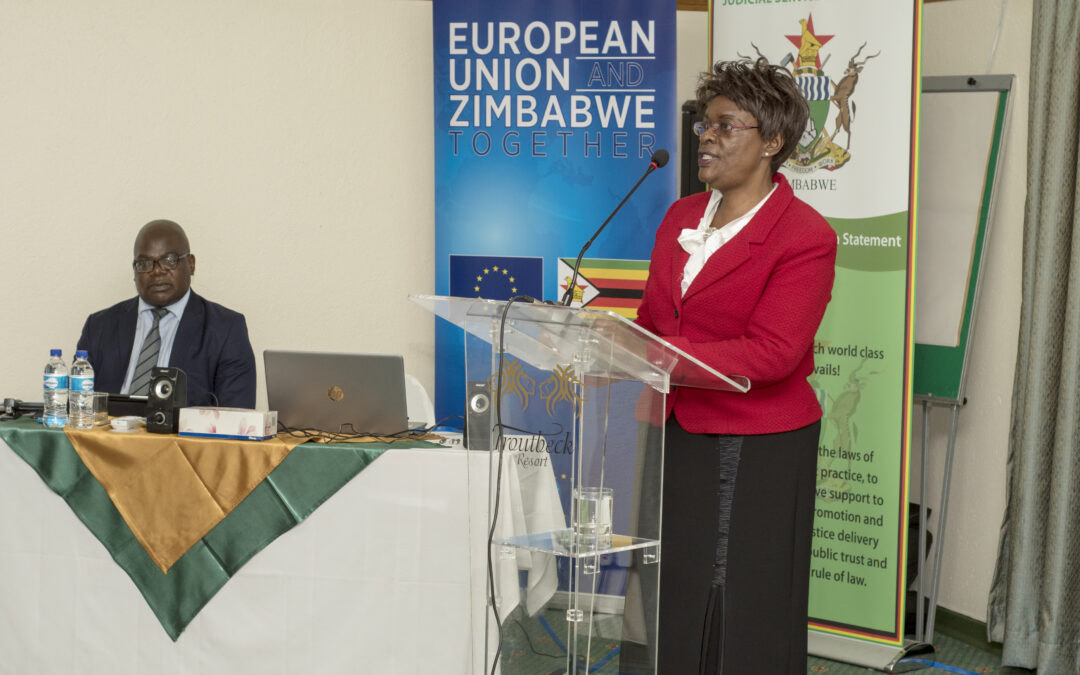
The ICJ and the Judicial Service Commission (JSC) of Zimbabwe, are convening a three-day Orientation Workshop for newly appointed judges.
It is held until 24 March at Troutbeck Inn, Nyanga.
The workshop is the fourth such meeting that the ICJ and the JSC have convened with the support of the European Union.
The training provides a useful bridge for the new appointees as they transition from the bar to the bench.
The topics covered during the training include judgement writing, court procedure and decorum, substantive law, judicial independence and issues of integrity on the bench.
The Hon. Judge President Chiweshe in his opening remarks stated that the objectives of the workshop are to familiarize incoming judges with their new work environment and to acquaint them with the specific divisions of that court.
This is to prepare them for the full assumptions of work in the judiciary. Justice Chiweshe noted that each division, criminal, civil and family law, will expose the judges to its own activities, guided by the judge from that division.
After the training the hope is that the judges will be deployed to their respective regions and stations fully acquitted with the tasks before them and can dispense justice diligently, impartially, fairly, without fear, favour or promise.
In attendance at the first day of the workshop were 17 judges (four female and thirteen male).