Jun 18, 2018 | Events, News
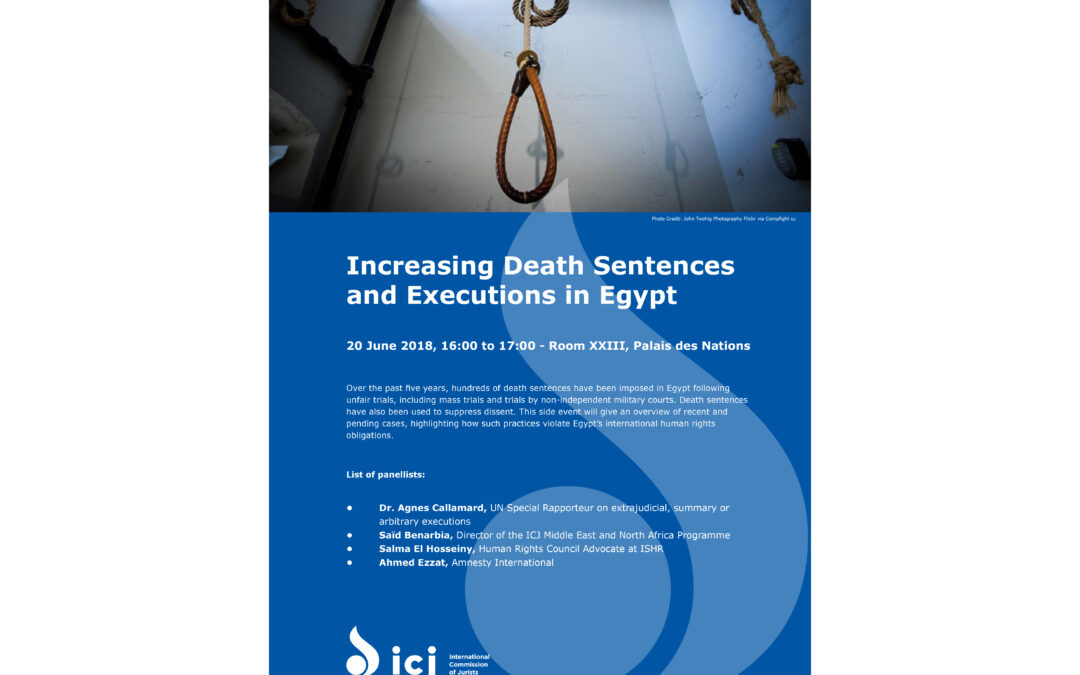
This side event at the Human Rights Council takes place on Wednesday, 20 June, 16:00-17:00, room XXIII of the Palais des Nations. It is organized by the ICJ.
Speakers:
Jun 12, 2018 | Advocacy, Cases, Legal submissions
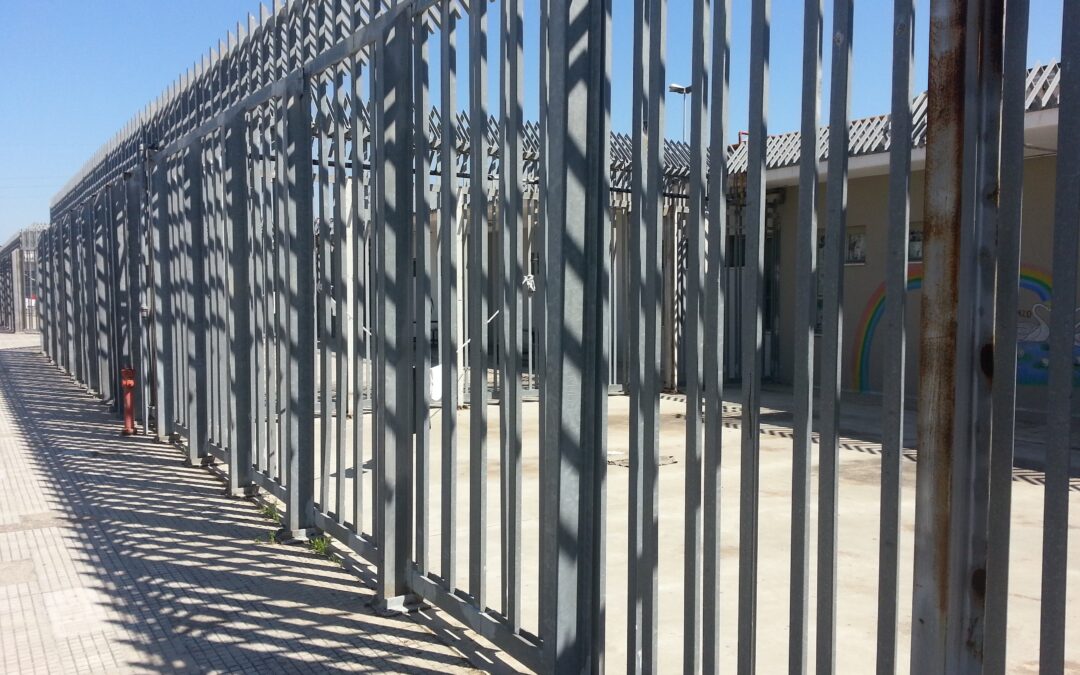
The ICJ and others intervened before the European Court of Human Rights in a case of thirteen undocumented children held in a hotspot in Italy.
The International Commission of Jurists (ICJ), the European Council on Refugees and Exiles (ECRE), the Dutch Council for Refugees and the AIRE Centre jointly intervened in the case of Trawalli and others v. Italy.
In this case, the European Court of Human Rights is called to rule, among other issues, on whether their detention and reception conditions were lawful and/or constituted an inhuman or degrading treatment under the European Convention on Human Rights.
In their third party intervention, the three human rights organizations submitted the following arguments:
a) Taking into consideration migrant children’s status as persons in situations of vulnerability and the principle of the best interests of the child, article 5 ECHR should be read in light of the rising consensus in international law towards a prohibition of detention of children on immigration grounds, in particular based on the consolidated and clear position of the UN Committee on the Rights of the Child. This applies to all instances of deprivation of liberty irrespective of their classification under domestic law.
b) In addition to the above, detention under article 5.1 ECHR will in any event be unlawful and arbitrary where it lacks a clear and accessible legal basis, outlining the permissible grounds of detention as well as the relevant procedural guarantees and remedies available to detainees, including judicial review and access to legal advice and assistance. In light of the obligations of EU Member States under EU law, the interveners submit that detention of asylum seeking children falling within the scope of the recast Reception Conditions Directive will result in a breach of the Convention standards also where it is not used as a measure of last resort, but rather is imposed without consideration of less onerous alternative measures and where the child’s best interests assessment has not been carried out and reflected in this decision.
c) Due to children’s extreme vulnerability, their detention for immigration purposes risks leading to a violation of Article 3 ECHR because of inadequate living conditions and/or to a violation of Article 8 ECHR because of a disproportionate and unnecessary interference with their development and personal autonomy, as protected under Article 8. In this sense, Article 8 must be regarded as affording protection from conditions of detention which would not reach the level of severity required to engage Article 3.
d) When the authorities deprive or seek to deprive a child of her or his liberty, they must ensure that he/she effectively benefits from an enhanced set of guarantees in addition to undertaking the diligent assessment of her/his best interest noted above. The guarantees include: prompt identification and appointment of a competent guardian; a child-sensitive due process framework, including the child’s rights to receive information in a child-friendly language, the right to be heard and have her/his views taken into due consideration depending on his/her age and maturity, to have access to justice and to challenge the detention conditions and lawfulness before a judge; free legal assistance and representation, interpretation and translation. The Contracting Parties must also immediately provide the child access to an effective remedy.
e) In order to fully comply with their obligations under the Convention, Contracting Parties must guarantee that asylum seeking children are accommodated in reception facilities which are adapted to their specific needs and provide adequate material conditions adapted to their age, condition of dependency and enhanced vulnerability. To do otherwise results in a failure by States to comply with their obligations under Article 3 ECHR and their specific obligations under EU law.
Italy-icj&others-Trawalli&others-Advocacy-legal submission-2018-ENG (download the intervention)

Jun 8, 2018 | News
The ICJ strongly condemns the draft bill of the Congressional Commission on Legislation and Constitutional Affairs to propose reforms to the Law of National Reconciliation (Congressional Decree 145-96) and grant amnesty in cases of gross human rights violations.
“The amnesty included in this draft bill is unconstitutional and flagrantly violates Guatemala’s international obligations. It seeks to place more obstacles in the way of victims of serious human rights violations in their search for justice and truth,” said Ramón Cadena, Director of the Central American Office of the ICJ.
“Justice must be delivered in these important cases because it is the basis for political stability, the rule of law and democracy. Guatemalan authorities should demonstrate that they have an unquestionable commitment to the struggle against impunity. Unfortunately, this draft bill demonstrates the exact opposite,” he added.
This decision flagrantly contravenes Guatemala’s international obligations to prosecute and punish those responsible for gross violations of human rights and guarantee the rights to justice, truth and reparation for victims of these crimes.
International bodies, including the Inter-American Court of Human Rights in numerous judgments, have condemned Guatemala for gross human rights violations; and on repeated occasions have stated that it is prohibited to grant amnesties in cases of gross violations of human rights and international crimes, such as crimes against humanity, genocide and war crimes.
This draft bill could open the doors to allow impunity to continue, at a time when the judicial system is fighting against impunity in historic cases of gross human rights violations and international crimes and in so doing provide guarantees for the victims’ rights to justice.
The ICJ considers that the administration of justice in cases of gross violations of human rights and international crimes by independent judges in cases of “transitional justice” should be supported, not only by the Legislature but also by the Executive Branch, as well as, self-evidently, by the Judicial Branch itself.
The Supreme Court of Justice has the obligation to support independent judges that through their rulings are proving to be impartial, objective and independent and should take the necessary measures to protect judges from any interference or attack that affects the smooth exercise of their duties.
The ICJ recalls that it is a State’s inalienable obligation under international law to investigate gross violations of human rights and international crimes and to prosecute and punish those responsible.
Jun 6, 2018 | News
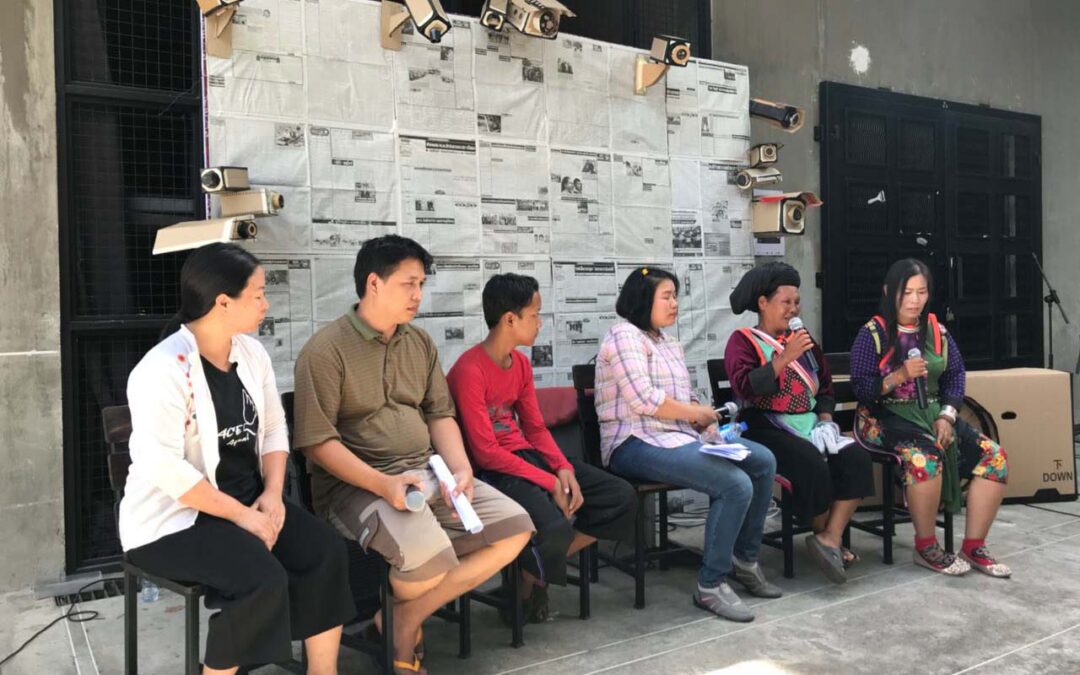
On 5 June 2018, the ICJ co-organized an academic seminar addressing the right to life under international law and the State’s duty to effectively investigate alleged violations.
The event happened on the eve of the post mortem decision to be delivered by Chiang Mai Provincial Court in the case of Chaiyaphum Pasae.
The Lahu youth activist was killed by a military official who was attempting to arrest him as an alleged drug suspect in Chiang Dao district of Thailand’s northern Chiang Mai province in March 2017.
Officials claimed Chaiyaphum had resisted arrest and was subsequently shot in “an act of self-defence”.
On 6 June 2018, Chiang Mai Provincial Court ruled that the bullets shot by the military official had caused the death of Chaiyaphum Pasae.
In its decision, the court made no finding of fault and no finding as to whether Chaiyaphum Pasae had resisted arrest before his death.
The decision by Chiang Mai Provincial Court will now be sent on to the Public Prosecutor and inquiry officers, who will in parallel continue criminal investigations into the case.
The Public Prosecutor is expected thereafter to make a decision regarding any indictment of the military official who shot at Chaiyaphum Pasae.
Participants in the seminar, which was held at Chiang Mai University’s Art Center, included Chaiyaphum Pasae’s family members, interested members of the public, media representatives, students and academics.
Kingsley Abbott, ICJ Senior Legal Adviser, addressed the seminar on the right to life and the international law and standards that apply to investigating potentially unlawful deaths, including the rights of victims and family members, referring to the standards set out in the revised Minnesota Protocol on the Investigation of Potentially Unlawful Death (2016), which was launched in Thailand on 25 May 2017.
The event follows the ICJ’s first regional workshop on the investigation of potentially unlawful deaths and enforced disappearance in Asia, held last week in Bangkok for authorities from Thailand, Cambodia, Myanmar and Nepal.
Other speakers at the Workshop included Ratsada Manuratsada and Sumitchai Hattasarn, lawyers from Human Rights Lawyers Association (HRLA) who represented the family of Chaiyaphum Pasae, and Songkran Pongbunchan, a lecturer from Chiang Mai University’s Faculty of Law.
The Discussion was conducted in collaboration with Legal Research and Development Center Chiang Mai University (LRDC); Center for Protection and Revival of Local Community Rights (CPCR); Center for Ethnic Studies and Development Chiang Mai University (CESD); Human Rights Lawyers Association (HRLA); Protection International (PI); Holding Hands Group; Inter Mountain Peoples’ Education and Culture in Thailand Association (IMPECT); Cross Cultural Foundation (CrCF); Maayimstudio; Save Lahu Group; Lanyim Creative Group; Dinsorsee Creative Group; Northern Activist Community (CAN); and Tonkal Network.
This seminar is part of an ongoing engagement between the ICJ and Chiang Mai University’s Faculty of Law.
Contact
Kingsley Abbott, Senior Legal Adviser, ICJ Asia Pacific Regional Office, t: +66 94 470 1345, e: kingsley.abbott(a)icj.org
Jun 1, 2018 | Events, News
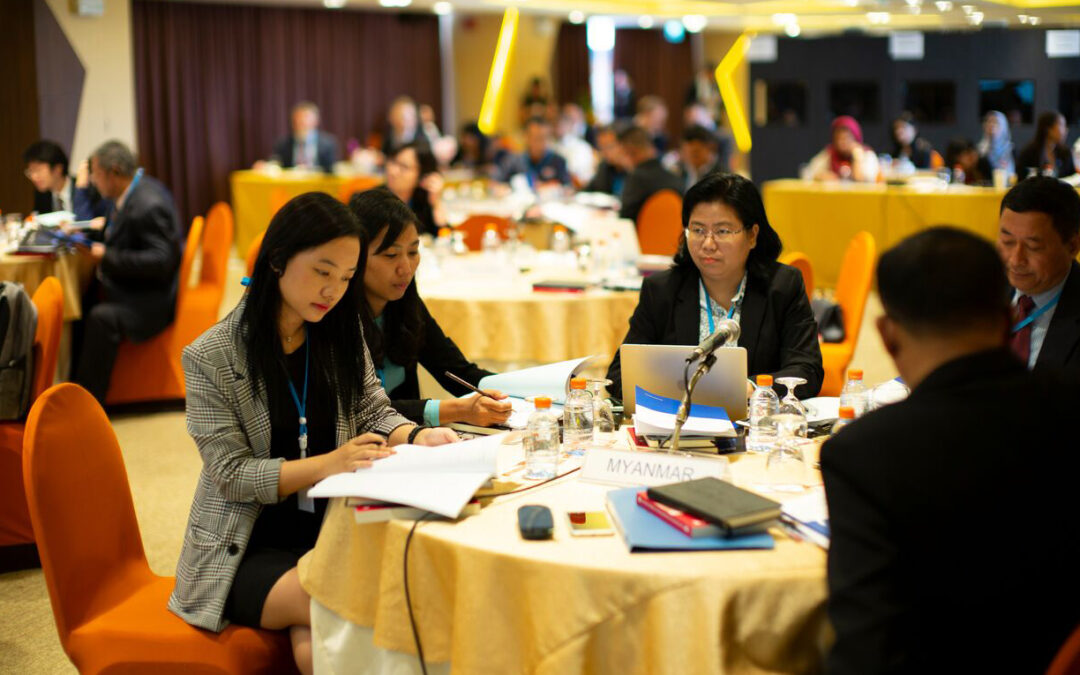
Between 30 May and 1 June 2018, the ICJ co-hosted a workshop for authorities from Thailand, Cambodia, Myanmar and Nepal on the investigation of potentially unlawful deaths and enforced disappearance in accordance with international human rights law and standards.
The workshop was co-hosted with Thailand’s Ministry of Justice and the United Nations Office of the High Commissioner for Human Rights (OHCHR) and took place as part of the ICJ’s Global Redress and Accountability Initiative, which has as one of its core objectives, “increasing the knowledge and capacity of lawyers, prosecutors and investigators to deal with challenges of impunity and access to redress.”
The participants included more than 30 criminal investigators, forensic doctors, forensic scientists, prosecutors, police trainers, senior judges and representatives of the Cambodian Ministry of Justice, the Myanmar Attorney General’s Office, the Thai Ministry of Justice and the Nepal Office of the Attorney General.
The event commenced with opening remarks by the Ambassador of Finland, Ms. Satu Suikkari-Kleven; the Ambassador of Germany, Mr. Peter Prügel; Adviser on the Promotion of the Rights and Freedom from Thailand’s Ministry of Justice, Mr. Pitaya Jinawat; and the Asia Director of the ICJ, Frederick Rawski.
Alex Conte, Senior Law and Policy Advisor, ICJ Global Redress and Accountability Initiative, gave an overview of the international human rights legal framework that applies to the investigation of unlawful deaths and enforced disappearance.
Kingsley Abbott, Senior Legal Adviser at the ICJ, then provided an overview of the revised Minnesota Protocol on the Investigation of Potentially Unlawful Death (2016), which was launched in Thailand on 25 May 2017 and which formed the core of the materials used at the workshop.
Other speakers included Ms. Jennifer Prestholdt, Deputy Director, the Advocates for Human Rights, who presented on the Rights of Victims and Families and witness interviews; Mr. Glenn Williams, Detective Inspector, Field Crime Manager, New Zealand Police National Headquarters, who presented on the investigation process including crime scene management;
Ms. Shivani Verma and Ms. Pratubjit Neelapaijit, of the Office of the High Commissioner for Human Rights who presented on Witness Protection; and Dr. Pornthip Rojanasunan, Adviser, Central Institute of Forensic Science (CIFS)/Member of the Advisory Panel who presented on forensic pathology.
This workshop followed two workshops the ICJ co-hosted between 5 to 8 December 2017 in Thailand on the investigation of potentially unlawful deaths and enforced disappearance for lawyers from Thailand and India, academics and the Thai authorities.
Contact
Alex Conte, ICJ Global Redress and Accountability Initiative, t: +41 79 957 2733; e: alex.conte(a)icj.org
Kingsley Abbott, Senior International Legal Adviser, ICJ Asia Pacific Regional Office, t: +66 94 470 1345, e: kingsley.abbott(a)icj.org