Jun 16, 2017 | News
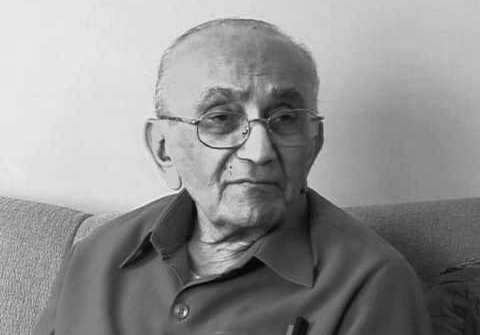
Justice Prafullachandra Natwarlal Bhagwati, former ICJ Commissioner and Honorary Member and Chief Justice of the Supreme Court of India, passed away at the age of 95, on 15 June 2017, following a brief illness.
“The International Commission of Jurists benefited greatly from Justice Bhagwati’s engagement and leadership. He was a giant of the human rights movement, dedicated to enlarging and ensuring access to justice for everyone, including those who couldn’t seek and receive justice due to their economic or social status,” said Sam Zarifi, ICJ’s Secretary-General.
“His dedication and ground-breaking approach to human rights accountability inspired many within and outside of the ICJ, and the values he represented will continue to inspire and inform our work,” he added.
Justice Bhagwati had a long history of promoting and protecting human rights, both at home and on the international stage, particularly for the most marginalized and vulnerable individuals and groups.
Former Chief Justice of India, Justice P.N. Bhagwati held a long and illustrious career within the Indian judiciary.
He introduced many innovative reforms within the Indian judicial system that increased access to justice for the poorest and most disadvantaged, including as a pioneer of public interest litigation and absolute liability.
Outside of India, Justice P.N. Bhagwati played a prominent role in the international human rights movement, for example as a member of the Committee of Experts of the International Labour Organization and Chair of the United Nations Human Rights Committee.
He was also actively involved in a number of non-governmental organizations, including the ICJ, where he committed to a high number of missions, seminars, publications and other activities on behalf of the organization.
He also served as a long-standing Chair of the Advisory Board for the ICJ’s Centre for the Independence of Judges and Lawyers.
Jun 13, 2017 | News
The ICJ welcomed today the Special Rapporteur’s report on Turkey and his preliminary findings on his visit to the country last November.
The ICJ welcomes and concurs with the finding that the “situation of the judiciary is undermining freedom of opinion and expression”.
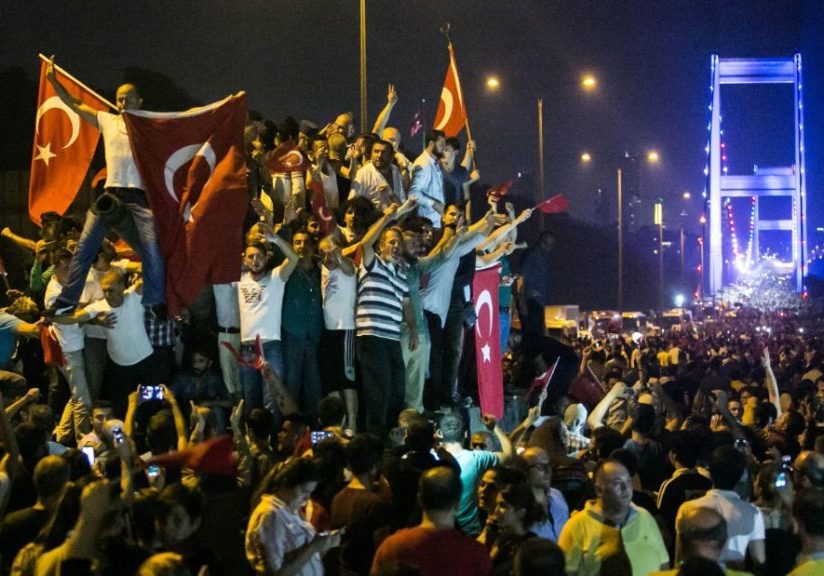
Mass dismissals of judges have had a devastating effect on the judiciary’s independence, already weakened by the current state of emergency. Furthermore, we are concerned at the claim by the President that the state of emergency will remain in place until Turkey reaches “peace and prosperity”. Whatever other questions there may be about their validity, maintaining emergency derogations to human rights law instruments for such an open-ended period would clearly not be in line with international law.
The ICJ is also concerned at the constitutional amendments approved on the 16th of April by a referendum. Among other things, the amendments have given powers to the President and the Parliament to appoint all the members of the High Council of Judges and Prosecutors, the body tasked with protecting the independence of these professions.
The judiciary has had in the past an important role in implementing legislation that has severely limited the freedom of journalists to carry out their job.
The independence of the judiciary has now been eroded to its core in Turkey. Without it, there is no effective remedy in the country to protect freedom of opinion and expression.
Further reading: ICJ’s briefing paper Turkey: the Judicial System in Peril
Jun 13, 2017 | Advocacy, Non-legal submissions
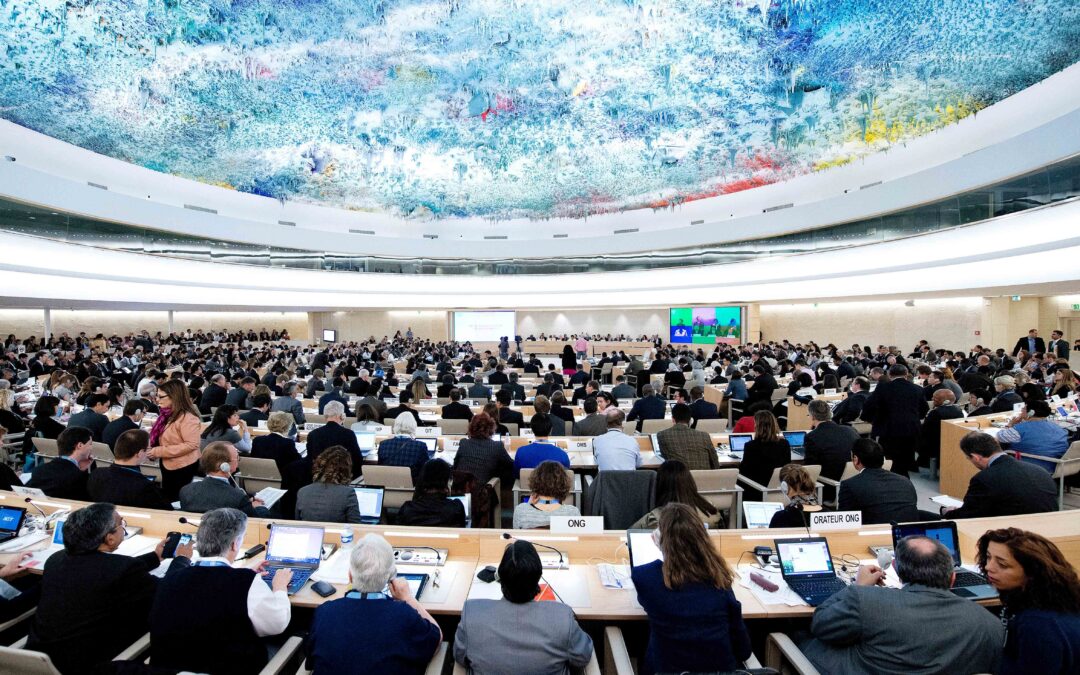
During a panel discussion at the UN Human Rights Council, the ICJ delivered an oral statement on the role of men and boys in eliminating violence against women by ensuring women’s access to justice for gender based violence.
The statement was delivered during the first panel of the Council’s annual full-day discussion on the human rights of women. The panel focused on accelerating efforts to eliminate violence against women by engaging men and boys in preventing and responding to violence against women.
The ICJ’s statement was as follows:
Violence against women is a widespread human rights abuse rooted in patriarchal societies and gender stereotypes that are harmful to everyone. As the panel have recognised, the international community cannot address the issue as though it is only a problem for women and we welcome the positive focus on the role of men and boys as beneficiaries and agents of change.
The ICJ remains concerned about women’s access to justice for gender based violence. Strong domestic laws, grounded in an international human rights framework, that are upheld by a robust and independent judiciary, are essential components of tackling the problem.
However, the ICJ has worked with lawyers, judges and civil society to assess the obstacles that continue to face women seeking justice for gender based violence and we know that laws alone are not enough. It must also be acknowledged that many laws are based on patriarchal norms and stereotypes that are intrinsically discriminatory against women seeking justice through the legal system.
Behavioural change is required in not only preventing violence against women but also in ensuring that justice is available to those that have been subject to this violence. Men have a pivotal role to play in working with women to ensure that a gender based perspective is applied to the way laws are accessed and implemented.
We applaud the panellists’ focus on engaging with men and boys to prevent harmful behaviours of violence against women from taking root.
However, we would like to ask what role panellists suggest men and boys have in:
a) ensuring that perpetrators are held accountable for their actions, and
b) in supporting the justice system in rehabilitating offenders to prevent further acts of violence, without compromising justice and services available to women?
In response to the ICJ’s statement the Special Rapporteur on Violence Against Women commented that structural problems impact on the effectiveness of laws.
Mr Abhijit Das noted that prosecution was only one means of addressing gender inequality and that engagement with men and boys needed to go beyond this to include the widest number of stakeholders possible, including those men and boys that do not perpetrate violence against women.
Mr Anthony Keedi noted that rehabilitation was a key component of addressing violence against women and must be at the heart of change to prevent cycles of violence from continuing.
The participants in the panel and discussion were:
- Chair: H.E. Mr Joaquin Alexander Maza Martelli, President of the Human Rights Council.
- Opening statement: Ms Kate Gilmore, UN Deputy High Commissioner of Human Rights provided an opening statement
- Keynote speaker: H.E. Ms Karen Ellemann, Minister for Equal Opportunities and Nordic Cooperation, Denmark
- Moderator: Ms. Lana Wells, Brenda Stafford Chair in the Prevention of Domestic Violence, University of Calgary, Canada
- Panellist: Ms Dubravka Simonovic, Special Rapporteur on violence against women, its causes and consequences
- Panellist: Mr Anthony Keedi, Masculinities Technical Adviser, ABAAD Resource Centre for Gender Equality, Lebanon
- Panellist: Mr Francis Oko Armah, Youth Activist, curious Minds, Ghana
- Panelist: Mr Abhijit Das, Co-Chair of MenEngage Alliance and Founder of Men’s Action for Stopping Violence against Women, India
Jun 9, 2017 | Advocacy, Non-legal submissions
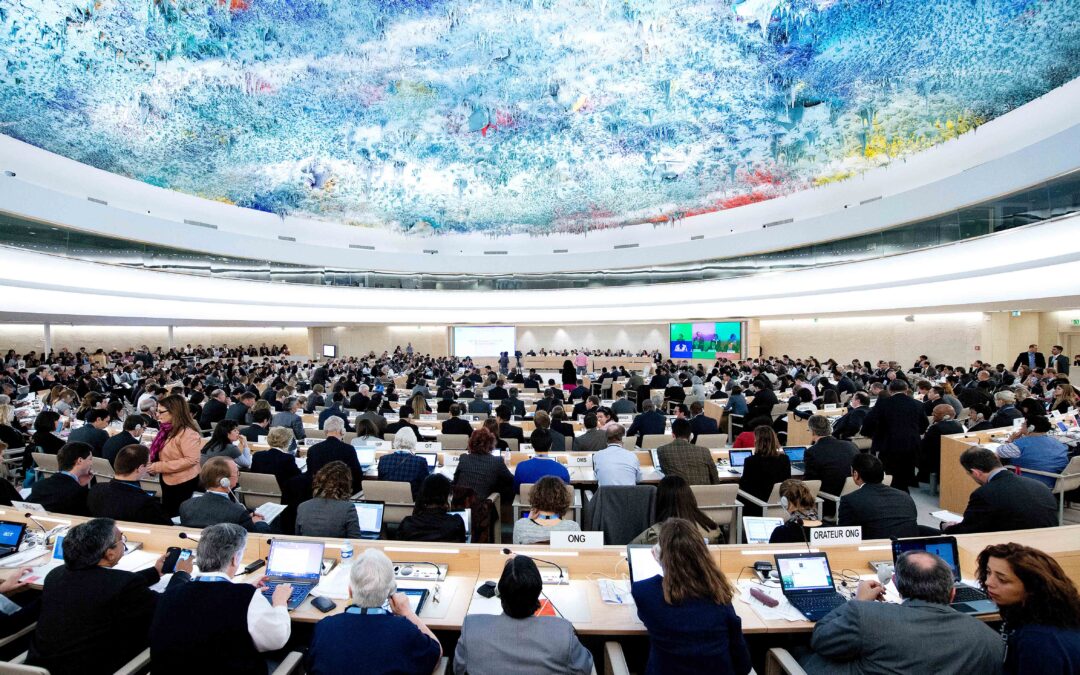
Today the ICJ delivered an oral statement on discrimination against women in access to justice at the UN Human Rights Council in Geneva.
The statement came during an interactive dialogue with the Working Group on the issue of discrimination against women in law and in practice. Ms Alda Facio, Chair of the Working Group, presented the Working Group’s latest report which highlighted examples of good practice in eliminating discrimination against women.
The ICJ stated as follows:
The ICJ would like to thank the Working Group for its report and welcomes its positive focus in highlighting examples of good practice, whilst continuing to note that discrimination against women remains a multifaceted and systemic problem.
The ICJ shares the Working Group’s concerns about the intense backlash against women’s rights gains in national, regional and international spheres. We are particularly concerned about the levels of discrimination women continue to face in accessing the justice required to uphold their human rights.
The ICJ has been working for a number of years, in different regions and with different stakeholders, to identify the discriminations women face in accessing justice and to consider the opportunities that can be used to address these discriminations. The importance of applying a gendered analysis to the law and the way that this is accessed and applied is essential to the elimination of discrimination in this area.
The ICJ supports the Working Group’s identification of the fundamental importance of incorporating international human rights standards into domestic legal frameworks to ensure gender equality protections. In the context of the 2030 Agenda, and with particular reference to Sustainable Development Goals 5 and 16, the ICJ encourages States to ensure that any laws and practices that discriminate against women in accessing justice are repealed, and to recall that any exceptions on the grounds of culture, religion or tradition are unacceptable.
Whilst discrimination against women in access to justice has been well documented and is by no means a new phenomenon, it is highly alarming that the problem is worsening in a number of states. The ICJ would ask that the international community remains vigilant about these potential regressions and commits to holding to account any States that fail to fulfil their international obligations to ensure access to justice for women.
Jun 8, 2017 | Events, News
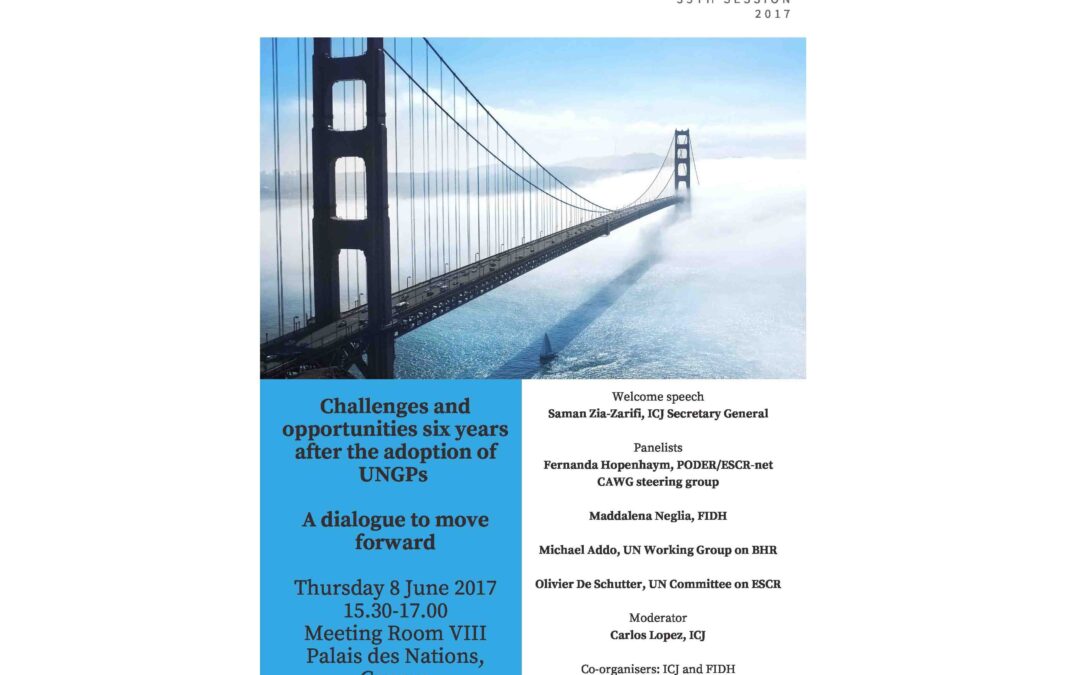
Today, the ICJ and FIDH are organizing a side event to to the 35th Regular session of the Human Rights Council on business and human rights.
Business responsibility to respect human rights
Challenges and opportunities six years after the adoption of UNGPs
A dialogue to move forward
Thursday 8 June 2017, 15.30-17.00
Meeting Room VIII
Palais des Nations, Geneva
After the adoption of the UNGP in 2011, standards on business responsibility to respect human rights and business human rights due diligence have gained prominence in the global debate on business accountability.
Many companies claim to comply with the UNGP by performing a human rights due diligence including across their global supply chain.
Several initiatives have emerged at regional and national level to promote companies’ due diligence processes, including the EU Directive on non-financial reporting, the UK Modern Slavery Act, the French law on company devoir de vigilance.
Despite the progress, serious human rights abuses still occur in both developing and developed countries.
The ability of companies to identify, monitor and prevent negative human rights impacts in their operations and relationships is still weak and the access to effective remedy remains difficult if not impossible.
This is an opportune moment to take stock of the progresses made to date and the challenges ahead in order to create a level playing field that will effectively promote the respect of human rights in business global operations.
Welcome speech
Saman Zia-Zarifi, ICJ Secretary General
Moderator
Carlos Lopez, ICJ
Panelists
Fernanda Hopenhaym, PODER/ESCR-net CAWG steering group
Maddalena Neglia, FIDH
Michael Addo, UN Working Group on BHR
Olivier De Schutter, UN Committee on ESCR/University of Louvain