Jun 13, 2017 | Advocacy, Non-legal submissions
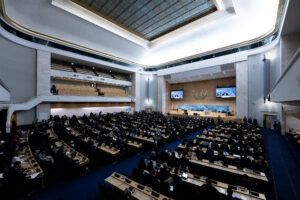
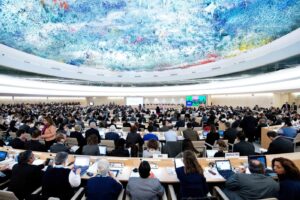
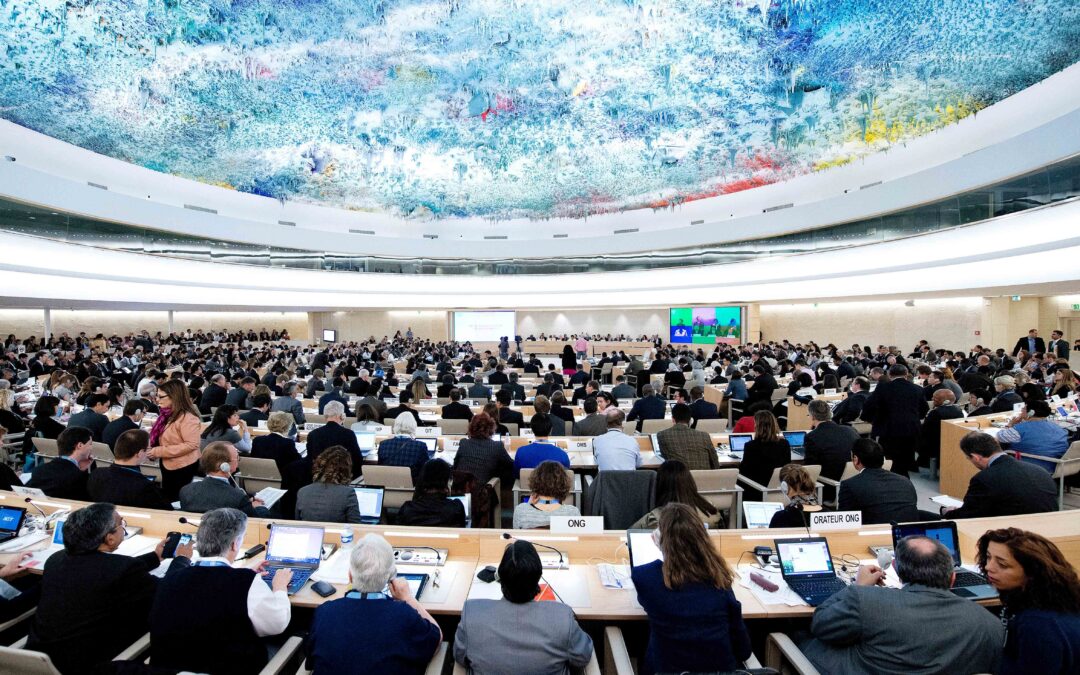
During a panel discussion at the UN Human Rights Council, the ICJ delivered an oral statement on the role of men and boys in eliminating violence against women by ensuring women’s access to justice for gender based violence.
The statement was delivered during the first panel of the Council’s annual full-day discussion on the human rights of women. The panel focused on accelerating efforts to eliminate violence against women by engaging men and boys in preventing and responding to violence against women.
The ICJ’s statement was as follows:
Violence against women is a widespread human rights abuse rooted in patriarchal societies and gender stereotypes that are harmful to everyone. As the panel have recognised, the international community cannot address the issue as though it is only a problem for women and we welcome the positive focus on the role of men and boys as beneficiaries and agents of change.
The ICJ remains concerned about women’s access to justice for gender based violence. Strong domestic laws, grounded in an international human rights framework, that are upheld by a robust and independent judiciary, are essential components of tackling the problem.
However, the ICJ has worked with lawyers, judges and civil society to assess the obstacles that continue to face women seeking justice for gender based violence and we know that laws alone are not enough. It must also be acknowledged that many laws are based on patriarchal norms and stereotypes that are intrinsically discriminatory against women seeking justice through the legal system.
Behavioural change is required in not only preventing violence against women but also in ensuring that justice is available to those that have been subject to this violence. Men have a pivotal role to play in working with women to ensure that a gender based perspective is applied to the way laws are accessed and implemented.
We applaud the panellists’ focus on engaging with men and boys to prevent harmful behaviours of violence against women from taking root.
However, we would like to ask what role panellists suggest men and boys have in:
a) ensuring that perpetrators are held accountable for their actions, and
b) in supporting the justice system in rehabilitating offenders to prevent further acts of violence, without compromising justice and services available to women?
In response to the ICJ’s statement the Special Rapporteur on Violence Against Women commented that structural problems impact on the effectiveness of laws.
Mr Abhijit Das noted that prosecution was only one means of addressing gender inequality and that engagement with men and boys needed to go beyond this to include the widest number of stakeholders possible, including those men and boys that do not perpetrate violence against women.
Mr Anthony Keedi noted that rehabilitation was a key component of addressing violence against women and must be at the heart of change to prevent cycles of violence from continuing.
The participants in the panel and discussion were:
- Chair: H.E. Mr Joaquin Alexander Maza Martelli, President of the Human Rights Council.
- Opening statement: Ms Kate Gilmore, UN Deputy High Commissioner of Human Rights provided an opening statement
- Keynote speaker: H.E. Ms Karen Ellemann, Minister for Equal Opportunities and Nordic Cooperation, Denmark
- Moderator: Ms. Lana Wells, Brenda Stafford Chair in the Prevention of Domestic Violence, University of Calgary, Canada
- Panellist: Ms Dubravka Simonovic, Special Rapporteur on violence against women, its causes and consequences
- Panellist: Mr Anthony Keedi, Masculinities Technical Adviser, ABAAD Resource Centre for Gender Equality, Lebanon
- Panellist: Mr Francis Oko Armah, Youth Activist, curious Minds, Ghana
- Panelist: Mr Abhijit Das, Co-Chair of MenEngage Alliance and Founder of Men’s Action for Stopping Violence against Women, India
Jun 9, 2017 | Advocacy, Non-legal submissions
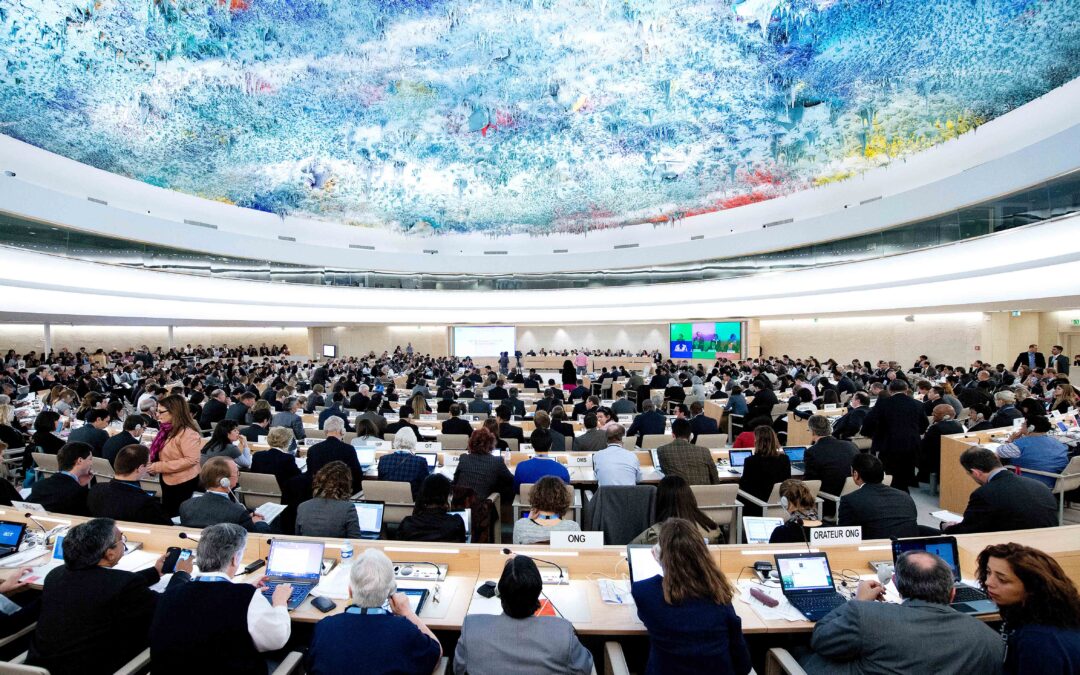
Today the ICJ delivered an oral statement on discrimination against women in access to justice at the UN Human Rights Council in Geneva.
The statement came during an interactive dialogue with the Working Group on the issue of discrimination against women in law and in practice. Ms Alda Facio, Chair of the Working Group, presented the Working Group’s latest report which highlighted examples of good practice in eliminating discrimination against women.
The ICJ stated as follows:
The ICJ would like to thank the Working Group for its report and welcomes its positive focus in highlighting examples of good practice, whilst continuing to note that discrimination against women remains a multifaceted and systemic problem.
The ICJ shares the Working Group’s concerns about the intense backlash against women’s rights gains in national, regional and international spheres. We are particularly concerned about the levels of discrimination women continue to face in accessing the justice required to uphold their human rights.
The ICJ has been working for a number of years, in different regions and with different stakeholders, to identify the discriminations women face in accessing justice and to consider the opportunities that can be used to address these discriminations. The importance of applying a gendered analysis to the law and the way that this is accessed and applied is essential to the elimination of discrimination in this area.
The ICJ supports the Working Group’s identification of the fundamental importance of incorporating international human rights standards into domestic legal frameworks to ensure gender equality protections. In the context of the 2030 Agenda, and with particular reference to Sustainable Development Goals 5 and 16, the ICJ encourages States to ensure that any laws and practices that discriminate against women in accessing justice are repealed, and to recall that any exceptions on the grounds of culture, religion or tradition are unacceptable.
Whilst discrimination against women in access to justice has been well documented and is by no means a new phenomenon, it is highly alarming that the problem is worsening in a number of states. The ICJ would ask that the international community remains vigilant about these potential regressions and commits to holding to account any States that fail to fulfil their international obligations to ensure access to justice for women.
Jun 8, 2017 | Events, News
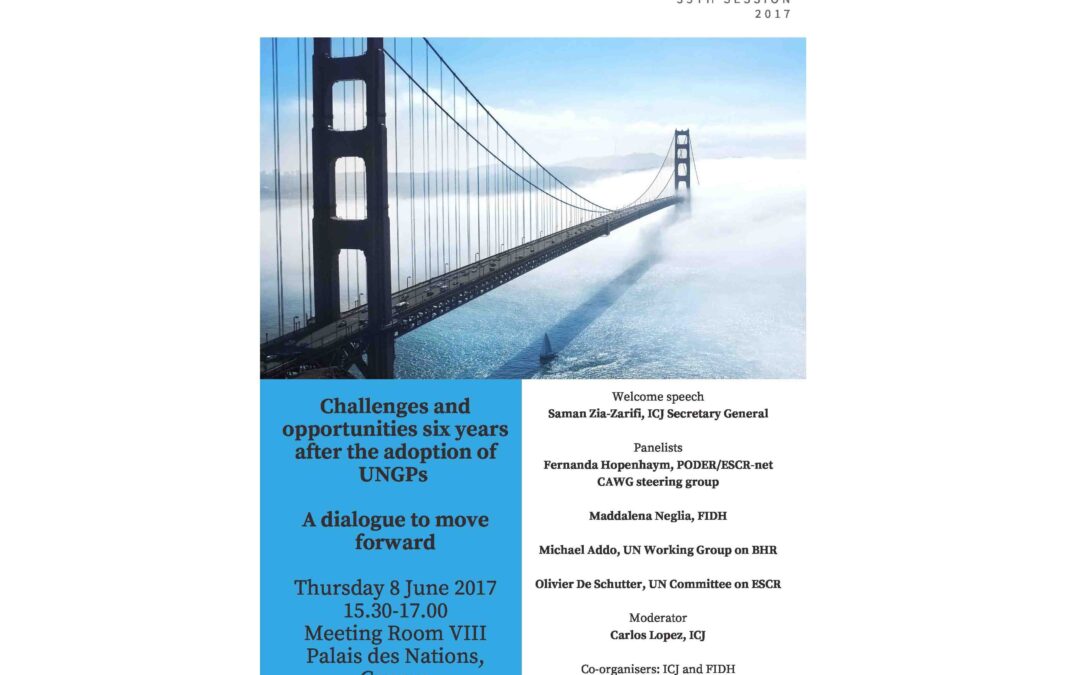
Today, the ICJ and FIDH are organizing a side event to to the 35th Regular session of the Human Rights Council on business and human rights.
Business responsibility to respect human rights
Challenges and opportunities six years after the adoption of UNGPs
A dialogue to move forward
Thursday 8 June 2017, 15.30-17.00
Meeting Room VIII
Palais des Nations, Geneva
After the adoption of the UNGP in 2011, standards on business responsibility to respect human rights and business human rights due diligence have gained prominence in the global debate on business accountability.
Many companies claim to comply with the UNGP by performing a human rights due diligence including across their global supply chain.
Several initiatives have emerged at regional and national level to promote companies’ due diligence processes, including the EU Directive on non-financial reporting, the UK Modern Slavery Act, the French law on company devoir de vigilance.
Despite the progress, serious human rights abuses still occur in both developing and developed countries.
The ability of companies to identify, monitor and prevent negative human rights impacts in their operations and relationships is still weak and the access to effective remedy remains difficult if not impossible.
This is an opportune moment to take stock of the progresses made to date and the challenges ahead in order to create a level playing field that will effectively promote the respect of human rights in business global operations.
Welcome speech
Saman Zia-Zarifi, ICJ Secretary General
Moderator
Carlos Lopez, ICJ
Panelists
Fernanda Hopenhaym, PODER/ESCR-net CAWG steering group
Maddalena Neglia, FIDH
Michael Addo, UN Working Group on BHR
Olivier De Schutter, UN Committee on ESCR/University of Louvain
Jun 5, 2017 | Advocacy, Non-legal submissions
The ICJ has made a submission to the UN Human Rights Committee in advance of its forthcoming examination of Pakistan’s initial report under International Covenant on Civil and Political Rights (ICCPR).
In its submission, the ICJ has brought to the Committee’s attention concerns in relation to the following issues:
- The compliance of Pakistan’s counter-terrorism laws with the State’s obligations under Articles 6, 9 and 14 of the Covenant, particularly in the context of its “military justice” system;
- Shortcomings in the legal framework relevant to torture and other ill-treatment;
- The continuing practice of enforced disappearances and, in this context, the ongoing impunity of law enforcement and military agencies;
- The compliance of Pakistan’s blasphemy laws with Articles 14, 18, and 19 of the Covenant; and
- The compatibility of Pakistan’s “International Non-Governmental Organizations Policy” with the State’s obligations under Article 22 of the Covenant.
The Human Rights Committee will examine Pakistan’s initial report during its 120th session, which will be held in Geneva from 3-28 July 2017.
Following the review, the Committee will adopt Concluding Observations setting out recommendations to the Pakistani Government.
Pakistan -ICCPR submission-Advocacy-non legal submission-2017-ENG (full text in PDF)
Jun 1, 2017 | Advocacy, Open letters
The ICJ and other NGOs have jointly issued a checklist of key criteria for the selection and appointment of new members for the UN Working Group on the issue of discrimination against women in law and in practice.
The Human Rights Council will appoint four new members of the UN Working Group at its 36th regular session in September 2017. The deadline for applications of candidates expired on 1 June 2017.
The proposed criteria were developed by:
- Amnesty International
- Alkarama Foundation
- Global Initiative for Economic, Social and Cultural Rights
- International Commission of Jurists
- International Lesbian, Gay, Bisexual, Trans and Intersex Association
- International Service for Human Rights
- World Organization against Torture
The NGO’s called on States, NGOs and others, including relevant professional networks, to use the prepared checklist to identify eligible candidates, the strongest of whom should meet a substantial number of the criteria.
Joint NGO-Criteria UNWG Discrimination Against Women-Advocacy-Open Letter-ENG (criteria checklist, PDF)