Dec 15, 2016 | News
The ICJ and the Judicial College of Zimbabwe (JCZ) have assisted senior prosecutors in their role in strengthening the rule of law and protection of human rights in the country.
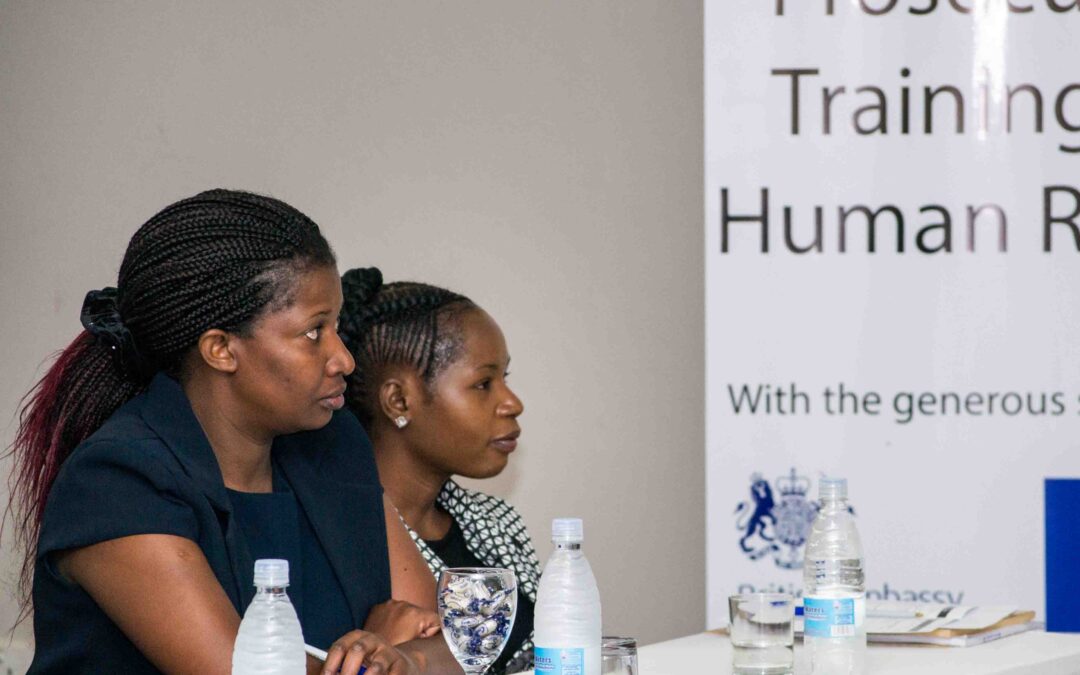
The Zimbabwe National Prosecuting Authority (NPA) held a pilot training of trainers for senior prosecutors on fair trial standards and human rights from 15-16 December 2016.
The NPA received substantive legal and technical support for this training from the Judicial College of Zimbabwe (JCZ) and the ICJ.
In consultation with the ICJ, the JCZ designed the training curriculum.
The JCZ has a statutory mandate to provide continuous professional development to various justice sector actors including the prosecution.
The content of the curriculum includes prosecutorial conduct in upholding the rule of law, constitutional and legislative protection of the rights of accused persons, general powers of the prosecutor general and his/her nominees, and the relationship with the other justice actors, such as the police.
In addition, the training focused on aspects relating to warrants for further detention, bail, right to remain silent, admissibility of statements obtained through illegal or abusive means, discharge at close of state case, sentencing and the prosecutors code of ethics.
The framing of the various topics is informed by universal, regional and domestic law and standards on the role, duties and mandate of the NPA, and individual prosecutors.
Fifty (50) senior prosecutors from different provinces and districts were selected to attend this inaugural intensive human rights training, facilitated by Mr. Shana, the JCZ principal, and Mr. Andrew Chigovera, former Attorney-General, former Commissioner, African Commission on Human and Peoples Rights.
Contact
Arnold Tsunga, ICJ Regional Director for Africa, t: +27 73 131 8411, e: arnold.tsunga(a)icj.org

Dec 13, 2016 | News
The ICJ and Human Rights Commission of Pakistan (HRCP) urge the Pakistani authorities to fully engage with the UN human rights body by answering its questions comprehensively.
The call follows the recent adoption by the United Nations Human Rights Committee of a document raising a multiplicity of concerns about Pakistan’s human rights record.
“It is encouraging to see Pakistan’s increased engagement with United Nations human rights mechanisms in recent years”, said Sam Zarifi, ICJ’s Asia Director.
“But it is important that the Government does not stop here and now takes the additional constructive step of answering all the Committee’s questions truthfully and honestly,” he added.
In November 2016, during its 118th session, the Human Rights Committee adopted a document known as a List of issues in relation to Pakistan’s compliance with the International Covenant on Civil and Political Rights (ICCPR), in which the Committee asked multiple questions about the country’s human rights record, including:
- Fair trial concerns as a result of the expanded jurisdiction of military courts following the introduction/adoption of the 21st Amendment to the Constitution, including the criteria for and the process of selecting cases to be tried by military courts, the qualifications of judges presiding over those courts and their proceedings;
- Reintroduction of the death penalty and the wide scope of its application, including the mandatory death sentence for “blasphemy”;
- Broad and vaguely defined “blasphemy offences”, their disproportionate use against individuals belonging to religious minorities; the large number of “blasphemy” cases instituted on the basis of false accusations; and the lack of mechanisms to protect judges who hear “blasphemy” cases and those accused of blasphemy from intimidation and threats;
- Rights of Ahmadis, including their “right to profess, practice and propagate” their religion without interference;
- Repatriation of Afghan refugees, including information on the adoption of a draft national refugee law and a comprehensive policy on the voluntary repatriation and management of Afghan nationals;
- Rights of women, including steps taken by the Government to prevent and punish persistent violence (sexual and otherwise) against women, including so-called honour killings;
- Torture and other ill-treatment, extrajudicial killings, and enforced disappearances, including steps taken by the Government to implement the Supreme Court’s judgment in the Muhabbat Shah case, which held military authorities responsible for the enforced disappearance of at least 28 people from a Malakand internment centre.
This is the first time Pakistan’s human rights record is being reviewed by the Human Rights Committee, the treaty body that monitors implementation of the International Covenant on Civil and Political Rights by its State parties, since Pakistan ratified the Covenant in 2010.
The next step in the review process is for Pakistan to respond to the questions framed in the List of Issues.
The Human Rights Committee will undertake a comprehensive review Pakistan’s compliance with and implementation of the ICCPR and adopt concluding observations in July 2017.
“It is of the utmost importance to Pakistan to derive greater benefit from its engagement with the UN human rights mechanisms by making a sincere effort to answer the concerns of the Committee,” said I A Rehman, Secretary General of HRCP.
Background
Pakistan ratified the International Covenant on Civil and Political Rights (ICCPR) in June 2010. Following ratification/accession, every state party to the ICCPR is required to submit an initial “state report” containing information on the implementation of each provision of the treaty.
Pakistan submitted its initial state report to the Human Rights Committee in October 2015.
In light of the information provided in the State report, as well as information received from civil society, the Human Rights Committee then prepares a List of Issues containing particular issues of concern to the Committee, and asking whatever questions it sees fit in light of those concerns.
The answers provided by the State party to those questions, as well as other information submitted by civil society and others form the basis of the “review” of the State’s compliance with the treaty.
The State is not obligated to reply to the List of Issues in advance of the review session, but in practice most do.
The State replies are presented to the Committee at the beginning of the review and are the starting point for the interactive dialogue between the Committee and the State under review.
During the review, the Committee meets with State representatives who present answers to the List of Issues and respond to the Committee’s questions.
At the end of the session, the Committee adopts Concluding Observations, which highlight the Committee’s concerns and make recommendations to the State on improving the implementation of the ICCPR.
Pakistan’s ICCPR review is scheduled to take place in July 2017.
Contact
Sam Zarifi, ICJ Asia Pacific Regional Director (Bangkok), t: +66 807819002; email: sam.zarifi(a)icj.org
Pakistan-list-of-issues-advocacy-2016-eng (in PDF)
Dec 6, 2016 | Advocacy, News, Non-legal submissions
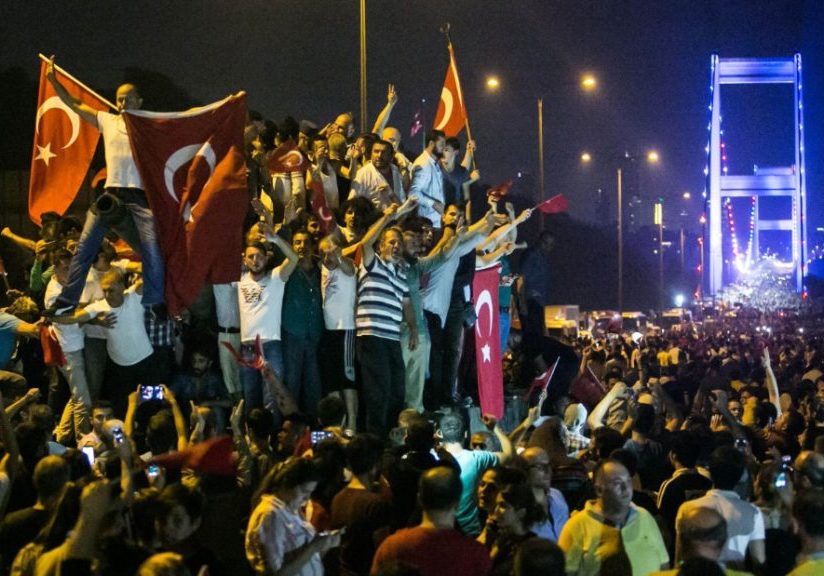
Nearly five months after the failed coup attempt in Turkey, the country remains locked in an acute rule of law crisis. The government must take urgent steps to restore the rule of law, the ICJ said today.
Mass arrests, many of them arbitrary, and credible allegations of the torture and other ill-treatment of detainees, mean that access to legal advice, to a fair trial and to effective judicial remedies are crucial. However, the unprecedented summary and arbitrary purge of the judiciary following the coup, and arrests of judges, prosecutors and lawyers, have significantly weakened the justice system and its capacity to protect against and effectively remedy violations of human rights. The vulnerability of detainees to violations of their human rights has been compounded by unwarranted restrictions on access to lawyers and extended periods of pre-trial detention.
State of Emergency
The ICJ is concerned that the State of Emergency, which involves derogations from Turkey’s international human rights law obligations, has been renewed for a second period of 90 days, until mid-January. Sweeping emergency decrees continue to erode human rights, including rights of fair trial, the right to liberty, and freedoms of expression and association.
The ICJ recalls that in times of crisis, any measures derogating from human rights must be strictly necessary to meet a current threat to the life of the nation. This necessity must be continually re-assessed so that the derogating measures apply for the shortest time possible. Certain human rights, including the right to life, the prohibition of torture or ill-treatment, and the essential elements of arbitrary deprivation of liberty and to a fair trial and the right to an effective remedy can never be restricted even in a state of emergency. The ICJ is concerned that Turkey’s notifications of derogation purport to derogate in general terms from a number of these rights.
Measures taken under the State of Emergency should be rigorously and urgently reviewed to ascertain whether they are permissible under international law and whether they remain necessary and proportionate to any current threat to the life of the nation. Moreover, it must be ensured that non-derogable rights, including the prohibition on torture and other ill-treatment, and the right to a fair trial, are not limited by emergency measures. The ICJ urges the Turkish authorities to lift the State of Emergency and the derogations from its international human rights law obligations at the earliest opportunity.
Independence of the judiciary
The ICJ reiterates its grave concern at mass dismissals of judges and prosecutors, which have a devastating effect on the independence of the judiciary. More than 3,000 judges and prosecutors – approximately one fifth of the judiciary – have been arbitrarily dismissed under emergency decrees, without procedural safeguards and without the right to reasoned decisions.
Judges and prosecutors have been detained in very large numbers. In total, more than 2,000 have been detained, including two judges of the Constitutional Court, 109 members of the Court of Cassation, 41 Members of the Council of State and five members of the High Council for Judges and Prosecutors (HSYK).
Restructuring of the Court of Cassation and the Council of State, under legislation adopted in July, has required the reappointment of all judges of these courts. New judges have been appointed rapidly, through procedures that lack transparency, and in the context of strong executive influence over the appointment process in the HSYK.
The ICJ is also gravely concerned that the independent association of judges, YARSAV, has been shut down, and its President, Murat Arslan, has been arrested.
These measures have eroded the separation of powers in Turkey and have seriously undermined the independence of the judiciary at every level, compromising the courts’ ability to provide fair trials or an effective remedy for violations of human rights. The impact of this situation on the protection of human rights goes beyond what can be justified under the state of emergency. To meet its international human rights obligations, the Turkish government must as a matter of urgency take steps to restore the independence of the judges and of the governing bodies of the judiciary. Procedural safeguards that protect against arbitrariness in criminal, civil and administrative procedures, including in regard to the dismissal of judges, must be reinstated.
Independence of lawyers and access to legal advice
The ICJ is similarly concerned at measures that undermine the independence of the legal profession and the capacity of lawyers to protect human rights. More than 573 lawyers are reported to have been detained in connection with the failed coup since July, and more than 200 have been arrested, and their assets frozen.
Amongst those reported to be arrested are four Presidents of regional bar associations: Orhan Öngöz, President of the Trabzon Bar; Mehmet Cemal Acar, President of the Siirt Bar; İsmail Taştan, President of the Gumushane – Bayburt Regional Bar and Fevzi Kayacan, President of the Konya Bar. The ICJ considers that many of these detentions and arrests are likely to be arbitrary.
These developments have very serious consequences, not only for the rights of lawyers themselves, but also for the right to a fair trial of their clients and the effectiveness of judicial remedies for violations of human rights. They raise concerns that lawyers are being identified with their clients or their clients’ causes, contrary to the Principle 18 of the UN Basic Principles on the Role of Lawyers. The ICJ recalls that under the UN Basic Principles, governments must ensure that lawyers are able to perform all of their professional functions without intimidation, hindrance, harassment or improper interference.
Furthermore, the ICJ is concerned that hundreds of NGOs have been closed under emergency decrees, including a number of lawyers’ associations. Such closures have serious implications for rights of freedom of association and expression, and for the rule of law.
The ICJ calls on the Turkish government to take urgent steps to guarantee the independence of the legal profession, protect lawyers from arbitrary detention or arrest and provide procedural safeguards to ensure the right to fair trial of lawyers under criminal investigation.
Contact:
Roisin Pillay, ICJ Europe Director, at roisin.pillay(a)icj.org or +32 2 734 84 46
Massimo Frigo, ICJ Europe Legal Adviser, at massimo.frigo(a)icj.org or +41 22 979 38 05

Dec 6, 2016 | News
Hosted on 3-4 December, the event was attended by a total of 40 participants which includes representatives of CSOs, lawyers, MPs and village track administrators.
The workshop aimed to raise awareness of international standards and best practice of resettlement and development-based eviction and displacement among local community in order to mitigate potential adverse impact associated with the development of the Kyauk Phyu Special Economic Zone.
In the opening, Dr Daniel Aguirre, ICJ International Legal Adviser, outlined the essential role of lawyers and community members in safeguarding human rights and holding the State and investors accountable.
The discussion was led by international experts and experienced and committed leaders of Civil Society Organization.
Susanna Price from Australian National University highlighted key principles of the ADB’s Involuntary Resettlement Policy along with experiences from China, Cambodia and Indonesia.
U Hayman Oo, ICJ Legal Researcher, explained how the UN principles on Development-based Eviction and Displacement are applicable in the context of Myanmar and urged the participants to use these standards for their advocacy work.
U Myo Mrat Hein, the Director and lawyer of the Thazin Legal Aid Group, discussed important issues surrounding the national land acquisition legislation whilst Sean Bain, legal consultant at the ICJ give a brief overview of important provisions of the Myanmar SEZ Law (2014).
The other two guest local speakers shared their first-hand experiences of advocacy work and resettlement issues which occurred during the development of Dawai and Thilawa SEZ respectively.
Participants exchanged strategies and ideas to take preparatory steps to mitigate potential impacts of the KPSEZ in terms of protecting their economic, social and cultural rights, learning from Dawei and Thilawa, as well as from international standards which Myanmar recognizes.
The new Kyauk Phyu SEZ Management Committee, along with Dawai and Thilawa, was formed last month with over 30 members including international and local social and environmental experts.
In a meeting held in Nay Pyi Taw following the establishment of the SEZ Management Committee, Daw Aung San Su Kyi emphasized that the current three SEZs of the country are leading projects for Myanmar’s economic growth.
She also expressed concerns over the potential negative effect of these zones if not properly implemented.
Dec 5, 2016 | News
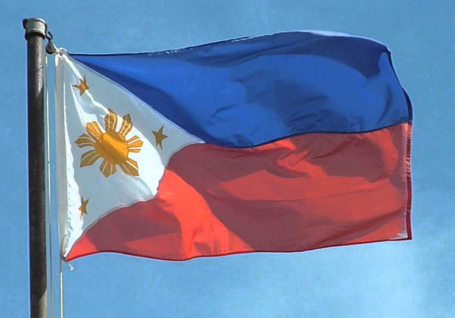
A joint statement calls on members of the House of Representatives of the Philippines to stop further attempts to reintroduce the death penalty and to block any legislation that subverts human rights.
On 29 November 2016, the Sub-Committee on Judicial Reforms of the House Committee of Justice approved a bill restoring the death penalty in the Philippines by railroading the proceedings in the committee and ignoring important questions from other lawmakers questioning the need for the legislation or its urgent passage.
The full statement can be downloaded here:
philippines-joint-statement-death-penalty-news-web-story-2016-eng (PDF)