Mar 12, 2015 | News
Thailand must live up to its repeated promises to bring justice to the case of Somchai Neelapaijit, who was forcibly disappeared eleven years ago today, said the ICJ.
In multiple statements since Somchai Neelapaijit was abducted on a street in central Bangkok, the Royal Thai Government has pledged to resolve the case.
Before the United Nations Human Rights Council in May 2008, the Royal Thai Government pledged “to do its utmost and leave no stone unturned in order to bring to justice the case of Mr Somchai.”
In April 2014, Thailand gave assurances to the UN Committee that monitors the implementation of the Convention Against Torture in Geneva that the Department of Special Investigations (DSI) was continuing to investigate Somchai Neelapaijit’s case without any interference.
“Despite the passage of eleven years, Thai authorities have not carried out a comprehensive investigation or exhausted the possible sources of evidence,” said Sam Zarifi, ICJ’s Regional Director for Asia and the Pacific. “What is required is the DSI’s real and determined effort to identify the perpetrators and bring them to justice.”
Thailand signed, but has not yet ratified, the Convention Against Enforced Disappearance in January 2012.
Pending the ratification, Thailand must desist from any acts that would defeat the objective and purpose of the Convention, which among other things places an obligation on State Parties to make enforced disappearance a criminal offence, to thoroughly and impartially investigate cases, bring those responsible to justice and treat family members of a ‘disappeared’ person as victims in their own right.
Promisingly, the Ministry of Justice is in the process of drafting a Torture and Enforced Disappearance Prevention and Suppression Bill, which, in its current form, defines and criminalizes enforced disappearance and torture in Thailand.
“This new law must ensure there is no statute of limitations on enforced disappearance, which is not only a serious human rights violation but also a crime under international law,” added Zarifi. “Somchai’s fate and whereabouts remain unresolved, and his family continue to demand truth and justice from the authorities.”
To mark the 10-year anniversary of Somchai Neelapaijit’s “disappearance”, the ICJ released a report Ten Years Without Truth: Somchai Neelapaijit and Enforced Disappearances in Thailand, in which it documented the tortuous legal history of the case.
The report highlighted several key problems, such as poor use of forensic evidence, failure to follow and develop leads, unduly restrictive interpretation of national and international law, and above all, a lack of political will to resolve a case that remains emblematic of the culture of impunity in Thailand.
Contact
Sam Zarifi, ICJ Asia-Pacific Regional Director, (Bangkok), t:+66 807819002, e-mail: sam.zarifi(a)icj.org

Mar 9, 2015 | Advocacy
The ICJ supported a statement commenting on the respective reports by the Independent Expert on the Environment and Human Rights and the Independent Expert on Foreign Debt and its impact on Human Rights.
In the context of the Interactive Dialogue with the Independent Experts in the 28th Session of the Human Rights Council, Franciscans International and the Center of Concern, with the support of the ICJ, noted that the reports address, from different perspectives, a wide range of connections between the private sector and governments that many times result in human rights abuses.
The report by the Independent Expert on human rights and the environment, presented an encouraging set of good practices to mitigate environmental damage and its human rights impact.
The report by the Independent Expert on Foreign Debt and its impact on human rights highlighted the links between private lending and the abuses committed by authoritarian regimes.
This report will be followed by another report on applicable legal standards and analysis of whether additional international standards are needed.
Universal-Statement on BHR at HRC28-Advocacy-2015-ENG (full text in PDF)

Mar 6, 2015 | E-bulletin on counter-terrorism & human rights, News
Read the 90th issue of ICJ’s monthly newsletter on proposed and actual changes in counter-terrorism laws, policies and practices and their impact on human rights at the national, regional and international levels. The E-Bulletin on Counter-Terrorism and Human...

Mar 6, 2015 | News
The ICJ today expressed its dismay that the Singapore Court of Appeal, in a judgment issued on 4 March 2015 declined to declare caning, a painful form of corporal punishment, to be unlawful.
The administration of caning violates the absolute prohibition of torture and cruel, inhuman or degrading punishment under international law.
Despite this prohibition, the Court of Appeal determined that any international legal prohibition had no effect on Singapore, since the legislature had not made it part of the country’s domestic law.
The ICJ emphasized that Singapore’s failure to prohibit caning in its own national law in no way makes caning a lawful act.
Under international law, caning remains wrong and illegal, irrespective of the country’s domestic arrangements.
The Court of Appeal also ruled that caning, administered as a form of judicially imposed punishment in Singapore, does not amount to torture.
The Court of Appeal stated that caning did not “breach the high threshold of severity and brutality that is required for it to be regarded as torture.”
The ICJ notes that the international prohibition against ill-treatment extends not only to torture, but also to cruel, inhuman and degrading treatment and punishment.
The ICJ considers that caning constitutes both types of ill-treatment.
The ruling was issued by the Singapore Court of Appeals in the case of Yong Vui Kong, a 26-year old man who appealed against his sentence of 15 strokes of the cane and life imprisonment imposed as a punishment for an offence under the Misuse of Drugs Act.
Upon his conviction in 2011, Yong Vui Kong had initially been sentenced to death.
Following changes in the law and an application for re-sentencing to the High Court, his sentence was modified in 2013 to life imprisonment and ‘15 strokes of the cane’.
In his appeal, which was dismissed by the Court of Appeal, Yong Vui Kong challenged this sentence on several grounds, including that caning constitutes torture, which is prohibited under international law.
“The Court of Appeal’s ruling is out of step with Singapore’s obligations to prevent, prohibit and punish all forms of torture and other cruel, inhuman or degrading treatment or punishment. International human rights bodies have made clear that caning and other forms of corporal punishment violate the absolute prohibition of torture and other cruel, inhuman or degrading treatment or punishment. As such it must be prohibited,” said Emerlynne Gil, International Legal Adviser for Southeast Asia of the ICJ.
Laws in Singapore that permit the imposition of corporal punishment are inconsistent with Singapore’s obligation to prohibit torture and other ill-treatment at all times and in all circumstances.
Consequently, in 2011 the UN Committee on the Rights of the Child asked Singapore to “prohibit unequivocally by law, without any further delay, all forms of corporal punishment, including caning, in all settings”.
In addition, when Singapore went under the Universal Periodic Review of its human rights record before the UN Human Rights Council in 2011, several States recommended that the authorities abolish all corporal punishment, including caning.
The ICJ also emphasizes that all forms of torture and other cruel inhuman or degrading treatment are absolutely prohibited by customary international law and international treaties binding on Singapore, including the Convention on the Rights of the Child (CRC) and the Convention on the Rights of Persons with Disabilities (CRPD).
The prohibition against torture is also a peremptory norm of international law, as recognized by numerous legal authorities and by all States in repeated UN General Assembly resolutions.
The peremptory character of the norm means that it overrides all other laws, international or domestic. The Court of Appeal dismissed any effect that the peremptory character of the prohibition might have on its administration in Singapore.
The ICJ calls on the lawmakers in Singapore to act without delay to outlaw corporal punishment.
Contact:
Emerlynne Gil, International Legal Adviser for Southeast Asia, t +66840923575 ; e emerlynne.gil(a)icj.org
Mar 5, 2015 | News
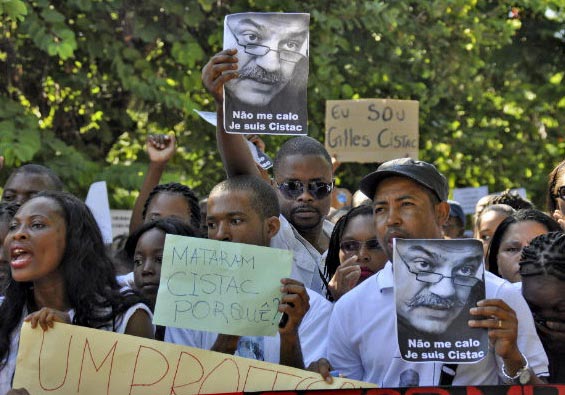
The ICJ calls for the prompt and thorough investigation into the killing of Gilles Cistac, a prominent academic and human rights defender.
Gilles Cistac served as a Professor of Law at the Faculty of Law, Universidade Eduardo Mondlane in Mozambique.
His death, at the hands as of yet un-indentified gunmen in Maputo, Mozambique, on Tuesday 3 March 2015, follows his involvement in the debates on the sensitive issues of decentralization of power and establishment of autonomous provinces in Mozambique.
It is also reported that he was the subject of recent attacks on social media by a person who used a pseudonym and called Gilles Cistac a spy and a traitor, and accused him, along with others, of subverting the country.
“Demonstrating its commitment to the rule of law and respect for human rights, which were central to Gilles Cistac’s work, the government must fulfill its obligation to investigate the killing of Professor Cistac, promptly and effectively, and to ensure that those responsible are brought to justice in fair proceedings,” said Arnold Tsunga the Africa Director of the ICJ.
These obligations arise as part of the government’s duty to protect the right to life including under the African Charter on Human and Peoples’ Rights and the International Covenant on Civil and Political Rights, international human rights treaties to which Mozambique is a party.
The government must also take steps to ensure protection of those, including human rights defenders, who exercise their right to freedom of expression.
Arnold Tsunga also called on the authorities in Mozambique to heed the message of the UN High Commissioner for Human Rights, Zeid Ra’ad Al Hussein, UN High Commissioner for Human Rights: “Human rights defenders are not violent seditionists, criminals, nor bloody revolutionaries, as so many governments like to portray them. They are the best of us, all of us. And they have a message. (…) Understand the message, talk to them about it, be persuaded or persuade, without violence, instead of silencing them, punishing them, their families, and their communities.”
The ICJ will continue to monitor is the investigation of this deadly attack as part work to promote enhanced respect for human rights and in defence of human rights defenders.
Contact:
Arnold Tsunga, t +27 716 405 926 ; e arnold.tsunga(a)icj.org