Feb 20, 2017 | News
On Monday 20 February 2017, the ICJ Commissioner Belisário Dos Santos Júnior and the lawyer, Jaime Araíújo Rentería commenced an international mission in Guatemala.
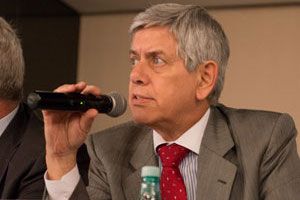
The ICJ Commissioner Belisário Dos Santos Júnior (photo) is the former representative of the Brazilian lawyers’ association at the São Paulo Human Rights Commission, who has acted as the legal representative for political detainees. Jaime Araújo Rentería, former President of the Colombian Constitutional Court is a practicing lawyer and university professor.
The objective of the mission is to evaluate the situation of the legal profession in the country, identify obstacles and challenges, and offer perspectives about ways in which the State can provide better protection for lawyers so they can carry out their functions in an independent and safe manner.
The two mission members will be in Guatemala for a week and will interview the President and Executive Committee of the Bar Association, human rights lawyers, and high-level officials from the three branches of the State, members of the international community and representatives of human rights organizations.
On Friday 24 February, the two lawyers will hold a press conference to present the conclusions and recommendations of the mission to the press and general public.
Nov 17, 2016 | Events, Multimedia items, News, Video clips
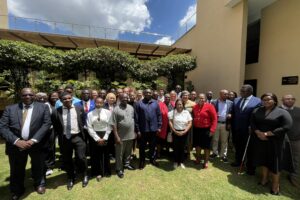
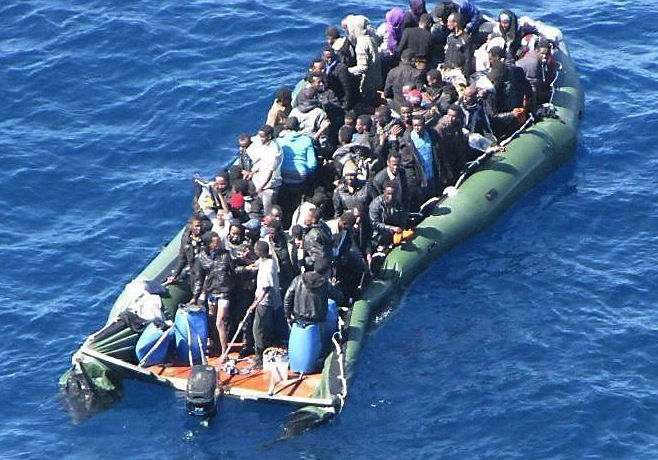
The 7th annual Geneva Forum of Judges & Lawyers, 17-18 November 2016, brought together judges, lawyers, and refugee and migration experts from around the world, as well as UN agencies to discuss the role of judges and lawyers in situations of large-scale movement of refugees and migrants.
Participants reflected on practical, policy, and legal challenges posed by contemporary movements of refugees and migrants, perceived as exceptional in terms of their scale and speed. Particular situations to be considered include those in Europe (with people coming primarily from and through North Africa and the Middle East, including from Syria, Eritrea, Iraq and Afghanistan); in the Americas (including people coming to the United States of America from Central and South America); in Asia (including in relation to the Rohingya across Southeast Asia, and in relation to practices involving Australia and the Pacific); and within and from parts of Sub-Saharan Africa.
In most of these situations, the legal protections available and the respective roles of the executive, legislative and judicial branches of government in securing these protections has been a matter of debate.
Authorities world-wide have faced the challenge of ensuring that in all circumstances people have access to fair and effective procedures in relation to key decisions about their rights and interests, such as: determinations of a person’s entitlement to international protection, including determinations as to refugee status; decisions about detention or criminal proceedings based on one’s entry or presence in the country; and decisions about expulsion or onward transfer.
In some cases governments have departed radically from ordinary procedures. The framework of “crisis” or “emergency” has been increasingly invoked, sometimes to reduce judicial protections and guarantees and access to justice.
Forum participants were invited to analyze relevant legal and policy frameworks and practices at the national, regional and universal levels, and to make recommendations about the particular role of judges and lawyers in such situations, including relative to the executive and legislative branches of government.
During the Forum, the forty distinguished judges and lawyers from around the world reaffirmed the essential role of judges and lawyers in securing the rule of law and human rights in relation to large movements of refugees and migrants.
The Forum concluded with substantial agreement and reaffirmation of the essential role that judges and lawyers must be enabled to play, and must fulfil in practice, if the rights of refugees and migrants and the rule of law are to be secured, including in the context of large movements.
Participants exchanged challenges and solutions, and deliberated on a wide range of issues, including:
- on methods for best assessing evidence and credibility;
- on means for overcoming the legal, policy, and practical challenges when judges and lawyers face large numbers of claims and cases;
- on reforms to better enable immigration judges to meet basic standards of independence and impartiality;
- on the need for judiciaries and legal professions to ensure practitioners receive appropriate training and better access to information about international standards and reliable information about country situations;
- on the importance of effective access to competent legal advice and representation, including free of charge when necessary, for refugees and migrants to be able to exercise their rights and for judges to be able to decide cases in an efficient and just manner;
- on ways of supporting judges who courageously exercise their independence to uphold the rule of law and human rights, including in the face of interference or reprisal from the executive or legislative branches of government, or intense media criticism or majoritarian pressure;
- on ensuring that refugees and migrants who are victims of crime or victims of human rights violations are able to have effective access to justice and effective remedy, without discrimination arising from their status;
- on the importance of ensuring that legal processes are sensitive to the particular situation of women and children migrants, and migrants in detention.
The main output of the Forum, published in May 2017, is the ICJ Principles on the role of judges and lawyers in relation to refugees and migrants.
The Principles complement ICJ’s 2011 (updated 2014) Practitioners’ Guide No 6 on Migration and International Human Rights Law, and Practitioners Guide No 11 on Refugee Status Claims Based on Sexual Orientation and Gender Identity (2016).
The 2016 Geneva Forum of Judges & Lawyers was made possible with the support of the Republic and Canton of Geneva, Switzerland.
The ICJ is also grateful to the Swiss Confederation, and the Centre d’Accueil Genève Internationale (CAGI), for their in-kind support.
The Programme for the 2016 Forum can be downloaded in PDF format here:
en-programme-2016gf-09-11-2016
esp-programme-2016gf-09-11-2016
The List of Participants can be downloaded in PDF format here: participants-2016gf-09-11-2016
Information about the Geneva Forum from past years is available by clicking here.
The final output of the 2015 Geneva Forum was the publication of ICJ Practitioners Guide No. 13, on Judicial Accountability, available in PDF format by clicking here.
For further details, please contact Matt Pollard, senior legal adviser, matt.pollard(a)icj.org
Voices from the Geneva Forum 2016: Sanji Monageng
Voices from the Geneva Forum 2016: Guy Goodwin-Gill
Voices from the Geneva Forum 2016: Maya Sahli-Fahdel (in French)
Voices from the Geneva Forum 2016: Mónica Oehler Toca (in Spanish)
Information about related ICJ work on refugees and migrants can be accessed by clicking the links below:
ICJ and others call on the EU to protect refugee and migrant children’s rights (November 2016)
Mar 3, 2016 | News
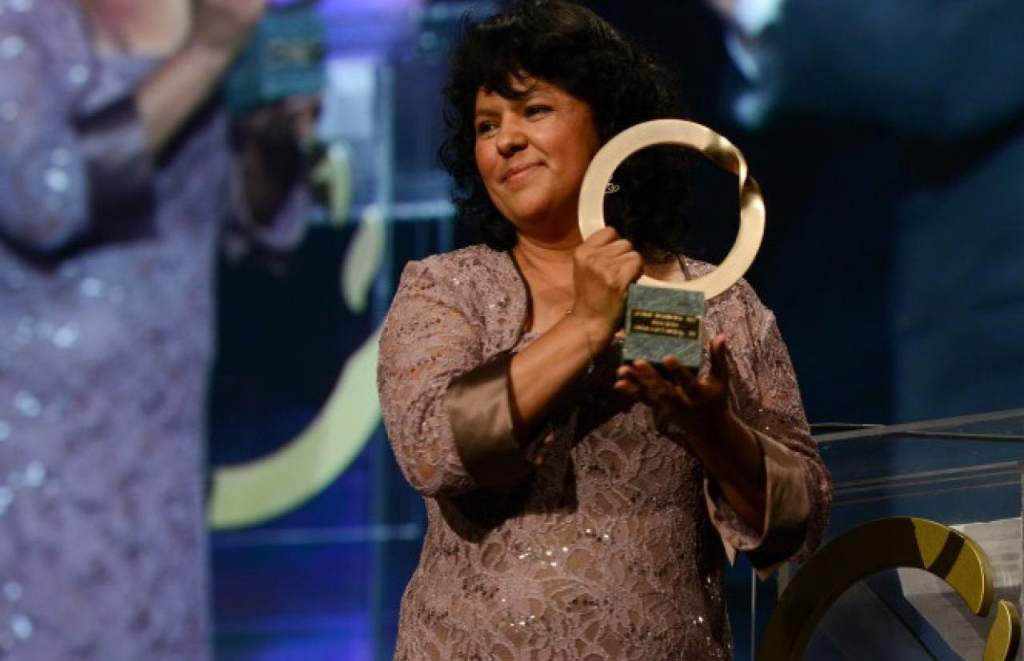
One of the leading indigenous activists and human rights defenders in Honduras, Berta Cáceres had worked jointly with the ICJ on several projects. She was shot dead by unknown attackers at her home today.
The ICJ urges the Honduran authorities to launch a rapid and independent investigation to identify who perpetrated and/or ordered the murder of Berta Cáceres and bring the person(s) responsible into court.
“We have lost a courageous and committed human rights defender,” said Ramón Cadena, ICJ’s Regional Director for Central America.
“It is essential that this crime does not remain unpunished. The government must send a strong signal and take immediately measures to effectively investigate this killing and hold those responsible to account,” he added.
A relentless defender of indigenous peoples rights to land and natural resources, Berta Cáceres had been awarded the Goldmann Environmental Prize in 2015 (photo).
It is a huge loss not only for her family, but also for the whole human rights movement in Honduras, the ICJ said.
Berta Cáceres had received repeated death threats from both state security forces and the company planning the Agua Zarca dam, which she had successfully fought against, together with residents of the Lenca Community.
She had been placed under the protection of the local police in La Esperanza, the area where she lived. Obviously this was not enough.
The situation of human rights defenders in Honduras is dire and has continuously deteriorated in the recent years, with their activities being systematically criminalized.
Mar 1, 2016 | News
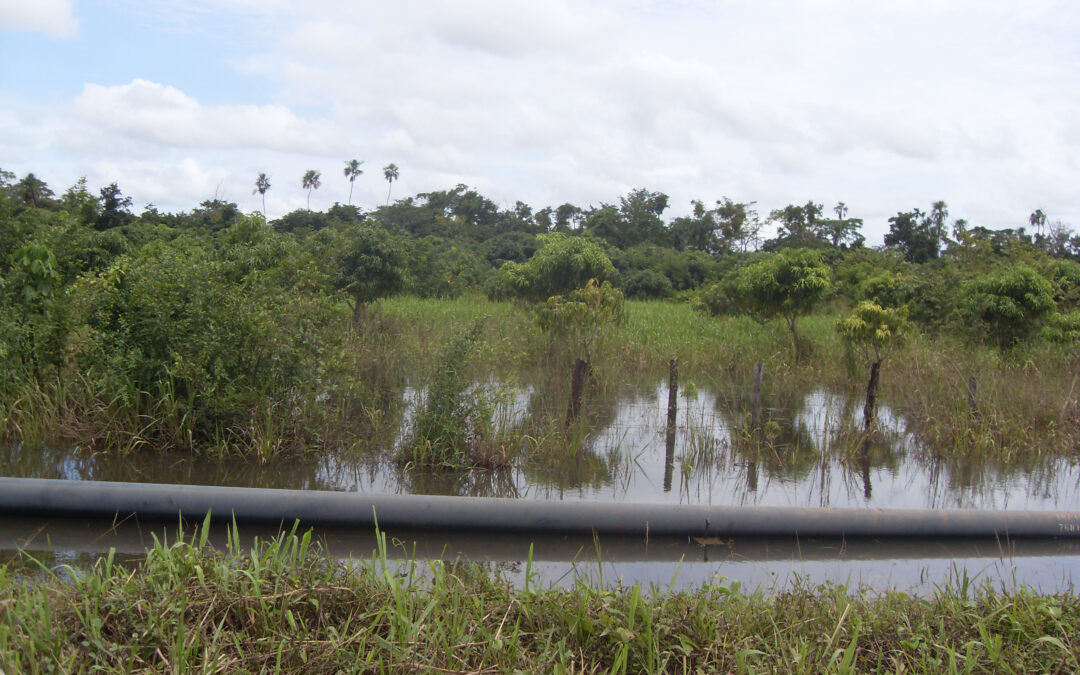
En mayo de 2015, la empresa REPSA entregó un oficio en el Ministerio de Ambiente y Recursos Naturales donde acepta su responsabilidad por el desborde de sus lagunas de oxidación artificial que se derramaron sobre las aguas del río La Pasión el 28 de abril de 2015.
Sobre un segundo evento del 6 de junio de 2015 no hubo un reconocimiento de su responsabilidad.
El daño causado al Río la Pasión persiste al día de hoy y ha obligado a varias comunidades que allí habitan a buscar fuentes alternativas de sustento y trabajo.
El 10 de junio de 2015, vecinos del municipio de Sayaxché, en asamblea general integraron la Comisión por la Defensa de la Vida y la Naturaleza, para dar seguimiento por la vía legal a la contaminación del río.
El 11 de junio de 2015 presentaron una denuncia en el Ministerio Público con sede en el Municipio de San Benito, departamento de El Petén y demandaron a la empresa REPSA.
La Jueza Karla Hernández del Juzgado Pluripersonal de Primera Instancia Penal, Narcoactividad y Delitos contra el Ambiente resolvió investigar y suspender las operaciones de la empresa por un período de seis meses.
La decisión de la Jueza provocó diferentes acciones en su contra.
Entre las acciones más evidentes se cuentan: a) Antejuicio presentado en septiembre de 2016 por abogados vinculados a la empresa REPSA, el cual fue declarado sin lugar por la Corte Suprema de Justicia el 9 de diciembre de 2015; b) Demanda de juicio sumario civil para deducción de responsabilidades civiles por “extralimitación de sus facultades como juez B del Juzgado Pluripersonal de Primera Instancia Penal, Narcoactividad y Delitos contra el Ambiente del Municipio de San Benito, Departamento de El Petén, toda vez que ordenó una medida precautoria que no está contemplada en la ley”; esta denuncia fue aceptada para su trámite por la Sala Regional Mixta de la Corte de Apelaciones del Departamento de El Petén, Municipio de Poptún el 6 de octubre de 2015 y se encuentra en trámite.
Acerca de estas acciones, la CIJ considera:
- Según los Principios básicos de las Naciones Unidas relativos a la independencia de la judicatura no se efectuarán intromisiones indebidas o injustificadas en el proceso judicial, ni se someterán a revisión las decisiones judiciales de los tribunales, salvo la vía de la revisión judicial por medio de los recursos legales existentes;
- En el presente caso, la decisión de la jueza Hernández fue recurrida conforme los recursos propios del proceso penal (reposición y apelación); sin embargo, mediante otras acciones, se tomaron medidas en contra de la jueza Hernández y no contra la resolución emitida por ella, como debiera ser.
- Estas acciones atentan contra la independencia judicial, en tanto buscan evitar que la Jueza Hernández conozca el caso;
- La Jueza Hernández ha recibido amenazas sin que el Estado de Guatemala le brinde la protección debida;
Ramón Cadena, Director de la Comisión Internacional de Juristas para Centroamérica expresó: “Urgimos a las autoridades del Sistema de Justicia a tomar medidas adecuadas para evitar que las y los jueces independientes, resulten afectados por este tipo de acciones e intimidaciones.”
Feb 29, 2016 | News
El día 1 de febrero del presente año, el Juez Tercero de Primera Instancia Penal Narcoactividad y Delitos contra el Ambiente desestimó la querella presentada por el Señor Ricardo Méndez Ruiz en febrero de 2015, en contra del Fiscal de Derechos Humanos Licenciado Orlando López.
Dicha querella pretendía afectar la labor que ha venido realizando el Fiscal Orlando López a favor de la lucha contra la impunidad, criminalizándolo y afectando su derecho a la libertad de expresión.
La CIJ celebra dicha resolución que reconoce la función de defensores y defensoras de derechos humanos, operadores de justicia, abogados y abogadas y a la sociedad guatemalteca.
En este caso, el Fiscal de Derechos Humanos tuvo que enfrentar una querella por casi un año.
Recientemente la Corte de Constitucionalidad denegó un Recurso de Amparo presentado por Ricardo Méndez Ruiz en contra del Procurador de los Derechos Humanos, por haber emitido dicho Procurador la resolución en la que declaró “la violación de los derechos a la dignidad, a la integridad, a la seguridad que constituyen una amenaza al derecho a la vida, a la igualdad, la libertad de accion y de asociación de los defensores de Derechos Humanos y los miembros de organizaciones no gubernamentales de derechos humanos…” y señaló como responsable de dicha violación al señor Ricardo Méndez Ruiz.
Finalmente, el Procurador de Derechos Humanos recomendó a Ricardo Méndez Ruiz “abstenerse de realizar señalamientos para criminalizar la labor de los defensores y defensoras de derechos humanos en Guatemala” y lo invitó a reflexionar sobre el “daño social que representa difundir masivamente el tipo de contenidos analizados” en dicha resolución, por medio de los cuales “no sólo agrede a personas, organizaciones o movimientos, representantes diplomáticos y Misiones Internacionales, sino también fomenta el odio y la confrontación social”.
Ante este amparo, la Corte de Constitucionalidad resolvió que “el acto señalado como objeto de reproche no genera agravio constitucional susceptible de ser reparado en amparo” y que “debe denegarse la protección constitucional solicitada” por Ricardo Méndez Ruiz.
La CIJ hace un nuevo llamado a las autoridades del Estado de Guatemala para que inicie una investigación exhaustiva e imparcial acerca de las actuales campañas contra defensores y defensoras de derechos humanos y que adopte las medidas necesarias de acuerdo a derecho con respecto a dichos actos.