Nov 3, 2020 | Advocacy, Non-legal submissions
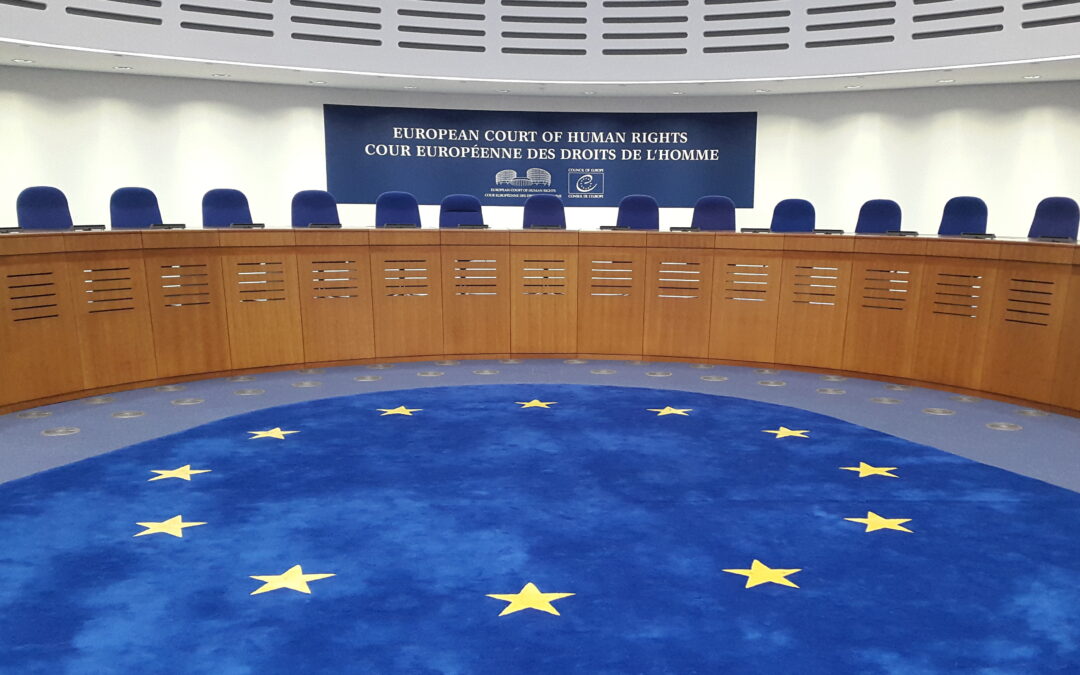
Today, the ICJ, jointly with Human Rights Watch and the Turkey Human Rights Litigation Support Project presented a submission to the Council of Europe’s Committee of Ministers on the Execution of the judgment Kavala v. Turkey by the European Court of Human Rights.
The ICJ, Human Rights Watch and the Turkey Human Rights Litigation Support Project have reported to the Committee of Ministers that new charges against Osman Kavala lack concrete evidence and have been brought in disregard of the ECtHR’s judgment whose execution the Committee is supervising.
The three NGOs have invited the Committee of Ministers to:
- consider adopting the relevant recommendations formulated in their submission of 29 May 2020;
- take further steps to end immediately Mr. Kavala’s ongoing detention, which has now exceeded three years;
- recognise at its 1390th 1-3 December 2020 meeting that the continuing detention of Osman Kavala violates Article 46 of the Convention concerning the binding nature of final judgments of the ECtHR and may trigger Article 46(4) infringement proceedings against Turkey; and
- take the necessary general measures identified in the NGOs submission of 29 May 2020 to implement the ECtHR’s ruling concerning Article 5 and 18 of the Convention in Kavala v. Turkey and its findings in relation to human rights defenders.
In their initial submission dated 29 May 2020, the NGOs underlined that decisions taken to prolong Mr. Kavala’s detention had been guided by political expediency and there had been a concerted political effort by the Turkish authorities to prevent Mr. Kavala’s release. These bases for their action are evident in the sequence of court orders prolonging Mr. Kavala’s detention, the actions of the executive and prosecutors in relation to the judicial procedures against him, and the lack of due consideration of the ECtHR’s findings and objective deliberation as to the legality of any deprivation of liberty. The NGOs made several recommendations to the Committee of Ministers, on the issues of the general and individual measures, to ensure full implementation of the ECtHR’s judgment and Mr. Kavala’s immediate release on the ground that the Court’s judgment clearly applies to his ongoing detention.
In its judgment on Kavala v. Turkey, the EUropean Court of Human Rights, on 10 December 2019, found violations of Article 5(1) (right to liberty and security), Article 5(4) (right to a speedy decision on the lawfulness of detention) and Article 18 (limitation on use of restrictions on rights) of the European Convention on Human Rights taken together with Article 5(1). The Court required the Government of Turkey to take measures to end the detention of human rights defender Osman Kavala and to secure his immediate release. The Court stated that any continuation of Mr. Kavala’s detention would prolong the violations and breach the obligation to abide by the Court’s judgment in accordance with Article 46(1) of the Convention. The judgment became final on 11 May 2020.
Despite the Court’s clear findings and mandatory order, Mr. Kavala remains in detention as of the date of this submission.
Turkey-Kavala_v_TurkeyExecution-JointSubmission2-HRWICJTHRLP-2020-ENG
Nov 2, 2020 | Advocacy, Cases, Legal submissions
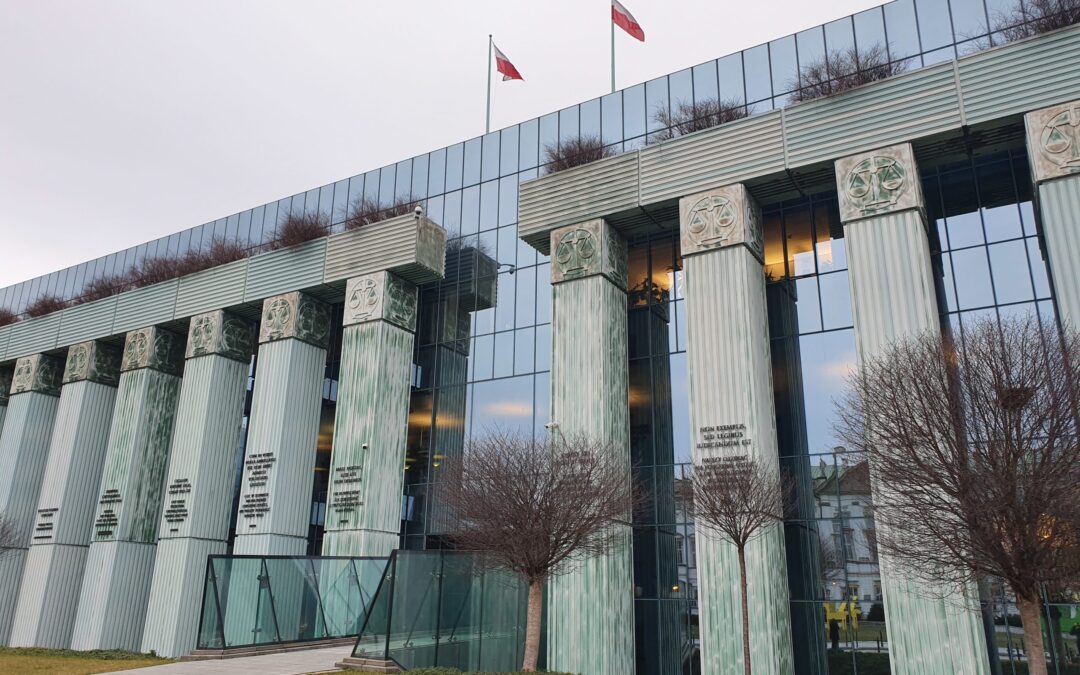
The ICJ submitted today a third party intervention to the European Court of Human Rights in a key case challenging the independence of the Disciplinary and Extraordinary Chambers of Poland’s Supreme Court.
In the case of Reczkowicz and Others v. Poland, the European Court of Human Rights will consider whether the recently established Disciplinary and Extraordinary Chambers of the Supreme Court of Poland may be considered an “independent and impartial tribunal” in order to satisfy the requirements of the right to a fair trial under article 6 of the European Convention on Human Rights (ECHR).
In its third party intervention, the International Commission of Jurists has submitted that a court cannot be considered as independent whenever the body that has appointed its members lacks guarantees of independence from the executive and legislative powers as enshrined in standards of the Council of Europe and the United Nations, including that at least half of its members be judges elected by their peers.
It further concluded that a court composed by judges appointed by a non-independent body or via a non-independent procedure will not be capable of constituting an independent and impartial tribunal under article 6 ECHR.
Poland- ECtHR-Reczkowicz and Others v Poland – TPI – ICJ – 2020 -ENG (download the third party intervention)

Oct 30, 2020 | Advocacy, Non-legal submissions
The Gauteng Township Economic Development Bill aims to promote local economic development in designated townships by creating and facilitating the creation of viable township businesses. The Bill establishes a Development Fund whose economic benefits and incentives are strictly reserved for citizens and permanent residents only.
The Bill would prohibit most non-citizens from large swathes of economic activity.
“This would include documented non-citizens like asylum seekers and refugees most of whom are not eligible for social assistance. It might prevent many non-citizens from making a living and could leave many destitute and homeless,” the ICJ Africa Director Kaajal Ramjathan-Keogh said.
“The Bill might also fuel existing xenophobic sentiment and could result in recurrences of xenophobic violence. Courts in South Africa have repeatedly warned government officials and departments against conduct that risks perpetuating xenophobia.”
If this Bill were to be enacted, South Africa would fall short of its requirements under both national and international law.
The ICJ has thus submitted their comments to the Gauteng Provincial Government, which you can find below.
Watch the animation on this issue
Oct 27, 2020 | Advocacy, Cases, Legal submissions
The ICJ and Amnesty International have presented today a third party intervention before the European Court of Human Rights in the case of the premature dismissal of Judge Waldemar Zurek from his position in the National Judicial Council.
In the case Zurek v. Poland, the ICJ and Amnesty International presented submissions on the scope of application of the right to a fair trial under Article 6.1 of the European Convention on Human Rights (ECHR) in cases relating to the role of an independent judiciary and its members through self-governance mechanisms (such as the National Council of the Judiciary) in light of international standards on judicial councils, judicial appointments, the judicial career and security of tenure; of the Court’s Convention jurisprudence; and of general principles on the rule of law and the role and independence of the judiciary.
They further submitted obervations on the scope of the right to freedom of expression under Article 10 ECHR as applied to judges, including those engaged in the administration of the judiciary.
ECtHR-AmicusBrief-Zurek_v_Poland-Advocacy-Legal-Submission-2020-ENG (download the third party intervention)
Oct 26, 2020 | Advocacy, News
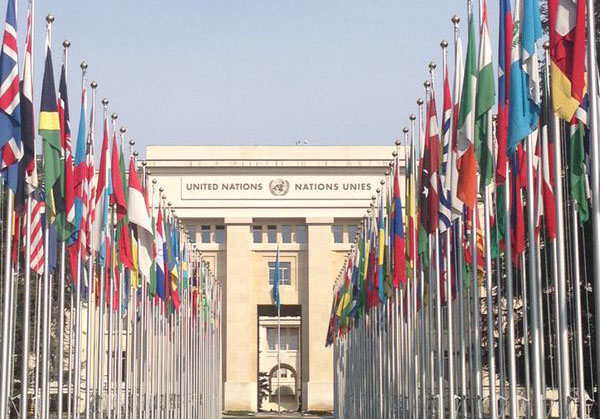
As the sixth session if the Open-Ended Intergovernmental Working Group (OEWG) working on a draft treaty convenes, the ICJ welcomes the Revised Draft treaty and calls on States to work to overcome political obstacles an make substantial progress towards completing its work on this much needed treaty.
The session, which takes place from 26 to 30 October, has before it a second Revised Draft of a Legally Binding Instrument, presented by the Chairmanship of the OEWG. The ICJ welcomes this draft as a very good basis for negotiations, though it considers that certain provisions still require revision and refinement.
The session takes place in the difficult and uncertain backdrop of the COVID-19 pandemic, with its serious impacts on human rights such as the right to health and strains on the capacity of States and society to tackle its consequences.
The ICJ is especially concerned at the adverse impact of the restrictions imposed on civil society participation deriving from the rules adopted by the UN for the holding of meetings, while at the same time understanding that meetings cannot be held in the normal manner particularly given the recent increase of COVID cases in Geneva.
In general and with some exceptions, the Second revised Draft LBI reflects changes in the text, structure and organization of the draft articles that improve its potential to serve as an effective protective instrument, as well as increase its overall coherence. The ICJ considers the second Revised draft as a good starting point for negotiations which states should engage into without further delay.
Universal-ICJ comments on BHR treaty 2-Advocacy-2020-ENG (full statement in PDF)
Oct 13, 2020 | Advocacy, News, Non-legal submissions
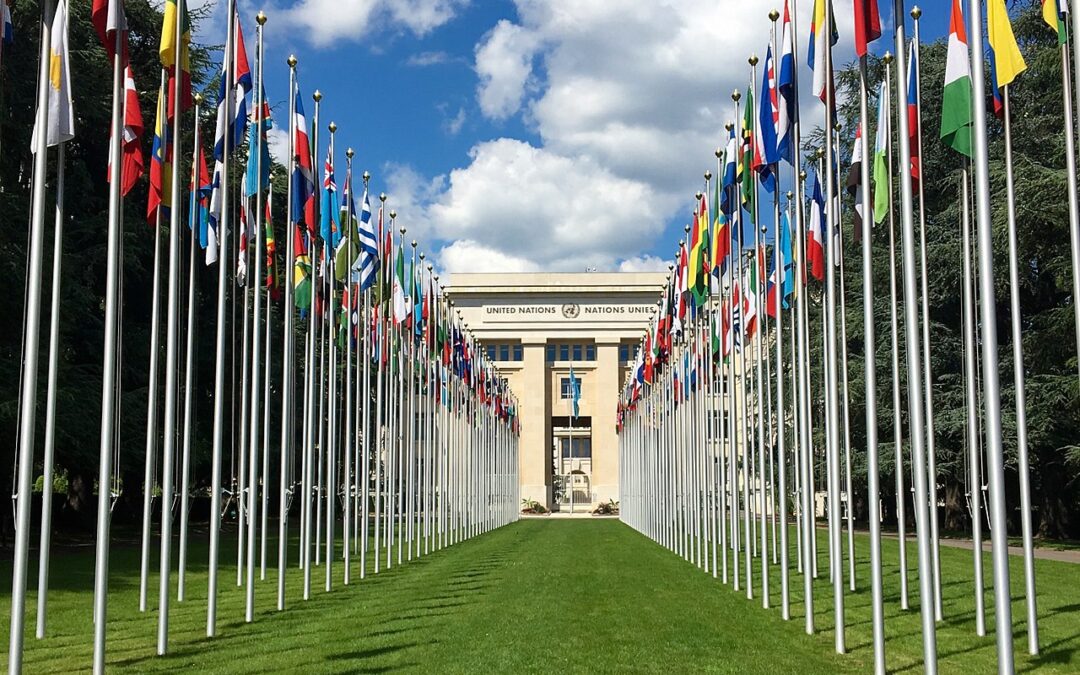
On 12 October 2020, the ICJ made a submission to the Human Rights Council’s Working Group on the Universal Periodic Review in advance of the Human Rights Council’s review of Singapore in May 2021.
In its submission, the ICJ expressed concern about the following issues:
(i) Freedom of expression online;
(ii) The death penalty;
(iii) Corporal punishment; and
(iv) International human rights instruments.
The ICJ further called upon the Human Rights Council and the Working Group on the Universal Periodic Review to recommend that Singapore ensure, in law and in practice, the right to freedom of expression online, the right to life and the absolute prohibition against cruel, inhuman or degrading treatment or punishment; and become a party to core international human rights instruments, including the International Covenant on Economic, Social and Cultural Rights, the International Covenant on Civil and Political Rights, the Convention Against Torture and Other Cruel, Inhuman or Degrading Treatment or Punishment, the International Convention on the Protection of the Rights of All Migrant Workers and Members of Their Families and the International Convention for the Protection of All Persons from Enforced Disappearance, as well as the existing Optional Protocols to some of these treaties.
The submission is available in PDF here.