Sep 14, 2020 | Advocacy, News
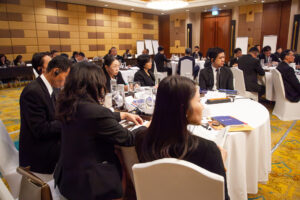
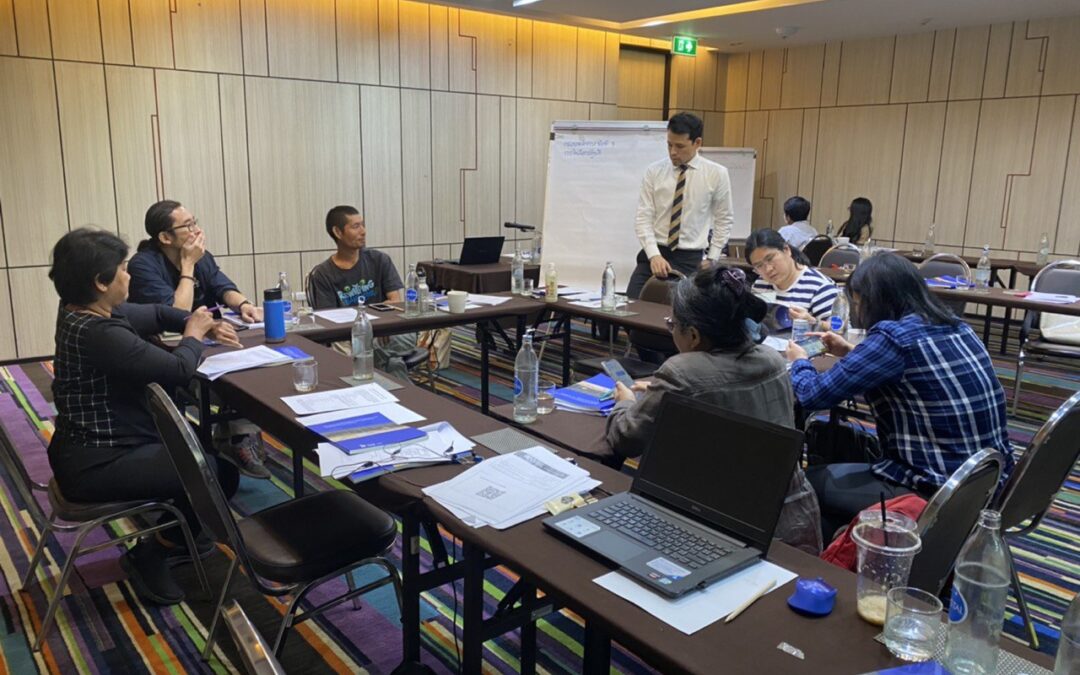
On 13 September 2020 the ICJ hosted a workshop on the impacts on economic, social and cultural rights associated with the development of Special Economic Zones (SEZs) in Thailand. Lawyers, members of civil society organizations and academics from across Thailand attended the Workshop.
The event began with an introduction to ICJ’s report – the Human Rights Consequences of the Eastern Economic Corridor and Special Economic Zones in Thailand – and outlined the deficiencies in the legal and regulatory framework governing economic development in Special Economic Zones and the Eastern Economic Corridor.
During the group discussions, participants were introduced to the international laws and standards that are applicable in the context of Thailand and can be applied to allegations of human rights violations and negative environmental impacts. They were urged to use these standards for their advocacy work.
These included economic, social and cultural rights contained in the International Covenant on Economic, Social and Cultural Rights (ICESCR), to which Thailand is a State party and other internationally recognized principles, including:
- Right to an adequate standard of living and housing under article 11 of the ICESCR, General Comments 4 and 7 of the Committee on Economic Social and Cultural Rights and the Basic Principles and Guidelines on Development-Based Evictions and Displacement – which stress the need to provide adequate legal protection from forced eviction, due process, alternative accommodation, and access to an effective remedy of those that are affected by eviction orders;
- Human rights obligations that are exercised in relation to the environment, such as obligation to facilitate public participation in decision making related to the environment, and duties to protect human rights defenders and to conduct the prior assessment of the possible environmental impacts of proposed projects and policies; and
- Rights to and at work under article 6 to 8 of the ICESCR, General Comment No. 19 and 23 of the Committee on the Economic, Social and Cultural Rights, and several ILO Conventions, particularly regarding rights abuses suffered by migrant, seasonal and subcontracted workers, as well as restrictions on freedom to join and form trade unions.
At the conclusion of the Workshop, participants exchanged views on strategies and collaboration for action to mitigate potential impacts of the Special Economic Zones and the Eastern Economic Corridor and to advance the protection of economic, social and cultural rights.
Further reading
Thailand: laws governing development of Eastern Economic Corridor and Special Economic Zones fail to adequately protect human rights – ICJ report
Thailand: ICJ hosts discussion on human rights consequences of Special Investment Zones
ICJ and Chiang Mai University discuss Special Economic Zones in Myanmar and Thailand

Sep 8, 2020 | Advocacy, News
The ICJ, in collaboration with the Zimbabwe Anti-Corruption Commission (ZACC), today launched a whistleblowing application (tip off) mechanism in Harare.
It is common that people reporting corruption, tipping off and submitting key evidence prefer to stay anonymous, as they may have an often, well-founded, fear of reprisal by the parties involved. In such instances it is imperative for the ZACC to adopt a protective solution that guarantees user anonymity. This tip off mechanism will enable ZACC to receive information and evidence securely while the user of the mechanism remains anonymous. In turn ZACC will be able to use the information received to investigate and prosecute cases of corruption. Additionally, the application will also have a case management dashboard which will aid evaluation of ZACC’s efficiency in handling corruption cases.
Corruption undermines the rule of law by impeding access to justice through diversions of public resources for private gain. As such, the ICJ, through the support by the EU, is working towards increased transparency and integrity in the justice delivery system in order to increase access to justice for all. The whistleblowing application is not undertaken in isolation, as it builds on other initiatives to combat corruption under this programme, which include the Anti-Corruption Campaign, establishment of an anti-corruption court, capacity building, and various research initiatives.
“Corruption remains a key challenge confronting Zimbabwe. If unabated, corruption undermines democracy and the rule of law leading to violations of human rights. Its destructive effect on development disproportionately affects the poor. The participation of the public, in augmenting government efforts in combating corruption is therefore critical. It is our hope that through this awareness programme, ordinary members of the public will be able to recognize corrupt behaviour and feel empowered to take a stand against it. Further, we hope that the mechanism will sustain the momentum against corruption and increase the demand for improved accountability and transparency in various sectors in Zimbabwe thereby contributing to reduction of corruption,” said Blessing Gorejena, ICJ’s Zimbabwe Project Team leader.
Once officially launched, the whistle-blowing mechanism will be available to the public. It will be promoted and encouraged by publicizing stories of successful prosecutions and other actions as a result of information provided by whistle-blowers, as well as reporting on the effective protection of such persons from any form of reprisal or other harm.
The project is facilitated through the support of the European Union.
Contact:
Blessing Gorejena, Senior Legal Adviser and Team Leader of ICJ Zimbabwe Project, t:0772151989, e: blessing.gorejena(a)icj.org
Sep 8, 2020 | Advocacy, News
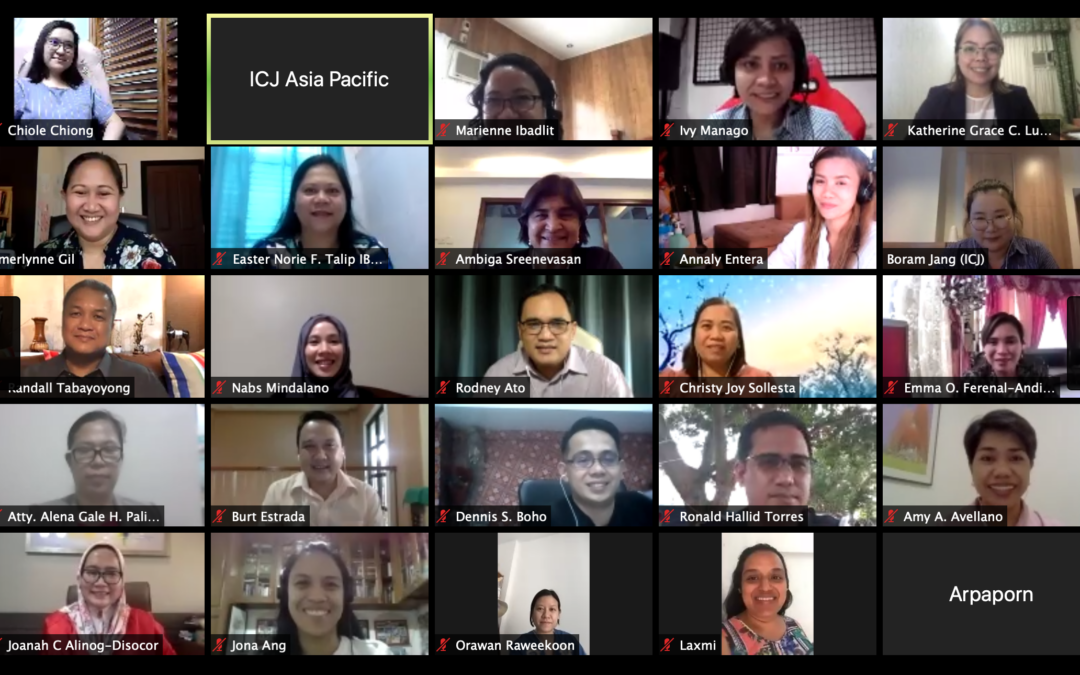
On 29 August and 5 September, the ICJ collaborated with the Integrated Bar of the Philippines (IBP) to hold a webinar series for legal aid providers in the Philippines on eliminating gender discriminatory attitudes and behaviors towards women.
Members of IBP’s legal aid committees from the Eastern and Western Mindanao Regions participated in these webinars, focused on gender stereotypes and discriminatory practices that exist in the legal profession and in the work of legal aid providers who directly engage with women when they seek justice.
Dato Ambiga Sreenevasan, ICJ’s Commissioner from Malaysia, addressed the promotion and protection of women’s human rights in the context of the legal profession: “While conditions for women have improved, there is still work to be done to achieve equality between men and women in the legal profession. At the entry level, things appear to be going well, but we must look also at women’s opportunities throughout their legal career and question why it is the case that some areas are still male-dominated.”
Mikiko Otani, ICJ’s Commissioner from Japan and a member of the UN Committee on the Rights of the Child, spoke about how gender stereotypes and gender discrimination hinder women from accessing justice. “The Bar should be at the forefront of advocating for improvement in legal structures that would help eliminate gender discrimination,” she said.
The Philippines had previously featured as one of the top ten performers in addressing gender disparities, as measured by the World Economic Forum’s Global Gender Gap Index. However, it has recently fallen to rank 16th out of 153 countries. Emerlynne Gil, ICJ Senior International Legal Adviser, acknowledged various measures adopted by the Philippines to implement the Convention on the Elimination of All Forms of Discrimination Against Women (CEDAW), such as the adoption of the Anti-Violence Against Women and Children Act and the Magna Carta for Women. She noted, however, that the Philippines still must do a great deal more.
“The existing culture of impunity and lack of effective remedies for women to access the justice system are just some of the difficult challenges the country faces that prevent it from achieving this goal,” Emerlynne Gil said.
The webinar series also featured a discussion on specific challenges faced by women when accessing justice during the COVID 19 pandemic and in the context of the “drug war” in the Philippines. The lawyers discussed their role and also that of the Bar as an institution to immediately identify and eliminate these gender stereotypes to ensure their clients’ right to access to justice.
Judge Amy Alabado Avellano, a Regional Trial Court judge in the Philippines led this discussion. Attorney Burt Estrada, IBP Executive Vice President, and Attorney Marienne Ibadlit, former IBP Governor for Western Visayas, also held a dialogue with the lawyers on how the IBP as a professional association for lawyers in the Philippines could contribute towards enhancing access to justice for women in the country.
Contact
For questions and clarifications, please contact Ms. Emerlynne Gil, Senior International Legal Adviser, t: +662 619 8477 (ext. 206); e: emerlynne.gil(a)icj.org.

Sep 2, 2020 | Advocacy, Non-legal submissions
The ICJ has made submissions to the Human Rights Committee, today, on Ukraine’s implementation of, and compliance with, the provisions of the International Covenant on Civil and Political Rights.
The ICJ broughtto the Committee’s attention some issues of concern pertaining to Ukraine’s compliance with and implementation of the ICCPR.
This submission highlights a number of concerns relating to the security and independence of lawyers in Ukraine, and their consequences for the protection of certain Covenant rights. In particular, this submission addresses:
- the institutional independence of the legal profession;
- security of lawyers and their right to life;
- restrictions on access to clients and the rights of the defence; and
- security of lawyers and access to justice in uncontrolled territories in Ukraine.
These concerns highlight Ukraine’s lack of compliance with its obligations under the Covenant, including in respect of the right to life under article 6 and the right to a fair trial under article 14, in particular, as well as under other Covenant rights, such as Ukraine’s obligations under articles 2, 7, 9, 10, and 17 of the ICCPR.
Ukraine-ICJ-Submission-CCPR-Advocacy-Non-Legal-Submissions-2020-ENG
Sep 1, 2020 | Advocacy, News
Today the ICJ called on the Organization of American States (OAS) to respect the autonomy and independence of the Inter-American Commission on Human Rights (IACHR) as the body in charge of promoting the observance of human rights in the Americas, including in respect of its core administration functions.
The OAS Secretary-General has declined to endorse the unanimous decision taken in January by the seven-person IACHR to renew the mandate of its Executive Secretary, Paulo Abrão, whose term expired on 15 August.
The Secretary General indicated that his action was motivated by concern at internal complaints that are still to be resolved.
The refusal to renew this mandate, however, must not be made on the basis of pending complaints, which must nonetheless be resolved in a reasonably short period of time, based on the principles of due process for all parties concerned
The ICJ recognizes the importance of processing the staffs’ complaints in a timely manner which respects the due process rights of the parties concerned through an independent and transparent process.
The ICJ recalls that it is essential to ensure the independence and autonomy of the Inter-American Commission, which necessarily includes the functions related to the appointment process of the Executive Secretary.
“The IACHR has played a critical role in the Americas to advance human rights and to protect victims of human rights violations,” said ICJ Secretary General Sam Zarifi.
He also mentioned that “the situation requires an urgent resolution that guarantees respect for the principles of independence and autonomy of the IACHR.”
Aug 31, 2020 | Advocacy, News
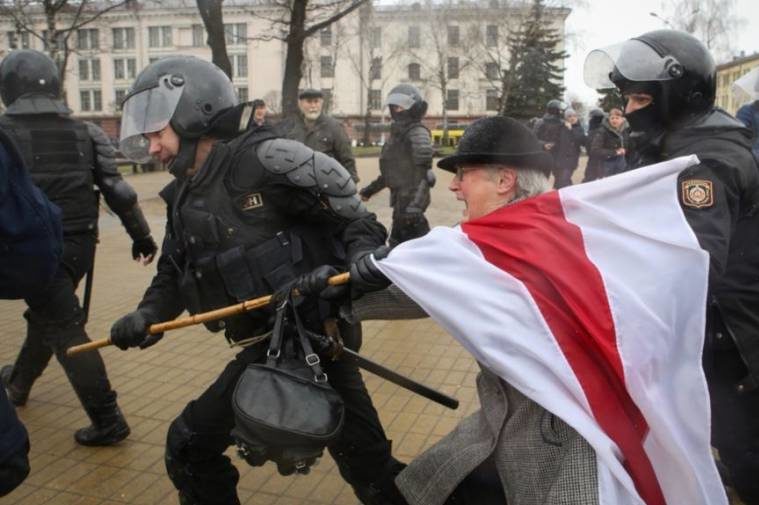
Today, the ICJ called on Belarus to comply with its international human rights law obligations in its response to the protests taking place in the aftermath of the presidential elections and in the treatment of those detained.
This includes immediately releasing persons arbitrarily detained, providing prompt access to lawyers for those still detained, accounting for the fate and whereabouts of missing protestors and promptly and effectively investigating torture and other ill-treatment.
The widespread arbitrary arrests of peaceful protesters, and credible allegations of torture and ill-treatment and enforced disappearances of detainees, are particularly alarming in light of obstacles faced by detainees in accessing lawyers, the ICJ said.
The ICJ recalls that under international human rights law, all persons have the right to peaceful assembly, and any restriction of this right must be provided in law be strictly necessary and proportionate to a specified legitimate purpose. The mass arrest of protesters does not appear to meet these requirements.
Belarus has obligations, including under treaties to which it is party, to respect the right to liberty and refrain from arbitrary arrests or other unwarranted interferences with the freedom of assembly, or freedom of expression, of protesters, protected under international law.
Law enforcement authorities must respect the right to life and the prohibition on torture or other ill-treatment at all times. Allegations of arbitrary killing, enforced disappearances and torture and other ill-treatment must be promptly, thoroughly and independently investigated, and those responsible brought to justice.
Effective remedies must be provided to victims of such serious human rights violations.
The ICJ is concerned about reports of the widespread denial of access to a lawyer and further obstacles that lawyers face while carrying out their professional duties in the current context in Belarus.
Reportedly, lawyers are not provided with access to the case file or further information necessary for the provision of effective legal assistance to their clients. This is of particular concern in light of multiple reports of torture or other ill-treatment of those detained following the election.
The ICJ stresses that the right of access to qualified legal representation is crucial for the protection of the human rights of those arrested in connection with the current political upheaval in Belarus.
The right of access to a lawyer is recognized as an essential element of the right to a fair trial and the right to liberty, protected under the International Covenant on Civil and Political Rights, to which Belarus is a party.
The UN Basic Principles on the Role of Lawyers provide that governments should ensure that lawyers are able to perform all of their professional functions without intimidation, hindrance, harassment or improper interference and should be able to consult with their clients freely and have access to appropriate information, files and documents in their possession or control in sufficient time to provide effective legal assistance to their clients.
It is essential that lawyers and other human rights defenders can carry out protection of human rights of their clients especially in times of emergency.
The ICJ also calls on the Belarus Republic Bar Association to bolster its efforts in protecting its members who provide legal representation in cases related to the ongoing protests.
Background:
The Republic of Belarus ratified the International Covenant on Civil and Political Rights in 1973
Following the presidential elections of 9 August 2020 in Belarus, widespread protests across Belarus took place following the discredited result, which were recognized as neither free nor by the European Union and other observers. Following the initial dispersal of these protests by the authorities, more than 6000 people were arrested and detained, many arbitrarily. There is credible evidence that many of those arrested or detained have been subjected to torture or other ill-treatment and that decisions regarding their arrest and detention have been made by courts temporarily established in detention centres.
While estimates of numbers differ, the whereabouts of at least tens of those who took part in the protest have not been established to date. One of the missing persons, Nikita Krivtsov, was recently found dead in a forest near Minsk.
The reports that defence lawyers were denied access to those arrested include high-profile cases, such as the case of the former presidential candidate Victor Babaryka whose lawyer was not allowed to see his client in the detention centre for more than a week.
According to the Belarusian Republican Bar Association, lawyers face problems with meeting their clients held in the detention centres and access to the case files and further information necessary to carry out their professional duties.