Feb 27, 2020 | Advocacy, News
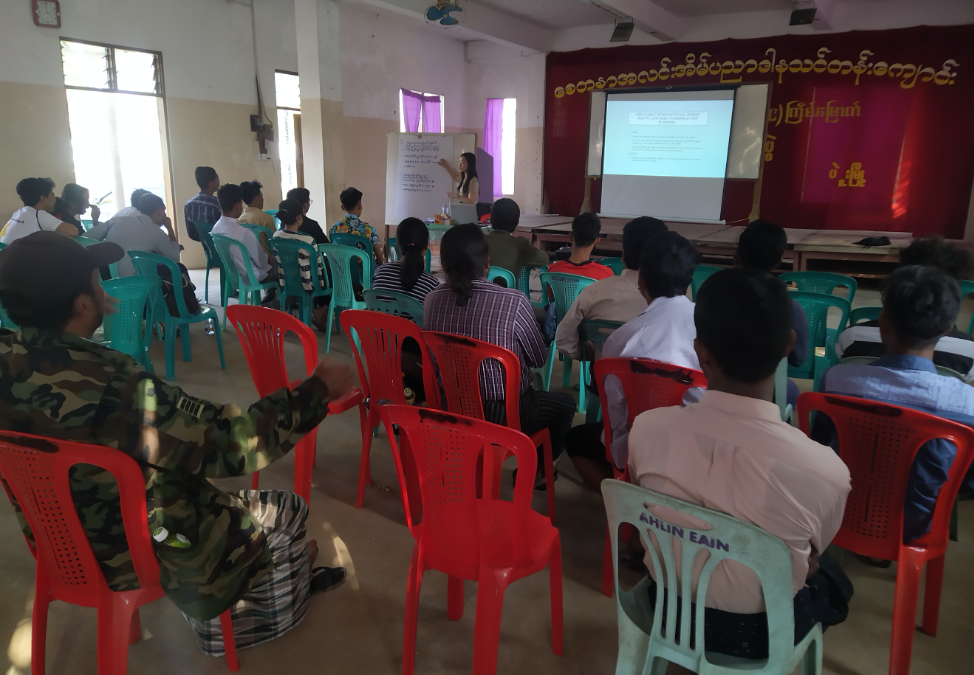
In January and February 2020, the ICJ supported community dialogue events on international and national law and standards relating to freedom of thought, conscience, religion and belief.
The events were organized by the Young Men’s Christian Association (YMCA) for around 50 youths and human rights defenders from Chin State and Bago Region in Myanmar.
The program sought to improve the capacity of local youths and human rights defenders from Chin State and Bago Region to understand how freedom of religion or belief (FoRB) is protected by the international and national legal frameworks and apply this understanding to their activities.
The ICJ’s national legal researcher, Ja Seng Ing, introduced the concept of freedom of religion or belief (FoRB) u, and applicable international standards on FoRB for Myanmar including how FoRB interacts with other human rights such as freedom of expression. She presented an overview of the domestic legal framework on FoRB and highlighted the State’s obligation to implement such laws and policies to respect and protect the equality, non-discrimination and other rights of individuals and to particularly address violations of their rights to FoRB.
The participants raised the need to improve the quality of public discussion on FoRB and related human rights, and shared this experiences in advocating for the protection of FoRB – including the limitation and challenges that they have faced.
The activities are part of the ICJ’s ongoing effort to convene civil society actors and lawyers in Myanmar with a view to advancing FoRB in the country, and builds on the ICJ’s previous work on this theme.
Contact
Ja Seng Ing, ICJ Legal Researcher, e: jaseng.ing(a)icj.org
Related material
Primer on international human rights law and standards on the right to freedom of thought, conscience, religion or belief, January 2019
New report examines right to freedom of religion or belief in Malaysia, March 2019
Feb 25, 2020 | Advocacy, Non-legal submissions
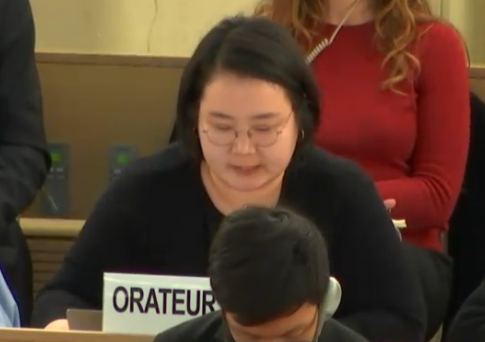
The ICJ today spoke at the UN Human Rights Council in Geneva, highlighting issues of access to justice for women in the context of religious and customary law.
The statement, delivered during a High Level Panel discussion commemorating the twenty-fifth anniversary of the Beijing Declaration and Platform for Action adopted at the Fourth World Conference on Women, read as follows:
“The International Commission of Jurists (ICJ) welcomes this opportunity to celebrate the progress made in the implementation of the Beijing Declaration and Platform for Action 25 years after its adoption and to address the remaining challenges to gender equality and women’s empowerment.
We have indeed seen an expansion in many countries of women’s legal entitlements and protection of their rights. However, there is also a growing trend to push these advances back and violate women’s human rights, invoking as justification religion, tradition, culture, and custom. This came out clearly when ICJ, UN Women and the OHCHR hosted a consultation for the UN Special Rapporteur on freedom of religion or belief last year, where women human rights defenders from all over Asia raised concerns about the resurgence of intersecting forms of discrimination by religion and culture based on patriarchal attitudes. They specifically narrated how women and girls were denied their sexual and reproductive rights.
Recalling the vision of the Beijing Declaration and Platform for Action, we reiterate the obligation of States not to invoke, “any custom, tradition or religious consideration”, to avoid their obligations to combat gender-based violence and discrimination against women. The Human Rights Committee also provides that “State parties should ensure that traditional, historical, religious or cultural attitudes are not used to justify violations of women’s right to equality before the law and to equal enjoyment of [ICCPR] rights[1].”
We therefore urge the Council to foster an open and inclusive discourse with Member States on the regressive interpretations of religious and customary laws that discriminate against women, and to acknowledge the voices and the diversity of women in that process. We urge States to ensure the full implementation of the human rights of women as an inalienable part of all fundamental freedoms.”
[1] Para 5, CCPR/C/21/Rev.1/Add.10
Feb 17, 2020 | Advocacy, Non-legal submissions
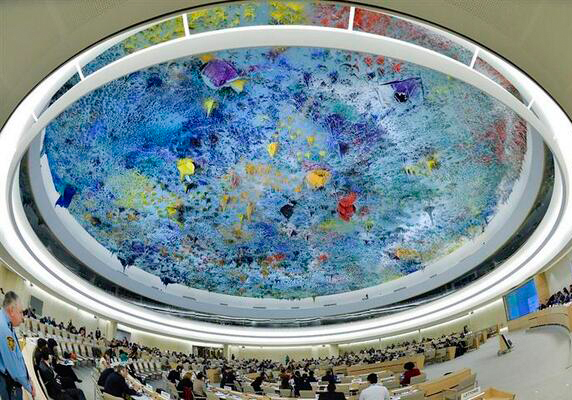
The ICJ has urged expert members of the UN Human Rights Council Advisory Committee to focus on the most direct and acute human rights issues, including a human-rights based approach to victims of terrorism, as the Committee prepares a report on “effects of terrorism on all human rights”.
In an oral statement to the Advisory Committee’s ongoing 24th session in Geneva, the ICJ expressed grave concern about the content of the latest draft of the report, and the potential negative consequences for human rights protection of the report in its current form, and urged the Advisory Committee:
- To substantially revise and refocus the report to include a clear recommendation to the Council that the exclusive focus of the Council’s work should remain on the most acute issues from a human rights perspective: violations in countering terrorism and a human-rights based approach to victims of terrorism, along the lines already established by successive holders of the Special Rapporteur mandate.
- To recommend against the Council entering into more diffuse macroeconomic issues such as diverting foreign direct investment, reducing capital inflows, destroying infrastructure, limiting foreign trade, disturbing financial markets, and negatively affecting certain economic sectors and impeding economic growth.
- To avoid making recommendations that simply repeat already-existing obligations or commitments to counter terrorism under various UN or other instruments.
- To affirm that the existing and longstanding normative and institutional framework on counter-terrorism and human rights is already sufficient to address relevant impacts of terrorism from a human rights perspective.
Prior to the session, the ICJ together with other NGOs had filed a written statement alerting the Advisory Committee to the highly sensitive context into which its report would be delivered at the Council, and urging the Committee to guard against its work being instrumentalized by Egypt and other States who seek to distort, distract and divert the limited resources and attention of the Council and its Special Rapporteur, away from the longstanding focus, achieved by years of Mexican leadership with consensus support of the Council, on human rights in countering terrorism, and the human rights of victims of terrorism.
The Advisory Committee’s report was requested by a 2017 resolution led by Egypt, which was not a matter of consensus, and is being drafted by a former Ambassador of Egypt who is now a member of the Committee.
Earlier at the session, several States including the EU, Switzerland, and Mexico had expressed concern or otherwise questioned particular aspects of the current draft of the report, and urged the Committee to substantially review and revise the draft. Egypt, China, Russia and several other States expressed satisfaction with the draft and urged the Committee to quickly finalize the report and send it to the Council.
The Advisory Committee report is due to be presented to and considered at the September 2020 session of the Human Rights Council, although some Committee members expressed the wish to finalize the report at the current Committee session.
Feb 10, 2020 | Advocacy, News
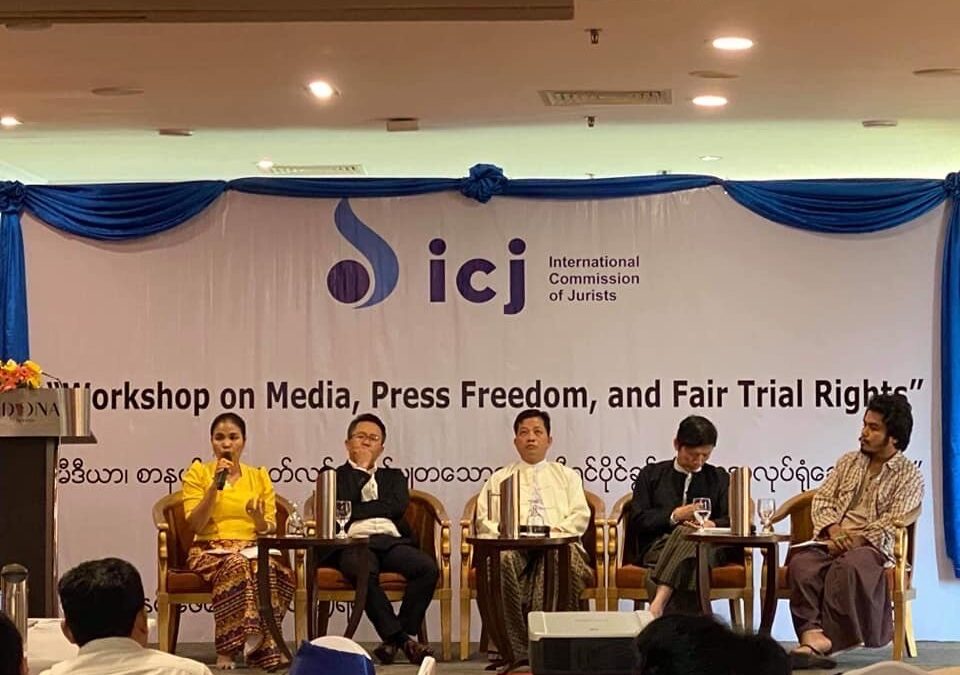
The ICJ conducted a workshop for journalists on fair trial rights and due process on 9 February 2020 in Yangon to help them respond to situations of arrest and prosecution
Some 25 journalists across Myanmar participated in the event, including media representatives from ethnic communities in Shan and Kachin states. Members of nationwide journalism networks, the Myanmar Media Lawyers Network, and the Myanmar Press Council also participated.
The workshop apprised journalists of the guarantees and rights of persons arrested and prosecuted under international human rights law, and the limited protections available under Myanmar law in comparison. It provided a space for participants to collectively identify gaps in journalistic protection. It also intended to foster greater collaboration between journalists and lawyers in safeguarding a free press in Myanmar.
The workshop opened with remarks from Linda van der Horst, head of the political section of the Embassy of the Kingdom of the Netherlands in Myanmar, and Ross Clarke, Team Leader at the ICJ. Both stressed the role of the media in ensuring a robust democracy that adheres to the rule of law, especially in light of the upcoming 2020 national elections. Linda Van der Horst noted that the workshop could also help journalists more deeply understand legal concepts useful for their reporting.
ICJ Associate Legal Adviser Jenny Domino addressed the rights of arrested persons and fair trial guarantees in criminal proceedings under international law. She highlighted the unlawfulness of arresting a journalist as punishment for his work in ensuring that individuals receive information in a free and democratic society. In a comparative context, she discussed the various writs available under Philippine law to protect journalists from unlawful arrests, extralegal killings and enforced disappearances.
ICJ Legal Adviser Hnin Win Aung then discussed Myanmar criminal procedure and the pre-trial rights of criminal defendants. She introduced the writ of habeas corpus remedy under the 2014 Law on the Application for Writs for contesting arbitrary detention. She explained the limitations of this remedy and the practical challenges of litigating in the Myanmar courts.
The presentations were followed by a panel discussion on fair trial rights challenges in Myanmar. The panel was composed of U Myint Kyaw of the Myanmar Press Council, U Brang Mai of Myitkyina Journal, U Myo Aung of Dawei Watch and U Than Zaw Aung of Myanmar Media Lawyers’ Network. The speakers agreed that there is no equality before the law and pushed for greater advocacy on judicial independence and impartiality.
To conclude the workshop, the participants shared their thoughts on how lawyers and the ICJ could help local media moving forward. The participants suggested a human rights analysis of how fair trial rights are undermined in practice by various actors in Myanmar’s criminal justice system. They also expressed their interest to work more closely with lawyers towards better reporting of current events.
The workshop marks the ICJ’s effort to support journalists and empower persons from minority groups towards greater participation in Myanmar’s democratic transition.
Contact
Jenny Domino, ICJ Associate Legal Adviser, e: jenny.domino(a)icj.org
Hnin Win Aung, ICJ Legal Adviser, e: hninwin.aung(a)icj.org
Related material
Strategic Litigation Handbook for Myanmar
Briefing Paper, Citizenship Law and Human Rights in Myanmar
Event, ICJ hosts workshop with civil society on freedom of religion or belief
Feb 6, 2020 | Advocacy, News, Non-legal submissions
The ICJ has made a submission to the UN Human Rights Committee in advance of its forthcoming examination of Tunisia’s sixth periodic report under the International Covenant on Civil and Political Rights (ICCPR).
In its submission, the ICJ highlights a number of ongoing concerns with respect to the country’s implementation of and compliance with the provisions of the ICCPR, including in relation to:
- Tunisian authorities’ implementation of the transitional justice law, particularly on issues pertaining to criminal accountability for gross human rights violations;
- Judicial independence and accountability, particularly on issues pertaining to the development of a Judicial Code of Ethics, and
- Tunisia’s failure to establish a Constitutional Court.
The submission is relevant for the Committee’s evaluation of Tunisia’s implementation of the State’s obligations and related Covenant rights under articles 2, 3, 6, 7, 9, 14, 15, 16, 18, 19, 21, 22 and 26 of the ICCPR.
The Human Rights Committee will examine Tunisia’s sixth periodic report during its 128th session, which will be held in Geneva from 2 March to 27 March 2020.
Tunisia submitted its sixth periodic report to the Committee in June 2019 according to the approved simplified reporting procedure and in response to the list of issues identified by the UN Human Rights Committee in April 2018. Among these issues, the Committee requested Tunisia to provide information in relation to: the Constitutional and legal framework within which the Covenant is implemented; transitional justice; and the independence and impartiality of the judiciary.
Download
Tunisia-ICJ-Submission-UNHRC-Advocacy-Non-Legal-Submissions-2020-ENG (full submission, in PDF)
Feb 5, 2020 | Advocacy, News, Open letters
ICJ Commissioners and Honorary Members today denounced the rapidly escalating rule of law crisis in Poland, after a new law was passed that would result in harassment of judges upholding the independence of the judiciary.
A group of 44 ICJ Commissioners and Honorary Members, including senior judges, lawyers and legal scholars from around the world said in their statement “it is clear that the separation of powers, the independence of the judiciary, and the capacity of Polish judges to uphold the rule of law are now severely compromised. Judges’ freedom of expression, association and assembly are under immediate threat.”
The statement
The International Commission of Jurists (ICJ), its Centre for the Independence of Judges and Lawyers (CIJL) and the undersigned Commissioners and Honorary Members of the ICJ are alarmed at the rapidly escalating rule of law crisis in Poland.
It is clear that the separation of powers, the independence of the judiciary, and the capacity of Polish judges to uphold the rule of law are now severely compromised. Judges’ freedom of expression, association and assembly are under immediate threat.
The passing by the Sejm on 23 January of the amendments to the laws on the judiciary, and their signing into law on 4 February, means that judges will be prohibited from questioning the legitimacy or institutional independence of any Polish court, even where its members have been appointed through a politically controlled process, in violation of EU and international law. Judges will face disciplinary action for denying the validity of any judicial appointment.
This law is an attempt to prevent any Polish court from upholding the independence of the judiciary, in the face of repeated legislative and government attacks on judicial independence in recent years.
This is directly contrary to the obligations of judges under the EU treaties to apply EU law, and would therefore lead to violations of Poland’s EU law obligations. It would also lead to violations of Poland’s obligations under international human rights law, since it would require judges to act contrary to their duty to uphold the right to a fair hearing before an independent and impartial tribunal.
As the Venice Commission noted in its recent opinion on the amendments, they are clearly “designed to have a nullifying effect” on recent judgments and resolutions of the Court of Justice of the EU and the Polish Supreme Court, which have called into question the validity of recent judicial appointments. As such, they do severe damage to the rule of law in Poland.
These developments follow recent legislation which has politicised the National Council of the Judiciary (NCJ) and imposed executive control of the appointment process for judges of the Supreme Court, court presidents and other judges. A powerful new Extraordinary Chamber as well as a Disciplinary Chamber of the Supreme Court, appointed under this new system, has further entrenched political control of the judiciary.
The ICJ, its undersigned Commissioners and Honorary Members, applaud the continued resolute defence of the rule of law by sections of the Polish judiciary. This has been evident in the resolution of the Supreme Court (Civil, Criminal, Labour and Social Security Divisions) of 23 January which found that recent judicial appointments meant that some Polish courts were not sufficiently independent to be legitimately constituted.
We deplore the response by President Adrzej Duda in which he suggested that judges opposing the judicial reforms on the judiciary acted out of improper self-interest.
The undersigned ICJ Commissioners and Honorary Members affirm their solidarity with Polish judges, in particular those who are currently facing abusive disciplinary or criminal proceedings for carrying out their judicial functions in accordance with the principle of judicial independence, or for exercising their freedom of expression, association or assembly as a means to defend the rule of law.
We recall that international human rights law and international standards on the judiciary require all branches of government to respect the independence of the judiciary. Furthermore, they recognise that judges have rights to freedom of expression and association and that they have a particularly important role in contributing to discussions on issues of the functioning of the judicial system and the rule of law, especially in defending the independence of the judiciary.
We call on the international community to respond to the Polish rule of law crisis in a manner appropriate to the gravity of the situation, before the damage to the Polish legal system becomes further entrenched.
In particular, we call on the European Union to urgently advance proceedings concerning Poland under Article 7 TEU, in light of the clear breach of EU law and EU fundamental values entailed by the new law, in conjunction with previous reforms, and by the government’s open defiance of decisions of the Court of Justice of the EU and the Polish Supreme Court.
Poland-Commissioners-Statement-Advocacy-Open-Letter-2020-ENG, (full text with all signatories, PDF)