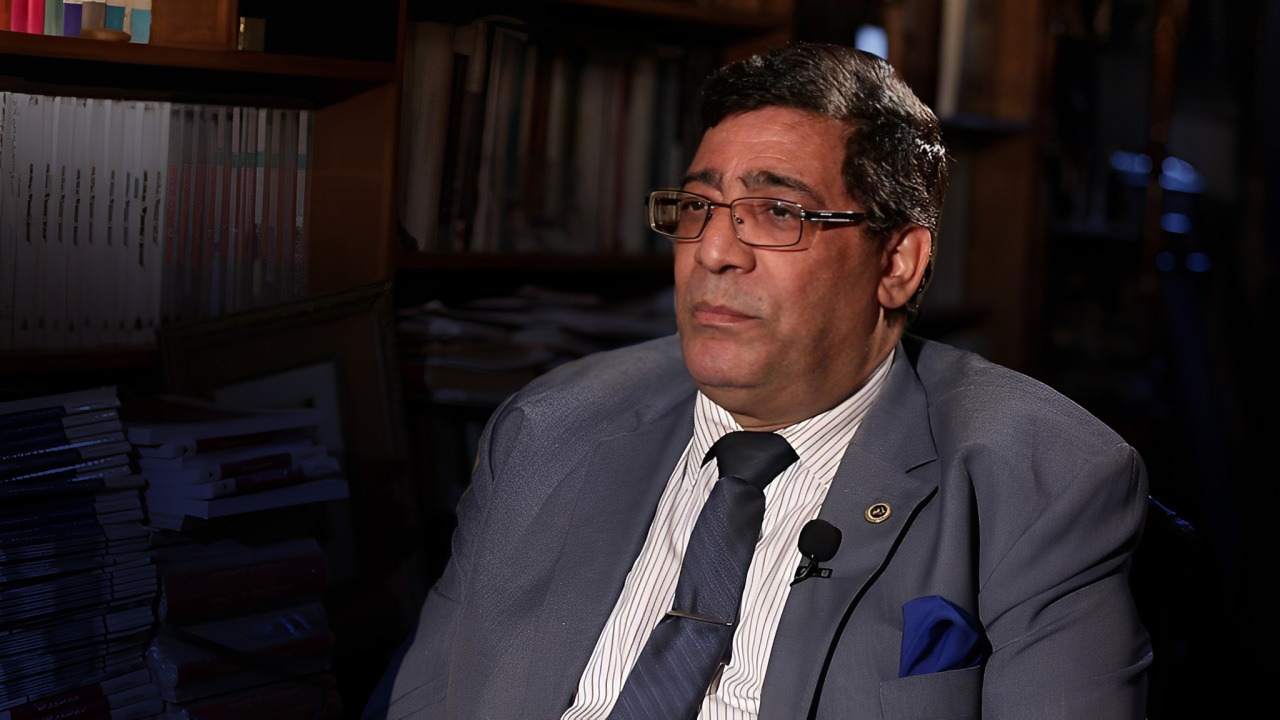
The UN Working Group on Arbitrary Detention (WGAD) concluded that Egypt’s 19-month detention of political economist, researcher and author, Dr Abdel Khaleq Farouq, is arbitrary and violates his rights to liberty, to freedom of opinion and expression, to a fair trial and to non-discrimination. Adopting its Opinion No. 19/2026 on 29 March 2026 – following a joint communication by the International Commission of Jurists (ICJ), the Egyptian Commission for Rights and Freedoms (ECRF) and the Committee for Justice (CFJ) – the WGAD called on Egypt to immediately release Dr Farouq and to accord him an enforceable right to compensation and to provide him with other reparation measures.
.هذا البيان الصحفي متوفر باللغة العربية أيضاً
“The Working Group’s opinion confirms that Egypt continues to arbitrarily detain Dr Farouq in retaliation for his legitimate exercise of his right to freedom of expression,” said Saïd Benarbia, ICJ Middle East and North Africa Programme Director. “The Egyptian authorities must immediately release Dr Farouq and provide him with full reparations.”
On 18 October 2024, Dr Farouq published a series of articles on Facebook criticizing the Egyptian government’s economic policies and the Egyptian President. Two days later, plain-clothed National Security Agency (NSA) officers raided Dr Farouq’s home, arrested him, and seized his manuscripts and digital devices, before taking him to an undisclosed location. Subsequently, Dr Farouq was brought before the Supreme State Security Prosecution (SSSP) in Cairo and charged with “joining a terrorist organisation” and “spreading fake news” before being referred to trial before the Misdemeanour Court of El Shorouk, Cairo.
On 4 October 2025, after the Court failed to pronounce its verdict publicly, in violation of international human rights law, Dr Farouq’s lawyers learned that their client had been convicted of “spreading false news inside and outside of Egypt”, under article 102 bis of the Criminal Code, and had been sentenced to five years’ imprisonment.
On 25 December 2025, the Court of Appeal upheld his conviction and sentence. A further appeal before the Court of Cassation remains pending.
The criminal proceedings against Dr Farouq were marred with numerous serious violations of his right to a fair trial.
In light of the above, the WGAD found Dr Farouq’s detention to be arbitrary on all grounds submitted by the three organizations. With respect to this, the WGAD concluded that his detention was arbitrary for the following reasons:
- Dr Farouq’s deprivation of liberty lacked a sufficient legal basis;
- Dr Farouq’s detention resulted solely from his legitimate exercise of his right to freedom of opinion and expression as a political economist;
- All stages of the criminal proceedings against Dr Farouq were marred with violations of his right to a fair trial;
- Dr Farouq’s arrest and detention were based on discrimination resulting from Dr Farouq’s political opinion.
In its opinion’s concluding remarks, the WGAD situated Dr Farouq’s case within the context of a series of its recently adopted opinions concerning arbitrary detention in Egypt. In doing so, it expressed concern, in particular, that these cases may point to a “widespread or systematic practice of arbitrary detention in Egypt, including the unlawful practice of rotation, whereby release is ordered but never effected and new charges are brought against the person concerned”. With respect to this, the Working Group underscored Egypt’s “obligation not to engage in acts that could constitute crimes against humanity, and to prevent and punish them if they are committed”.
“Dr Abdel Khaleq Farouq’s case reflects Egypt’s continuing use of arbitrary detention and politically motivated prosecutions to silence peaceful criticism. WGAD’s warning that such cases may indicate a widespread or systematic practice of arbitrary detention, including through the abusive practice of case ‘rotation’, potentially amounting to a crime against humanity, is extremely serious and underscores the deepening rule of law and human rights crisis in Egypt,” said Ahmed Mefreh, Executive Director of Committee for Justice.
The WGAD also noted that the conditions of Dr Farouq’s detention – including his “near-total isolation, denial of medication, denial of sunlight and exercise, and the heart attacks” he suffered while in custody – gave rise to concern that he was ill-treated, which, cumulatively, in turn, impaired his capacity to participate meaningfully in his own defence.
The ICJ, the ECRF and the CFJ call on the Egyptian authorities to implement the WGAD’s opinion in full, including by:
- Releasing Dr Farouq immediately and unconditionally;
- Providing him access to adequate medical care;
- Undertaking an impartial, independent and effective investigation into the violations of Dr Farouq’s human rights and taking appropriate measures against those responsible for these violations;
- According Dr Farouq an enforceable right to compensation and providing him with other reparation measures;
- Urgently reforming the Anti-Terrorism Law of 2015 and certain Penal Code provisions, and putting an end to the practice of authorizing pre-trial detention in violation of article 9(3) International Covenant on Civil and Political Rights (ICCPR), which requires that the judicial authority authorizing such a detention be independent; and
- Ensuring that Dr Farouq is not subjected to further case rotation in an effort to arbitrarily extend his detention.
Background
With respect to its findings, the WGAD held that Dr Farouq’s deprivation of liberty lacked a sufficient legal basis due to:
- Egypt’s failure to provide an arrest warrant and the reasons for arrest at the time of arrest;
- Egypt’s use of an unofficial place of detention to detain Dr Farouq overnight;
- Egypt’s failure to ensure that Dr Farouq be brought before an independent judge both promptly after arrest and subsequently to review the legality of his detention. The working Group reiterated its previous finding against Egypt that the SSSP, a body that simultaneously acts as prosecutor and judicial reviewer of detention, cannot be deemed to be independent for the purposes of exercising “judicial power”;
- Egypt’s failure to provide individualized assessments of the necessity and proportionality of extending Dr Farouq’s pre-trial detention; and
- Egypt’s detention of Dr Farouq pursuant to sweeping and undefined provisions of the Penal Code and Anti-Terrorism Law.
Furthermore, the WGAD also found the following:
- Dr Farouq’s political and economic articles attracted the highest level of protection under article 19 ICCPR, guaranteeing the right to freedom of opinion and expression;
- Egypt failed to respect international norms relating to the right to a fair trial at all stages of the criminal proceedings against Dr Farouq, including by denying his counsel access to the case file and the opportunity to make submissions during trial, and by failing to publicly pronounce the verdict against Dr Farouq; and
- Egypt’s arrest and detention of Dr Farouq were based on discrimination resulting from Dr Farouq’s political opinion, reflecting a broader and well-documented pattern of persecution of academics, journalists, writers and political opponents in Egypt.
Contact
Saïd Benarbia, Director, ICJ Middle East and North Africa Programme; t: +41 22 979 3800, e: said.benarbia@icj.org
Nour Al Hajj, Communications & Advocacy Officer, ICJ Middle East and North Africa Programme; e: nour.alhajj@icj.org
Committee for Justice (CFJ), Media Team; +41 22 940 35 38; media@cfjustice.org
Egyptian Commission for Rights and Freedoms (ECRF), Mohamed Lotfy, Founder & Executive Director; media@rights-freedoms.org