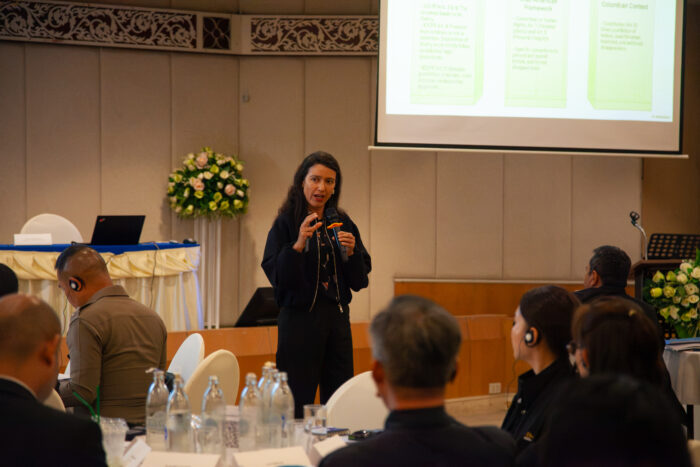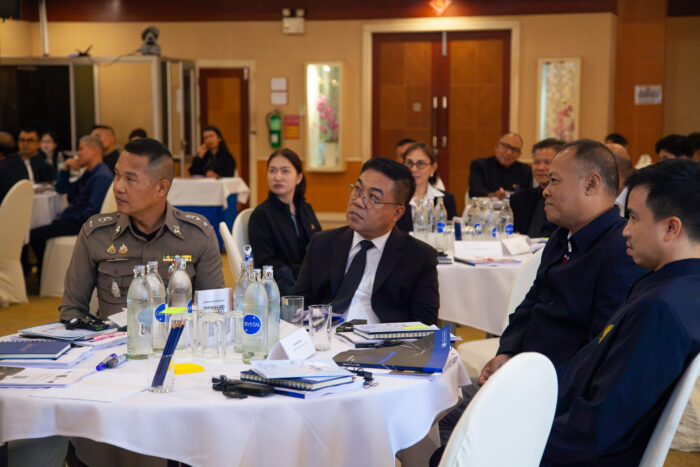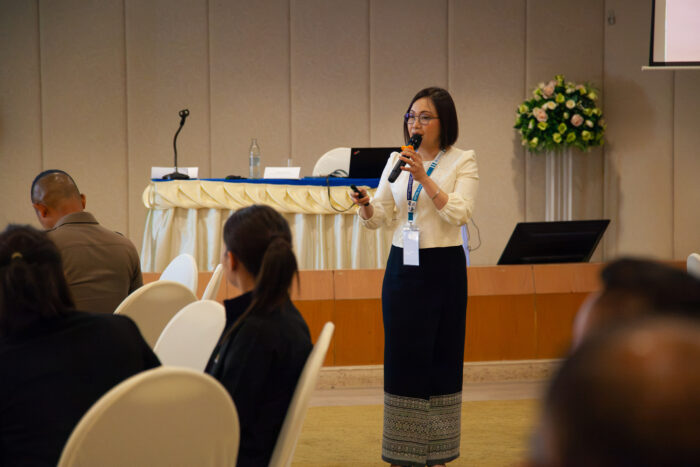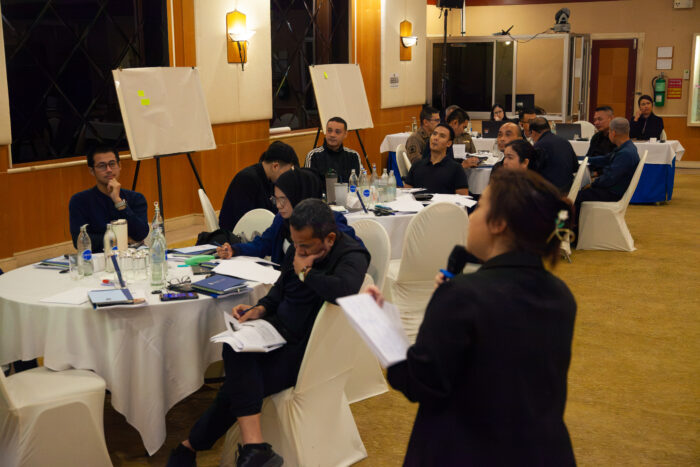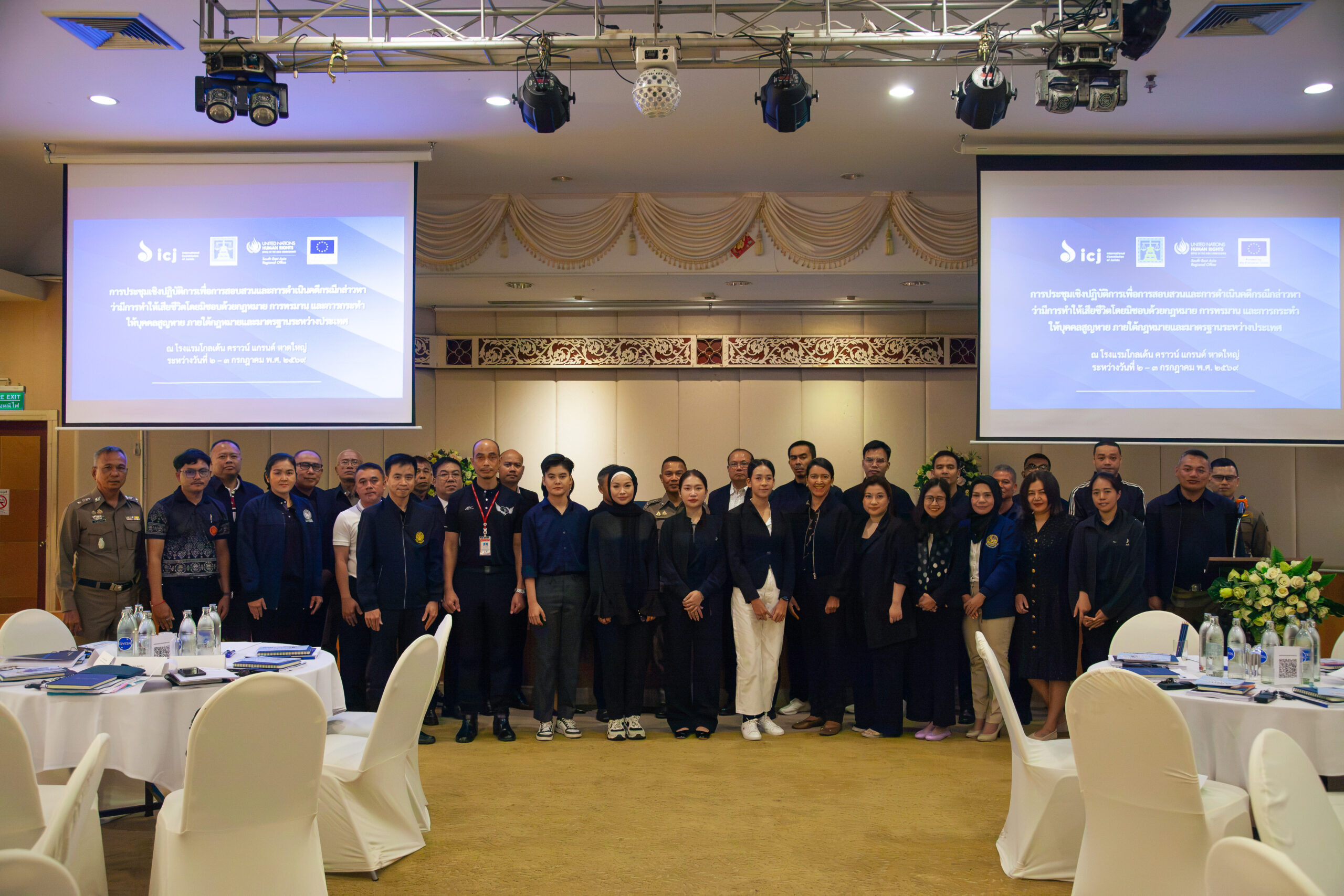
On 2–3 July 2026, the International Commission of Jurists (ICJ) co-convened a workshop in Hat Yai, Songkhla Province on the investigation and prosecution of alleged unlawful killings, torture and enforced disappearance, applying international law and standards. Some thirty-nine persons attended, including public prosecutors and investigators, administrative officials, forensic practitioners, prison officers, national human rights officers, internal security command officers, and academics.
The workshop was jointly organized together with the Rights and Liberties Protection Department of the Ministry of Justice, and the Office of the UN High Commissioner for Human Rights (OHCHR) Regional Office for South-East Asia, with the support of the European Union Delegation to Thailand.
The workshop focused on strengthening the practical application of Thailand’s Prevention and Suppression of Torture and Enforced Disappearance Act B.E. 2565 (2022) (the Act), which incorporates into Thai law the provisions of the Convention against Torture and the International Convention for the Protection of All Persons from Enforced Disappearance – to both of which Thailand is a party. Held in the South, the workshop gave particular attention to the challenges of investigating and documenting these serious crimes in the conflict-affected southern border provinces, where many allegations of torture and ill-treatment have been made by detainees held under security-related law in force in the region.
Participants, facilitated by speaker Nithiwadee Phromaat of the Ministry of Justice, examined the key provisions of the Act, including the definition of “State official”, the distinct offences of torture and of cruel, inhuman or degrading treatment, the elements of enforced disappearance, and the principle of command responsibility. Participants considered that a deprivation of liberty of a few hours may amount to enforced disappearance where it is undisclosed, unacknowledged and unrecorded.
The workshop considered the preventive and procedural safeguards built into the Act, in particular the requirement of continuous audio-visual recording from the moment of arrest, the obligation to notify both the public prosecutor and the administrative authority of a detention, and the mandatory reporting and review of all deaths in custody. Participants discussed how an “invitation” to accompany officials may constitute deprivation of liberty where the person has no meaningful choice but to comply, thereby triggering the implementation of prevention measures.
A significant part of the workshop was devoted to international standards on the investigation of potentially unlawful deaths and torture. Sanhawan Srisod of the ICJ explained the Minnesota Protocol, concerning the investigation of potentially unlawful death and enforced disappearance, and the Istanbul Protocol, the leading set of standards on the investigation and documentation of torture and ill-treatment, both of which have so far rarely been applied in Thai proceedings. Participants examined the obligations to conduct a prompt, thorough, effective, independent, impartial and transparent investigation, to include the participation of the families of victims and survivors, and to make available forms of reparation extending beyond monetary compensation.
Forensic pathologist Dr Panjai Vohandee, Director of the Forensic Science Services Division, Central Institute of Forensic Science, addressed the medical and forensic dimensions of investigation, including autopsy standards, the documentation of injuries, and the identification of remains. She stressed that many torture techniques are specifically designed to leave no marks, and that the absence of physical evidence must not be interpreted as indicating that torture did not occur. Speakers emphasized the value of psychological evidence, which often persists far longer than physical evidence and can be decisive where no physical traces remain.
The workshop also drew on the experience of Carolina Villadiego, Assistant Judge of Colombia’s Special Jurisdiction for Peace (JEP), who shared lessons from Colombia’s investigation and prosecution of torture, enforced disappearance and extrajudicial killings arising from its internal armed conflict. She described the JEP’s macro-criminal, pattern-based approach, and explained how contextual and testimonial evidence can sustain investigations and convictions even where forensic evidence is weak or absent. She also discussed the persistent gap between what security forces are trained to do and what the law prohibits, the tendency of perpetrators to associate torture only with its most extreme forms, and the operational safeguards drawn from the Méndez Principles on effective interviewing, which serve to prevent both torture and enforced disappearance.
Discussion throughout returned to the continuing nature of enforced disappearance, whereby the crime continues until the fate and whereabouts of the disappeared person are established. This means that the duty to investigate and search persists regardless of how much time has passed, and that cases involving disappearances that occurred prior to the Act’s enactment do not fall foul of the principle of non-retroactivity.
Background
The workshop is part of the ICJ’s broader efforts to advance the domestic implementation of international standards on forensic investigations. Since 2017, the ICJ has conducted multiple national and regional-level workshops in Thailand, engaging justice sector actors, defence lawyers, forensic doctors and civil society representatives.
Presenters at the workshop included:
- Carolina Villadiego, Assistant Judge, Special Jurisdiction for Peace (JEP), Colombia
- Cynthia Veliko, Regional Representative, South-East Asia Office of the UN High Commissioner for Human Rights
- Duangdao Kiatpisansakun, Deputy Director-General, Rights and Liberties Protection Department, Ministry of Justice
- Mandira Sharma, Asia-Pacific Regional Director, ICJ
- Nithiwadee Phromaat, Head of the Torture Prevention and Suppression System Development Division, Rights and Liberties Protection Department, Ministry of Justice
- Panjai Vohandee, Director of the Forensic Science Services Division, Central Institute of Forensic Science, Ministry of Justice
- Sanhawan Srisod, Senior Legal Adviser, ICJ
Further reading
Thailand: launch of the revised Minnesota Protocol
The investigation and prosecution of potentially unlawful death: ICJ Practitioners’ Guide no. 14
Contacts
Sanhawan Srisod, Senior Legal Adviser, Legal and Policy Office, e: sanhawan.srisod@icj.org
Saovanee Kaewjullakarn, Associate Legal Adviser, ICJ Asia and the Pacific Programme, e: saovanee.kaewjullakarn@icj.org