Philippines: ICJ joins NGOs joint statement of concern for systematic human rights violation and impunity

Philippines: ICJ joins NGOs joint statement of concern for systematic human rights violation and impunity

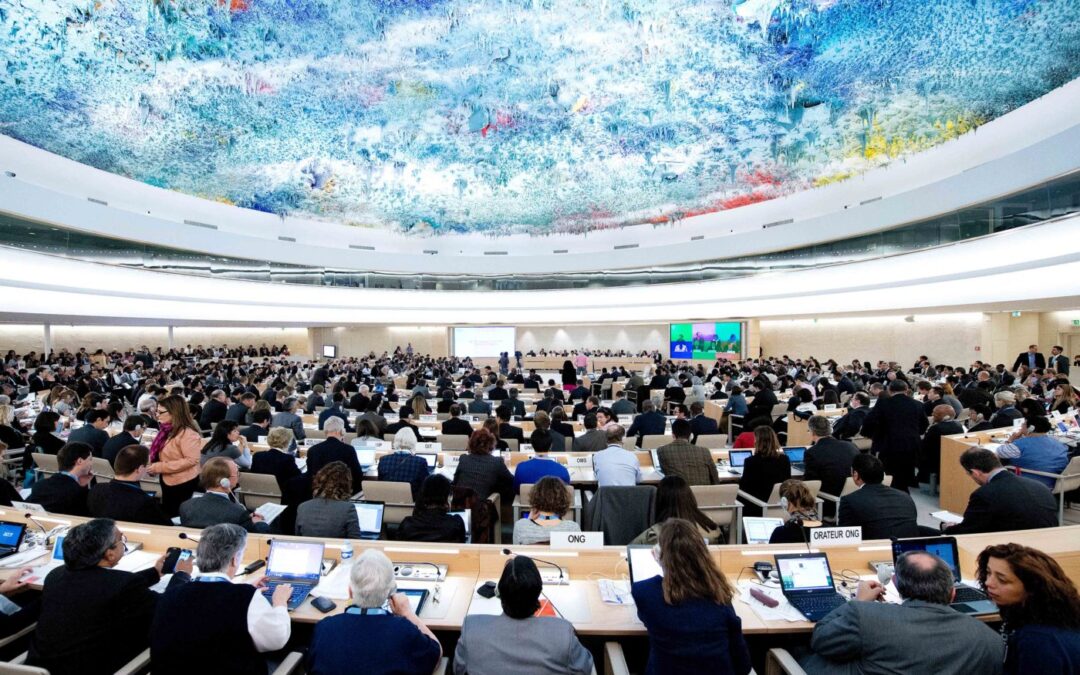
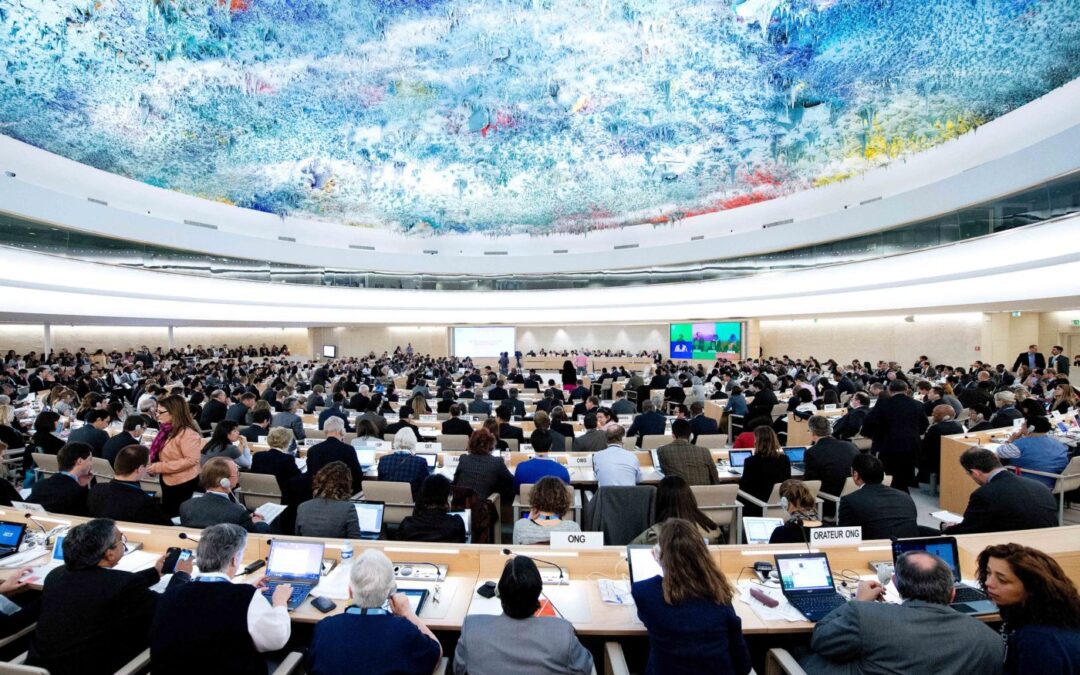
The ICJ joined today seven other organisation in a statement before the UN Human Rights Council expressing concern at the systematic human rights violation and the persistent impunity in the Philippines and calling for more accountability.

The joint statement delivered by FORUM ASIA reads as follows:

“Madam President,

Nearly six months since its adoption, Human Rights Council resolution 45/33 offering technical assistance to the Philippines has proven to be utterly insufficient to address the systematic human rights violations and persistent impunity documented in the High Commissioner’s report. The Philippine Government’s policies and actions since the Resolution’s adoption have been completely at odds with the commitments outlined in it.

Extrajudicial killings in the so-called ‘war on drugs’ have continued. To date, the Government has made no tangible progress towards accountability against those most responsible for such killings. In December 2020, the Office of the Prosecutor of the ICC found that there is “reasonable basis to believe that the crimes against humanity” of murder, torture, the infliction of serious physical injury and mental harm, and other inhumane acts were committed between at least 1 July 2016 and 16 March 2019.

Human rights defenders pursuing legitimate work, especially those who advocate for international accountability, including lawyers, continue to be attacked and accused of belonging to terrorist groups. Rights defenders continue to be arrested and jailed. The draconian Anti-terrorism Act, passed last year, exacerbates risks to defenders. The killing of nine human rights defenders and activists on 7 March, two days after President Duterte ordered the police and military to “finish off” and “kill” those purported to be “communist rebels”, illustrates clearly the persistent killings and attacks faced by activists and defenders. It is very clear that no amount of technical assistance or capacity building will end the killings as the President and top government officials continue to incite murder and violence as official policy.

In this context, it is imperative that the Council set up an international accountability mechanism to end the cycle of violence and impunity in the Philippines.

Thank you.”


The statement was endorsed by:

  • Amnesty International
  • Asian Forum for Human Rights and Development (FORUM-ASIA)
  • CIVICUS: World Alliance for Citizen Participation
  • Human Rigths Watch
  • International Commission of Jurists (ICJ)
  • International Federation for Human Rights (FIDH)
  • Philippines Alliance of Human Rights Advocates (PAHRA)
  • World Organisation Against Torture (OMCT)

Contact:

Massimo Frigo, ICJ UN Representative, e: massimo.frigo(a)icj.org, t: +41797499949

Myanmar: a civilian government and the rule of law must be restored (UN Statement)

Myanmar: a civilian government and the rule of law must be restored (UN Statement)

Today, during a General Debate, the ICJ called on the UN Human Rights Council to condemns a set of laws amendend by the military governmentn in Myanmar and restricting human rights, and to demand the return to of Myanmar civilian rule respecting the rule of law.


The statement reads as follows:

“Madame President,

The International Commission of Jurists (ICJ) condemns the illegitimate attempts to “amend” several laws by the Military appointed Myanmar’s State Administration Council (SAC) following its unlawful seizure of power on 1 February 2021.

The implementation of the Amended Law Protecting the Privacy and Security of Citizens (2017) would undermine the democratic process, criminalize peaceful protests and remove various human rights protections. It would provide for broad and unchecked power to the military to arrest anyone without a warrant and aim to remove basic protections, including the rights to be free from arbitrary detention and from warrantless surveillance and search and seizure.

The amendments to the Penal Code and the Criminal Procedural Code have made non-bailable certain offenses, specifically targeting persons criticizing the coup or the military junta, as well as those encouraging others to support the “Civil Disobedience Movement.”

In addition, Amendments made to other existing laws, such as the Ward and Tract Administration Law and Electronic Transactions Law, allow for search and seizure at night without arrest warrant and allow for the silencing of critical voices against the coup and human rights violations of the military, in violation of international standards.

The ICJ calls on the Council to adopt a resolution, which, among other things, univocally condemns and demands the repeal of these laws and the return to of Myanmar civilian rule respecting the rule of law.

Thank you.”

Myanmar: Accountability needed for crimes against humanity (UN Statement)

Myanmar: Accountability needed for crimes against humanity (UN Statement)

Today, the ICJ delivered a statement to the UN Human Rights Council calling for accountability for crimes against humanity committed in Myanmar during the Interactive Dialogue on the report by the UN Special Rapporteur on the situation of human rights in Myanmar.

The statement reads as follows:

“Madame President,

The International Commission of Jurists (ICJ) welcomes the recent report of the Special Rapporteur on the situation of human rights in Myanmar.

The widespread gross violations of human rights documented in the report – including extrajudicial killings, arbitrary arrests and detention- underscore the need for urgent measures of accountability to redress these and to deter further violations.

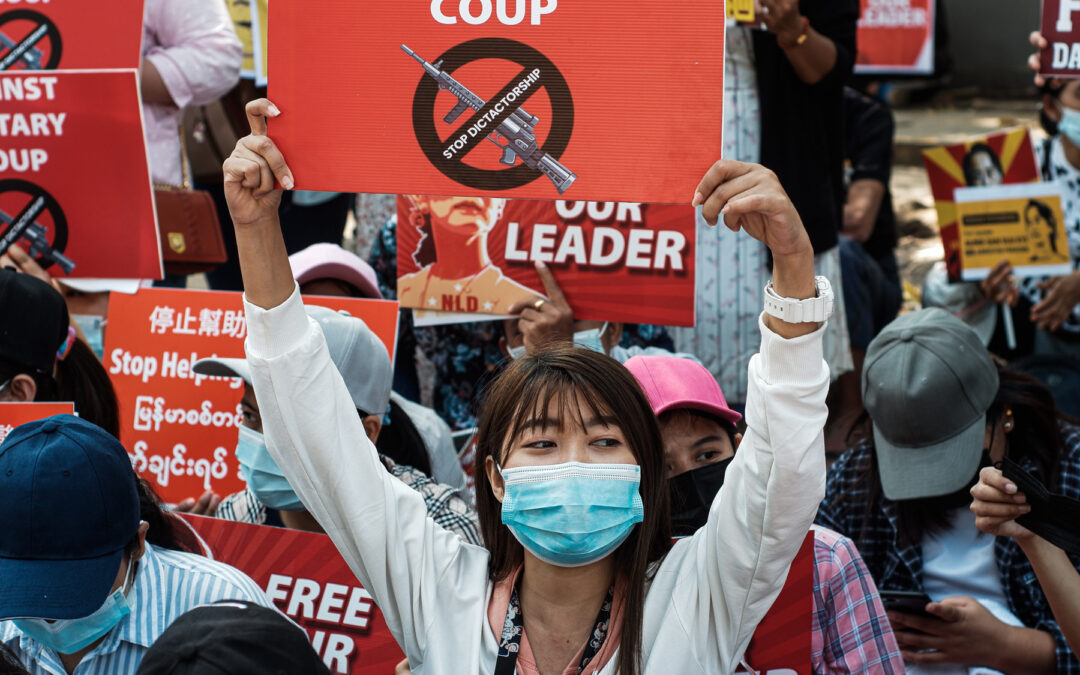
ICJ has documented further evidence that the unlawful crackdown against peaceful protestors have continued to worsen leading to more extrajudicial killings. More than 50 people have already been unlawfully killed and several hundreds have been severely injured.

Hundreds of others have been arbitrarily arrested and detained, with some subjected to torture and ill-treatment. As the scale of violations continues to increase in many parts of the country, these attacks have become systematic and widespread, and must be investigated as crimes against humanity.

The ICJ therefore supports the recommendations made by the Special Rapporteur, including for referral of the situation to the ICC.

The ICJ urges the Council to adopt a resolution that would strengthen and support the IIMM’s work to collect and preserve evidence for accountability; and to extend the mandate of the Special Rapporteur, including to ensure the immediate, full and unrestricted monitoring of the situations and prompt and effective implementation of their recommendations.

Thank you.”

Contact:

Massimo Frigo, ICJ UN Representative, e: massimo.frigo(a)icj.org, t: +41797499949


Thailand: ICJ conducts trainings in southern Thailand on investigations into unlawful killings

Thailand: ICJ conducts trainings in southern Thailand on investigations into unlawful killings

Between December 2020 and February 2021, the ICJ co-hosted a series of workshops for government authorities, medical professionals and lawyers in the southern border provinces of Thailand on how to conduct investigations into alleged unlawful killings and enforced disappearances.

Thailand’s southern border provinces of Pattani, Yala, Narathiwat and four districts of Songkhla have been affected by a longstanding ethno-nationalist insurgency, which has involved conflict between certain Malay groups and Thai military and security forces. Special security laws have been enacted and applied to the deep south.  Over recent years, there are reports of widespread human rights violations, including violations of due process and fair trial rights, torture, ill-treatment while in custody, arbitrary detention and extrajudicial killings continue to emerge. Investigations into these allegations, prosecutions of perpetrators and provision of remedies and reparations to victims remain slow.

The first workshop was organized between 21 and 22 December 2020 in Songkhla province for authorities from Thailand’s southern border provinces. The event focused on how investigations into unlawful deaths should be conducted in accordance with international human rights law and standards, with a particular focus on the revised Minnesota Protocol (2016), which the ICJ assisted in producing.

The workshop was co-hosted with Thailand’s Ministry of Justice, the Embassy of New Zealand in Bangkok, and the United Nations Office of the High Commissioner for Human Rights (OHCHR). The participants included 48 judges, public prosecutors, police investigators, representatives of the Ministry of Justice’s Department of Special Investigation (DSI), the National Anti-Corruption Commission (NACC), the Narcotics Control Board (ONCB) and observers from the Internal Security Operations Command (ISOC) Region 4 Forward.

The second workshop was organized on 23 and 24 December 2020 in Pattani province for medical professionals in the same region. The event introduced participants to the international human rights law and standards governing the effective investigation and documentation of torture and other ill- treatment, including the revised Minnesota Protocol (2016) and the Istanbul Protocol (1999), and emphasized the important role of medical professionals in the documentation of torture.

The workshop was co-hosted with Thailand’s Ministry of Justice and the OHCHR. The participants included 28 medical professionals from district and military hospitals and detention centres.

Between January and February 2021, the ICJ also developed training videos for defence lawyers and civil society representatives in the southern border provinces. The videos focused on the use of forensic evidence in cases of alleged unlawful killings and how international human rights law and standards, particularly the revised Minnesota Protocol (2016) and ICJ’s Practitioners’ Guide No. 14, can assist defence lawyers when preparing for criminal proceedings and challenging the forensic evidence of prosecution witnesses.

The project was jointly implemented with the OHCHR, Cross-Cultural Foundation, Muslim Attorney Centre Foundation and the Embassy of New Zealand in Bangkok. Participants included 21 defence lawyers and civil society representatives from Thailand’s southern border provinces.

Speakers at the three workshops included:

  • Amornrat Lekvichai, Thailand’s Institute of Forensic Science;
  • Badar Fafukh, Human Rights Officer, OHCHR Regional Office for South-East Asia;
  • Duangsamorn Chudeechan, Thailand’s Institute of Forensic Science;
  • Duarte Nuno Vieira, Full Professor, Faculty of Medicine, University of Coimbra and Chairman of the Scientific Advisory Board of the International Criminal Court;
  • Gisle Kvanvig, Head of UN Police Secretariat, Norwegian Center for Human Rights;
  • Howard Varney, Senior Programme Advisor, International Center for Transitional Justice;
  • Ivar Fahsing, Expert on investigation and Human Rights, Norwegian Center of Human Rights;
  • Porntip Rojanasunan, member of the Expert Advisory Panel of the revision of the Minnesota Protocol;
  • Sanhawan Srisod, ICJ Associate Legal Adviser;
  • Stephen Cordner, Professor Emeritus, Department of Forensic Medicine, Monash University and editor of the Forensic Science sections of the 2016 Minnesota Protocol;
  • Steve Wood, Senior Liaison Officer and Regional Coordinator, New Zealand Police National HQ;
  • Stuart Casey-Maslen, Honorary Professor, Faculty of Law, University of Pretoria and Research Coordinator of the Minnesota Protocol;
  • Thomas Wenzel, Full Professor, Faculty of Medicine, University of Vienna; and
  • Vitit Muntarbhorn, Professor Emeritus, Faculty of Law, Chulalongkorn University and Former ICJ Commissioner.

The workshops are part of the ICJ’s ongoing efforts under the Global Accountability Initiative to ensure the domestic implementation of international law and standards on the investigation of potentially unlawful deaths and enforced disappearances.

In Thailand, since 2017, the ICJ has held several national and regional-level workshops on the same topics with justice sector actors, defence lawyers and civil society representatives.

Contact

Sanhawan Srisod, ICJ Associate Legal Adviser, Asia & the Pacific Programme, e: sanhawan.srisod(a)icj.org

Kingsley Abbott, ICJ Director, Global Redress and Accountability; e: kingsley.abbott(a)icj.org

See also

Thailand: launch of the revised Minnesota Protocol

Thailand: Lawyers and civil society hold consultations on protecting rights and the use of force during protests

Thailand: Lawyers and civil society hold consultations on protecting rights and the use of force during protests

On 13 and 20 February 2021, the ICJ, jointly with Centre for Civil and Political Rights (CCPR Centre), held two consultative sessions on international law and standards relating to the right to freedom of expression, peaceful assembly and the use of force in law enforcement operations.

The discussions took place against the backdrop of recent widescale protests in Thailand, in which people exercising the rights to peaceful assembly and freedom of expression were met with sometimes unlawful force by security units.

Twenty-five Thai and international lawyers, civil society representatives and academics attended both discussion sessions, some participants in person and others online.

The 13 February session focused on relevant international law and standards relating to the rights to freedom of expression, peaceful assembly and the use of force in law enforcement operations, including the International Covenant on Civil and Political Rights (ICCPR), to which Thailand is a party, The sessions were led by Daisuke Shirane, CCPR Centre Asia Pacific Coordinator; Badar Farrukh, OHCHR Regional Office for South-East Asia Human Rights Officer; and Chonlathan Supphaiboonlerd, ICJ Associate Legal Adviser.

Participants considered the exercise in practice of the rights to freedom of expression and information, rights that have recently been unduly restricted in Thailand.  Such restrictions were said to have resulted in violations of the rights of individuals who increasingly rely on online platforms, particularly social media platforms such as Facebook and Twitter, to share information on the protests and to express their opinions on the reform movement.

The session included a Q&A session with Christof Heyns, former member of the UN Human Rights Committee and Special Rapporteur on summary, arbitrary and extrajudicial executions. The discussion focused on the scope of the right of peaceful assembly, COVID-19 related restrictions, the State’s duty to facilitate peaceful assembly, and the international legal requirements of legality, necessity and proportionality on State’s response against the protesters.

In the 20 February consultation, Aram Song, attorney of the MINBYUN-Lawyers for a Democratic Society from South Korea, shared with the participant his experiences representing victims of human rights violations arising from police responses to protesters.  He discussed the unlawful use of force and the constitutionality of regulations and ordinance that restricting the right to expression and peaceful assembly in the courts. Thereafter, Gayoon Baek, Chief Secretary of the Truth and Reconciliation Commission of the Republic of Korea, gave her views on how to conduct advocacy through international human rights mechanisms to ensure the right to freedom of expression and peaceful assembly.

This workshop is part of the ICJ’s ongoing efforts to bring existing Thai laws in compliance with international laws and standards that regulating the right to freedom of expression and peaceful assembly.

Further reading

Thailand: ICJ co-hosts round-table on right to peaceful assembly

Letter to the Lawyers Council of Thailand on Disbarment Proceedings against Mr. Anon Nampha

Letter to the Lawyers Council of Thailand on Disbarment Proceedings against Mr. Anon Nampha

In a joint letter to the President of the Lawyers Council of Thailand, the ICJ and Lawyers for Lawyers raised concerns on the disbarment proceeding against Mr. Anon Nampha, a lawyer and human rights defender. The organisations believe that the proceedings unduly interfere in his work as a lawyer and serves to impair the exercise of his human rights, including the right to freedom of expression.

Dear President of the Lawyers Council of Thailand,
Re: Disbarment Proceedings Against Mr. Anon Nampha

Lawyers for Lawyers is an independent and non-political foundation that seeks to promote the proper functioning of the rule of law by pursuing freedom and independence of the legal profession.

International Commission of Jurists (ICJ), a global non-governmental organization composed of 60 eminent judges and lawyers, works to advance understanding and respect for rule of law as well as the legal protection of human rights throughout the world.

We write to your office concerning the disbarment proceeding against Mr. Anon Nampha, a lawyer and human rights defender, that is taking place before the Investigative Committee that was established by the Committee on Professional Ethics of the Lawyers Council of Thailand during the Meeting No. 1/2564 on 13 January 2021. We are concerned that the proceeding unduly interferes in his work as lawyer, including in representation of clients, and serves to impair the exercise of his human rights, including the right to freedom of expression.

According to our information, we understand that the proceeding against lawyer Anon Nampha is related to a complaint motion filed to the Lawyers Council of Thailand on 7 August 2020 by Mr. Aphiwat Khanthong, Assistant Minister in the Office of the Prime Minister, claiming to be acting in his capacity as a private attorney at Or Amporn Na Takua Tung and Friends Law Office. Mr. Aphiwat Khanthong alleged that lawyer Anon Nampha’s behaviour violated the Lawyers Council of Thailand’s disciplinary rules as, he claims, it would “incite, intend to cause unrest, distort information and insult on the monarchy”. The alleged speech in question apparently called for reform of the monarchy, during a Harry Potter-themed protest at the Democracy Monument on Ratchadamnoen Avenue on 3 August 2020.

Under international law and standards, lawyers, like other individuals, enjoy the right to freedom of expression, belief, association and assembly. A lawyer should be able to draw the public’s attention to issues relating to public affairs in their official capacity as well as in their private capacity. Suspensions or revocations of lawyer licenses as a result of exercise of their legitimate rights and freedoms do not only impact on the exercise of the rights of the lawyers, but also on the rights of their clients to be represented by the lawyer of their choosing.

Download the full letter in English and Thai.

Translate »