Oct 22, 2016 | Advocacy
South Africa’s announced withdrawal from the International Criminal Court (ICC) is a slap in the face for victims of the most serious crimes and should be reconsidered, African groups and international organizations with a presence in Africa said today.
The groups urged other African countries to affirm their commitment to the ICC, the only court of last resort to which victims seeking justice for mass atrocities can turn.
“South Africa’s intended withdrawal from the ICC represents a devastating blow for victims of international crimes across Africa,” said Mossaad Mohamed Ali of the African Center for Justice and Peace Studies. “As South Africa is one of the founding members of the court, its announcement sends the wrong message to victims that Africa’s leaders do not support their quest for justice.”
South Africa publicly announced on October 21, 2016, that it has notified the United Nations secretary-general of its intent to withdraw from the ICC.
However, there are significant questions as to whether South Africa abided by its domestic law in withdrawing without approval of its own parliament, the groups said.
“Modern day South Africa is testament to the importance of struggle for international justice, given the history of people of South Africa supported by the international community in defeating the scourge of apartheid and systematic racism. It is inconceivable that this country is now at the forefront of efforts aimed at undermining the international framework to tackle impunity,” said Arnold Tsunga, Director of ICJ’s Africa Regional Programme.
“We call on the government of South Africa to reconsider taking this enormous backwards step in the struggle for justice and to restore its place as a leader in promoting accountability for the most serious crimes and human rights abuses,” he added.
“South Africa’s purported withdrawal – without parliamentary approval or public debate – is a direct affront to decades of progress in the global fight against impunity,” said Stella Ndirangu, from the Kenyan section of the International Commission of Jurists.
“We call on the South African government to reconsider its rash action and for other states in Africa and around the world to affirm their support for the ICC.”
“We do not believe that this attempt to withdraw from the ICC is constitutional and it is a digression from the gains made by South Africa in promoting human rights on the continent,” said Jemima Njeri of the Institute for Security Studies’ International Crime in Africa Program.
“The South African government is sending a signal that it is oblivious to victims of gross crimes globally.”
South Africa’s announcement that it will withdraw from the ICC comes after the country’s court of appeal concluded the government violated its international and domestic legal obligations in not arresting ICC fugitive Sudanese President Omar al-Bashir in June 2015, when he visited South Africa.
A government appeal was pending, but on October 21, 2016, the government indicated that it has withdrawn the appeal.
“The decision by Pretoria to withdraw from the Rome Statute is a response to a domestic political situation,” said George Kegoro of the Kenya Human Rights Commission.
“Impervious to the country’s political history and the significance of the ICC to African victims and general citizenry, the South African leadership is marching the country to a legal wilderness, where South Africa will be accountable for nothing.”
South Africa is the first country to notify the UN secretary-general of withdrawal from the ICC.
Contact:
Arnold Tsunga, Director of ICJ’s Africa Regional Programme, t: +27-716-405-926 ; e: arnold.tsunga@icj.org
south-africa-withdrawal-of-icc-advocacy-2016-eng (full text in PDF)
Oct 20, 2016 | Advocacy, Analysis briefs, News
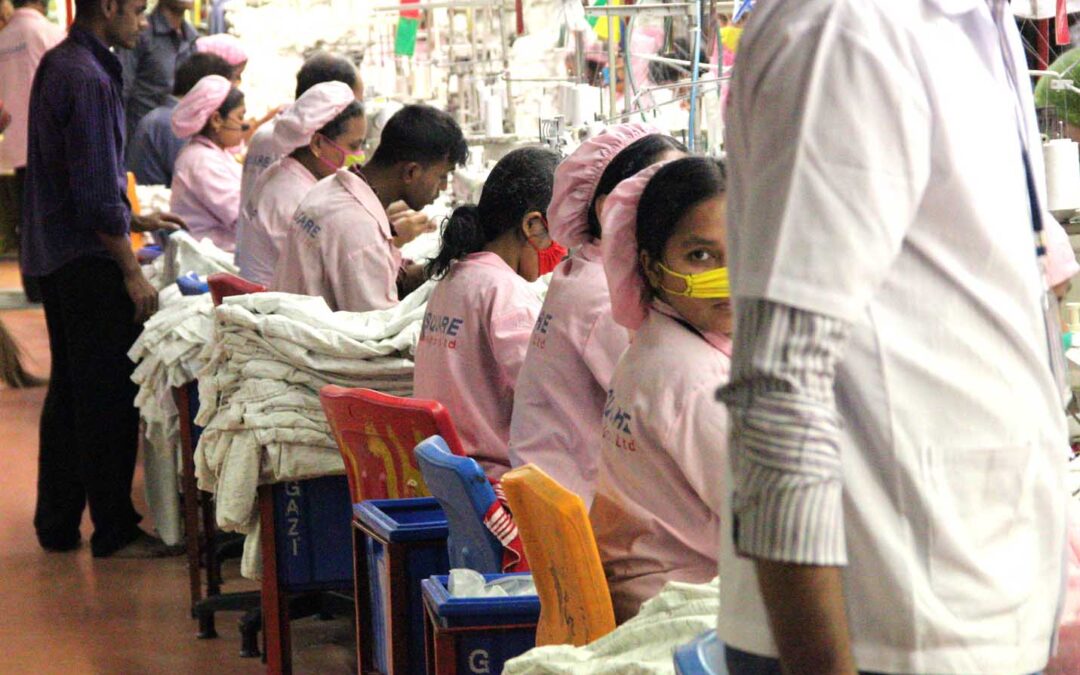
In a paper published today, the ICJ recommends a series of substantive elements that it considers as key to an effective treaty on business and human rights.
The ICJ is publishing this paper as the second session of the open ended intergovernmental working group on transnational corporations and other business enterprises with respect to human rights (OEIWG) will be held next week (24-28 October).
On 26 June 2014, the United Nations Human Rights Council (HRC) adopted Resolution 26/9 establishing an “open ended intergovernmental working group on transnational corporations and other business enterprises with respect to human rights” (OEIWG) with the mandate to “elaborate an international legally binding instrument to regulate, in international human rights law, the activities of transnational corporations and other business enterprises”.
The first session of the OEIWG took place from 6 to 10 July 2015.
The ICJ supports the objective of establishing an international legally binding instrument on transnational corporations and other business enterprises, with a focus on business accountability and access to effective remedies for human rights abuses by business enterprises.
There is a substantial international protection gap to be filled in this respect, on which the ICJ has previously commented extensively.
It is with a view to closing this gap and ensuring that international human rights law can optimally fulfil its protective function that the ICJ is engaging in the present treaty process.
The key elements in the ICJ paper are a contribution to the ongoing discussions about the future instrument, without being exhaustive as to such elements.
The ICJ has already published a paper focused on issues of scope of businesses to be addressed in the treaty, in particular the meaning or “transnational corporations (TNCs) and other business enterprises” a question which remains unresolved and is contentious in the OEIWG discussions.
The present paper will focus on the possible content of the prospective treaty.
universal-oewg-session-2-icj-submission-advocacy-analysis-brief-2016-eng (full text in PDF)
Oct 4, 2016 | Advocacy, News, Open letters
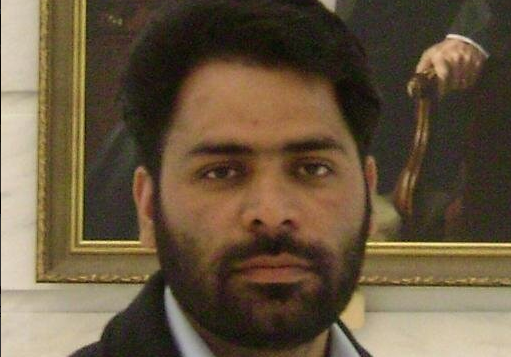
The ICJ, along with Lawyers’ Rights Watch Canada and Human Rights Watch, sent a letter to the Government’s Chief Minister of Jammu and Kashmir expressing concern at the arbitrary detention of Kashmiri human rights defender Khurram Parvez.
The letter can be downloaded here: india-joint-ngo-letter-khurram-parvez-advocacy-open-letters-2016-eng (in PDF)
Sep 28, 2016 | Advocacy, Non-legal submissions
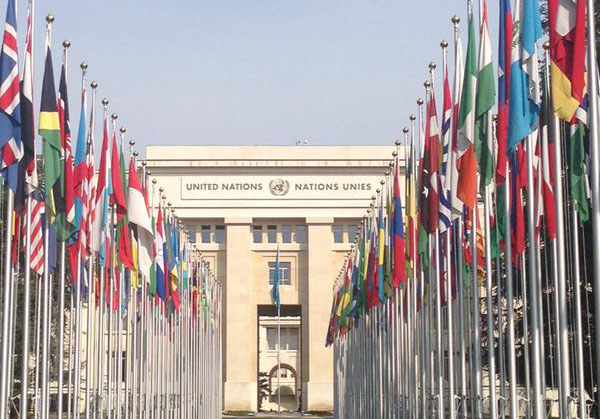
The ICJ today delivered an oral statement to the UN Human Rights Council, during the interactive dialogue with the Special Rapporteur on the situation of human rights in Cambodia.The ICJ welcomed the report of the Special Rapporteur on the situation of human rights in Cambodia, before continuing as follows:
The ICJ concurs with the Special Rapporteur’s observation that “democratic space has been reduced in Cambodia through the application of a range of laws … and the restriction of a range of legitimate activities of non-governmental and civil society organizations.”
Since 2014, Cambodia has adopted laws inconsistent with its international human rights obligations, including undermining the independence of the judiciary, and unduly restricting the work of civil society.
Human rights defenders increasingly face retaliation for their legitimate work, shrinking civil society space.
Last week, the ICJ observed the criminal trial of Ny Chakrya, Deputy Secretary-General of the National Election Committee and former Head of Human Rights Section and Legal Aid at a leading NGO, ADHOC. He was convicted of crimes, including criminal defamation, for raising allegations of human rights violations. Ny Chakrya and four staff-members of ADHOC, all of whom are in detention, also face another investigation with all the hallmarks of being politically motivated.
Indeed, numerous members of the political opposition and human rights defenders are in exile, face legal proceedings, or have been convicted, in cases that also appear to be politically motivated.
Further, the investigation into the July 2016 killing of leading human rights defender, Kem Ley, lacks transparency.
We very much welcome the spotlight the Special Rapporteur placed on such cases by naming them here today.
2016 marks 25 years since the Paris Peace Agreements under which Cambodia undertook to “ensure respect for and observance of human rights and fundamental freedoms in Cambodia.”
We urge Cambodia, the signatories to the Paris Peace Agreements, the Special Rapporteur on Cambodia, the Office of the High Commissioner for Human Rights, and the Human Rights Council, to work to ensure these Agreements are given full effect – particularly as Cambodia prepares for local and national elections scheduled for 2017 and 2018.
The statement may be downloaded in PDF format here: hrc33-srcambodia-2016
Sep 26, 2016 | Advocacy, Non-legal submissions
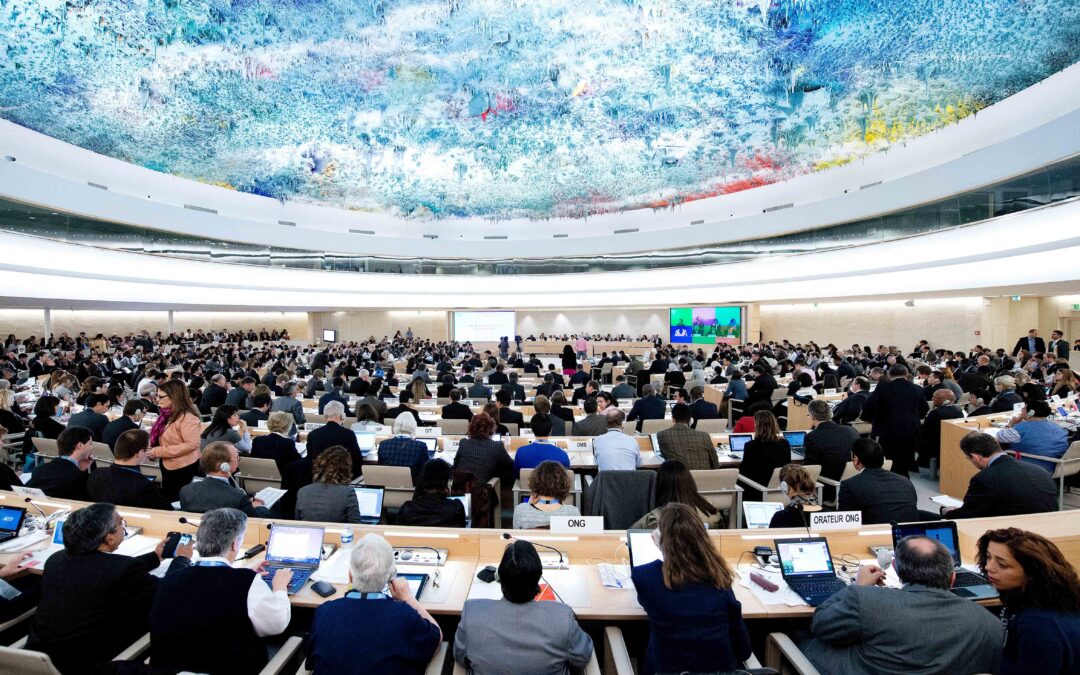
The ICJ today at the UN Human Rights Council, joined other organisations to condemn the increasing attacks aimed at deterring NGOs from exposing human rights violations.
The statement was delivered by the leading international NGO the International Service for Human Rights (ISHR), on behalf of ICJ, Amnesty International, Asian Forum for Human Rights and Development (FORUM-ASIA), Centros de Estudios Legales y Sociales (CELS), Conectas Direitos Humanos, East and Horn of Africa Human Rights Defenders Programme (EHAHRDP), and Gulf Centre for Human Rights (GCHR), during a general debate on Follow up to the Vienna Declaration and Programme of Action (VDPA).
The organisations stated as follows:
“The failure of States to protect in these instanes is incompatible with the VDPA’s recognition of the ‘important role of non-governmental organisations in the promotion of all human rights’, that NGOs should be able to play this role ‘without interference’, and that they ‘enjoy the rights and freedoms recognised in the Universal Declaration of Human Rights’.
One example of such interference is the ruling on 17 September by a Cairo Criminal Court to freeze the personal bank accounts of five Egyptian human rights defenders – Bahey el din Hassan, Hossam Bahgat, Gamal Eid, Mostafa El-Hassan, and Abdel Hafiz Tayel – as part of the ongoing investigations into case no.173, also known as the foreign funding case.
The court also froze the bank accounts of three human rights NGOs: the Cairo Institute for Human Rights Studies, Hisham Mubarak Law Center, and Center for the Right to Education.
As a result, a judicial committee is now expected to manage the funds of these independent NGOs and defenders, as well as have full access to their records and databases of the NGOs, including files related to victims of human rights violations.
The VDPA makes clear that the ‘administration of justice, … especially, an independent judiciary and legal profession in full conformity with applicable standards contained in international human rights instruments, are essential to the full and non-discriminatory realization of human rights’.
To illustrate: In Egypt, the judiciary has been used as a tool in the ongoing crackdown on civil society, systematically failing to respect fair procedures. None of the individuals or organizations accused have thus far been permitted to view their entire case file, nor to present their defense before the investigative judges. Further, the court relied for its verdict on allegedly falsified investigations compiled by Egypt’s National Security Agency (NSA), and disregarded all material evidence presented by the defendants.
Such systematic attacks on civil society are not only illegal, but ill-advised and absolutely inimical to a State’s national interests, peace and prosperity.
We call on Egyptian authorities to immediately and unconditionally reverse the ruling and drop the investigation into case no. 173. We also stress that Egyptian human rights defenders need the support of this Council, particularly those States that have repeatedly expressed their commitment to protecting HRDs. We urge States to demonstrate their genuine leadership in this regard.”
Sep 23, 2016 | Advocacy, Non-legal submissions
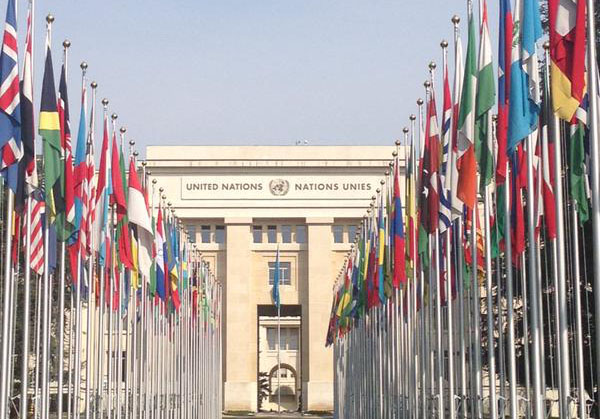
The ICJ, speaking at the UN Human Rights Council, highlighted concerns with criminalization of political gatherings, arbitrary detention, use of military for law enforcement, and trials of civilians before military courts, in Thailand.
The statement was made during discussion of the outcome of the Second Universal Periodic Review (UPR) of Thailand.
While congratulating Thailand on completion of the UPR, the ICJ oral statement continued as follows:
However, the ICJ is disappointed that several key recommendations concerning restrictions of civil and political rights in the country did not enjoy the support of Thailand.
The interim Constitution, put in place by the military government after the May 2014 coup, remains in force. Article 44 gives the government sweeping, unchecked powers inconsistent with the fundamental pillars of the rule of law and human rights.
The military government has issued numerous orders and announcements under the interim Constitution, including some that criminalize political gatherings, allow arbitrary detention for up to seven days without charge, and provide military officers broad powers of law enforcement.
At least 1,811 civilians have faced proceedings in military courts contrary to international law and standards, many merely for exercising their rights to free expression and peaceful assembly.
Thailand did not accept any of the recommendations to remove these restrictions on the rule of law and human rights.
While the ICJ welcomes the Order of 12 September 2016 ending the practice of prosecuting civilians in military courts for crimes committed after that date, approximately 500 civilian cases remain in military courts.
The ICJ is also concerned that in July the government charged three human rights defenders with criminal defamation for raising allegations of torture in the deep South.
The ICJ urges Thailand to accept and implement recommendations relevant to:
- revoking the interim Constitution and all NCPO orders and announcements that are contrary to the rule of law and respect for human rights;
- transferring all pending civilian cases to civilian courts and set aside the convictions of all civilians prosecuted in military courts since the 2014 coup; and
- ending all harassment of human rights defenders in Thailand.
The statement may be downloaded in English and in Thai in PDF here:
thailand-hrc33-upr-advocacy-non-legal submission-2016-eng
thailand-hrc33-upr-advocacy-non-legal-submission-2016-tha