Sep 22, 2016 | Advocacy, Non-legal submissions
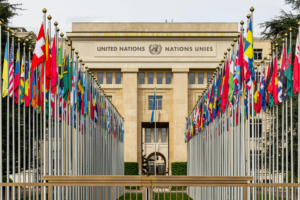
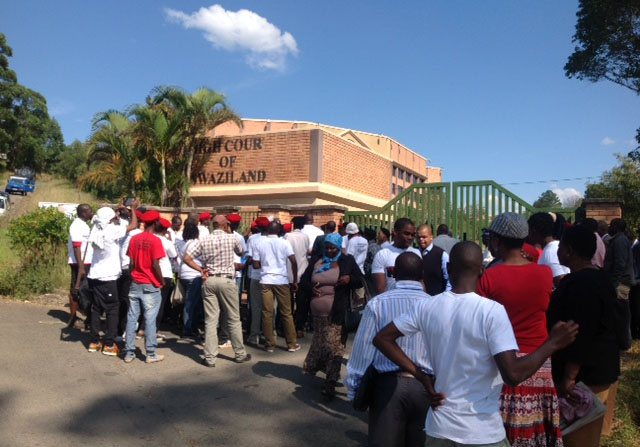
The ICJ today spoke to continuing concerns for human rights and the rule of law in Swaziland, during discussion at the UN Human Rights Council of the outcome of Swaziland’s Universal Periodic Review.
The statement read as follows:
The ICJ is concerned by the lack of implementation of recommendations accepted by the Government of Swaziland during the first UPR cycle.
The Swazi Government undertook to take concrete and immediate measures to guarantee the independence and impartiality of the judiciary. However judges continue to be appointed on the basis of corrupt patronage. The current Chief Justice and another Supreme Court judge are generally perceived to have been appointed on the basis of their traditional roles as former headman and chief, respectively, in the absence of any formal or transparent merit-based recruitment process.
Swaziland still has not ratified key international instruments, including the Rome Statute, the Optional Protocol to the Convention Against Torture, and the Convention for the Protection of All Persons from Enforced Disappearance, which they accepted during the last cycle.
The police have continued to ban and disrupt peaceful protests, relying on the Suppression of Terrorism Act, the Sedition and Subversive Activities Act and Public Order Act. Human rights defenders and political activists continue to be arrested and charged with criminal offences for exercising their rights to freedom of expression, association and assembly.
Swaziland has not enacted into law the Sexual Offences and Domestic Violence Bill, or any other law guaranteeing gender equality.
For these reasons, the ICJ calls upon the Government of Swaziland to accept and fully and promptly implement UPR recommendations from this cycle relevant to:
- Ensuring the independence and impartiality of the judiciary;
- Ratifying and domesticating the international instruments they accepted at the last cycle;
- Aligning national laws with international standards to guarantee freedom of expression, association and assembly;
- Enacting the Sexual Offences and Domestic Violence Bill into legislation.
The statement may be downloaded in PDF format here: hrc33-upr-swaziland-2016
Sep 19, 2016 | Advocacy, Non-legal submissions
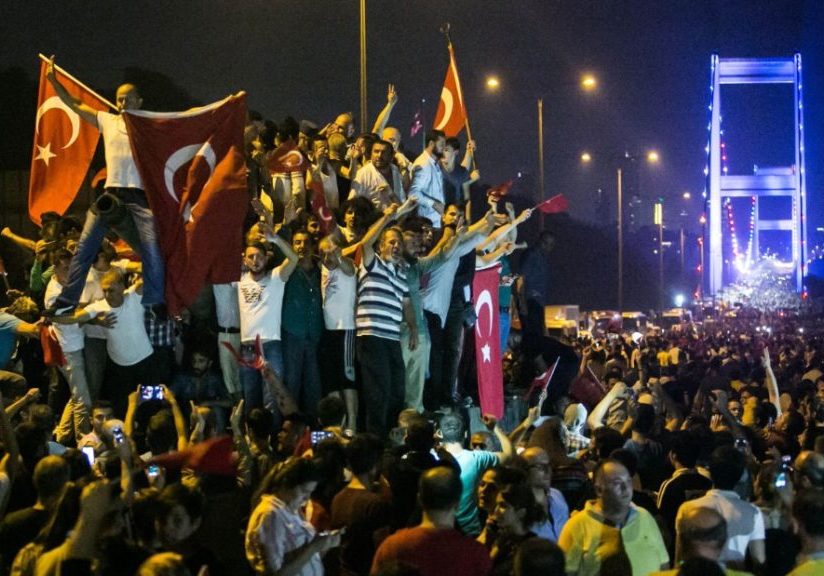
The ICJ today expressed concern at the UN for the independence of the judiciary, human rights, and the rule of law in Turkey, highlighting measures taken by the government, almost immediately after a failed coup in July, to suspend or dismiss thousands of judges and prosecutors.
The statement, which was delivered in General Debate on country situations, at the UN Human Rights Council in Geneva.
The statement read as follows:
The International Commission of Jurists (ICJ) wishes to draw the Council’s attention to the crisis of the rule of law in Turkey, and its serious consequences for the protection of human rights.
Within hours of the failed coup attempt in July, the Government initiated a purge of the judiciary on an unprecedented scale.
At least 3,300 judges and prosecutors have been dismissed or suspended, and hundreds have been arrested, including members of the High Council for Judges and Prosecutors.
Many of these measures appear to be arbitrary and fail to respect the right to a fair hearing before an independent authority.
These actions have done severe damage to the already fragile independence of the judiciary in Turkey, and threaten the right to a fair trial.
They represent a dramatic escalation of the attack on judicial independence that was already underway before the attempted coup, documented in an ICJ report published in June.
State-of-emergency decrees further undermine protection of human rights.
Periods for pre-trial detention have been extended and detainees’ confidential access to lawyers has been restricted. There are credible reports of ill-treatment of detainees, and of harassment of lawyers representing them.
The ICJ recalls that certain rights, including the prohibition on torture or other ill-treatment, and essential elements of the prohibition of arbitrary detention and right to a fair trial by an impartial tribunal, can never be derogated from, even in the most serious states of emergency.
The ICJ urges Turkey to take measures to restore the rule of law and ensure respect for human rights under the state of emergency.
The statement may be downloaded in PDF format here: hrc33-oralstatement-gditem4-turkey-2016
Sep 16, 2016 | Advocacy, Non-legal submissions
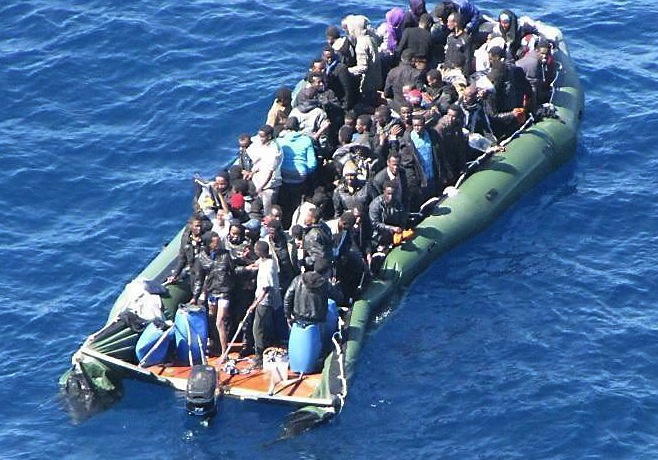
At the UN Human Rights Council, the ICJ today emphasized the role of judges and lawyers in securing human rights and the rule of law for refugees and migrants, including in situations of large-scale movements.The statement, delivered during a general debate, read as follows:
As the report of the High Commissioner for Human Rights, on Promotion and protection of the human rights of migrants in the context of large movements (UN doc A/HRC/33/67), recognizes, all such persons must have “access to justice”, including effective access to courts and lawyers.
This includes fair and effective individualized procedures in relation to key decisions such as: entitlement to refugee status or other international protection; detention or criminal proceedings based on entry or presence in the country; and expulsion or onward transfer.
The roles of the executive, legislature and judiciary in such situations has been debated in many countries. In some cases, governments have invoked the concept of “crisis” or “emergency” to justify radical departures from ordinary procedures, including reducing effective access to independent judges and lawyers.
In the experience of the International Commission of Jurists (ICJ), over many decades and in all regions of the world, the role of judges and lawyers in securing human rights and the national and international rule of law is in fact even more important in times and circumstances perceived to be “exceptional”, or of “crisis” or “emergency”. The ICJ is therefore deeply concerned about any reduction of the role of judges and lawyers in relation to large-scale movements of refugees and migrants.
The seventh annual ICJ Geneva Forum of Judges & Lawyers, 17-18 November 2016, will bring together judges, lawyers, and refugee and migration experts from around the world, as well as relevant UN, regional, and other agencies, to discuss the role of judges and lawyers in situations of large-scale movement of refugees and migrants. Based on the discussion, the ICJ will produce and disseminate guidance on the important role of judges and lawyers to protect human rights and the rule of law in all such circumstances.
The statement may be downloaded in PDF format here: hrc33-oralstatement-gditem3-migrantsrefugees-16092016
Sep 16, 2016 | Advocacy, Non-legal submissions
On 16 September 2016, the ICJ made a submission to the Universal Periodic Review of India.
The submission brings to the attention of the members of the Human Rights Council’s Working Group on the UPR issues concerning:
- discrimination and violence based on sexual orientation and gender identity;
- death penalty;
- impunity and accountability;
- freedom of speech, expression and association;
- ratification and implementation of international human rights instruments.
india-icj-upr-submission-advocay-non-legal-submission-2016-eng (full text in PDF)
Sep 15, 2016 | Advocacy, Non-legal submissions
The ICJ, with support of the NGO the Human Rights Commission of Pakistan (HRCP), spoke at the UN Human Rights Council today on the continuing problem of enforced disappearances in Pakistan.
The statement was delivered during an interactive dialogue with the Working Group on Enforced or Involuntary Disappearances.
The ICJ, with support of the Human Rights Commission of Pakistan (HRCP), welcomed the Working Group’s follow-up report on recommendations from its 2012 visit to Pakistan, and stated further as follows:
The practice of enforced disappearance has persisted and expanded since the Working Group’s visit. Previously restricted mainly to Balochistan, the Federally Administered Tribal Areas and Khyber Pakhtunkhwa, enforced disappearances are now a nation-wide phenomenon.
In August 2015, Zeenat Shahzadi, a Pakistani journalist, went “missing” from Lahore, a rare case of alleged enforced disappearance of a woman.
Estimates of the overall number of cases of enforced disappearance vary. The official Commission of Inquiry on Enforced Disappearances has reported nearly 1,400 unresolved cases.
The HRCP, an NGO that documents human rights violations in 60 districts, has reported 370 cases of enforced disappearance since 2014.
Other NGOs claim between 5,000 to 18,000 cases. Even by the most conservative estimates, a significant number of enforced disappearances remain unresolved.
The Government has not brought perpetrators to account in even a single case of enforced disappearance. Rather than effective measures to prevent the practice or to strengthen existing accountability mechanisms, recent legislation actually facilitates enforced disappearances.
In January 2015, Pakistan empowered military courts to try civilians for terrorism-related offences. These courts have since sentenced at least 100 people to death, and at least 12 have been hanged, after grossly unfair trials without possibility of appeal to any civilian courts, including the Supreme Court.
Families allege that some of those tried had been subjected to enforced disappearance by military authorities, and military control over the proceedings leaves the family and victim without effective remedy.
Victims’ groups, lawyers, and activists working on enforced disappearance also continue to face security risks including attacks, harassment, surveillance, and intimidation.
The ICJ and HRCP commend the Working Group for its systematic follow-up, which can have a positive impact, and urge the Working Group to continue to monitor and report on the situation in Pakistan.
The statement may be downloaded in PDF format here: hrc33-oralstatement-disappearances-pakistan-15092016
Jun 29, 2016 | Advocacy, Non-legal submissions
The ICJ, joined by FIDH, Franciscans International, and IMADR, today delivered a statement to the UN Human Rights Council.
The statement was on the situation of Rohingya Muslims in Myanmar, and on the need for active participation by international judges in the judicial mechanism to be adopted in Sri Lanka as part of the process of accountability and reconciliation.
The organizations stated, during general debate on an oral update on Sri Lanka from the High Commissioner for Human Rights, and the Commissioner’s report on the situation of Rohingya in Myanmar, that:
The Government of Myanmar has persecuted the Rohingya, refused to extend basic citizenship rights, and Parliament passed legislation entrenching discrimination such as the Race and Religion Protection laws. This has displaced thousands within Rakhine State and driven the Rohingya to sea and neighbouring countries. The ICJ, FIDH, Franciscans International and IMADR call on Myanmar:
- to repeal the 1982 Citizenship Law or amend it in accordance with the recommendations of the Special Rapporteur, to grant Rohingya full citizenship and accompanying rights;
- to develop a citizenship plan based on non-discrimination;
- to reject the Rakhine State Action Plan in its current form;
- to repeal laws that discriminate against ethnic and religious minorities;
- to diligently prosecute all acts of violence fuelled by discrimination, and hate speech that incites discrimination, hostility or violence; and
- to improve basic living conditions for the Rohingya and Arakanese in Rakhine State by enhancing protection of their economic, social, and cultural rights.
We welcome recent initiatives by the Government of Sri Lanka towards implementing Resolution 30/1, including the establishment of an Office of Missing Persons, and ratification of the Convention for the Protection of All Persons from Enforced Disappearance.
However, many of the commitments in the resolution remain unfulfilled. The other three transitional justice mechanisms envisioned by the resolution – an office of reparation, a truth-seeking commission, and a judicial mechanism – are yet to be established.
We call on Sri Lanka to implement, without delay, all elements of Resolution 30/1, including particularly the establishment of a credible judicial mechanism with full participation of international judges, prosecutors and lawyers. We agree that international participation is “a necessary guarantee for the independence and impartiality of the process in the eyes of the victims” (High Commissioner’s Oral Update, A/HRC/32/CRP.4, paragraph 32).
Rapid progress on this and other key elements of the resolution is essential to the credibility of the overall process of transition in Sri Lanka.
The statement can be downloaded in full, in PDF format, here: HRC32-OralStatement-SriLankaMyanmar-2016