Sep 26, 2018 | Advocacy, Non-legal submissions
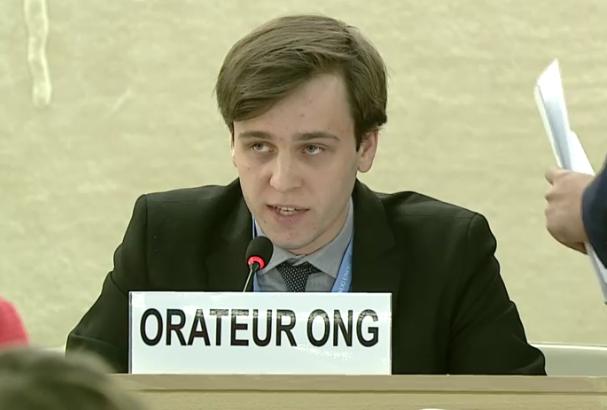
The ICJ today emphasised the continuing failure of domestic accountability mechanisms to ensure proper accountability for crimes under international law in Libya, speaking at the UN Human Rights Council in Geneva.
The statement, made during an Interactive Dialogue with the UN High Commissioner for Human Rights on her oral update on the situation in Libya, at the Human Rights Council in Geneva, read as follows:
“Mr President,
The International Commission of Jurists (ICJ) remains concerned by the scale and magnitude of the human rights violations that continue in Libya, and the failure of domestic accountability mechanisms to address them.
Impunity prevails for crimes under international law committed during and after the 2011 uprising, including extrajudicial killings, torture and other ill-treatment, and enforced disappearances. Broad amnesty laws allow those responsible to avoid prosecution.
Even in the rare cases where former officials of the Gadhafi regime have faced trial,[1] the integrity of the justice process has been compromised by failures to respect international fair trial standards, including the right to legal counsel and the right to call and examine witnesses.
On August 15, 2018, following an unfair mass trial, 99 defendants were convicted for the killing of 146 anti-Gaddafi protesters in Tripoli during the 2011 uprising.[2] 45 were sentenced to death, violating the right to life.
Such unfair trials and unlawful sentences not only violate the human rights of the accused: they deprive the victims of the crimes of the right to know the truth about the legacy of past violations and the legitimate and untainted justice to which they are entitled. New, fair trials are required.
Political and security instability in Libya undermines the ability of the judiciary to administer justice independently and impartially, including with a view to combating impunity. Judges and prosecutors are threatened, intimidated, abducted and in some instances killed, particularly when attempting to address crimes by members of armed groups.
The ICJ would like to ask the High Commissioner, how can other States and civil society help ensure that Libya, while fully cooperating with the International Criminal Court, implements an effective legal and practical framework to address crimes under international law and eradicate impunity?
Thank you.”
[1] Case 630/2012.
[2] https://www.hrw.org/news/2018/08/22/libya-45-sentenced-death-2011-killings.
Jul 24, 2018 | Advocacy, Analysis briefs, News
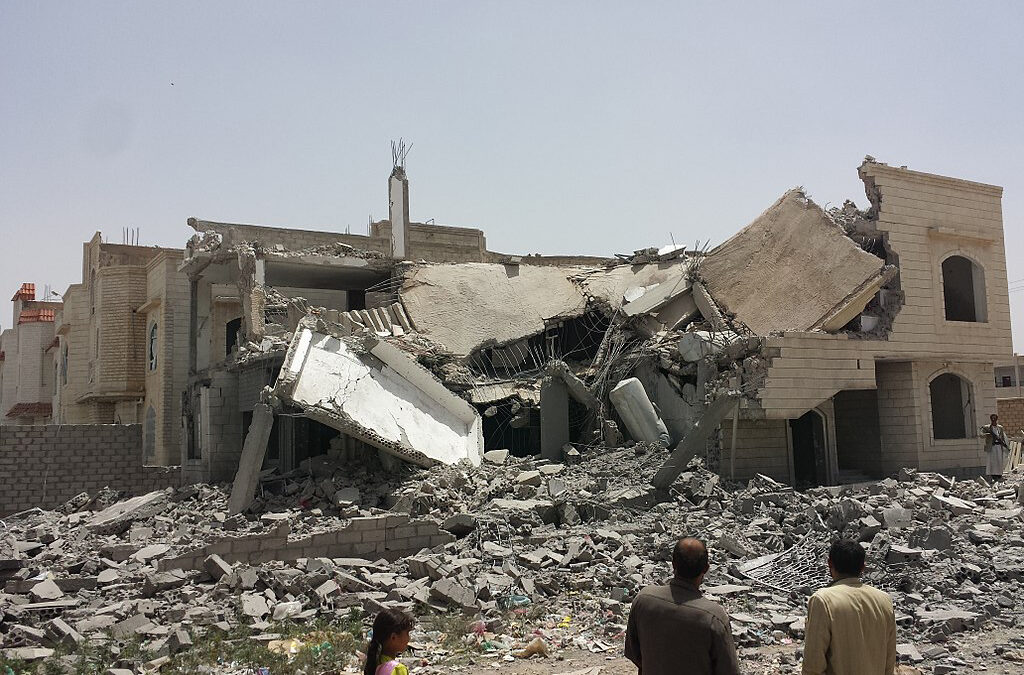
In a briefing paper published today, the ICJ called on the parties to the conflict in Yemen to take immediate and effective measures to ensure the protection of the civilian population, including against human rights abuses and international humanitarian law violations.
Serious violations of international humanitarian law committed in Yemen include direct and indiscriminate attacks against civilians and the impediment of access to humanitarian relief of the civilian population.
Gross human rights violations and abuses include widespread instances of arbitrary arrest and detention, torture and ill-treatment, and enforced disappearances.
The ICJ has called for persons responsible for such violations to be held to account.
“All parties to the conflict in Yemen have acted in blatant disregard of the most basic rules of international humanitarian law and human rights law,” said Said Benarbia, ICJ MENA Director.
“The top priority is to end these violations and in particular to protect the civilian population,” he added.
In its briefing paper, the ICJ analyses international law violations committed in the conduct of hostilities and against persons deprived of their liberty.
The Saudi Arabia-led coalition and the Houthis are allegedly responsible for direct, indiscriminate or disproportionate attacks against civilians and civilian objects, including local markets, food storage sites, water installations and medical facilities.
The United Arab Emirates, the internationally recognized government of Yemen and the Houthis have allegedly engaged in arbitrary arrest and detention, torture and ill-treatment, and enforced disappearances.
The ICJ briefing paper also examines the potential legal implications of the blockade imposed by the Saudi Arabia-led coalition on Yemen and the sieges laid by the Houthis against several towns and localities, which impede the civilian population to access humanitarian relief.
The ICJ briefing paper further assesses the potential responsibility of third States for transferring arms to the parties to the conflict.
Under numerous instruments, including the Arms Trade Treaty, States are prohibited from selling arms to the parties to an armed conflict whenever a risk exists that the end-user could commit international law violations.
Arms transfers may even engage the exporting States’ international responsibility for aiding or assisting in the commission of such violations.
“Victims must have access to effective legal remedies and be provided with adequate reparation,” Benarbia said.
“The international community must state loud and clear that impunity is not an option. The Security Council should refer the situation in Yemen to the International Criminal Court and third States should consider, where feasible, the exercise of universal jurisdiction to prosecute relevant crimes under international law,” he added.
Contact
Vito Todeschini, Associate Legal Adviser, ICJ Middle East and North Africa Programme, t: +216-71-962-287; e: vito.todeschini(a)icj.org
Said Benarbia, Director of the ICJ Middle East and North Africa Programme, t: +41-22-979-3817; e: said.benarbia(a)icj.org
Yemen-War briefing-News-web story-2018-ENG (full story with background information, English, PDF)
Yemen-War impact on populations-Advocacy-Analysis Brief-2018-ENG (Analysis Brief in English, PDF)
Yemen-War briefing-News-web story-2018-ARA (full story with background information, Arabic, PDF)
Yemen-War impact on populations-Advocacy-Analysis Brief-2018-ARA (Analysis Brief in Arabic, PDF)
May 18, 2018 | Advocacy, Non-legal submissions
Speaking today at a special session of the UN Human Rights Council, the ICJ joined calls for an independent international inquiry into the use lethal and other force by Israeli security forces in Eastern Gaza.
The statement read as follows:
The International Commission of Jurists (ICJ) deplores apparent violations of international law by Israeli security forces during the past six weeks in Eastern Gaza near the border with Israel, in relation to demonstrations by Palestinians.
The ICJ is concerned at the many killings and serious injuries associated with the excessive, unjustified or otherwise unlawful use of force, including the killing of a number of children.
The ICJ recalls that international human rights law permits use of lethal force only when strictly necessary to protect life. The ICJ understands that Israel has taken the position that only the international law of armed conflict, and not international human rights law, was applicable, and that all lethal force used against protestors was justified. The ICJ insists that human rights law – and specifically, standards on the use of force in law enforcement contexts – was indeed applicable, and that the use of lethal force was in the circumstances wholly unjustified.
Excessive force, including lethal force, has apparently been used against unarmed persons who do not pose a threat to life. Irrespective of legal regime, such use of force is manifestly inconsistent with the principles of necessity and proportionality.
The ICJ joins the call for this Council to establish an independent Commission of Inquiry or similar investigation, to ensure accountability for serious violations of international law.
Update: The session concluded with the adoption (29 yes, 2 no, 14 abstained) by the Council of a resolution establishing a Commission of Inquiry.
Mar 23, 2018 | Advocacy, Non-legal submissions
The ICJ today joined other NGOs in an end-of-session statement, reflecting on the 37th ordinary session of the UN Human Rights Council.
The statement was delivered by the International Service for Human Rights (ISHR) on behalf of:
- The East and Horn of Africa Human Rights Defenders Project (DefendDefenders)
- The Global Initiative for Economic, Social & Cultural Rights
- CIVICUS
- International Commission of Jurists
- International Federation for Human Rights Leagues
- Conectas Direitos Humanos
- Human Rights House Foundation
- Amnesty International
- International Lesbian and Gay Association
- Human Rights Watch
- Asian Forum for Human Rights and Development (FORUM-ASIA).
The statement read as follows (text in italics was not read aloud for lack of time):
“Our organisations welcome the adoption of the resolution on the promotion and protection of human rights and the implementation of the 2030 Agenda for Sustainable Development, particularly in reaffirming that all approaches to development must comply with the State’s international human rights obligations.
We agree that “cooperation and dialogue” are important for the promotion and protection of human rights, and that States should fully cooperate with the Council and its mechanisms, and ensure that all stakeholders are able to cooperate and engage with them without fear of reprisals.
However, we must now be vigilant to ensure that the resolution on Mutually Beneficial Cooperation, lacking in balance, does not undermine other important parts of the Council’s mandate: to address human rights violations and respond promptly to human rights emergencies in specific countries.
The Council has failed to take meaningful action to address the alarming situation on the ground in Cambodia. We welcome and echo the joint statement on Cambodia by over 40 states calling for further action if the situation does not improve in the lead up to the elections and for a briefing by the High Commissioner before the next Council session. We are concerned by Cambodia’s attempt to shut down criticism under item 10 debate on the worsening human rights situation in the country, as they are doing domestically.
We are disappointed by the weak outcome on Libya. Given the gravity of the human rights situation on the ground and the lack of accountability for crimes under international law, the Council cannot justify the lack of a dedicated monitoring and reporting mechanism.
We welcome the co-sponsorship of the Myanmar resolution by groups of States from all regions, making a joint commitment to address the continuing human rights violations and crimes against humanity in the country and support for the Special Rapporteur and Fact-Finding Mission to fulfil its mandate to establish truth and ensure accountability for perpetrators.
We also welcome the renewal of the mandate of the Commission on Human Rights in South Sudan allowing it to continue its vital investigations and identification of perpetrators. These developments acknowledge the importance of accountability for serious human rights violations and crimes under international law, which cannot be understated.
We welcome the adoption of the resolution on drugs and human rights as the OHCHR report will provide human rights indicators related to the drug issue that would help in future policies.
We welcome the resolution on Eastern Ghouta adopted after an urgent debate, demonstrating how this Council can respond in an agile manner to crises.
Having long supported the resolution on “protection of human rights while countering terrorism”, we appreciate the efforts that led to the end of the separate and deeply flawed initiative on “effects of terrorism on the enjoyment of human rights“. Future versions of the resolution must address the relevant issues exclusively and comprehensively from the perspective of the effective protection of human rights.
We welcome the Dutch-led joint statement on strengthening the Council, emphasising the importance of substantive civil society participation in any initiative or process and that the Council must be accessible, effective and protective for human rights defenders and rights holders on the ground.
Finally, we call on the Bureau co-facilitators on improving the efficiency and strengthening the Council to closely engage with all Members and Observers of the Council, human rights defenders and civil society organisations not based in Geneva.”
Mar 20, 2018 | Advocacy, Non-legal submissions
The ICJ today spoke at the Human Rights Council about the creation of a UN database of business enterprises involved in Israeli settlements in the Occupied Palestinian Terrority (OPT).
The statement, delivered in general debate under item 7 of the Council agenda, read as follows:
“Regarding the Report on a Database of business enterprises involved in listed activities in the settlements on the Occupied Palestinian Territory (A/HRC/37/39), the ICJ recognizes that considerable progress has been made, but considers that the normative and methodological frameworks of the database would benefit from incorporating an analysis of corporate complicity under international law, in addition to the existing references to the UN Guiding Principles on Business and Human Rights.
The ICJ stresses that a transparent process and strong due process safeguards in relation to companies alleged to be involved are essential and notes the efforts of the OHCHR in this regard.
All States, including the home States of the companies involved, have a responsibility to prevent companies from operating in breach of international law. Businesses themselves should see the database as an opportunity to more proactively incorporate respect for human rights within their policies and operations.
The database should contribute to global efforts to hold all business enterprises accountable for their role in violations of human rights and humanitarian law. Indeed, the ICJ urges all States, including those that have supported the creation of this database, to support and give due attention to addressing the human rights impacts of businesses in their own territories as well as global operations of businesses for which they are the home State.”
Video of the statement is available here:
Mar 2, 2018 | Advocacy, Non-legal submissions
The ICJ today delivered an oral statement to the UN Human Rights Council urging it to take action on the situation in Eastern Ghouta in the Syrian Arab Republic.
The statement, which was made during an urgent debate at the UN Human Rights Council convened with a view to adoption of a resolution, read as follows:
“The International Commission of Jurists (ICJ) urges the Council to adopt a strong resolution today. The resolution should fully reflect the gravity, magnitude and character of the violations and abuses taking place, demand their immediate cessation, and set out specific measures for accountability of those responsible.
The ICJ highlighted these concerns in a statement one week ago. Every further day of delay costs lives. It is imperative that the Council act immediately and that the relevant forces move quickly to implement Security Council resolution 2401 and any resolution of the Human Rights Council. An immediate end to all attacks on civilians and civilian objects is paramount.
We welcome references to accountability, and urge the Council to explicitly call on States to make use of all means available in this regard, including in their national legal systems, as well as at the regional and international level.
All forces on the ground must respect international humanitarian law and human rights law and standards and be held accountable for failures in this regard. In particular, the Syrian Arab Republic and Russian Federation must comply with Security Council resolutions, ensure the effective protection of civilians, and create conditions in which rapid and unimpeded passage of humanitarian relief can actually take place.”
The Council did not complete the adoption of the resolution on 2 March, but ultimately did so on 5 March.