Mar 27, 2015 | Advocacy, News, Non-legal submissions
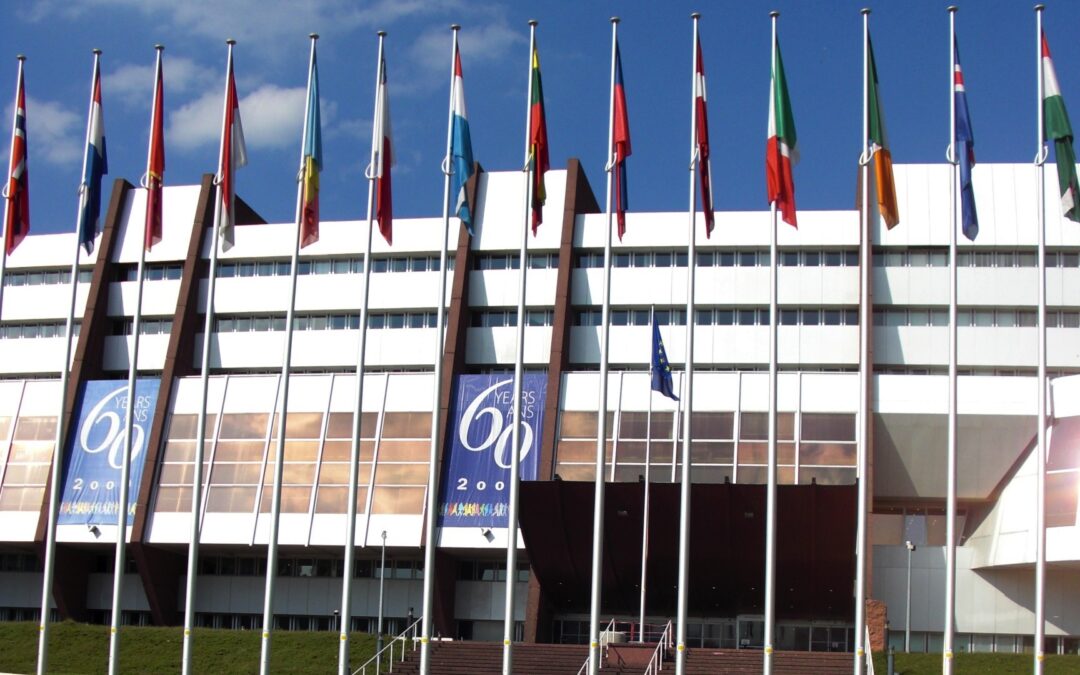
The ICJ, and other NGOs present at the Brussels Conference on the implementation of the European Convention on Human Rights today responded to the final draft of the Brussels Declaration to be adopted today, with ten specific action points.
The response welcomes the draft Declaration’s deadline of June 2016 to improve the execution of the judgments of the European Court of Human Rights, but regrets that it does not set out the specific measures that states and the Committee of Ministers should take to improve implementation.
CouncilofEurope-JointStatement-ExecutionofJudgments-BrusselsConference-Advocacy-non legal submission-2015-ENG (download the joint statement)
Mar 19, 2015 | Advocacy, Legal submissions, News
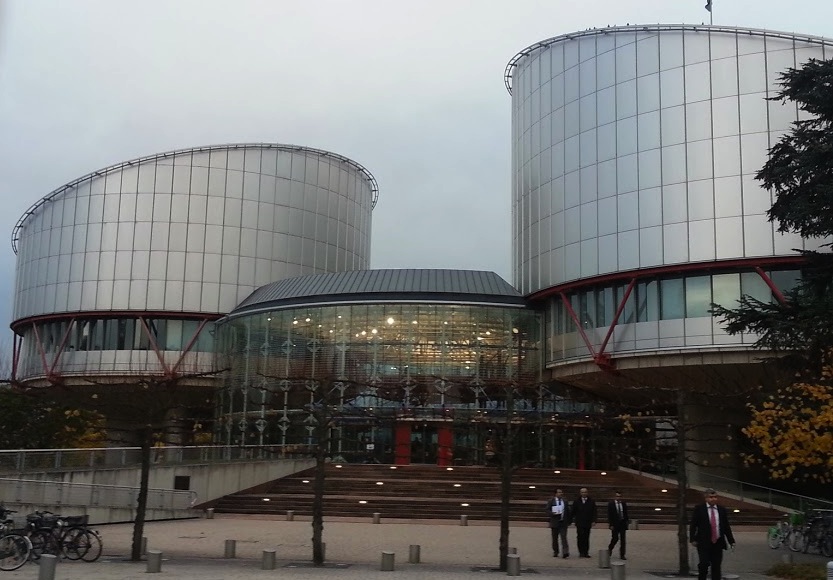
The ICJ and Amnesty International have presented a submission on the draft of an Additional Protocol supplementing the Council of Europe Convention on the Prevention of Terrorism.
In their submission, the ICJ and AI outlined before the Committee on Foreign Terrorist Fighters and Related Issues (COD-CTE) of the Council of Europe the general principles of human rights law related to the issue of foreign fighters and the implementation of Security Council resolution 2178(2014) and made observations on the draft criminal offences contained in the draft protocol.
The submission outlines positions and concerns with relation to:
- The lack of definition of central concepts like “terrorism”, “terrorist acts”, and “foreign fighters”
- The risk of introducing criminal offences lacking the clarity, accessibility and foreseeability required by the principle of legality
- The risk of conflation of of different legal regimes, notably of international humanitarian law and ordinary criminal law
- The need to investigate and prosecute existing crimes under international law
- The need to ensure that any criminalisation of acts or omissions must have a close connection to the commission of the principal criminal offence, with a real risk that such a principal criminal act would in fact take place
- Specific comments on the draft offences of participation in an association or group for the purpose of terrorism; receiving training for terrorism; travelling abroad for the purpose of terrorism; funding travelling abroad for the purpose of terrorism; organizing or otherwise facilitating travelling abroad for the purpose of terrorism.
CouncilofEurope-Submission-ForeignFighters-Advocacy-Legal Submission-2015-ENG (download the observations)
Mar 3, 2015 | Advocacy
In advance of the Brussels Conference on implementation of the European Convention on Human Rights, our shared responsibility, the ICJ and nine other NGOs issued a statement on the Conference’s draft Declaration.
The statement welcomes a number of aspects of the draft Declaration, which addresses the need for more effective implementation of the Convention and the full, rapid execution of European Court of Human Rights judgments.
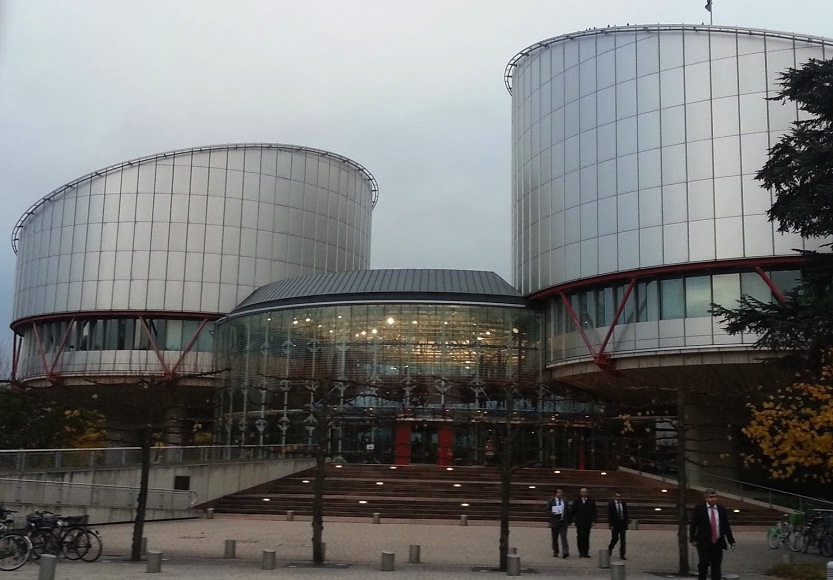
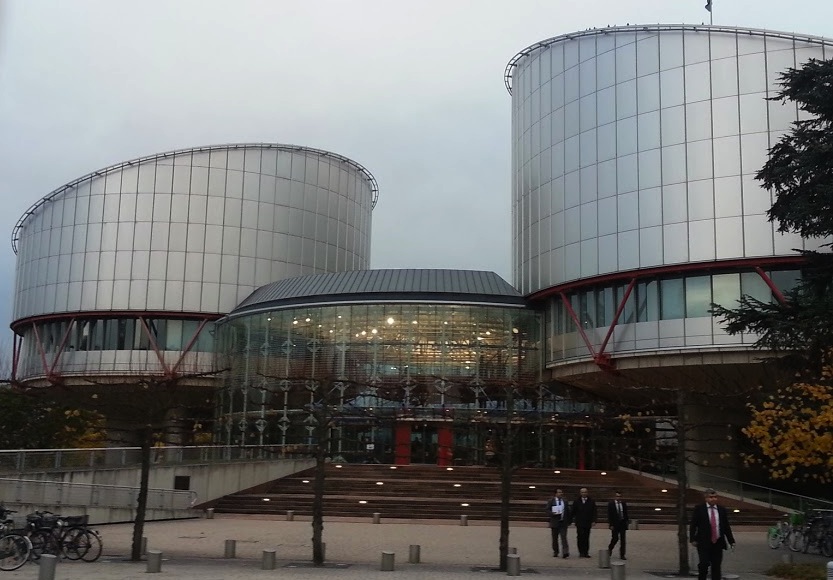
It raises concerns at several elements of the draft Declaration, including recommendations to the Court which could undermine its independence, and the lack of recognition of the role of civil society in the effective execution of judgments of the European Court of Human Rights (photo).
Europe-NGO Statement on Brussels Draft Declaration-Advocay-2015-ENG (full text in PDF)
Nov 18, 2014 | Advocacy, Cases, Legal submissions
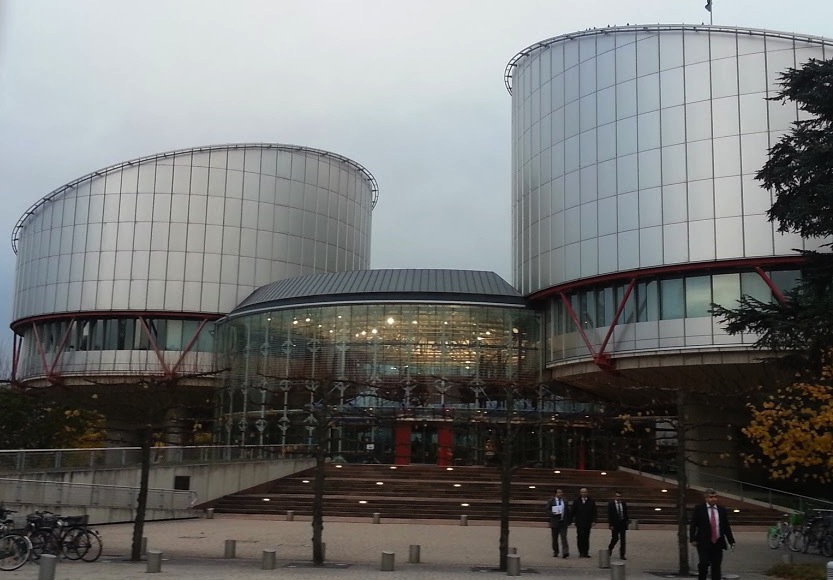
On 17 November 2014, the ICJ and ILGA-Europe filed their joint written submissions with the European Court of Human Rights in the case of Milica Đorđević and others v. Serbia (Application Nos. 5591/10, 17802/12, 23138/13 and 25474/14).
The case concerns the authorities’ decision in 2009 to relocate the applicants’ “Pride Parade” to promote the equality and visibility of lesbian, gay, bisexual and transgender people away from central Belgrade, Serbia, and the authorities’ repeated banning of Pride Parades in central Belgrade in 2011, 2012 and 2013.
The ICJ and the European Region of the International Lesbian, Gay, Bisexual, Trans and Intersex Association (ILGA-Europe)’s submissions to the Court focus on:
- the essential role of the right to freedom of peaceful assembly in a democratic society, and the scope of discretion afforded to States in determining measures required to prevent disorder at an assembly where counter-demonstrators threaten violence against groups most at risk; and
- the nature and scope of the State’s obligation in relation to the right to freedom of peaceful assembly under the European Convention on Human Rights and the International Covenant on Civil and Political Rights, focusing in particular on States’ duty to adopt legislative and administrative measures in order to fulfil their legal obligations.
SERBIA-ECHR amicus Dordevic-Advocacy-Legal Submission-2014-ENG (full text in PDF)
Oct 10, 2014 | Advocacy, Cases, Legal submissions
Today, the AIRE Centre (Advice on Individual Rights in Europe), the European Council on Refugees and Exiles (ECRE) and the ICJ presented joint written observations to the Grand Chamber of the European Court of Human Rights in the case of F.G. v. Sweden (Application No. 43611/11).
The case arises from the Swedish authorities’ dismissal of an asylum application. The submissions focus on:
- the obligation for Parties to the ECHR to ensure that the risk upon removal is addressed in such a way as to guarantee that the Convention’s protection is practical and effective;
- whether requiring coerced, self-enforced suppression of a fundamental aspect of one’s identity, which enforced concealment of one’s religion entails, is compatible with Convention obligations;
- the relevance and significance of the EU asylum acquis and Court of Justice of the EU’s jurisprudence on these matters; and
- the relevance and significance of the 1951 Geneva Refugee Convention.
SWEDEN-ECHR amicus FG vs Sweden-Advocacy-Legal Submission-2014-ENG (full text in PDF)
Jun 27, 2014 | Advocacy, Non-legal submissions
The ICJ and other civil society organizations highlighted progress in relation to accountability in the field of business and human rights, together with some continuing concerns, and unacceptable procedural tactics including in relation to a resolution on “protection of the family”.