Sep 17, 2019 | Advocacy
In a statement issued today, the ICJ and other human rights groups, as well as lawyers and members of the legal profession, expressed deep concern over the increasing attacks against lawyers under President Duterte’s administration.
Find the full statement available as PDF here: Philippines-attacks against lawyers escalating-advocacy-2019-ENG
Sep 17, 2019 | Advocacy
The ICJ welcomes the final report of the FFM (Independent International Fact Finding Mission).
Having monitored justice and human rights in Myanmar for over 50 years, the ICJ has an established presence in the country, and supports justice sector actors to implement reforms necessary to protect human rights through the rule of law.
With this experience, the ICJ concurs with conclusions of the FFM and the Special Rapporteur: particularly those highlighting the pervasive damage of unchecked military power and impunity on human rights, the rule of law, and development of an inclusive democratic society.
Myanmar’s Government has failed to fulfill international law obligations to investigate, prosecute and punish perpetrators of rights violations. In this context, the launch of an IIMM (Independent Investigative Mechanism for Myanmar) is necessary, and welcome. Myanmar should cooperate with the Mechanism, whose files may enable future prosecutions of individual criminals.
But this Mechanism is not a court: all States, particularly Myanmar, must work toward holding criminal trials, in competent jurisdictions, inline with international standards – noting that prosecutions target criminals, not the country.
Other immediate opportunities for Myanmar to protect human rights include: amending the National Human Rights Commission Law to expand its mandate and independence; amending laws that facilitate impunity such as the 1959 Defence Services Act; enacting an anti-discrimination law; and reviewing the 1982 Citizenship Law. These legislative reforms are urgent and possible steps that are necessary to demonstrate if the Government is genuine about its international law obligations. Any constitutional reform must also expand rights protections.
As the FFM’s mandate is ending, the ICJ would like to ask the experts: how can States best monitor and implement your recommendations, particularly related to international criminal accountability?
See also:
ICJ, Achieving Justice for Gross Human Rights Violations in Myanmar, January 2018
Terms of Reference for the UN Independent International Mechanism for Myanmar (unofficial Burmese translation), 16 January 2019, available here.
Statement to the Human Rights Council by Mr. Nicholas Koumjian, Head of the Independent Investigative Mechanism for Myanmar (unofficial Burmese translation with accompanying English text), 9 September, available here.
Sep 16, 2019 | Advocacy, News
Antonio Guterres should publicly condemn China’s widespread violations of the rights of its Muslim minority citizens, especially in Xinjiang Province, the ICJ demanded in a joint letter submitted along with Amnesty International, the International Federation for Human Rights (FIDH), Human Rights Watch, and the World Uyghur Congress.
The joint letter urged the UN Secretary-General to call for an end to widespread arbitrary detention of Muslim and minority communities through the immediate closure of Xinjiang’s ‘political education’ camps. Reports by the United Nations and human rights organizations have estimated that more than one million Muslims have been interned in extra-legal ‘political education’ detention camps.
“In the past few years, China’s violations in Xinjiang, including arbitrary detention, ill-treatment, pervasive surveillance and political indoctrination of Turkic Muslims, have intensified, and continue to worsen,” said Sam Zarifi, ICJ’s Secretary General.
“Quiet diplomacy has not worked. Mr. Guterres must exercise the full extent and power of his mandate as leader of the United Nations to demand and ensure protection of the rights of everyone in China, including all individuals in Xinjiang.”
The joint letter urged the UN Secretary-General to publicly support the creation of a UN fact-finding mission to assess the scale and nature of crimes under international law and human rights violations in Xinjiang. It further called on the UN Secretary-General to refrain from unqualified praise of China’s ‘Belt and Road’ Initiative – an investment initiative in which Xinjiang is a centerpiece – and to meet with representatives from the Uyghur community to hear first-hand of their plight.
“China has exerted immense and often inappropriate political pressure on individuals, governments and organizations criticizing its human rights violations,” said Zarifi. “The United Nations must push back against China’s political pressure and provide principled and steadfast leadership to end China’s political and cultural repression, and ongoing human rights violations in Xinjiang.”
Public criticism of China’s actions in Xinjiang has been growing. In August 2018, a member of the UN Committee on the Elimination of Racial Discrimination noted that China’s treatment of its Muslim minority citizens in Xinjiang had turned the region into a “‘no rights’ zone” with individuals being treated as “enemies of the State based on nothing more than their ethno-religious identity”. In March 2019, the UN High Commissioner for Human Rights, Michelle Bachelet, highlighted the need for her office to gain full access to facilitate independent and impartial investigation into ‘wide patterns of enforced disappearances and arbitrary detentions’ in the region. On 10 July 2019, 25 countries issued a joint statement calling on China to refrain from subjecting Uyghurs and other Muslim and minority communities in Xinjiang to arbitrary detention, surveillance and restrictions on freedom of movement.
Sep 3, 2019 | Advocacy, News
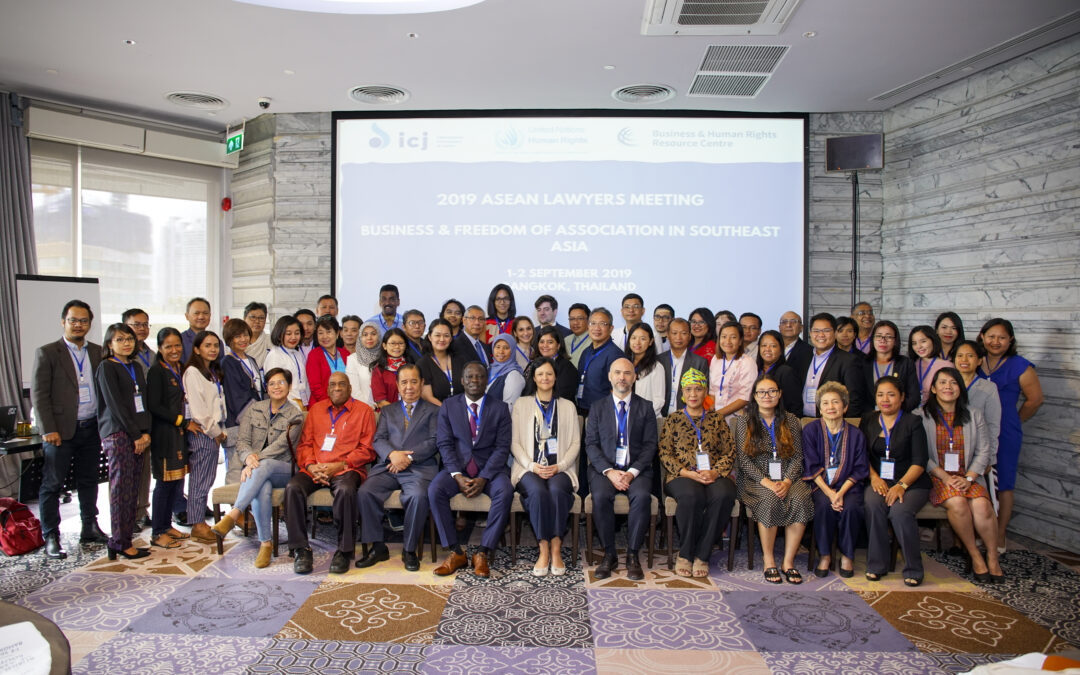
From 1 and 2 September 2019, the UN Special Rapporteur on freedom of association and assembly, Clément Nyaletsossi VOULE, and lawyers and trade union representatives met and discussed challenges faced in Southeast Asia on exercising the right to freedom of association of workers.
The event was organized by the ICJ together with Business & Human Rights Resource Centre (BHRRC), and supported by the Office of the United Nations High Commissioner for Human Rights (OHCHR).
At the meeting’s conclusion, the participants reached a consensus to work for the development regional guidelines on freedom of association of workers in the ASEAN and agreed to form a Working Group that would be tasked to develop these guidelines. The Working Group nominated by the participants is composed of trade union representatives at the national level, lawyers, among other experts.
In his keynote speech, the Special Rapporteur emphasized that freedom of association is a fundamental right for all workers without which they lack the power to fight discrimination and injustice in the workplace. He also explained the link between the rights to freedom of association and expression, “Freedom of association is closely related to freedom of expression as they both represent opening up of space for dialogue and an enabling environment where unions can participate freely.”
The participants at the meeting were practicing lawyers from Southeast Asia focusing on labor and employment and trade unions leaders and representatives. Other participants included representatives from human rights organizations addressing business and human rights and the right to freedom of association; the ASEAN Secretariat; the International Labor Organization (ILO), the ASEAN Trade Union Council (ATUC), and the International Trade Union Confederation (ITUC).
“Shrinking political and civic space combined with inequality and social marginalization are key challenges at the heart of business-related human rights violations in Southeast Asia,” said Katia Chirizzi, Deputy Regional Representative for UN Human Rights. “Governments must implement their obligations to respect, protect and promote human rights in relation to business activities. It is equally critical to ensure that businesses meet their responsibilities to respect human rights.”
During the meeting, the participants also discussed the role of women in labour organizing and the additional challenges women face when they exercise the right to freedom of association in the workplace. Betty Yolanda, Asia Regional Manager of the Business and Human Rights Resource Center (BHRRC) said: “Women workers face multiple forms of discrimination and challenges. They are fighting for their rights as workers in the company and at the same time they are also fighting the patriarchy.”
The participants identified common challenges confronted in the region where workers’ rights to freedom of association face legal and physical limitations. Migrant workers, women workers and workers in Special Economic Zones (SEZs) were identified as being particularly at risk in exercising their rights.
“It is crucial that we discuss these challenges openly and with all stakeholders, particularly issues that affect those who work in the informal sector, and other vulnerable communities such as migrant workers. Special investment frameworks, special economic zones and other government-led initiatives meant to attract foreign investment potentially create new opportunities to increase transparency and accountability. Unfortunately, they are more often used to justify lowering human rights standards, or impose new restrictions that act to limit workers and communities abilities to express their grievances or exercise their rights to association,” said Frederick Rawski, ICJ’s Regional Director for Asia and the Pacific.
Contact:
Boram Jang, International Legal Adviser, Asia & the Pacific Programme, e: boram.jang(a)icj.org
Jul 12, 2019 | Advocacy, Non-legal submissions
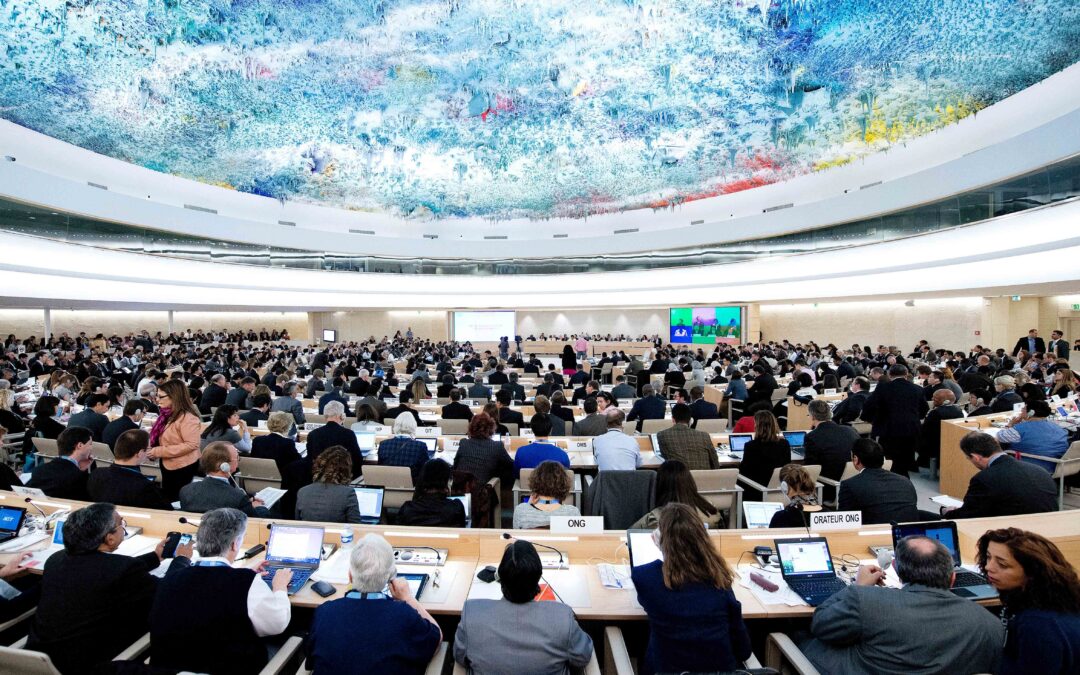
The ICJ joined other NGOs in an end-of-session statement, highlighting the achievements and shortfalls of the 41st Ordinary Session of the UN Human Rights Council, 24 June – 12 July 2019.
The statement, delivered by International Service for Human Rights (ISHR), reads as follows:
By renewing the mandate of the Independent Expert on protection against violence and discrimination based on sexual orientation and gender identity (SOGI), the Council has sent a clear message that violence and discrimination against people of diverse sexual orientations and gender identities cannot be tolerated. It reaffirmed that specific, sustained and systematic attention is needed to address these human rights violations and ensure that LGBT people can live a life of dignity. We welcome the Core Group’s commitment to engage in dialogue with all States, resulting in 50 original co-sponsors across all regions. However, we regret that some States have again attempted to prevent the Council from addressing discrimination and violence on the basis of SOGI.
The Council session also sent a clear message that Council membership comes with scrutiny by addressing the situations of Eritrea, the Philippines, China, Saudi Arabia and the Democratic Republic of Congo. This shows the potential the Council has to leverage its membership to become more effective and responsive to rights holders and victims.
The Council did the right thing by extending its monitoring of the situation in Eritrea. The onus is on the Eritrean Government to cooperate with Council mechanisms, including the Special Rapporteur, in line with its membership obligations.
We welcome the first Council resolution on the Philippines as an important first step towards justice and accountability. We urge the Council to closely follow this situation and be ready to follow up with additional action, if the situation does not improve or deteriorates further. We deeply regret that such a resolution was necessary, due to the continuation of serious violations and repeated refusal of the Philippines – despite its membership of the Council– to cooperate with existing mechanisms.
We deplore that Council members, such as the Philippines and Eritrea, sought to use their seats in this Council to seek to shield themselves from scrutiny, and those States[1] who stand with the authorities and perpetrators who continue to commit grave violations with impunity, rather than with the victims.
We welcome the written statement by 22 States on China expressing collective concern over widespread surveillance, restrictions to freedoms of religion and movement, and large-scale arbitrary detention of Uyghurs and other minorities in Xinjiang. We consider it as a first step towards sustained Council attention and in the absence of progress look to those governments that have signed this letter to follow up at the September session with a resolution calling for China to allow access to the region to independent human rights experts and to end country-wide the arbitrary detention of individuals based on their religious beliefs or political opinions.
We welcome the progress made in resolutions on the rights of women and girls: violence against women and girls in the world of work, on discrimination against women and girls and on the consequences of child, early and forced marriage. We particularly welcome the renewal of the mandate of the Working Group on Discrimination Against Women and Girls under its new name and mandate to focus on the intersections of gender and age and their impact on girls. The Council showed that it was willing to stand up to the global backlash against the rights of women and girls by ensuring that these resolutions reflect the current international legal framework and to resist cultural relativism, despite several amendments put forward to try and weaken the strong content of these resolutions.
However, in the text on the contribution of development to the enjoyment of all human rights, long standing consensus language from the Vienna Declaration for Programme of Action (VDPA) recognising that, at the same time, “the lack of development may not be invoked to justify the abridgement of internationally recognized human rights” has again been deliberately excluded disturbing the careful balance established and maintained for several decades on this issue.
We welcome the continuous engagement of the Council in addressing the threat posed by climate change to human rights, through its annual resolution and the panel discussion on women’s rights and climate change at this session. We call on the Council to continue to strengthen its work on this issue, given its increasing urgency for the protection of all human rights.
The Council has missed an opportunity on Sudan where it could have supported regional efforts and ensured that human rights are not sidelined in the process. We now look to African leadership to ensure that human rights are upheld in the transition. The Council should stand ready to act, including through setting up a full-fledged inquiry into all instances of violence against peaceful protesters and civilians across the country.
During the interactive dialogue with the Special Rapporteur on extrajudicial and summary executions, States heard loud and clear that the time to hold Saudi Arabia accountable is now for the extrajudicial killing of journalist Jamal Khashoggi. We recall that women human rights defenders continue to be arbitrarily detained despite the calls by 36 States at the March session. We urge States to adopt a resolution at the September session to establish a monitoring mechanism over the human rights situation in the country.
We welcome the landmark report of the High Commissioner on the situation for human rights in Venezuela; in response to the grave findings in the report and the absence of any fundamental improvement of the situation in the meantime, we urge the Council to adopt a Commission of Inquiry or similar mechanism in September, to reinforce the ongoing efforts of the High Commissioner and other actors to address the situation.
We welcome the renewal of the mandate on the freedom of peaceful assembly and association. This mandate is at the core of our work as civil society and we trust that the mandate will continue to protect and promote these fundamental freedoms towards a more open civic space.
We welcome the renewal of the mandate of the Special Rapporteur on Belarus. We acknowledge some positive signs of re-engagement in dialogue by Belarus, and an attempted negotiation process with the EU on a potential Item 10 resolution. However, in the absence of systemic human rights reforms in Belarus, the mandate and resolution process remains an essential tool for Belarusian civil society. In addition, there are fears of a spike in violations around upcoming elections and we are pleased that the resolution highlights the need for Belarus to provide safeguards against such an increase.
We welcome the renewal of the quarterly reporting process on the human rights situation in Ukraine. However, we also urge States to think creatively about how best to use this regular mechanism on Ukraine to make better progress on the human rights situation.
The continued delay in the release of the UN database of businesses engaged with Israeli settlements established pursuant to Council resolution 31/36 in March 2016 is of deep concern. We join others including Tunisia speaking on behalf of 65 states and Peru speaking on behalf of 26 States in calling on the High Commissioner to urgently and fully fulfil this mandate as a matter of urgency and on all States to cooperate with all Council mandates, including this one, and without political interference.
Numerous States and stakeholders highlighted the importance of the OHCHR report on Kashmir; while its release only a few days ago meant it did not receive substantive consideration at the present session, we look forward to discussing it in depth at the September session.
Finally, we welcome the principled leadership shown by Belgium, Luxembourg and the Netherlands, in pursuing accountability for individual victims of acts of intimidation and reprisals under General Debate Item 5, contrasting with other States which tend to make only general statements of concern, and call on States to raise all individual cases at the interactive dialogue on reprisals and intimidation in the September session.
(text in italics was not read out due to the limited time)
Signatories:
- International Service for Human Rights (ISHR)
- Amnesty International
- ARTICLE 19
- Asian Forum for Human Rights and Development (FORUM-ASIA)
- Association for Progressive Communications (APC)
- Cairo Institute for Human Rights Studies
- Center for Reproductive Rights
- CIVICUS: World Alliance for Citizen Participation
- DefendDefenders (the East and Horn of Africa Human Rights Defenders Project)
- Franciscans International
- Global Initiative for Economic, Social and Cultural Rights
- Human Rights House Foundation
- Human Rights Watch
- International Commission of Jurists (ICJ)
- International Federation for Human Rights (FIDH)
- International Lesbian and Gay Association (ILGA)
[1] States who voted against the resolution on Eritrea: Bahrain, Burkina Faso, Cameroon, China, Cuba, Egypt, Eritrea, Iraq, India, Saudi Arabia, Somalia, the Philippines and Pakistan.
States who voted against the resolution on the Philippines: Angola, Bahrain, Cameroon, China, Cuba, Egypt, Eritrea, Hungary, Iraq, India, Qatar, Saudi Arabia, Somalia, and the Philippines.
Jun 27, 2019 | Advocacy, Non-legal submissions
The ICJ highlighted the role of women in ensuring respect for human rights in relation to businesses, in a statement to the UN Human Rights Council today.
In an oral statement made during an interactive dialogue with the Working Group on Discrimination Against Women and the Working Group on the issue of human rights and transnational corporations and other business enterprises, the ICJ stated as follows (check against delivery):
The International Commission of Jurists (ICJ) welcomes the report of the Working Group on the issue of human rights and transnational corporations and other business enterprises, and agrees that despite years of progress, women continue to experience multiple forms of discrimination. Women’s voices continue to be unheard and they face insurmountable challenges as they use these voices to access justice on behalf of their communities.
We have seen numerous cases where women lead their communities in protesting abuses committed by business enterprises. Many of these communities are located in remote areas, far from courts or other mechanisms that could be used by them to seek justice. The women who lead these communities often do not identify as women human rights defenders. They see themselves as mothers protecting the health of their families or the land from which they grow their food and earn their living. Because of where these communities are located, local government authorities play a significant role on whether or not these women are heard or are able to access justice.
The women farmers of Kendeng in Indonesia, for instance, have been protesting the operation of a cement factory in their area, which contaminate their water and land. In 2016, the Supreme Court of Indonesia had already ruled in favor of these women farmers and their community, and ordered the revocation of the cement factory’s permit. To this day, however, the cement factory continues to operate, ignoring the final order of the Supreme Court. The Kendeng women farmers have raised the non-implementation of the Supreme Court’s order with the Governor of Central Java and the Indonesian government, but their voices remain unheard.
In the Philippines, the women community leaders of Pio V. Corpus, Masbate, have been protesting plans to establish a cement factory and a coal-fired power plant in their town. They allege that their local government leaders approved plans for this factory and power plant without consultation and in blatant disregard of the disastrous impact these would have on the environment and people’s health.
Mr. President, we join the Working Group in urging States and business enterprises to ensure meaningful participation of potentially affected women in all stages of human rights due diligence. We also urge States to take measures to ensure that women – wherever they may be located – are able to access justice for abuses committed by business. Finally, we recommend that local government authorities be made aware of the Guiding Principles and able to integrate the gender framework and guidance in discharging their human rights responsibilities.
Thank you.