Jan 8, 2018 | Advocacy, Cases, Legal submissions, News
The ICJ and other organizations have intervened today before the European Court of Human Rights challenging expulsions of asylum seekers from Hungary to Serbia.
The International Commission of Jurists (ICJ), the European Council on Refugees and Exiles (ECRE) and the Dutch Council for Refugees have submitted today a third party intervention before the Grand Chamber of the European Court of Human Rights in the case of Ilias and Ahmed v. Hungary.
The case challenges the systematic practice by the Hungarian authorities to send back to Serbia foreign nationals asking for asylum under the pretention that Serbia is a safe third country in which to ask for international protection.
The intervening organizations have argued before the Court that:
- a removal that exposes an applicant to the risk of refoulement and deprives them of protections under international and EU law, is prohibited regardless of whether the decision was taken on the basis of the safe third country concept or the country was included in a “safe third country” list.
- International law requires, inter alia, a rigorous scrutiny of the applicant’s arguable claim of potential prohibited treatment, access to an effective remedy following a negative decision, and access to the rights under the 1951 Refugee Convention.
- Application of the safe third country concept for EU Member States is contingent on the applicant being admitted to the territory and having effective access to a fair asylum procedure in the safe third country
- An assessment of whether restrictions on the freedom of movement of migrants, imposed in a border or international zone, amount to deprivation of liberty under Article 5 ECHR must be based on the impact of these measures on the individuals concerned.
Hungary-ECtHR-amicusbrief-cases-Ilias&Ahmed-ICJ&others-2018-ENG (download the third party intervention)
Background
Ilias Ilias and Ali Ahmed, both Bangladeshi nationals, fled their home country in arrived at the Hungarian-Serbian border on 15 September 2015 after having briefly crossed through Serbia during their trip.
Having asked immediately for asylum in Hungary, they were confined for days in a transit zone, a ” a confined area of some 110 square metres, part of the transit zone, surrounded by fence and guarded by officers”.
Their applications were rejected on the very same day of their application on the grounds that they could have asked for asylum in Serbia, considered by Hungary a safe third country, and appeals were rejected.
They were removed to Serbia on 8 October 2015.

Dec 15, 2017 | Advocacy, Cases, Legal submissions
The ICJ, together with other NGOs, intervened before the European Court of Human Rights in MA v Poland, concerning interim measures to protect applicants for asylum at the Polish-Belarus border.
The case concerned a family of asylum seekers who sought to apply for international protection in Poland, at a border crossing with Belarus, but were repeatedly turned away by border guards. The European Court granted interim measures indicating that the applicants should not be returned from Poland to Belarus, and that their asylum application should be examined by the Polish authorities. These interim measures were not complied with.
In their third party intervention in the case, the ICJ, ECRE, AIRE Centre and the Dutch Council for Refugees emphasised the binding nature of the obligation to comply with interim measures of the European Court of Human Rights, supported by the jurisprudence of the Court and by comparative standards of other international human rights mechanisms.
They further submitted that, where interim measures relate to children, irrespective of whether the children are applicants in the case, the State must abide by the measure indicated with special diligence and take the appropriate protective measures which the age, level of maturity, environment and experiences of the children require.
Poland-MA-ECtHR-amicus-ICJ&others-final-eng-2017 (download the intervention)
Oct 6, 2017 | Advocacy, Cases, Legal submissions
The ICJ and other human rights organisations intervened before the European Court of Human Rights in a case challenging the returns of migrants and refugees from Greece under the EU-Turkey deal.
The ICJ, the AIRE Centre, the European Council on Refugees and Exiles and the Dutch Council for Refugees have submitted a third party intervention before the European Court of Human Rights in the case of J.B. v. Greece. The case concerns the decision of Greek authorities to return a Syrian refugee to Turkey under the legal assumption that Turkey is a safe third country for refugees, that has been introduced following the EU-Turkey deal reached in reaction to the “refugee crisis”.
The interveners challenge the implementation of the rule of safe third country in these situations with regard to Greece’s obligations under the European Convention on Human Rights (ECHR). Specifically, the intervention focuses on:
- The principle of non-refoulement under the ECHR;
- The safe third country concept in international refugee law and EU law;
- The respect of the right to an effective remedy in cases of returns to Turkey under the safe third country rule.
Greece-JB_v_Greece-ECtHR-amicus-ICJ&others-final-eng-2017 (download the intervention)
Oct 3, 2017 | Advocacy, Cases, Legal submissions
On 2 October, the ICJ and Amnesty International submitted an intervention before the European Court of Human Rights in the case Ecodefence and others v the Russian Federation, Application no. 9988/13 and 48 other applications, which concern labeling NGOs as foreign agents.
In this submission, the applicants provided the Court with an analysis, based on international law sources, of:
a) the scope of application of rights to freedom of expression and association guaranteed under Articles 10 and 11 of the European Convention on Human Rights (ECHR or the Convention) to restrictions on the activity of non-governmental organisations (NGOs);
b) application of the principle of legality to such restrictions;
c) the legitimacy of the aim, necessity and proportionality of measures regulating NGOs, including restrictions on funding, burdensome reporting requirements, sanctions and the stigmatizing effect of labelling NGOs as “foreign agents”; and
d) the scope of permissible restrictions under Article 18 of the ECHR, particularly the question of interferences used for purposes other than those which fall under Articles 10 and 11 of the Convention.
The submission addresses the obligations of State parties to the ECHR with account taken of the other international law obligations, such as those under the International Covenant on Civil and Political Rights (ICCPR) as well as other relevant standards under international law.
Russia-ECtHR-AmicusBrief-Ecodefence-legalsubmissions-2017-ENG (download the third party intervention)

Sep 14, 2017 | Advocacy, Cases, Legal submissions, News
On 13 September, the European Committee of Social Rights decided on the admissibility of the collective complaint submitted by the ICJ and Forum for Human Rights, against the Czech Republic.
The Committee assessed the admissibility conditions set out in the Protocol and the Committee’s Rules and the Government’s objections on admissibility and declared the complaint admissible. The Czech Government has now two months to make written submissions on the merits of the complaint.
The complaint argues that the Czech Republic fails to ensure equal legal protection and participation of children below the age of criminal responsibility in the pre-trial stage of juvenile justice procedures.
The ICJ and FORUM submit that serious systemic flaws in the Czech juvenile justice system deprive a specific group of particularly vulnerable individuals – children below the age of criminal responsibility – of an adequate level of social protection and leave them at risk of inappropriate or unfair procedures leading to arbitrary punitive measures, in violation of Article 17 of the European Social Charter, both alone and read in conjunction with the principle of equality in the preamble to the Charter.
Europe-ECSR-ICJvCzechRepublic-ChildrenJustice-AdmissibilityDecision-2017 (download the Committee’s decision)
Jun 26, 2015 | Advocacy, Cases, Legal submissions, News
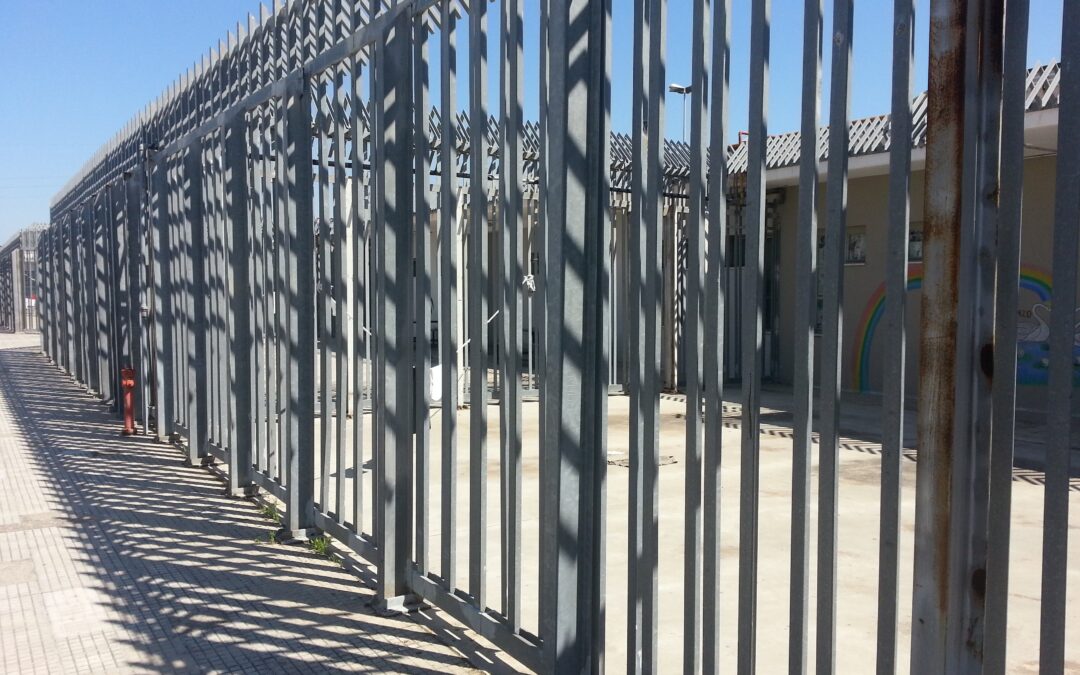
The ICJ submitted today a third party intervention before the European Court of Human Rights in the case of Richmond Yaw and others v. Italy regarding the detention of four migrants in Italian Centres for Identification and Expulsion.
The case raises issues related to the lawfulness of their detention in immigration centres, and the compliance of the mechanisms of judicial review and compensation for unlawful detention with the European Convention on Human Rights.
Taky Berko Richmond Yaw, Yaw Ansu Matthew, Darke Isaac Kwadwo, and Dominic Twumasi, nationals of Guinea, had been detained in the Centre for Identification and Expulsion of Ponte Galeria (Rome).
In these submissions, the ICJ presented the Court with a summary of its findings regarding the law and practice of detention of migrants and the related judicial guarantees in Italy, in its 2014 report, “Undocumented” Justice for Migrants in Italy.
Furthermore, the ICJ presented an analysis of the principles that apply in regard to arbitrary detention of persons detained for the purposes of immigration control under article 5.1.f. ECHR, in particular:
- The principle of legality, including the fact that the basis, procedures and conditions for detention must be provided by law, and the principle that detention must be carried out in good faith; and the due process guarantees related to these principles;
- The requirement that detention be undertaken only pursuant to the permitted purposes of article 5.1.f ECHR, and the need for strict construction of this requirement, and ongoing scrutiny of compliance with it, in particular in the context of long periods of detention;
- The requirements of access to an effective judicial mechanism to secure the right to habeas corpus and review of the legality, necessity and proportionality of the detention of migrants, under article 5.4. ECHR;
- The requirements of an effective remedy and reparation mechanism for unlawful deprivation of liberty under article 5.5 ECHR.
ECtHR-AmicusBrief-Yaw&others v Italy-Advocacy-Legal Submission-2015-ENG (download the third party intervention)