Mar 1, 2021 | Cases, News
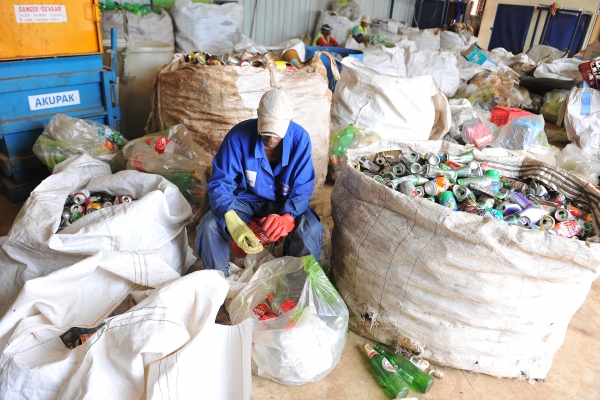
Today, the ICJ will argue in a case before the Johannesburg High Court that the rights to housing and work for persons who work to informally reclaim waste must be protected in line with international law and standards.
Today the International Commission of Jurists will be appearing as an amicus curiae in the matter of Ryckloff-Beleggings (Pty) Ltd v Ntombekhaya Bonkolo and Others. In this matter, the Socio-Economic Rights Institute of South Africa represents over 100 informal waste reclaimers who are opposing an application for eviction from their homes by, Ryckloff-Beleggings (Pty) Ltd, the owner of the property.
The ICJ, represented by Lawyers for Human Rights, is asking the Court to fully consider the impact of any eviction order it grants on the rights to housing and work of the reclaimers and the right to health of both the reclaimers and the broader community, particularly in the context of the ongoing COVID-19 pandemic.
Timothy Fish Hodgson, Legal Adviser on Social, Economic and Cultural Rights at the ICJ said:
“It is inhumane to render people homeless as a result of eviction from their homes, but when doing so also strips them of their ability to make a living, the impact on their dignity is even greater. South Africa has a duty to ensure the protection of the reclaimers’ rights to housing and work.”
Many of the informal reclaimers in this matter have lived on the property for long periods of time and they argue that the eviction will result in them being rendered homeless. Many make a living by collecting, sorting, recycling, and selling valuable materials disposed of as waste at and near their homes.
The land upon which they live is not just their home, but also allows them to make a living. In the South African context job opportunities are scarce with an official unemployment rate as high as 32.5 percent.
The ICJ brief calls on the Court to take account of international human rights law relating to the right to work, and South Africa’s international legal obligations and its own domestic law in terms of the right to housing.
In the event of their eviction being permitted by the Court, the reclaimers seek the provision of alternative accommodation which will not deprive them of their ability to make a living, a request which the ICJ contends is consistent with the requirements of international human rights law.
Thandeka Chauke, ICJ’s legal representative in this matter and an Attorney at Lawyers for Human Rights said:
“Especially in light of the economic devastation brought on by the COVID-19 pandemic, it is essential that Courts act as guardians of the human rights of the marginalized in our society. Informal reclaimers’ role in our society should be recognized and they should not be stripped of their homes and livelihoods without sufficient effort being made by government to come to their aid.”
For the ICJ’s heads of arguments, click on ICJ_Amicus_Curiae_Heads_of_Argument_Ryckloff.
For more information about the case, click here.
CONTACT:
Timothy Fish Hodgson, Legal Adviser on Social, Economic and Cultural Rights, e: timothy.hodgson@icj.org
Tanveer Rashid Jeewa, Communications and Legal Officer, e: tanveer.jeewa@icj.org

Feb 12, 2021 | Cases, News
Today, the ICJ and The Corporate Responsibility (CORE) Coalition UK, welcomed the judgment of the UK Supreme Court in the case Okpabi et al. v Royal Dutch Shell plc et al as a major step forward for those seeking access to justice for corporate abuses in the Niger Delta and around the world.
The Supreme Court judgment allows the case to proceed in the UK courts, reversing earlier decisions by the Court of Appeal and the High Court, and reaffirming the precedent established in its own previous decision in Lungowe et al v Vedanta resources (2019).
Carlos Lopez, Senior Legal Advisor at the ICJ, said:
“The emphasis of the Supreme Court on the relevance of evidence from internal company documents is of utmost importance for the proper assessment of whether the parent company intervened, advised or controlled the relevant activities of its subsidiary that caused harm, including notably human rights abuses and environmental destruction.
“This should have an impact on future similar proceedings before courts in the UK and elsewhere.”
Mark Dearn, Director of CORE, said:
“This landmark ruling is a vital step towards justice for some 50,000 claimants from the Ogale and Bille communities. It sends a clear message to multinational corporations like Shell – you have a duty of care and you will be held to account for human rights abuses and environmental damage caused by subsidiaries you control.
“Shell brazenly claimed in court that the oil spills were due to ‘uniquely Nigerian problems’. But the unique problem long faced by communities in this region is Shell’s impunity, as it has repeatedly tried to dodge accountability for its catastrophic destruction of the environment and people’s livelihoods.”
“It’s now crucial that governments step up to the plate to create new corporate accountability laws so that businesses know exactly what is expected of them.”
In Vedanta, the Court affirmed that a parent company that sufficiently intervenes, controls or advises the relevant operations of its subsidiary may bear liability for the breach of its duty of care towards the people affected by those operations.
Okpabi and other nearly 50,000 claimants in total – sued Royal Dutch Shell (RDS -the UK based parent company) and its Nigerian subsidiary Shell Petroleum Development Corporation (SPDC) for their alleged involvement in the leakage of oil pipelines which destroyed their farming land, wiped out fish stocks and poisoned drinking water in the Niger Delta, Nigeria.
In 2018 the Court of Appeal dismissed the claimants’ case, but the claimants appealed to the Supreme Court. The ICJ and the CORE Coalition intervened before the Supreme Court.
The Supreme Court has allowed the claim to proceed, focusing on whether the claim had a real prospect of success and the high relevance of the internal company documents for a proper assessment.
Find the judgment here.
Notes to Editors:
- This case was first launched in 2015 in the UK High Court. For a timeline of the case’s passage through the UK court system, see here.
- The ICJ and CORE Coalition submitted a legal brief to the Supreme Court setting out the applicability of comparative law and standards regarding companies’ responsibilities in relation to human rights and environmental protection. These standards showed that Royal Dutch Shell PLC (Shell) could have duty of care in relation to the communities affected by its Nigerian subsidiary’s activities.
- In 2018 the Court of Appeal dismissed the claimants’ case, ruling that Shell did not exercise sufficient control over its subsidiary SPDC for Shell possibly to hold a duty of care towards those affected by the oil spills.
- The Supreme Court judgment reverses that judgment, cautioning against dismissing such claims in “mini-trials” without proper access to all relevant facts and evidence that are in great part in the power of the company. The judgment clarifies the evidential threshold needed for the courts to hear such cases in the UK: “The resolution of the jurisdictional challenge depended upon whether the appellants’ claim satisfied the summary judgment test of real prospect of success.” (para 127 ref. Vedanta at para 45)
- In another section the Court also corrected the Court of Appeal’s view that the promulgation by a parent company of group wide policies or standards can never in itself give rise to a duty of care, saying: “that is inconsistent with Vedanta. Group guidelines … may be shown to contain systemic errors which, when implemented as of course by a particular subsidiary, then cause harm to third parties.” (para 143)
- In Lungowe v Vedanta Resources plc, which CORE and the ICJ similarly filed a joint intervention, the Supreme Court ruled that a duty of care was owed by the UK parent company, Vedanta. A settlement was subsequently reached. As the Supreme Court notes, this ruling was “very relevant to both the procedural and the substantive issues raised on this [Okpabi v Shell] appeal”.

Jan 15, 2021 | Advocacy, Cases, Legal submissions
The ICJ and Amnesty International have submitted today to the European Court of Human Rights their intervention in the case of Judge Igor Tuleya who alleges that the seven disciplinary proceedings brought against him have affected his reputation as a judge and undermine the authority of the judiciary.
Judge Igor Tuleya contests that the disciplinary proceedings brought against him were in violation of his right to respect for private life and of his right to an effective remedy against violation of human rights.
The case takes place in the context of the “reform” of the judiciary in Poland, involving policy measures and legislative changes approved between late 2015 and 2020, which have seriously compromised the independence of the judiciary.
The intervention focuses on three main issues:
- The scope of application of Article 8 and Article 13 in cases relating to disciplinary proceedings against judges, in light of international standards on disciplinary proceedings and measures and effective domestic remedies; of the Court’s Convention jurisprudence; and of general principles on the rule of law and the role and independence of the judiciary.
- The situation of the independence of the judiciary in Poland as the context in which to assess the application of Articles 8 and 13.
- The scope of Article 10 as applied to judges, including those engaged in the administration of the judiciary.
ECtHR-AmicusBrief-Tuleya_v_Poland-Advocacy-Legal-Submission-2020-ENG (download the third party intervention)
Nov 2, 2020 | Advocacy, Cases, Legal submissions
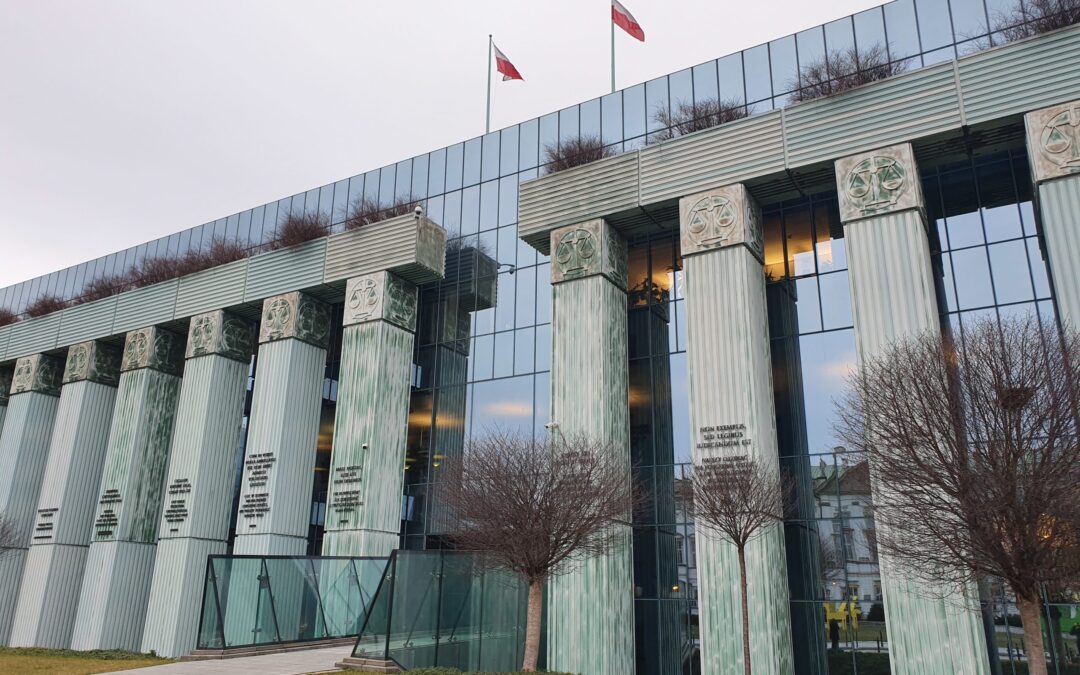
The ICJ submitted today a third party intervention to the European Court of Human Rights in a key case challenging the independence of the Disciplinary and Extraordinary Chambers of Poland’s Supreme Court.
In the case of Reczkowicz and Others v. Poland, the European Court of Human Rights will consider whether the recently established Disciplinary and Extraordinary Chambers of the Supreme Court of Poland may be considered an “independent and impartial tribunal” in order to satisfy the requirements of the right to a fair trial under article 6 of the European Convention on Human Rights (ECHR).
In its third party intervention, the International Commission of Jurists has submitted that a court cannot be considered as independent whenever the body that has appointed its members lacks guarantees of independence from the executive and legislative powers as enshrined in standards of the Council of Europe and the United Nations, including that at least half of its members be judges elected by their peers.
It further concluded that a court composed by judges appointed by a non-independent body or via a non-independent procedure will not be capable of constituting an independent and impartial tribunal under article 6 ECHR.
Poland- ECtHR-Reczkowicz and Others v Poland – TPI – ICJ – 2020 -ENG (download the third party intervention)
Oct 27, 2020 | Advocacy, Cases, Legal submissions
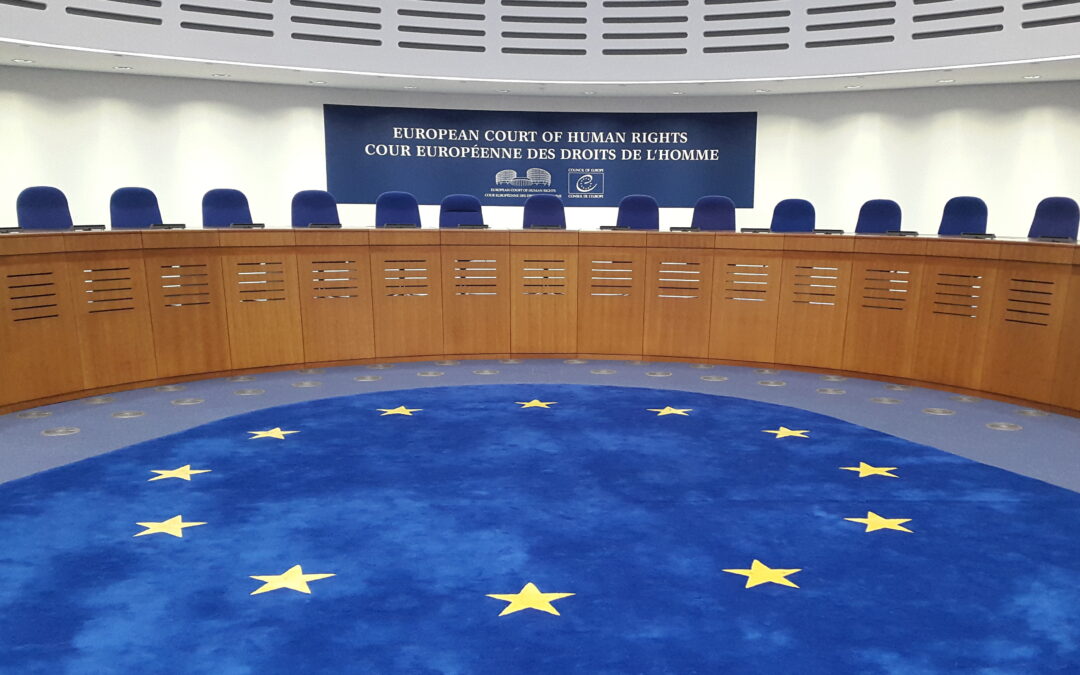
The ICJ and Amnesty International have presented today a third party intervention before the European Court of Human Rights in the case of the premature dismissal of Judge Waldemar Zurek from his position in the National Judicial Council.
In the case Zurek v. Poland, the ICJ and Amnesty International presented submissions on the scope of application of the right to a fair trial under Article 6.1 of the European Convention on Human Rights (ECHR) in cases relating to the role of an independent judiciary and its members through self-governance mechanisms (such as the National Council of the Judiciary) in light of international standards on judicial councils, judicial appointments, the judicial career and security of tenure; of the Court’s Convention jurisprudence; and of general principles on the rule of law and the role and independence of the judiciary.
They further submitted obervations on the scope of the right to freedom of expression under Article 10 ECHR as applied to judges, including those engaged in the administration of the judiciary.
ECtHR-AmicusBrief-Zurek_v_Poland-Advocacy-Legal-Submission-2020-ENG (download the third party intervention)