Jul 24, 2018 | Events, News
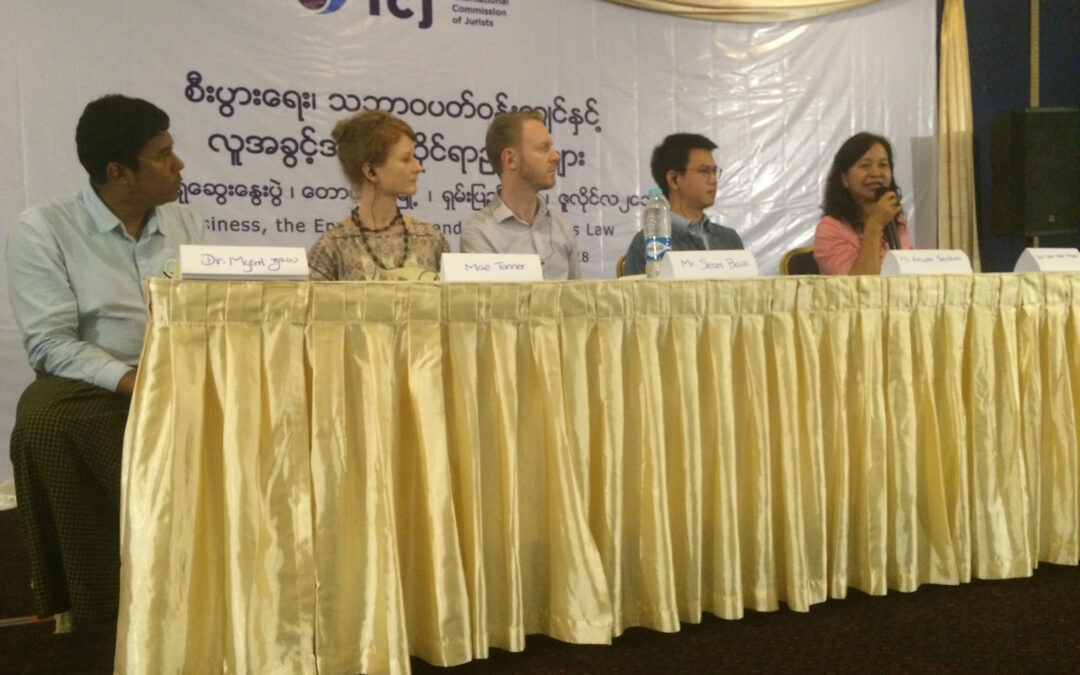
On 22 and 23 July the ICJ convened a workshop on Business, the Environment and Human Rights Law in Taunggyi, the capital of Myanmar’s Shan State.
This followed meetings between the ICJ’s legal advisers and the Shan State High Court and also with the State Advocate General on 13 July, to discuss rule of law developments.
The workshop aimed to identify ways to address the impacts of business activities on human rights and the environment, through legal advocacy including strategic litigation, and to provide a forum for cooperation and experience sharing among participants.
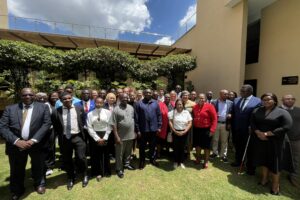
More than 50 lawyers, parliamentarians, human rights defenders and civil society representatives attended from Shan, Kayah and Mon states – provinces that together border Thailand, Laos and China.
An overview of the investment context was provided by Dr Myint Zaw of Paung Ku Myanmar, who also shared lessons from environmental activism in Myanmar.
As well as highlighting weaknesses in domestic law and policy, he presented concerns around lack of transparency and information sharing between the legislature and executive branches of government.
Australian lawyer and ICJ consultant Mae Tanner gave an overview of international human rights law and standards relevant to business activities and environmental protection, particularly emphasizing the obligations assumed by Myanmar in ratifying the International Covenant on Economic, Social and Cultural Rights.
She offered insights as to how UN mechanisms can be used by civil society to advance their advocacy on business and human rights in Myanmar.
Senior Advocate U Myint Thwin drew on his extensive litigation experience to share perspectives on the complex and confusing array of land laws in Myanmar and emphasized the importance of legal knowledge and training to combat corruption and achieve accountability.
The ICJ’s legal adviser Mr Sean Bain outlined the domestic laws relevant to investment and environmental protection in Myanmar and highlighted some key provisions that offer protection against human rights violations and abuses.
He noted the government’s stated aim of promoting the rule of law in Myanmar and emphasized the importance of demanding accountability, transparency and justice in this context.
Amarin Saichan, lawyer with Thai NGO EnLAW, shared experiences of pursuing strategic litigation to address unlawful and harmful business activities in Thailand, stressing the need for creativity in using the law to seek justice and accountability.
He also raised concerns around the use by government of strategic litigation against public participation in Thailand and explained how Thai lawyers are using the courts to guarantee the right protest against harmful development projects.
Participants had the opportunity to discuss how the strategies they shared could be used in the context of issues faced by their communities.
These included human rights and environmental concerns raised by energy and extractive projects, restrictions on shifting agriculture, and violations of the right to freedom of expression and assembly faced by communities who oppose state-backed developments.
They considered advocacy strategies for four case studies selected by participants from across Shan, Kayah and Mon states.
Throughout the workshop speakers and participants highlighted the importance of cooperation between civil society and lawyers, and the need to use Myanmar’s legal system more proactively as part of their broader advocacy strategies.
This workshop is part of the ICJ’s ongoing support to lawyers and civil society in Myanmar.
Jun 27, 2018 | Events, News
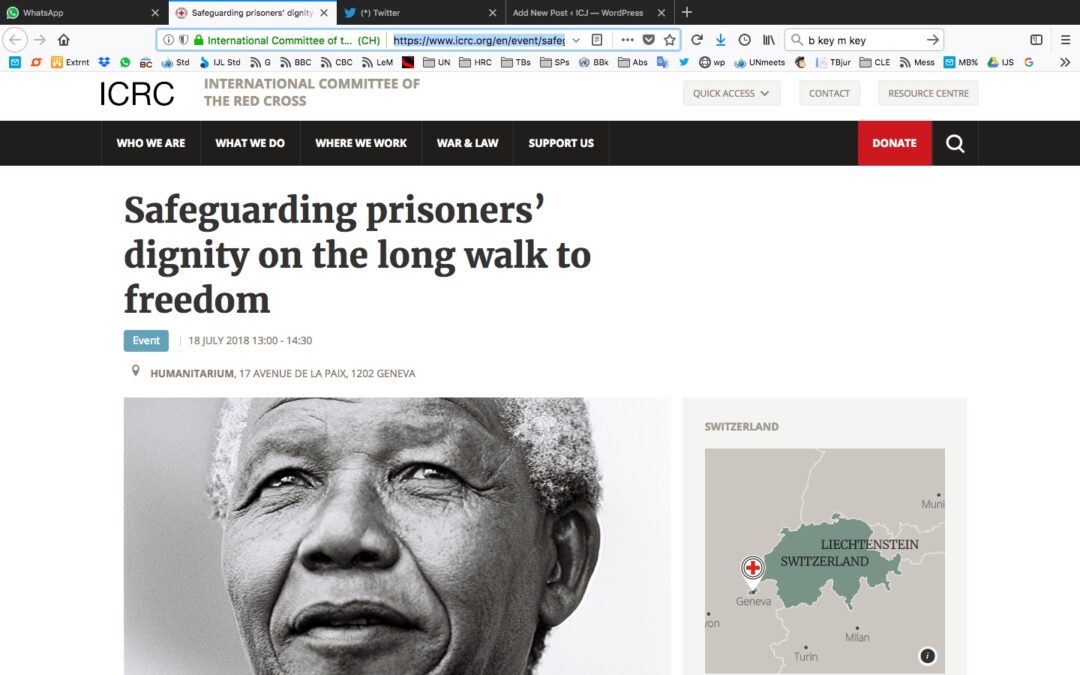
ICJ Senior Legal Adviser Matt Pollard will speak at an ICRC event on 18 July, marking Nelson Mandela International Day.The event, 18 July 2018, 13:00 – 14:30, will take place at the ICRC Humanitarium, 17 avenue de la paix, in Geneva.
On 18 July, the ICRC is marking Nelson Mandela International Day with the launch of a new edition of ‘A Human Rights Approach to Prison Management’ by the Institute for Criminal Policy Research. This Handbook, which has been translated into 19 languages, is used by the ICRC and many others around the world.
During the launch, author Professor Andrew Coyle will reflect on developments in the use of imprisonment worldwide over the last 20 years, focusing on topical issues such as the use of highly restrictive forms of detention for certain categories of prisoner, including solitary confinement. Detention experts from the ICRC and Geneva-based international organizations, the Association for the Prevention of Torture (APT) and the International Commission of Jurists (ICJ) will respond, and there will be space for questions and discussion.
In December 2015 the UN General Assembly adopted revised United Nations Standard Minimum Rules for the Treatment of Prisoners, to be known as the Nelson Mandela Rules in honour of the contribution of South Africa to the Rules’ development and of the legacy of the late President of South Africa, Nelson Rolihlahla Mandela, who spent 27 years in prison. In the accompanying resolution, the General Assembly decided to extend the scope of Nelson Mandela International Day as an opportunity to promote humane conditions of imprisonment, raise awareness about prisoners being a continuous part of society and to value the work of prison staff as a social service of particular importance.
Speakers:
- Andrew Coyle, Emeritus Professor of Prison Studies at Kings College, University of London
- Barbara Bernath, Secretary General of the Association for the Prevention of Torture
- Matt Pollard, Senior Legal Adviser to the International Commission of Jurists
- Sara Snell, Prison System Adviser to the International Committee of the Red Cross
- Valérie Belchior-Bellino Captier, Detention Nutrition Adviser to the ICRC
For more information and to register, click here.
Jun 22, 2018 | Events, News
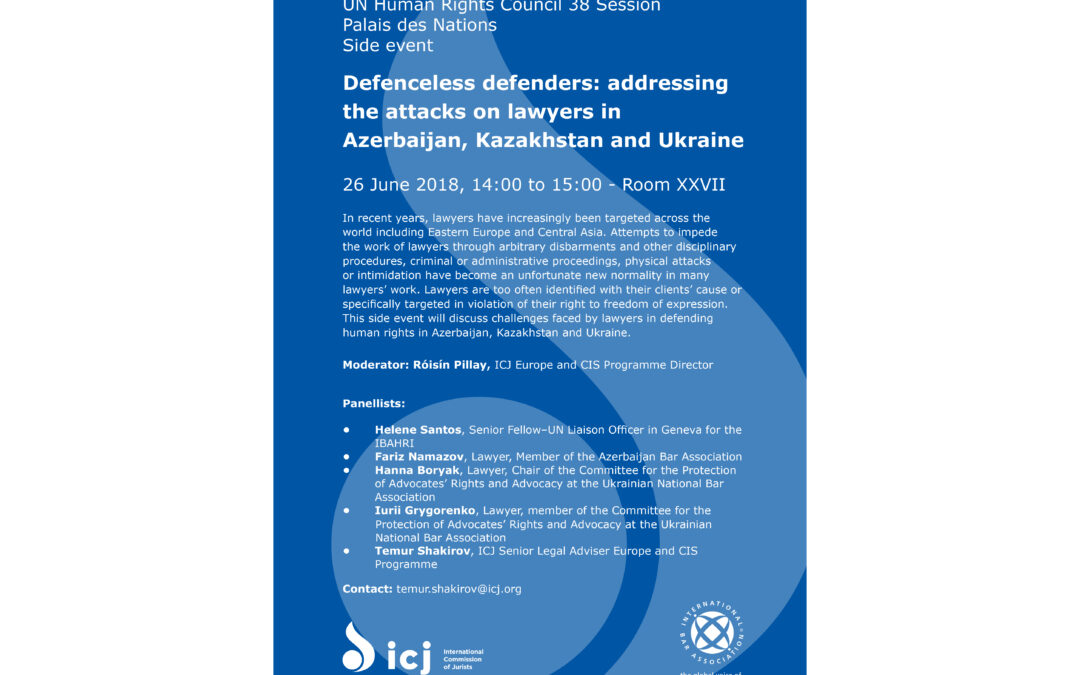
This side event at the Human Rights Council takes place on Tuesday, 26 June, 14:00-15:00, room XXVII of the Palais des Nations. It is organized by the ICJ and the International Bar Association’s Human Rights Institute (IBAHRI).
In recent years, lawyers have increasingly been targeted across the world including Eastern Europe and Central Asia. Attempts to impede the work of lawyers through arbitrary disbarments and other disciplinary procedures, criminal or administrative proceedings, physical attacks or intimidation have become an unfortunate new normality in many lawyers’ work.
Lawyers are too often identified with their clients’ cause or specifically targeted in violation of their right to freedom of expression. This side event will discuss challenges faced by lawyers in defending human rights in Azerbaijan, Kazakhstan and Ukraine.
Moderator: Róisín Pillay, ICJ Europe and CIS Programme Director
Speakers:
- Helene Santos, Senior Fellow–UN Liaison Officer in Geneva for the IBAHRI
- Fariz Namazov, Lawyer, Member of the Azerbaijan Bar Association
- Hanna Boryak, Lawyer, Chair of the Committee for the Protection of Advocates’ Rights and advocacy at the Ukrainian National Bar Association
- Iurii Grygorenko, Lawyer, member of the Committee for the Protection of Advocates’ Rights and Advocacy at the Ukrainian National Bar Association
- Temur Shakirov, ICJ Senior Legal Adviser Europe and CIS Programme
Jun 22, 2018 | Events, News
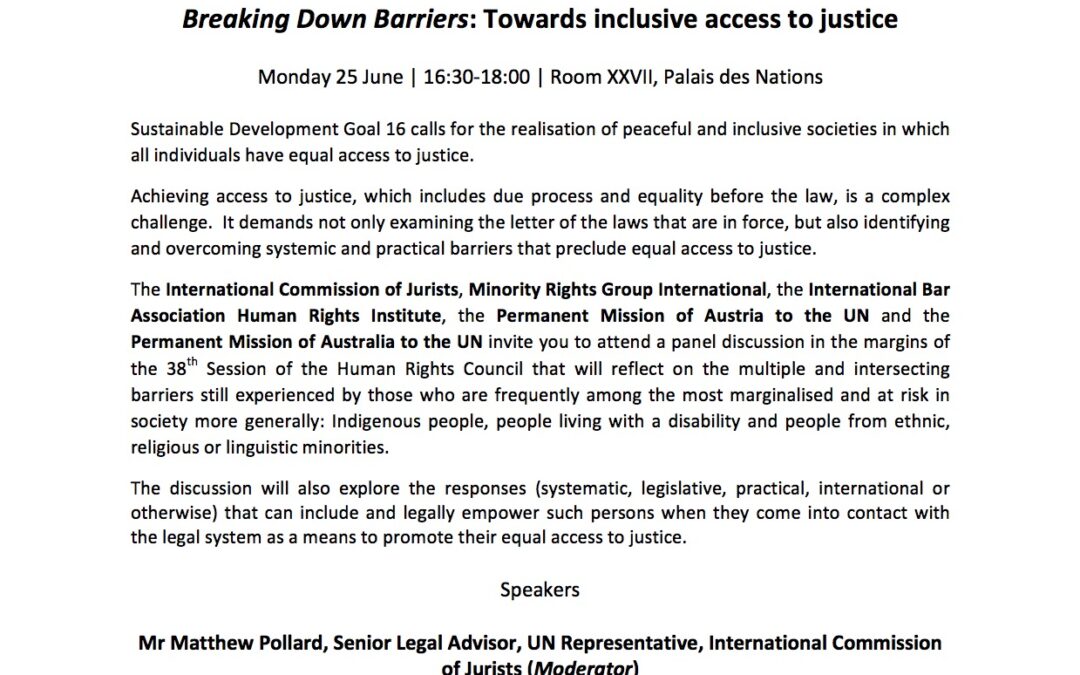
This side event to the UN Human Rights Council session addresses equal and effective access to justice for indigenous people, people living with a disability and people from ethnic, religious or linguistic minorities.
Monday 25 June | 16:30-18:00 | Room XXVII, Palais des Nations
Sustainable Development Goal 16 calls for the realisation of peaceful and inclusive societies in which all individuals have equal access to justice.
Achieving access to justice, which includes due process and equality before the law, is a complex challenge. It demands not only examining the letter of the laws that are in force, but also identifying and overcoming systemic and practical barriers that preclude equal access to justice.
The International Commission of Jurists, Minority Rights Group International, the International Bar Association Human Rights Institute, the Permanent Mission of Austria to the UN and the Permanent Mission of Australia to the UN invite you to attend a panel discussion in the margins of the 38th Session of the Human Rights Council that will reflect on the multiple and intersecting barriers still experienced by those who are frequently among the most marginalised and at risk in society more generally: Indigenous people, people living with a disability and people from ethnic, religious or linguistic minorities.
The discussion will also explore the responses (systematic, legislative, practical, international or otherwise) that can include and legally empower such persons when they come into contact with the legal system as a means to promote their equal access to justice.
Speakers:
Mr Matthew Pollard, Senior Legal Advisor, UN Representative, International Commission of Jurists (Moderator)
Dr June Oscar AO, Australia’s Aboriginal and Torres Strait Islander Social Justice Commissioner, Australian Human Rights Commission
Mr Glenn Payot, UN Representative, Minority Rights Group International
Ms Victoria Lee, Programme Manager, Human Rights and Disability Team, Office of the High Commissioner for Human Rights
For more information contact un(a)icj.org
Jun 21, 2018 | Events, News
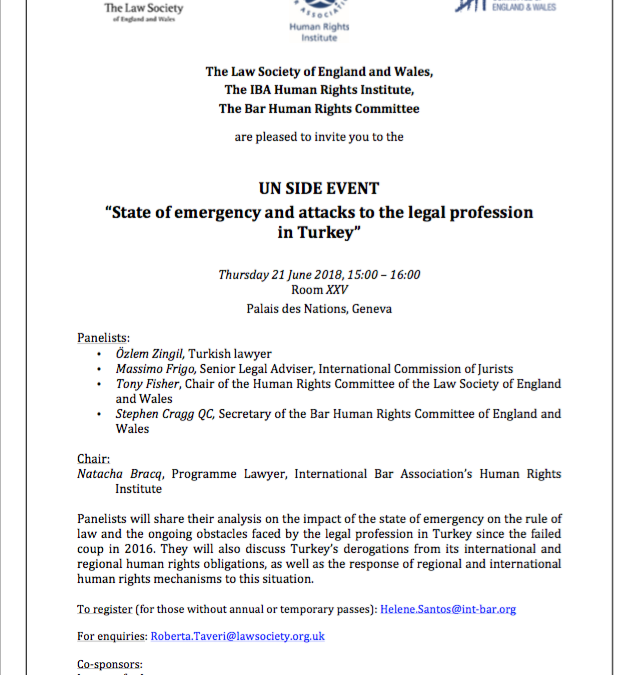
The ICJ will participate today in the side event “State of emergency and attacks on the legal profession in Turkey” organized by IBAHRI, the Law Society, and the Bar Human Rights Committee of England and Wales.
This side event at the Human Rights Council takes place on Thursday, 21 June, 15:00-16:00, room XXV of the Palais des Nations.
It is co-sponsored by Lawyers for Lawyers, Union Internationale des Avocats, Lawyers’ Rights Watch Canada.
In this side event, panelists will share their analysis on the impact of the state of emergency on the rule of law and the ongoing obstacles faced by the legal profession in Turkey since the failed coup in 2016.
They will also discuss Turkey’s derogations from its international and regional human rights obligations, as well as the response of regional and international human rights mechanisms to this situation.
Panelists:
- Özlem Zingil, Turkish lawyer;
- Massimo Frigo, International Commission of Jurists;
- Tony Fisher, Chair of the Human Rights Committee of the Law Society of England and Wales;
- Stephen Cragg QC, Secretary of the Bar Human Rights Committee of England and Wales;
- Natacha Bracq, Programme Lawyer, International Bar Association’s Human Rights Institute.
Geneva-SideEvent-StateofEmergencyLawyersTurkey-IBAHRI&others-June2018-ENG (download the flyer)
Jun 18, 2018 | Events, News
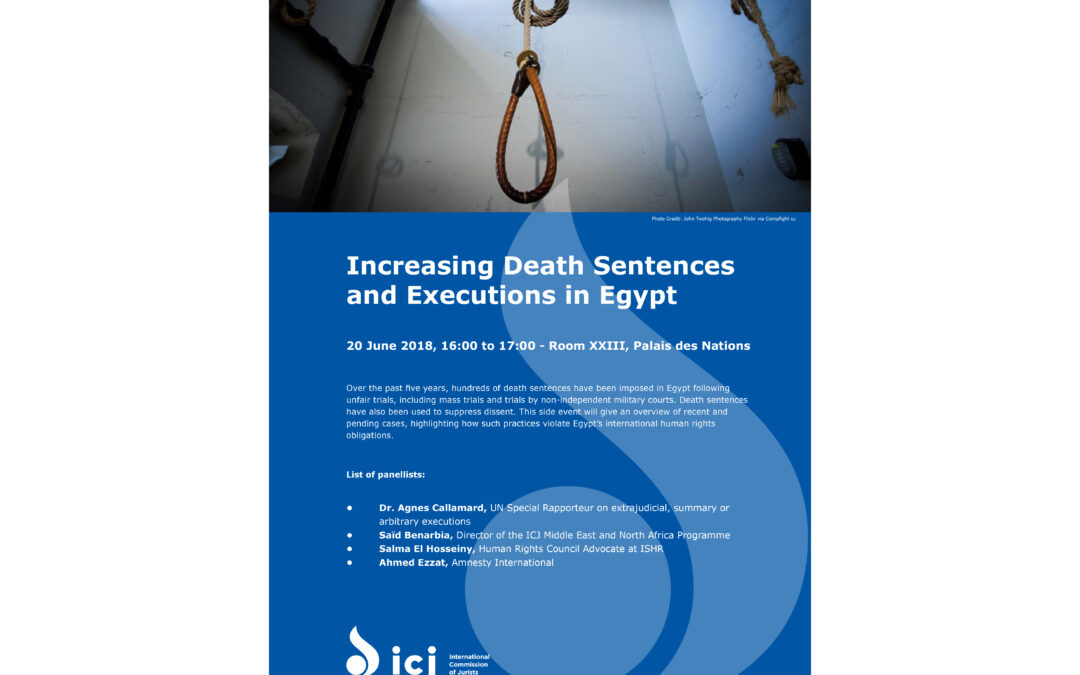
This side event at the Human Rights Council takes place on Wednesday, 20 June, 16:00-17:00, room XXIII of the Palais des Nations. It is organized by the ICJ.
Speakers: