Aug 3, 2015 | News
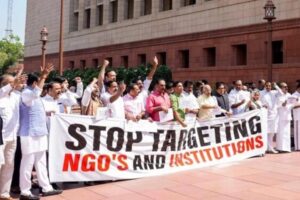
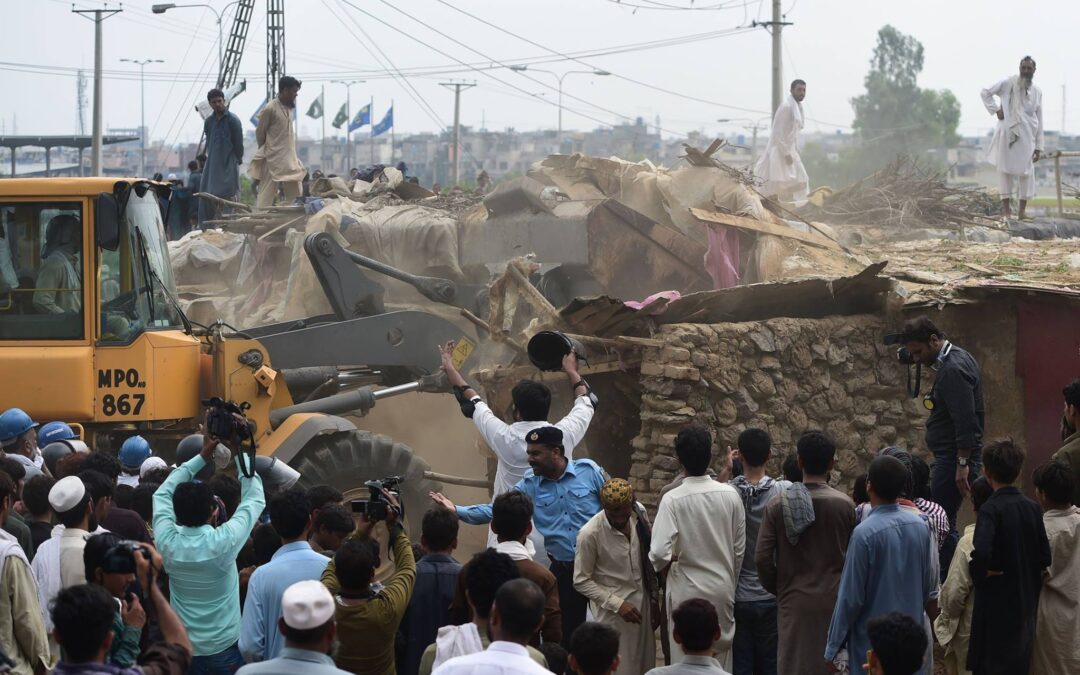
The ICJ is urging the Pakistani Government to immediately release, and drop all charges against, dozens of people arrested on 26 and 30 July in the context of a peaceful protest against forced evictions in Islamabad.
“This is yet another illustration of the Government using Pakistan’s counter-terrorism laws against peaceful protesters to clamp down on dissent,” said Sam Zarifi, ICJ’s Director for Asia and the Pacific.
“Peaceful protest is not an act of terrorism but a fundamental human right recognized by the Constitution as well as international human rights treaties that Pakistan is a party to,” he added.
The protest, forcibly dispersed by the police, was organized against the demolition of houses and the forceful eviction of over 8000 people residing in a slum in the city.
The Government alleges the slum is illegal and all residents are encroachers; the inhabitants claim that under Pakistani law, all informal settlements must either be formalized or the inhabitants must be provided alternate housing.
At least 66 individuals arrested were booked under Section 7 of the Anti-Terrorism Act, 1997 (ATA) for “obstructing the authorities”, “demonstrating force with a view to terrorizing citizens” and “creating mischief”.
Following a court order, they have been placed in police remand (custody of the police) for interrogation, where they may be at imminent risk of torture and other ill-treatment.
An anti-terrorism court released four of the detainees today. The rest, however, remain in police custody, and according to reports received by ICJ, many of them are being denied access to families and friends.
“The risk of abuse is inherent in the Anti-Terrorism Act, which defines terrorism in vague and overbroad terms. The Government must urgently amend the ATA to ensure it meets the internationally recognized tests of necessity, legality and proportionality,” Zarifi said.
Pakistan has a long history of using the ATA against political activists and human rights defenders.
In 2014, a dozen political activists, including Baba Jan, a prominent human rights defender from Hunza, were sentenced to life imprisonment by an anti-terrorism court for protesting against the government’s failure to assist victims of a landslide.
Before that, six power loom workers from Faisalabad were arrested in the context of a protest demanding minimum wage. In 2011, they were sentenced to 81 years in prison each under the ATA.
The International Covenant on Economic, Social and Cultural Rights, which Pakistan ratified in 2008, obligates States to recognize the right to an adequate standard of living, which includes housing.
The Human Rights Commission of Pakistan too has reminded the Government of its duty to provide shelter to the people of Pakistan and make arrangements to provide alternate housing to inhabitants of informal settlements.
“Forcibly evicting people from their homes without providing them any alternate housing can in itself be a human rights violation. Arresting peaceful protesters and denying their right to a fair trial even further adds to the culpability of the authorities,” Zarifi added.
Contact:
Sam Zarifi, ICJ Asia Pacific Regional Director (Bangkok), t: +66 807819002; email: sam.zarifi(a)icj.org
Reema Omer, ICJ International Legal Advisor, South Asia (London), t: +447889565691; email: reema.omer(a)icj.org
Additional Information:
Under Article 11(1) of the International Covenant on Economic, Social and Cultural Rights (ICESCR), which Pakistan ratified in 2008, States Parties recognize the right of everyone to an adequate standard of living, including adequate food, clothing and housing, and to the continuous improvement of living conditions.
States Parties are to take appropriate steps to ensure the realization of this right, recognizing to this effect the essential importance of international co-operation based on free consent.
The right to peaceful assembly is guaranteed under international human rights law, including Article 21 of the International Covenant on Civil and Political Rights (ICCPR), which Pakistan ratified in 2010 and is legally obligated to implement.
The UN Declaration on Human Rights Defenders also reiterates that everyone has the right to participate in peaceful activities against violations of human rights and fundamental freedoms, and obligates the State to take necessary measures to ensure the protection by the competent authorities of peaceful protestors against “any violence, threats, retaliation, de facto or de jure adverse discrimination, pressure or any other arbitrary action as a consequence of his or her legitimate exercise of the rights”.
Photo by Geo News

Jul 30, 2015 | News
The ICJ strongly condemned the execution of Yakub Memon, who was hanged in Nagpur Central Jail, India this morning.
“Yakub Memon’s execution is a distressing and regressive move, keeping India in the minority of countries which continue to carry out executions,” said Sam Zarifi, ICJ Asia Pacific Regional Director. “While Yakub Memon was convicted of terrible crimes, executing him was not the solution. India should immediately put in place a moratorium on the death penalty.”
A court set up under the Terrorist and Disruptive Activities (Prevention) Act (TADA) convicted and sentenced Yakub Memon to death for a range of offences, including conspiracy to commit terrorist acts, in connection with the deadly terrorist attacks in Mumbai in 1993.
These attacks killed more than 250 people and injured more than 700. The main accused in this case, including Yakub Memon’s brother Tiger Memon, have still not been apprehended or tried.
“In executing Yakub Memon, the Indian government has only fulfilled a desire for retribution and added to the disturbing trend of executions in the name of fighting terrorism in South Asia”, Zarifi added. “The death penalty has not been shown to have any deterrent effect on crime or terrorism anywhere in the world.”
The Indian Supreme Court had confirmed Yakub Memon’s conviction and sentence on appeal from the court set up under the TADA in March 2013.
The Indian government repealed the TADA in 1995, after sustained national and international criticism for its incompatibility with human rights law, particularly the right to fair trial.
Yakub Memon was tried under provisions of the TADA as it was the law in force in 1993, when the terrorist attacks in Mumbai occurred.
The Indian president rejected a first mercy petition on his case in April 2014.
He subsequently filed a review petition challenging his sentence before the Indian Supreme Court, which was rejected on 9 April 2015.
On 21 July 2015, the Indian Supreme Court dismissed his curative petition for the commutation of his death sentence.
A court had authorized his execution before his curative petition was dismissed.
Yakub Memon then approached the Indian Supreme Court challenging, both, the manner in which his curative petition was heard and dismissed, and the validity of the order authorizing his execution. However, the Supreme Court dismissed both these arguments yesterday.
Over the past week, Yakub Memon filed fresh mercy petitions to commute his death sentence before the Governor of the State of Maharashtra and the President of India. Both were rejected yesterday.
Yakub Memon’s lawyers challenged the rejection of the mercy petition, and asked the Indian Supreme Court to stay the execution as per the guidelines issued in the 2014 case of Shatrughan Chauhan v Union of India, for “safeguarding the interests of the death row convicts”.
These included ensuring a minimum period of 14 days “between the receipt of communication of the rejection of the mercy petition and the scheduled date of execution”.
But the Court – in a hearing early this morning – rejected this final plea.
Background:
This is India’s third execution in the past five years. India resumed executions in 2012, after a gap of eight years. Since November 2012, two other people have been executed, Ajmal Kasab and Afzal Guru.
They also were both charged and convicted for their role in terrorist attacks.
The ICJ expresses its solidarity with the victims of the 1993 attack, and their families.
India is a party to the International Covenant on Civil and Political Rights, which guarantees the right to a fair trial as well as the right to life and freedom from cruel, inhuman, or degrading treatment or punishment.
The UN Human Rights Committee, the supervisory authority for the ICCPR, has emphasized: “In cases of trials leading to the imposition of the death penalty scrupulous respect of the guarantees of fair trial is particularly important. The imposition of a sentence of death upon conclusion of a trial, in which the provisions of article 14 of the Covenant have not been respected, constitutes a violation of the right to life.”
In December 2014, the UN General Assembly adopted a resolution, for the fifth time since 2007, emphasizing that the use of the death penalty undermines human dignity and calling on those countries that maintain the death penalty to establish a moratorium on its use with a view towards its abolition. Some 117 UN Member States, a wide majority, voted in favor of a worldwide moratorium on executions as a step towards abolition of the death penalty.
The ICJ opposes capital punishment in all cases without exception. In line with the present international trend, the ICJ calls on India to impose an official moratorium on the death penalty, with a view to abolishing the death penalty.
Contact:
Sam Zarifi, ICJ Asia Pacific Regional Director (Bangkok), t: +66 807819002; email: sam.zarifi(a)icj.org

Jul 24, 2015 | News
The Cambodian Senate’s approval of the draft law this morning brings the Government one step closer to having the power to repressively monitor and restrict the registration and activities of associations and Non-Governmental Organizations (NGOs), the ICJ said today.
According to information provided to the ICJ, the Senate approved the draft Law on Associations and NGOs (LANGO) at approximately 10:00am local time this morning. Opposition Senators boycotted the vote.
“The draft law, once promulgated, will severely restrict the ability of members of civil society to exercise their rights to freedom of association and expression which Cambodia has a duty to protect under its international obligations,” said Kingsley Abbott, the ICJ’s International Legal Adviser.
“The regrettable irony is that in approving this draft law, which contains the stated aims of protecting civil society interests and promoting their partnership with public authorities, the Government has totally disregarded civil society’s calls for consultation and for the draft law to be withdrawn,” he added.
On 13 July 2015, the Cambodian National Assembly adopted the draft law after 55 members of the opposition party, the Cambodia National Rescue Party (CNRP), decided to boycott the vote.
The draft law will be promulgated once it receives the King’s signature, which is largely a symbolic step under the Cambodian Constitution.
The draft law’s most problematic provisions include:
- requirement of excessive documentation for the registration of both domestic and international associations and NGOs;
- arbitrary powers given to the Ministry of Interior and Ministry of Foreign Affairs to deny or revoke registration on the grounds that an association or NGO’s activities endanger public security, stability and order, constitute a threat to national security, national unity or the good culture, traditions and customs of Cambodian national society;
- the requirement that associations and NGOs adhere to a stance of neutrality vis à vis political parties, and provisions that allow for the suspension and dissolution of groups that violate this requirement;
- the requirement that associations and NGOs report to several ministries and submit an annual report summing up work activities and finances; and
- the inclusion of sweeping provisions for the suspension and dissolution of domestic and international associations and NGOs.
Background
The draft law, once promulgated, will bring Cambodia into non-compliance with international law and standards.
As a party to the International Covenant on Civil and Political Rights (ICCPR), Cambodia must guarantee the rights to freedom of expression and association and ensure that no restrictions are put in place except under the strict conditions set out in articles 19(3) and 22(2) of the ICCPR. These conditions clearly have not been met under the terms of the draft LANGO.
In addition, Article 2 of the UN Declaration on Human Rights Defenders provides that each “State has a prime responsibility and duty to protect, promote and implement all human rights and fundamental freedoms, inter alia, by adopting such steps as may be necessary to create all conditions necessary in the social, economic, political and other fields, as well as the legal guarantees required to ensure that all persons under its jurisdiction, individually and in association with others, are able to enjoy all those rights and freedoms in practice.
Article 8 states that everyone “has the right, individually and in association with others, to have effective access…to participation in the government of his or her country and in the conduct of public affairs…[including] the right, to submit to governmental bodies and agencies and organizations concerned with public affairs criticism and proposals for improving their functioning and to draw attention to any aspect of their work that may hinder or impede the promotion, protection and realization of human rights and fundamental freedoms.”
In June and July 2015, the ICJ and other international human rights groups sent joint letters to the Government of Cambodia, including to Prime Minister Hun Sen and the President of the National Assembly, urging for the withdrawal of the draft law.
Contact:
Kingsley Abbott, ICJ’s International Legal Adviser, t: +66 94 470 1345, e: kingsley.abbott(a)icj.org
Jul 22, 2015 | News
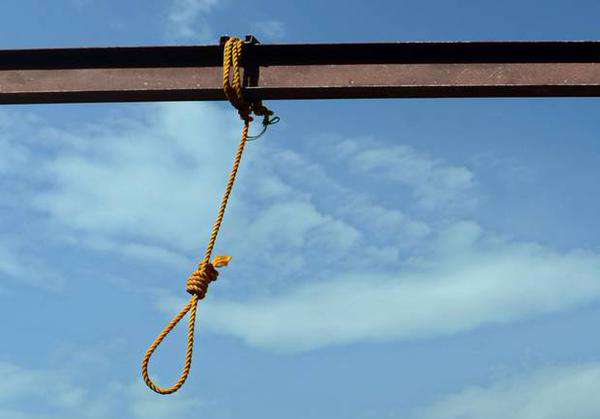
The Indian government should stay the imminent execution of Yakub Memon and commute his death sentence, said the ICJ today. The call comes after the Supreme Court dismissed his curative petition on 21 July.
Yakub Memon was convicted and sentenced to death for a range of offences, including conspiracy to commit terrorist acts, in connection with the deadly terrorist attacks in Mumbai in 1993, which killed more than 250 people and injured more than 700.
A court has authorized his execution for 30 July 2015, although Memon has submitted another mercy petition, according to media reports.
“The 1993 terrorist attacks in Mumbai were heinous criminal acts that devastated the lives of the victims and their families, and amounted to massive human rights abuses,” said Sam Zarifi, ICJ Director for Asia and the Pacific.
“But the death penalty is itself a denial of the right to life and the freedom from cruel and inhuman punishment. Executing Memon only adds to the sum total of inhumanity,” he added.
Yakub Memon was initially sentenced to death by a court set up under the Terrorist and Disruptive Activities Prevention Act, 1987 (TADA) in July 2007.
Yesterday’s Supreme Court decision was the latest in a series of denials of relief.
The Indian Supreme Court confirmed his conviction and sentence on appeal in March 2013.
Memon then filed a mercy petition before the Indian president, who denied it in April 2014.
He subsequently filed a review petition challenging his sentence before the Indian Supreme Court, which rejected the petition on 9 April 2015.
A court set up under the TADA convicted Yakub Memon for his involvement in the terror attacks in Mumbai in 1993.
The Indian government repealed the TADA in 1995, after sustained national and international criticism for its compatibility with human rights law, particularly the right to fair trial.
Provisions of the TADA defined offences vaguely and broadly; reversed the presumption of innocence in certain instances; allowed for long periods of pre-charge detention; made certain “confessions” to specific police officials admissible as evidence; and limited the right to appeal by only allowing appeals to the Supreme Court.
Several provisions of the TADA were later included in the Prevention of Terrorism Act (POTA), which was introduced in 2002 and repealed in 2004.
Subsequent amendments introduced some provisions of the POTA and TADA into the Unlawful Activities (Prevention) Act, which remains in force.
Yakub Memon was tried under provisions of the TADA as it was the law in force in 1993, when the terrorist attacks in Mumbai occurred.
India is a party to the International Covenant on Civil and Political Rights, which guarantees the right to a fair trial as well as the right to life and freedom from cruel, inhuman, or degrading treatment or punishment.
“India, consistent with its international legal obligations, may not impose the death penalty in situations where important safeguards to ensure a fair trial have not been met,” Zarifi said.
The UN Human Rights Committee, the supervisory authority for the ICCPR, has emphasized: “In cases of trials leading to the imposition of the death penalty scrupulous respect of the guarantees of fair trial is particularly important. The imposition of a sentence of death upon conclusion of a trial, in which the provisions of article 14 of the Covenant have not been respected, constitutes a violation of the right to life.”
The ICJ expresses its solidarity with the victims of the 1993 attack, and their families.
The ICJ opposes capital punishment in all cases without exception.
The death penalty constitutes a violation of the right to life and the right not to be subjected to cruel, inhuman or degrading punishment.
In line with the present international trend, the ICJ calls on India impose an official moratorium on the death penalty, with a view to abolishing the death penalty.
India resumed executions in 2012, after a gap of eight years. Since November 2012, two people have been executed, Ajmal Kasab and Afzal Guru. They were both charged and convicted for their role in terrorist attacks.
In December 2014, the UN General Assembly adopted a resolution, for the fifth time since 2007, emphasizing that the use of the death penalty undermines human dignity and calling on those countries that maintain the death penalty to establish a moratorium on its use with a view towards its abolition.
Some 117 UN Member States, a wide majority, voted in favor of a worldwide moratorium on executions as a step towards abolition of the death penalty.
Contact:
Sam Zarifi, ICJ Asia Pacific Regional Director (Bangkok), t: +66 807819002; email: sam.zarifi(a)icj.org

Jul 22, 2015 | News
Cambodian authorities must immediately quash the convictions for insurrection handed down to eleven opposition party activists on 21 July, the ICJ said today.
The Phnom Penh Municipal Court sentenced the National Rescue Party (CNRP) activists to between seven and 20 years in prison following an unfair trial.
“These men were grossly over-charged with insurrection in the first place,” said Kingsley Abbott, ICJ International Legal Adviser.
“The fact they have now been handed down disproportionately severe sentences following an unfair trial only serves to underscore that a serious miscarriage of justice has taken place in violation of Cambodia’s international obligations,” he added.
The charges arose out of their participation in a demonstration on 15 July 2014 against the closure of Phnom Penh’s designated protest site, Freedom Park, that became violent after “public-order” para-police attempted to break up the protest and were attacked by some people in the crowd.
According to information provided to the ICJ, all but one of the accused’s nine lawyers either boycotted or were unable to attend Tuesday’s suddenly-scheduled hearing in protest against a decision by the Court on Monday to fast track the trial.
When the Court unexpectedly called for closing arguments, the accused requested their lawyers to be present, which was denied.
According to observers, no credible evidence was produced during the trial connecting the eleven to the violence and the verdicts were read out after only 15 minutes of deliberation.
“In the event that fresh charges are brought, they must be consummate with the seriousness of the alleged offending, based on reliable evidence, and be adjudicated upon at a trial that scrupulously respects international fair trial standards in accordance with Cambodia’s international obligations,” Abbott said.
Background
Three men – Meach Sovannara, Oeur Narith, and Khin Chamreun – were convicted of participating in and leading an insurrectionary movement and were sentenced to 20 years imprisonment.
Eight men – Sum Puthy, Neang Sokhun, San Kimheng, Tep Narin, San Seihak, An Batham, Ouk Pich Samnang, and Ke Khim – were convicted of participating in an insurrectionary movement and were sentenced to seven years imprisonment.
Tuesday’s verdicts are inconsistent with international law and standards including article 14 of the International Covenant on Civil and Political Rights (ICCPR), to which Cambodia is a State Party, which states that everyone has the right to a “fair and public hearing by a competent, independent and impartial tribunal established by law.”
Contact:
Kingsley Abbott, International Legal Adviser, Asia & Pacific Programme, t: + 662 6198477, + 662 6198478 Ext. 203 ; e: kingsley.abbott(a)icj.org
Jul 19, 2015 | News
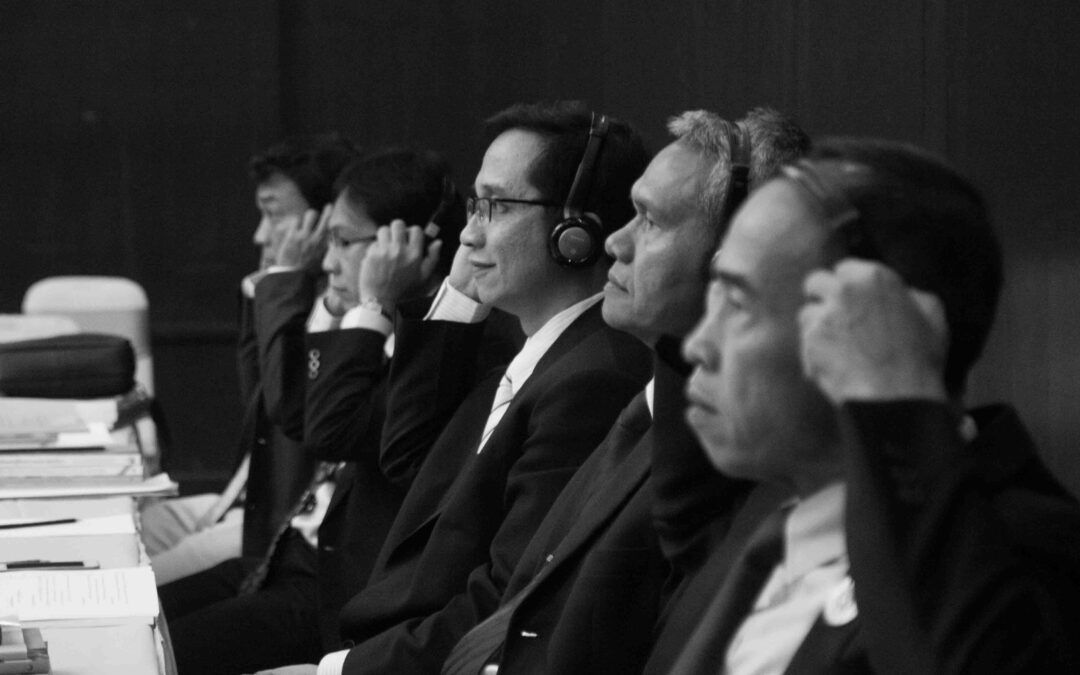
On 18-19 July 2015, the ICJ held a workshop on “The Protection of Victims in Criminal Cases” for 35 judges in Thailand’s deep South. This is the fifth workshop the ICJ has held with the judges of Region 9 since 2011.
The objective of the workshop, held in Hat Yai, was to discuss how to improve procedural measures to protect victims in Thailand with reference to international law and standards.
Speakers at the workshop included Justice John Lawrence O’Meally, an ICJ Commissioner from Australia, Judge Dol Bunnag, Chief Judge of the Juvenile and Family Court of Sakonnakorn Province, Chief Judges from Region 9, and Marie Guiraud, International Civil Party Lead Co-Lawyer at the Khmer Rouge Tribunal in Cambodia.
Background:
Previous ICJ workshops with the Judges of Region 9 have covered the following topics:
- Rule of Law and Strengthening the Administration of Justice in the Context of the Application of Emergency Laws in the Southern Border Provinces (2011)
- Rule of Law and Strengthening the Administration of Justice in the Context of Bail in the Southern Border Provinces (2012)
- Rule of Law and Strengthening the Administration of Justice in the Context of Habeas Corpus in the Southern Border Provinces (2012)
- The Principle of Inadmissibility of Evidence Obtained by Unlawful Means and Hearsay Evidence: International Standards Compared to Thai Law (2014)