Oct 10, 2014 | News
As Thai Prime Minister General Prayut Chan-Ocha visits Myanmar to revive the stalled Dawei Special Economic Zone (SEZ), the governments of Thailand and Myanmar should cooperate to establish a legal framework protecting the human rights of the area’s residents, said the ICJ.
Oct 7, 2014 | Multimedia items, News, Video clips
Alejandra Ancheita, founder and Executive Director of ProDESC, is one of the pioneers in seeking accountability for transnational companies in Mexican courts when local communities’ rights are not taken into account.
Alejandra Ancheita has worked with migrants, workers, and indigenous communities for over 15 years to protect their land and labour rights vis a vis transnational mining and energy companies.
These disputes have included violent attacks on those she is trying to protect.
In Mexico, there is a clear pattern of attacks, threats, criminalization, and murders of human rights defenders.
Alejandra Ancheita and ProDESC have been subjected to surveillance, a defamation campaign in the national media, and a break in at their offices.
“This recognition calls attention to the increasing violence being suffered by human rights defenders in Mexico, particularly women defenders,” she said. “I hope that it will provide better conditions and increased security not just for me, but for all human rights defenders in my country.”
“The ICJ is extremely pleased by the decision to pay tribute to the work of Alejandra Ancheita, not only because of her outstanding commitment and courage as an individual, but also because of the recognition that this award will provide to the area of human rights work that she has been dedicating herself to for many years,” said Olivier van Bogaert, ICJ Director of Media and Communications, and ICJ Representative on the MEA Jury.
The ICJ which also developed a longstanding work on economic, social and cultural rights, and on business and human rights, will devote the 2014 edition of its Geneva Forum for judges and lawyers to the role of courts in protecting economic, social and cultural rights.
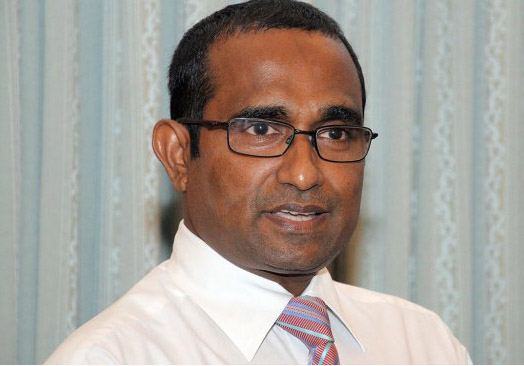
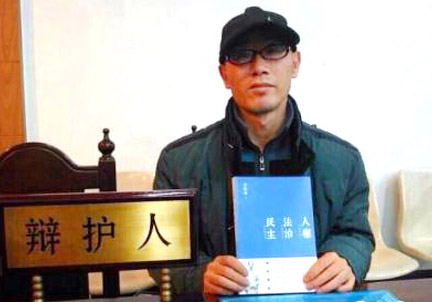
The two other finalists, Cao Shunli (China) and Adilur Rahman Khan (Bangladesh), received Martin Ennals Prizes.
Cao Shunli, who died in in detention in March 14th after being denied medical attention for known health conditions had vigorously advocated for access to information, freedom of speech, and freedom of assembly.
She disappeared in September 2013 shortly before boarding a flight order to participate in the Human Rights Council.
Chinese authorities only acknowledged her detention months later.
A special foundation is planned in her honor.
Since the 1990’s, Adilur Rahman Khan worked on a wide range of human rights issues, such as illegal detention, enforced disappearances, and extra-judicial killings.
Personally he is facing criminal prosecution for documenting the extrajudicial deaths of 61 people during demonstrations against the government.
His organization, Odhikar, is one of the few independent voices left in Bangladesh.
It is facing closure as donor funds destined for Odhikar are being blocked by the Prime Minister’s Office.
The “Nobel Prize of Human Rights”, the Martin Ennals Award for Human Rights Defenders (MEA) is a unique collaboration among ten of the world’s leading human rights organizations to give protection to human rights defenders worldwide.
Strongly supported by the City of Geneva, the award is given to Human Rights Defenders who have shown deep commitment and face great personal risk. Its aim is to provide protection through international recognition.
The Jury is composed of the following NGOs: ICJ, Amnesty International, Human Rights Watch, Human Rights First, Int’l Federation for Human Rights, World Organisation Against Torture, Front Line Defenders, EWDE Germany, International Service for Human Rights, and HURIDOCS.
Contact:
Michael Khambatta, Director Martin Ennals Foundation, t: +41 79 474 8208, e: khambatta(a)martinennalsaward.org
Olivier van Bogaert, ICJ Director of Media and Communications, and ICJ Representative on the MEA Jury, t: +41 22 979 38 08, e: olivier.vanbogaert(a)icj.org
Multimedia gallery:
Livestreaming of the Martin Annals Award 2014 Ceremony
Alejandra Acheita film:
Cao Shunli film:
Adilur Rahman Kahn film:
Sep 27, 2014 | News
On 24-26 September 2014, the ICJ conducted a workshop on fair trial standards and trial monitoring for Vietnamese lawyers in Manila, Philippines.
The objectives of the workshop were to strengthen the participants’ understanding of fair trial standards and to increase the pool of trained lawyers available to conduct trial monitoring activities in the ASEAN region.
As part of the workshop, the participants observed several criminal proceedings at the Regional Trial Court of Quezon city and visited the Paranaque City Jail, in Manila.
The speakers included experts from the Free Legal Aid Group (FLAG), the Human Rights Resource Center (HRRC), and the Asian International Justice Initiative (AIJI).
The ICJ’s manual on trial monitoring, which was used at the training, provides trial observers with practical guidance on how to prepare for a trial observation mission, carry out the observation and write the follow-up report.
It also provides a synthesis of the basic legal standards applicable in relation to (i) the right to a fair trial, (ii) the right to remedy of victims of human rights violations, and (iii) combating impunity.
Sep 26, 2014 | News
The government of Nepal has failed for over a decade to deliver justice for the killing of Krishna Prasad Adhikari. In protest his father, Nanda Prasad Adhikari, died on September 22, 2014, after over 300 days on hunger strike, the ICJ and Human Rights Watch said today.
Nanda Prasad Adhikari and his wife, Ganga Maya Adhikari (photo), began their hunger strike on October 23, 2013, to protest the failure of successive Nepali governments to ensure a credible investigation of the killing in 2004 of their son, allegedly by members of the United Communist Party of Nepal–Maoists (UCPN-M).
The ICJ and Human Rights Watch call on the Nepali government to protect the human rights of Ganga Maya Adhikari, who is reported to be in critical but stable condition in Kathmandu’s Bir Hospital. She continues to refuse food even after her husband’s death.
“Nanda Prasad Adhikari made the ultimate sacrifice in the pursuit of justice for his son, but it should never have come to this sad moment,” said Sam Zarifi, ICJ’s Regional Director for Asia and the Pacific. “The Adhikari couple symbolize the thousands of people in Nepal who demand justice for the violations and abuses they suffered at the hands of the government’s armed forces as well as the Maoists.”
Despite several promises by the government, there has been little movement towards accountability for Krishna Adhikari’s death.
In September 2013, after initial protests by the Adhikari couple, Nepali authorities announced that they would follow the Supreme Court’s directive to investigate the killing.
One year later, in April 2014, the Chitwan District Attorney filed charges against 13 people allegedly involved in the killing of Krishna Prasad Adhikari.
But when two men were arrested and produced in court, UCPN-M leaders protested, with leader Babu Ram Bhattarai saying publicly that if Parsuram Poudel, one of the accused, could be arrested, the government should arrest Bhattarai as well.
After three days of protests and threats by the UCPN-M, the Chitwan District Court granted bail to the two suspects. The case is still pending in court.
Throughout this period, the Adhikaris continued their hunger strike, pointing out serious flaws and shortcomings in the investigation carried out by Nepali authorities.
“Nepali politicians should stop making empty promises and investigate all allegations of human rights abuses and violations during the conflict,” said Brad Adams, Asia director for Human Rights Watch. “Nanda Prasad Adhikari’s death highlights Nepal’s flawed attempts at reconciliation and redress for conflict-era crimes, and looks like a desire to sweep all wartime injustice under the rug.”
The Comprehensive Peace Accord (CPA) that ended the conflict in 2006 explicitly recognizes Nepal’s obligations under international human rights law without reservation.
The CPA is unequivocal about the need to investigate and prosecute human rights violations in line with Nepal’s laws.
A promised Truth and Reconciliation Commission remains stalled, and the draft legislation to promulgate it is deeply flawed.
The ICJ and Human Rights Watch call on Nepali authorities to continue investigations and prosecutions for Krishna Adhikari’s death, as well as hundreds of unresolved cases of enforced disappearances and extrajudicial executions.
Contact:
Sam Zarifi, ICJ’s Regional Director for Asia and the Pacific, t +66-807-819-002 (mobile); e: sam.zarifi(a)icj.org
Sep 24, 2014 | News
The ICJ expressed concern at the promulgation of a constitutional amendment that empowers the Bangladesh Parliament to impeach judges of the Supreme Court.
The ICJ urges the Government to ensure the impeachment provision meets its obligations under the International Covenant on Civil and Political Rights and international standards on the independence of the judiciary.
“Parliament must prescribe adequate safeguards to ensure the newly enacted impeachment provision meets international standards for protecting the independence of the judiciary and the right to a fair trial,” said Sam Zarifi, ICJ’s Director for Asia and the Pacific. “Without such safeguards, the looming fear of arbitrary and politically motivated impeachment would create an environment in which judges would be unable to exercise their judicial functions independently and impartially, especially in cases involving the Government.”
On 22 September 2014, President Abdul Hameed gave his assent to the 16th constitutional amendment, which was passed unanimously by the Bangladeshi Parliament on 17 September 2014.
The amendment empowers Parliament to impeach judges of the Supreme Court on the grounds of “proven misbehavior or incapacity” by passing a resolution supported by at least a two-third majority of parliamentarians.
To exercise this power, Parliament has to first pass a law to regulate the procedure in relation to investigation and proof of the misbehavior or incapacity of a judge that would lead to an impeachment.
International standards on the independence of the judiciary, including the UN Basic Principles on the Independence of the Judiciary, the Commonwealth Principles on the Accountability of and the Relationship between the Three branches of Government, and the Beijing Statement of Principles of the Independence of the Judiciary, stipulate that judges shall be subject to suspension or removal only for “reasons of incapacity or behavior that renders them unfit to discharge their duties”.
The phrase “proven misbehavior or incapacity” in the Bangladeshi amendment will have to be interpreted and applied in line with this relatively high threshold.
“Impeachment of judges must be an exceptional measure, reserved for cases of gross misconduct,” said Zarifi. “Unless Parliament takes great care to ensure the law regulating and clarifying the impeachment procedure follows international law and standards on the removal of judges, the constitutional amendment can only be interpreted as an assault on the independence of the judiciary.”
Any removal proceedings must meet international standards on fair trial and due process.
A judge at risk of being disciplined or removed must be accorded the right to be fully informed of the charges; the right to be represented at the hearing by council of choice; the right to make a full defense; and the right to be judged by an independent and impartial tribunal.
“The actions that Parliament might take under the impeachment amendment are particularly worrying given the Awami League Government’s recent record of passing a series of regressive laws and policies relating to human rights,” added Zarifi. “After clamping down on the operation of civil society groups and restricting freedom of expression of the media and human rights defenders, it appears that the Government is now looking to target the judiciary.”
An independent and impartial judiciary is central to the protection of human rights and the rule of law.
The ICJ therefore urges the Bangladesh Parliament to safeguard judicial independence by ensuring that the laws governing the impeachment procedure meet international law and standards on the independence of the judiciary and the right to a fair trial.
Contact:
Sam Zarifi, ICJ Asia Pacific Regional Director (Bangkok), t: +66 807819002; e: sam.zarifi(a)icj.org
Reema Omer, ICJ International Legal Adviser (London), t: +44 7889565691; e: reema.omer(a)icj.org
Sep 13, 2014 | News
On 11-12 September 2014, the ICJ held an academic seminar on “The Principle of Inadmissibility of Evidence Obtained by Unlawful Means and Hearsay Evidence: International Standards Compared to Thai Law” for Judges, prosecutors and lawyers working in Thailand’s deep South.
The objective of the seminar held in Hat Yai was to discuss the provisions of the Thai Criminal Procedure Code that address hearsay and unlawfully obtained evidence and compare them to international standards.
Speakers at the seminar included Justice Jaran Pakdeethanakul of the Constitutional Court of Thailand; Associate Professor Narong Jaiharn, Dean of the Faculty of Law, Thammasat University; and two international Judges who spoke about the approach to hearsay and unlawfully obtained evidence in the inquisitorial and adversarial legal systems.